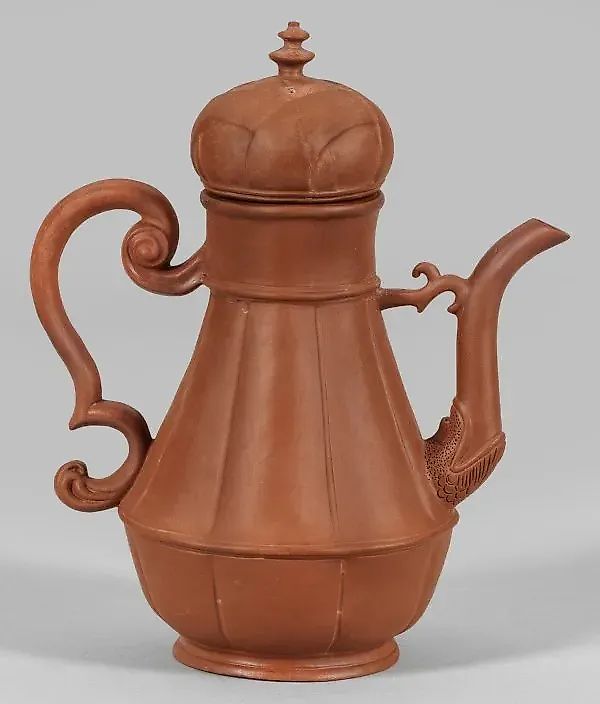
Rare red faience jug
Description
In Turkish form, red-brown faience. The exposed circular base is full, tapering conically and divided by vertical profile rings. Deeply set, it has a protruding curved spout resembling a fish mouth. On opposite sides are double curved volute handles, connected to the body by a plant-like knot. The built-in turban-shaped so-called Turkish band features relief and a double-disc handle. Eight-ribbed wall and threaded decoration. The form is most likely a work of Johann Jakob Irminger. Height 19.5 cm. The vessel form traces back to metal types of Islamic jugs. Such a type was already present in the 1710 manufactory program and in the 1711 inventory of the Meissen manufactory as "Turkish coffee jugs." Böttger's "red porcelain" could be well molded and turned, with various types of decoration. Partially, the wall is adorned with a small floral relief in Chinese style or coated with black glaze and decorated with gold painting by Martin Schnell. See Eberle, Cat. Böttger Stoneware, Schlösschen Friedenstein Gotha, No. 27f. (Inv. No. St 320, St 124); Gielke, Cat. Meissen Porcelain, Grassi Museum, No. 1 (Inv. No. 1944.5a, b), Johann Friedrich Böttger on his 300th birthday, Fig. I/38; Pietsch, Wark Collection, No. 122; SKD, Inv. No. PE 766; V&A Museum, Inv. No. C.34&A-1922. Rare red faience jug of "Turkish form" by Böttger with relief stamped decoration. Meissen. Around 1710.
Meissen (Meissen)
Additional lots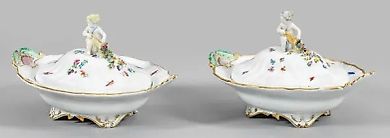
Lot No. 14282 A pair of soup tureens with lids
Meissen (Meissen)
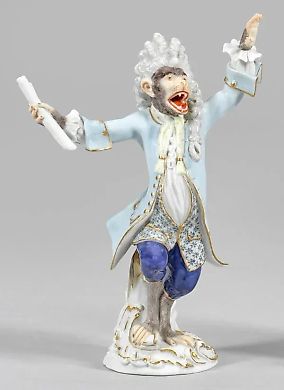
Lot No. 14307 The bandmaster of the monkey orchestra
Meissen (Meissen)
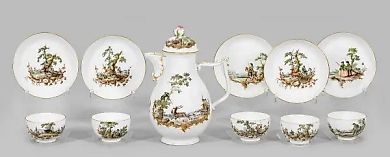
Lot No. 14349 Meissen hunting coffee set
Meissen (Meissen)
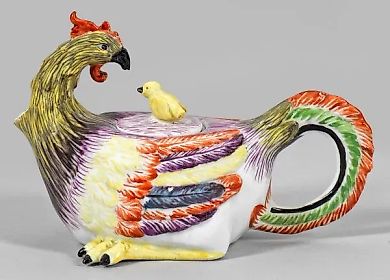
Lot No. 14446 Porcelain teapot in the shape of a rooster
Meissen (Meissen)
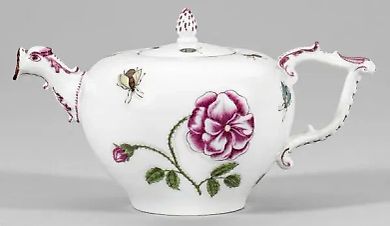
Lot No. 14434 A small Meissen porcelain teapot with flowers.
Meissen (Meissen)
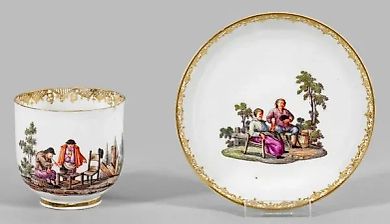
Lot No. 14440 Decorative cup with Teniers scenes.
Meissen (Meissen)
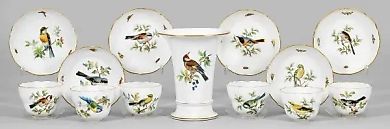
Lot No. 14253 Coffee set with a vase
Meissen (Meissen)
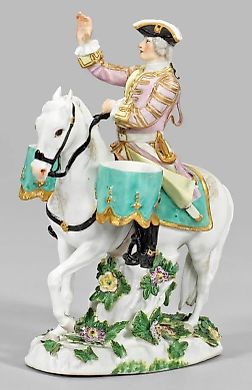
Lot No. 14377 Rare porcelain figure "Soldier on Horseback" fr…
Meissen (Meissen)
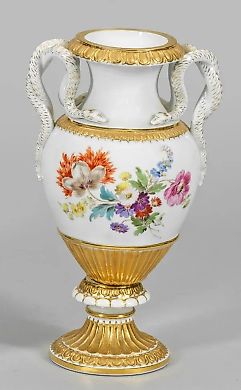
Lot No. 14270 Porcelain vase with snake-shaped handles, decor…
Meissen (Meissen)
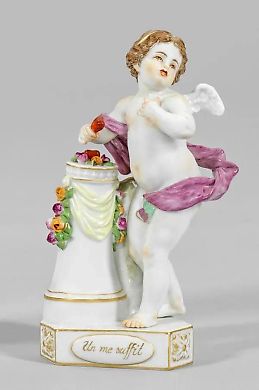
Lot No. 14311 "That's enough for me."
Meissen (Meissen)
Similar lots
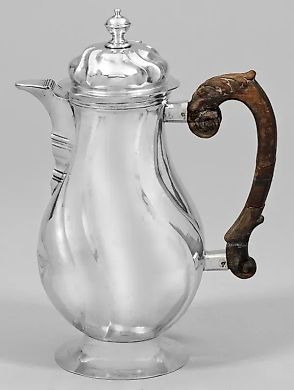
Lot No. 14511 Baroque coffee pot
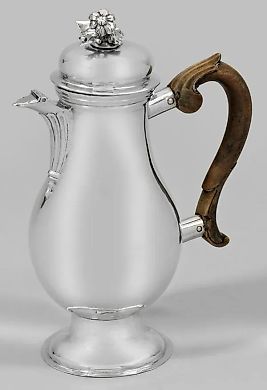
Lot No. 13173 Coffee pot
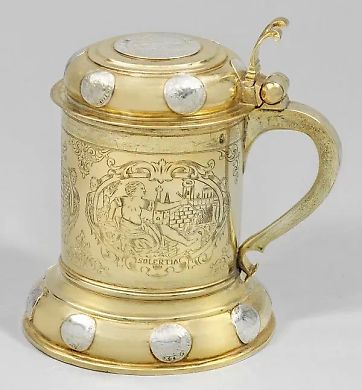
Lot No. 13161 Baroque hampen
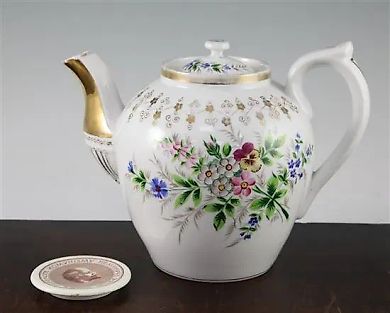
Lot No. 15465 A large teapot and lid made of Kuznetsov porcel…
Kuznetsova M.S. society
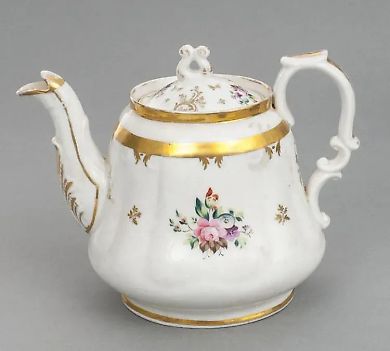
Lot No. 15715 Porcelain teapot from the Kuznetsov Factory: a …
Kuznetsova M.S. society
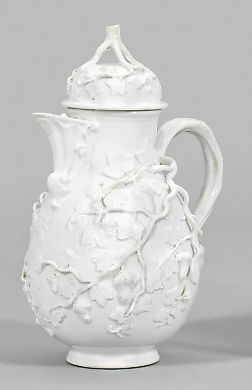
Lot No. 14431 Coffee pot with plastic vine decor.
Meissen (Meissen)
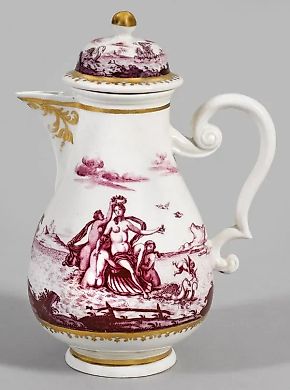
Lot No. 14470 Meissen coffee pot with a house painting in vio…
Meissen (Meissen)
Viewed lots
Lot No. 13078 Faience bear figurine
Lot No. 13585 Falcon
Herend (Herend)
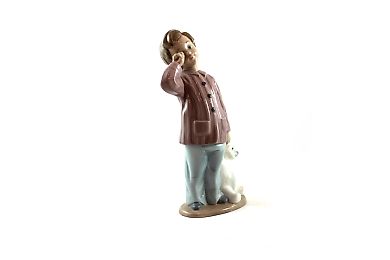
Lot No. 13944 A boy with a bear cub
Lladro
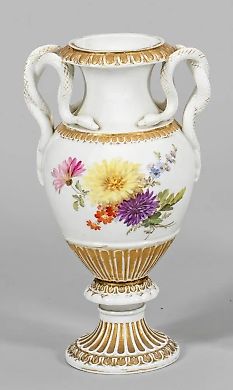
Lot No. 14272 Porcelain vase with handles in the shape of sna…
Meissen (Meissen)
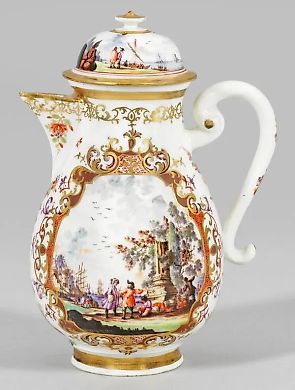
Lot No. 14456 Magnificent Meissen coffee pot with trade scene…
Meissen (Meissen)
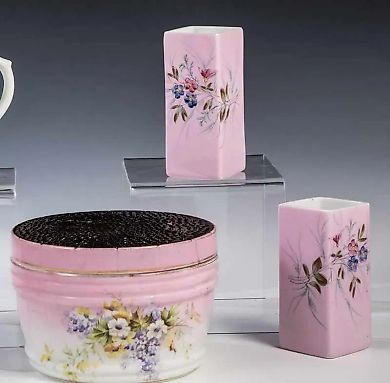
Lot No. 15178 Decorative box and two vases by Gardner, circa …
Kuznetsova M.S. society
Lot No. 15830 Porcelain saucer from the Kuznetsov Factory, 19…
Kuznetsova M.S. society
Lot No. 15859 Russian porcelain figure of a Siberian peasant …
Kuznetsova M.S. society