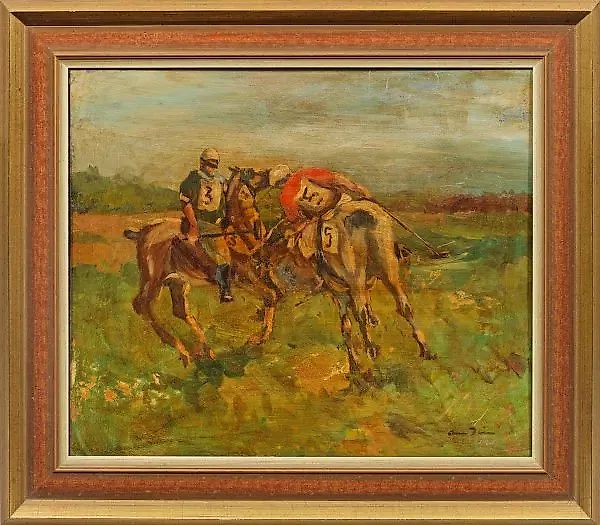
The Virtuoso Polo Player: A Vivid Work by a Late Impressionist
Description
(1884 Neustadt a. d. Hardt – 1957 Bad Dürkheim) A virtuoso polo player who painted in a rapid style, partially executed in an impasto manner, a vivid work of a late Impressionist, probably around 1950–1955. Works dedicated to hunting and equestrian sports, such as gallops and trottings, as well as polo games and carriage races, occupy a significant place in Dill’s oeuvre since the 1920s. Here he could express his mastery in depicting dynamic, fast movements. Dill often attended horse races and polo games, including in Munich and Iffezheim near Baden-Baden, which he captured with great liveliness and an exciting perspective on horses, riders, and the glamorous atmosphere. From 1908 to 1914, he studied at the Munich Academy, where he was a master student of Heinrich von Zügel. As early as 1917, Dill presented a large collection of paintings and drawings at the Crystal Palace. From 1922 to 1930, he was a member of the Munich Secession. In 1924, he was awarded the title of professor, and in 1949 he was appointed honorary member of the Munich Academy of Fine Arts. In 1930, the artist moved from Munich to the town of Neustadt an der Weinstraße, and in 1941 he moved to Bad Dürkheim. Alongside Max Slevogt, Otto Dill is considered one of the most important artists of classical modernism in the Palatinate. Oil on plywood. Signed. 50 cm x 59.5 cm. In a frame. Provenance: German private collection, Rhineland-Palatinate.
Otto Dill
Additional lots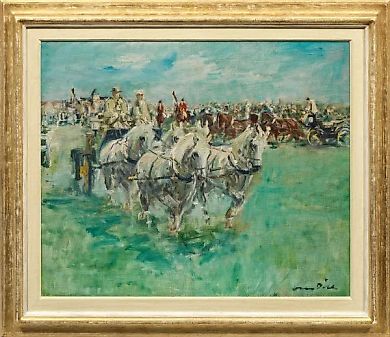
Lot No. 14607 An exquisite view of art
Otto Dill
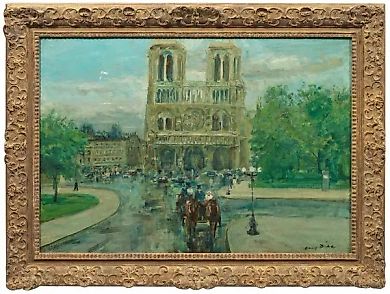
Lot No. 14613 "Impressionist Cityscape by Otto Dill"
Otto Dill
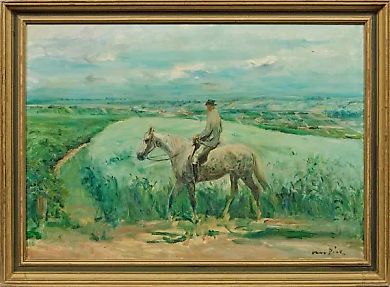
Lot No. 14611 "The landowner riding across his field"
Otto Dill
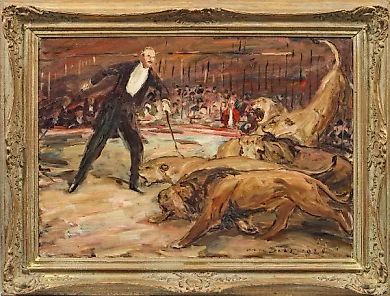
Lot No. 14614 Lion Tamer
Otto Dill
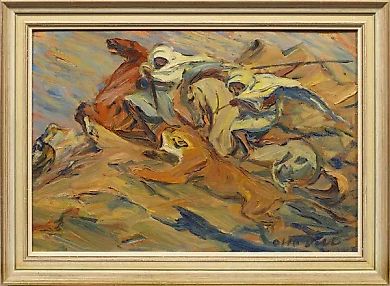
Lot No. 14617 "The Lion Hunt" - great mastery
Otto Dill
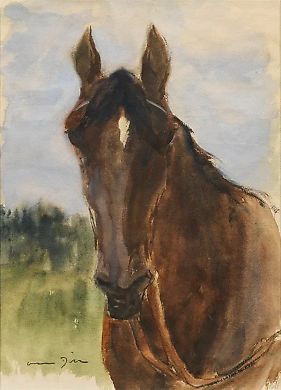
Lot No. 14608 "Horse Head: Art and Sport"
Otto Dill
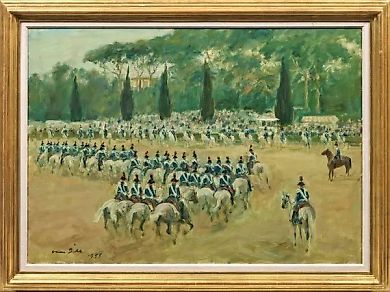
Lot No. 14612 Carousel Carabinieri
Otto Dill
Similar lots
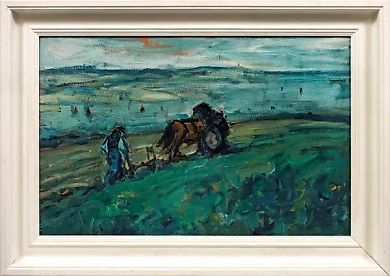
Lot No. 14628 Seiler - the great impressionist of Brittany.
Julius Seiler
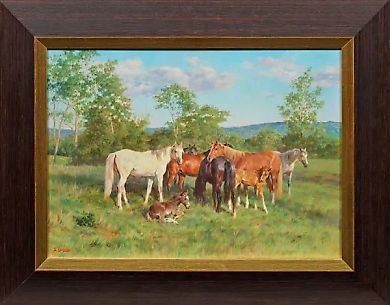
Lot No. 14085 "Wild Horses in the Light: A Virtuoso Depiction…
Sergio Budicin
Lot No. 14611 "The landowner riding across his field"
Otto Dill
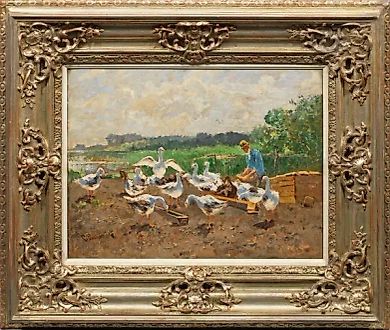
Lot No. 14722 "Munich - 1915: Feeding geese under a fragrant …
Richard von Poschinger
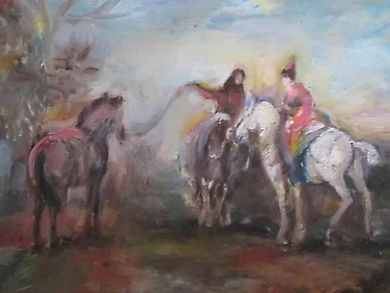
Lot No. 10698 Good horse
Hatice Akkaya
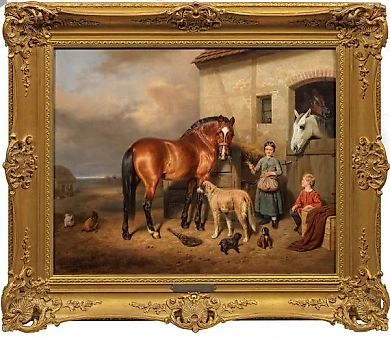
Lot No. 14758 "Highly Lively Style: Children Visiting the Sta…
Friedrich Randel
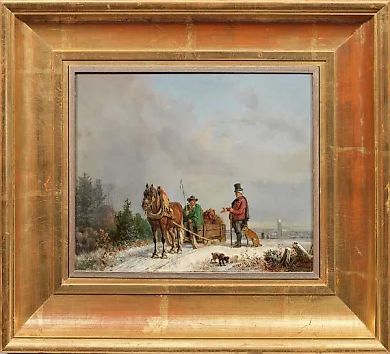
Lot No. 14756 "Inverted Sheaf Cart: The Romantic Life and Lan…
Heinrich Bürkel
Lot No. 14607 An exquisite view of art
Otto Dill
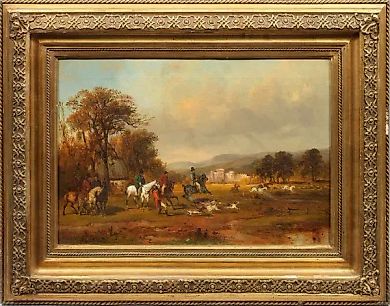
Lot No. 14735 Magnificent landscape with parforce: a rare mot…
Josef Karl Berthold Pyuttner
Lot No. 14608 "Horse Head: Art and Sport"
Otto Dill