
Soviet Agitational Porcelain: History and Symbolism of the Revolution
The history of Soviet agitational porcelain: from its creation for foreigners to its use in everyday life in the USSR. Plates with slogans, vases, and sculptures.

Porcelain in the Service of the Revolution
Soviet propaganda porcelain emerged shortly after the October Revolution. Initially, the main buyers were foreign collectors, attracted by the high quality of the items and their elegant painting. Over time, this tableware and decorative objects began to enter the daily life of their target audience—the ordinary citizens of the USSR. Discover how plates with slogans, commemorative vases, and small sculptures depicting the diverse heroes of the era adorned apartments and rooms in communal housing.
Revolutionary Symbolism on Porcelain

Sergei Chekhonin. Dish 'RSFSR'. Overglaze polychrome painting, gilding, silvering, engraving. 1922. The State Hermitage Museum, Saint Petersburg

Sergei Chekhonin (shape), Ilya Chashnik (painting). Cup and saucer with a black border on the rim. Overglaze polychrome painting. 1923–1924. The State Hermitage Museum, Saint Petersburg

Sergei Chekhonin. Plate. Overglaze polychrome painting, gilding. 1919. The State Hermitage Museum, Saint Petersburg
The production of porcelain in Russia began in the second half of the 18th century. Initially, elegant tableware and interior items with delicate painting were intended for the homes of the affluent classes. However, after the events of 1917, the role of porcelain changed: like propaganda posters, it became a tool for agitation. This is how Soviet porcelain, adorned with revolutionary slogans and symbols, was born.
To rapidly disseminate products among the population, it was necessary to organize their mass production. The main platform for this became the State Porcelain Factory (GФZ) in Petrograd. This enterprise, known before the revolution as the Imperial Porcelain Factory and serving the royal family, was one of the oldest in Europe. After nationalization, it was placed under the jurisdiction of the People's Commissariat of Education. Unpainted porcelain blanks, manufactured in previous years, remained in the factory's warehouses. It was these that they decided to use, adorning them with new themes. Artists of the new generation embodied current ideas: they applied slogans, Soviet coats of arms, and emblems to plates and dinner services. At the same time, the masters strove not to lose the traditions of Russian porcelain art.
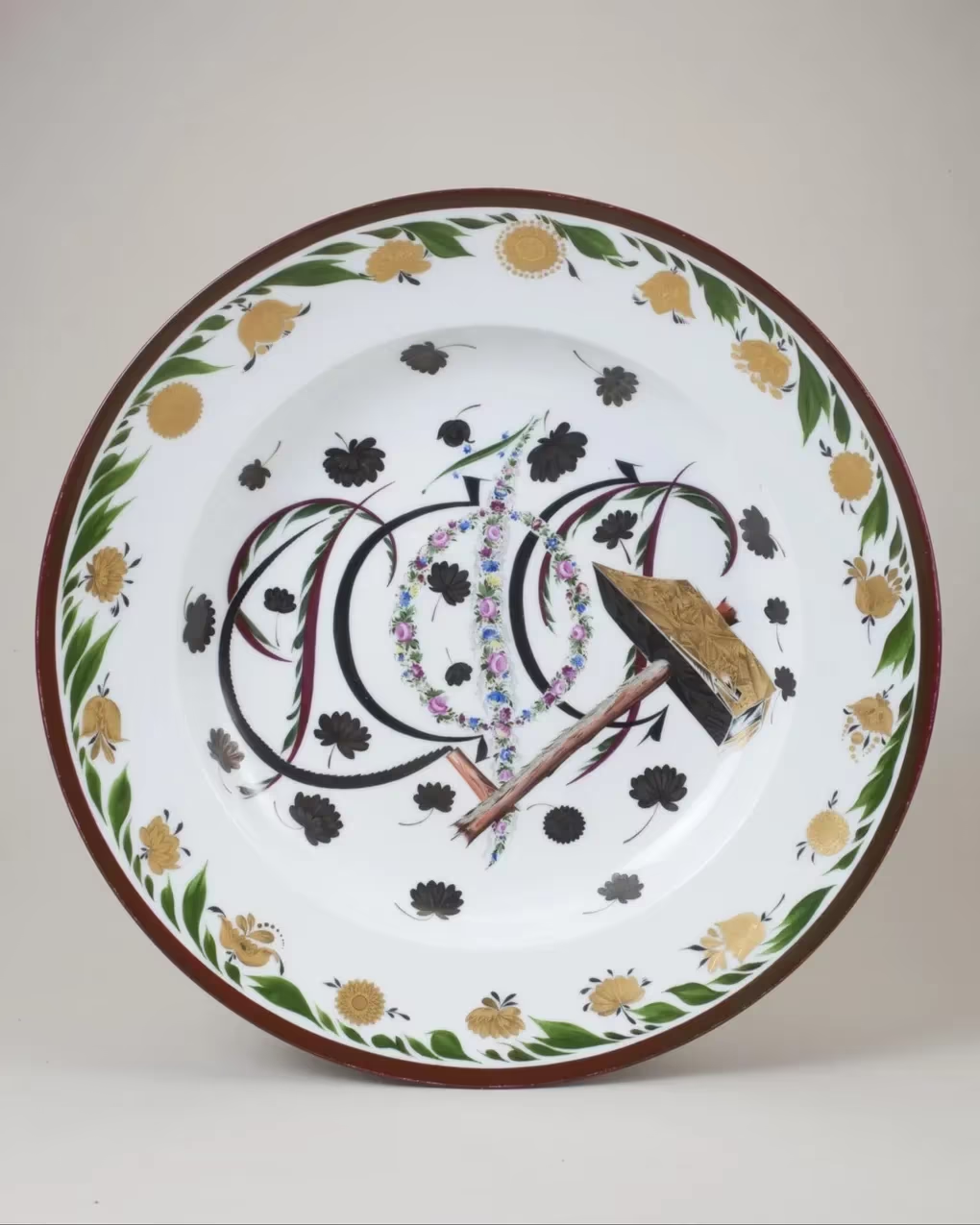
Sergei Chekhonin. Dish 'RSFSR'. Overglaze polychrome painting, gilding, silvering, engraving. 1922. The State Hermitage Museum, Saint Petersburg
The factory was headed by Sergei Chekhonin — a master of book graphics and ceramicist, a student of Ilya Repin. Under his leadership, a new style formed in porcelain decoration, distinguished by poster-like brightness and expressiveness. Among his early works were plates whose rims were decorated with propaganda slogans. Chekhonin created sketches, painted dishes with complex, elegant ornaments, and tea services with revolutionary appeals. The artist often used a monochrome palette, complementing it with gold, which gave the works a special power of impact. The technique of painting on porcelain seems simple only at first glance. Every completed brushstroke and artistic effect depends on many factors, and correcting random flaws takes a lot of time. The process requires absolute cleanliness, precision, a rhythmic sequence of actions, as well as careful maintenance of tools. Sergei Chekhonin
Exquisite Items in Private Collections
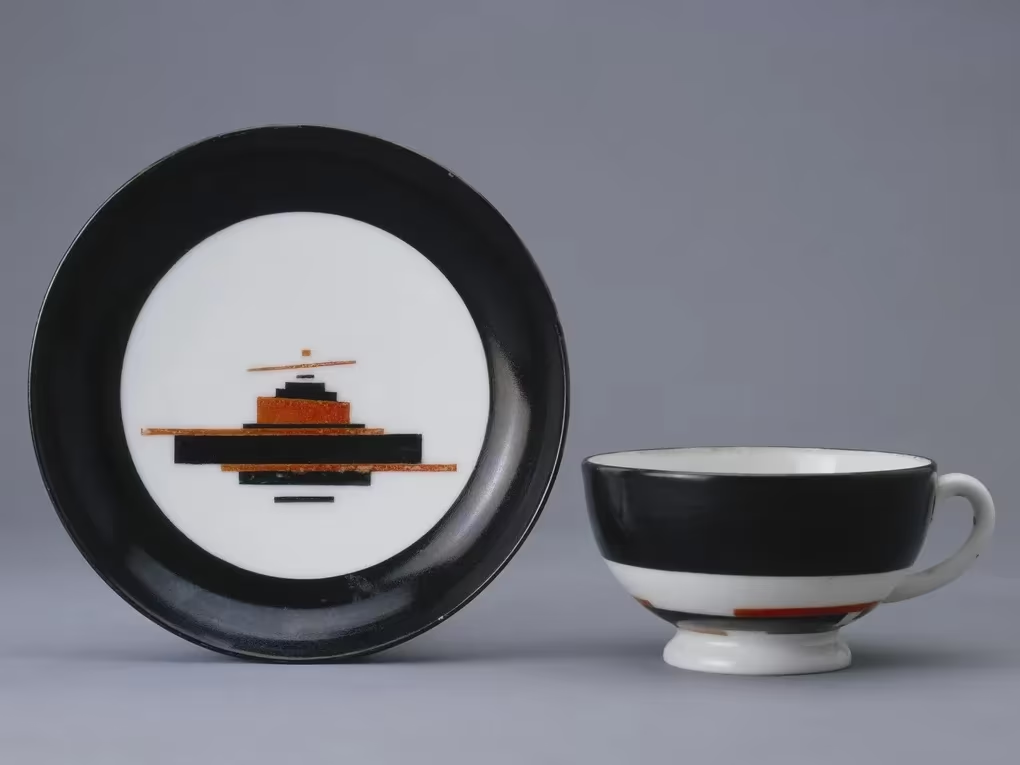
Sergei Chekhonin (shape), Ilya Chashnik (painting). Cup and saucer with black border on the rim. Overglaze polychrome painting. 1923–1924. The State Hermitage Museum, Saint Petersburg

Alexander Samokhvalov (model), Elena Kubarskaya (painting). Sculpture 'Girl with a Book'. Overglaze polychrome painting. Early 1930s. The State Hermitage Museum, Saint Petersburg

Mikhail Adamovich. Plate 'He Who Does Not Work, Neither Shall He Eat'. Overglaze painting. 1923. The State Historical Museum, Moscow

Kuzma Petrov-Vodkin (composition), Ivan Nazarov (painting). Dish 'Wedding'. Overglaze polychrome painting. 1923. The State Hermitage Museum, Saint Petersburg
On the initiative of Sergei Chekhonin, painters and graphic artists who previously had no experience working with porcelain, such as Boris Kustodiev, Alexander Samokhvalov, and Kuzma Petrov-Vodkin, were attracted to the factory. In their sketches and paintings, the masters actively used industrial motifs and the stylistic elements of poster art.
The innovative experiments in painting at the State Porcelain Factory were conducted under extremely difficult economic conditions. Nevertheless, a number of artists, through personal perseverance and years of effort, achieved outstanding results. Their works are not only comparable to the best examples of porcelain from past eras but even surpass them in certain artistic techniques.
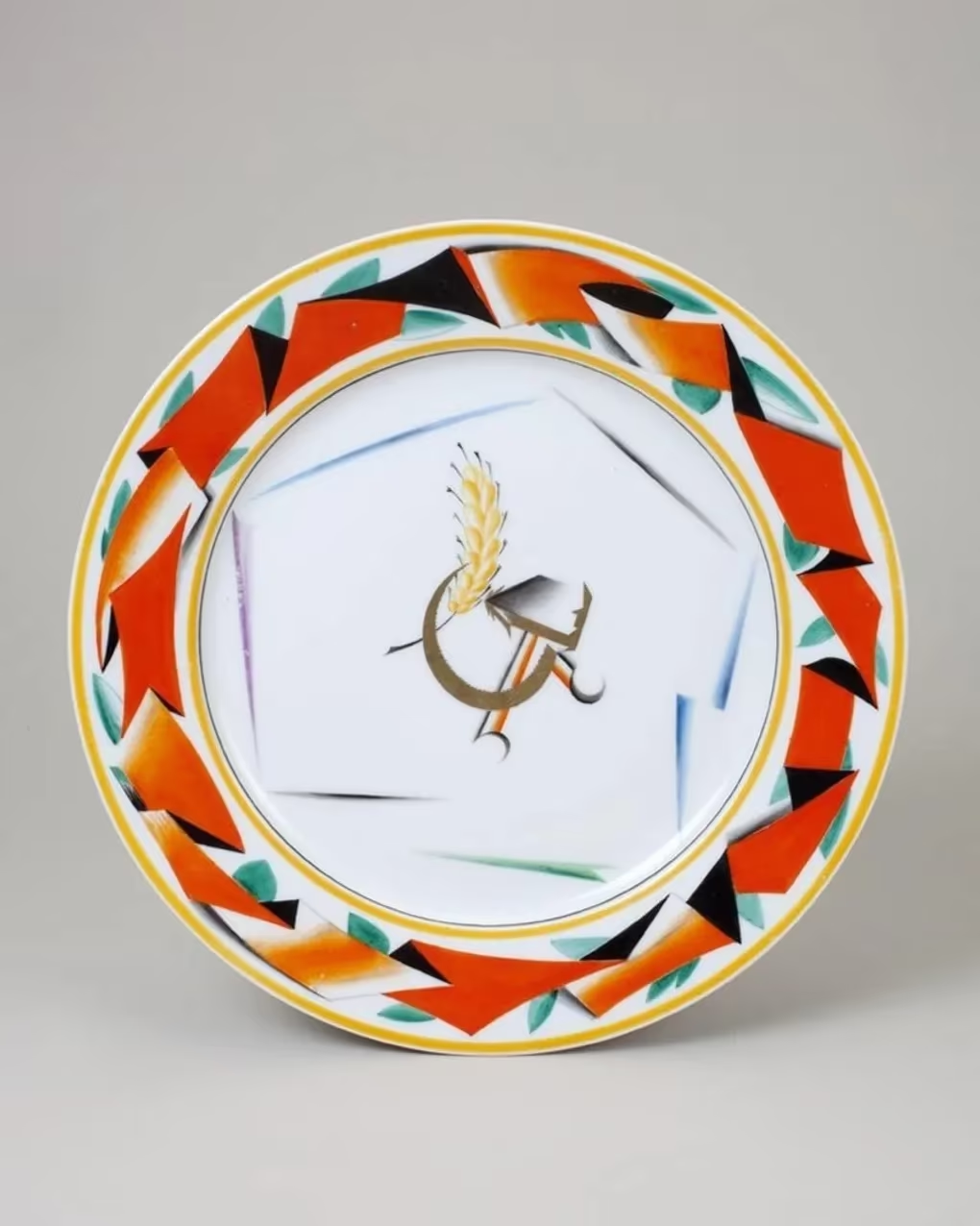
Sergei Chekhonin. Plate. Overglaze polychrome painting, gilding. 1919. The State Hermitage Museum, Saint Petersburg
Sergei Chekhonin
It was planned that propaganda porcelain would enter the homes of Soviet people and shape the new citizen. However, in reality, these items rarely reached the masses. High-quality porcelain was popular in Europe, and the main part of the factory's output went for export. Tea sets, platters, plates, and sculptures depicting everyday scenes were exhibited at shows. Initially, they were produced in limited batches. These artistically crafted items ended up in private collections, including abroad.
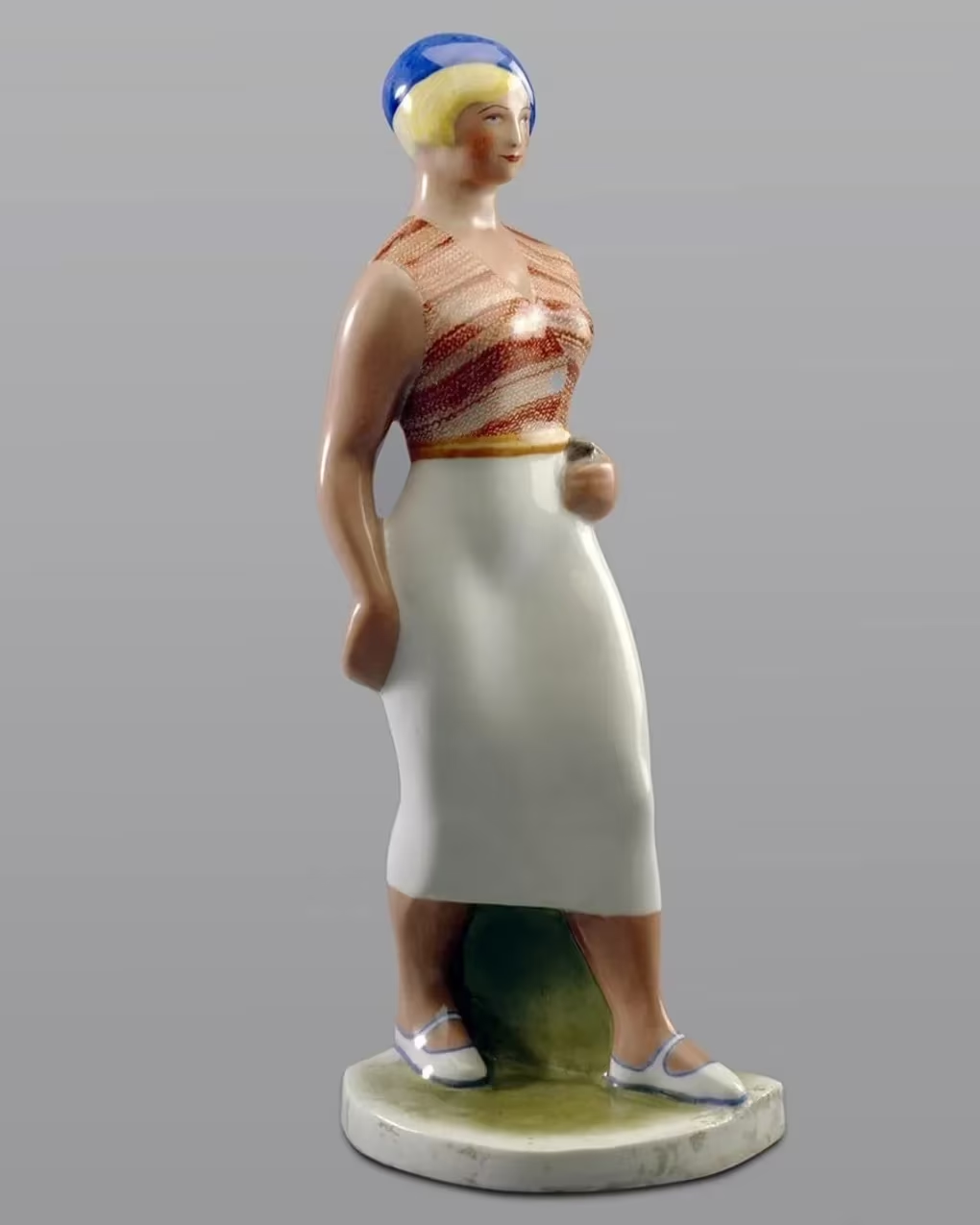
Alexander Samokhvalov (model), Elena Kubarskaya (painting). Sculpture 'Girl with a Book'. Overglaze polychrome painting. Early 1930s. The State Hermitage Museum, Saint Petersburg
Propaganda porcelain was created not only at the State Porcelain Factory (SPF) but also at other enterprises. For example, the Dulevo Factory produced decorative plates with the USSR coat of arms, which served as interior decoration rather than for everyday use. Slogans were applied to the tableware: "Workers of the world, unite!", "Long live the Soviets!", "To all who are brave and young at heart, a book, a sickle, and a hammer in hand," and others. Such items were often timed for anniversaries or significant events—for instance, after the death of Vladimir Lenin, items with his portrait were produced. Read also:

Mikhail Adamovich. Plate 'He who does not work, neither shall he eat'. Overglaze painting. 1923. The State Historical Museum, Moscow
Malevich's Avant-Garde on Cups and Saucers

Kazimir Malevich (form), Nikolai Suetin (painting). Half-cup. Overglaze polychrome painting. 1923. The State Hermitage Museum, Saint Petersburg

Kazimir Malevich. Teapot with lid. 1923. The State Hermitage Museum, Saint Petersburg

Kazimir Malevich (composition), Alexander Kudryavtsev (painting). Plate with Suprematist composition. Overglaze polychrome painting. 1923. The State Hermitage Museum, Saint Petersburg
In the 1920s, the State Porcelain Factory attracted avant-garde artists to work. The artist Kazimir Malevich, together with his students Ilya Chashnik and Nikolai Suetin, developed sketches for painting porcelain items. Although his collaboration with the factory was brief, it was Malevich who formulated the principles of Suprematist porcelain. His sketches were based on straight lines and angles, and the decoration was built on geometric forms—the square, cross, and circle. The color palette was concise: the artists used shades of red, black, and yellow on a white background. The designs were often applied to pre-revolutionary blanks, creating an expressive contrast between the classical form and the avant-garde Suprematist composition.
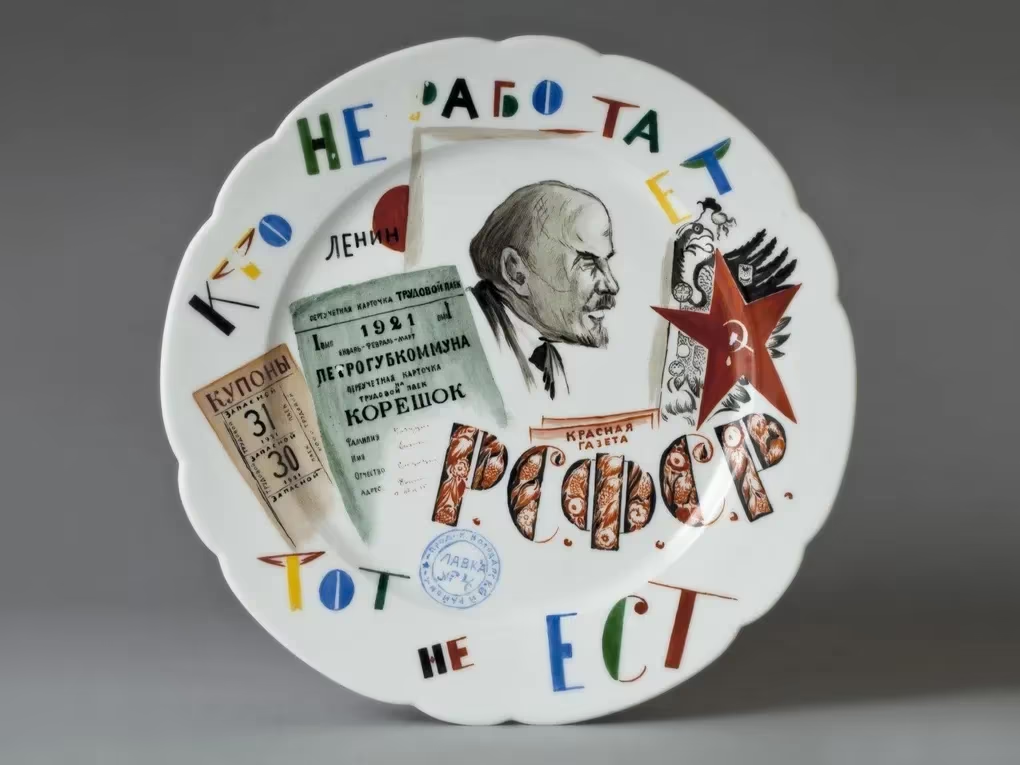
Mikhail Adamovich. Plate 'He who does not work, neither shall he eat'. Overglaze painting. 1923. The State Historical Museum, Moscow
Malevich's innovation was manifested not only in painting but also in the search for new forms for tableware. As early as the 1920s, he experimented with design, as evidenced by his Suprematist teapot, constructed from a combination of clear geometric lines. Another invention by the artist was the "half-cup": believing that only one side of a regular cup was used, he divided it vertically in half and replaced the traditional handle with a rectangular element. Such models, according to the author's concept, allowed for saving space.
Besides Malevich, other famous avant-garde artists, including Vladimir Tatlin and Vasily Kandinsky, also created sketches for porcelain. The latter, in particular, developed paintings for several tea services—items with his abstract compositions were of special interest to collectors.
The Theme of Labor and Production in Porcelain Art

Mikhail Mokh. Vase 'Peasant Sanatorium'. Overglaze polychrome painting. 1930. The State Hermitage Museum, Saint Petersburg

Mikhail Mokh. Cup and Saucer 'Aviation Day'. Overglaze polychrome painting, gilding, engraving. 1936. The State Hermitage Museum, Saint Petersburg

Unknown author. Bust 'Joseph Stalin'. Overglaze polychrome painting, silvering. 1930s. The State Hermitage Museum, Saint Petersburg
In the 1930s, the output of various porcelain factories was often decorated according to sketches by artists from the capital. The predominant themes on vases, dishes, and plates were related to production and technological progress: modern agricultural machinery, aviation, and new architectural structures were depicted. Portraits of political leaders and historical figures, such as Joseph Stalin and Mikhail Kalinin, were also applied to the items.
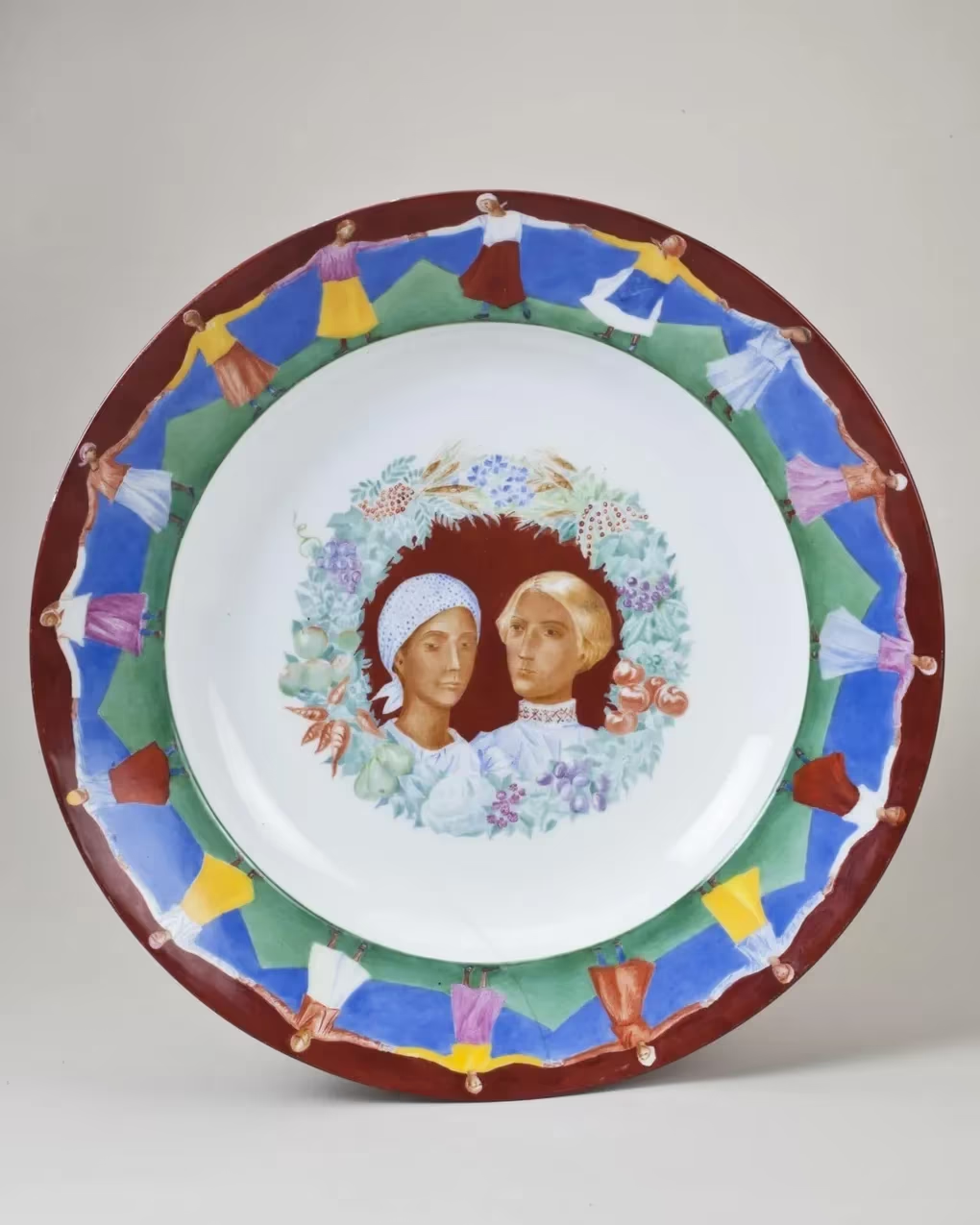
Kuzma Petrov-Vodkin (composition), Ivan Nazarov (painting). Dish 'Wedding'. Overglaze polychrome painting. 1923. The State Hermitage Museum, Saint Petersburg
The motifs on everyday porcelain often coincided with the themes of propaganda posters: the fight against illiteracy and industrialization, the development of northern territories and large-scale projects, the introduction of machinery in agriculture, and the promotion of sanitation. Porcelain became a mass-consumption product, with patterns applied using printing methods, airbrushes, and stencils, occasionally with subsequent hand finishing. The designs were complemented by thematic inscriptions and slogans, such as "Brush your teeth." Furthermore, artisans captured key events of the 1930s in porcelain: the launch of the Moscow Metro and the construction of the Moscow–Volga Canal. During the Great Patriotic War, porcelain enterprises were repurposed to produce goods for the army, manufacturing parts for military equipment. The production of artistic and everyday porcelain virtually ceased. Its revival began in the post-war period, when motifs glorifying the victory in the war became dominant. Solemnity was combined with heroic pathos, and the "Victory" style came into fashion. Military and naval themes remained popular for decades. The color red on a white background continued to symbolize revolutionary ideals.

Kazimir Malevich (form), Nikolai Suetin (painting). Half-cup. Overglaze polychrome painting. 1923. State Hermitage Museum, Saint Petersburg
Porcelain Figurines in Soviet Everyday Life

Natalya Danko. Sculpture "Embroidering a Banner". Overglaze polychrome painting, gilding, engraving. Second half of the 1920s. State Historical Museum, Moscow

Anna Leporskaya (form), Tamara Bezpalova-Mikhaleva (painting). Small teapot with lid. "The Little Humpbacked Horse" Service. Overglaze polychrome painting, underglaze monochrome painting, gilding, engraving. 1951. State Hermitage Museum, Saint Petersburg

Natalia Danko (model), Elena Danko (painting). Sculpture "Zarema" from the cycle "The Bakhchisaray Fountain". Overglaze polychrome painting, gilding. 1923. The State Hermitage Museum, Saint Petersburg
As early as the 1920s, porcelain enterprises began producing small souvenir figurines, such as "A Female Worker Embroidering a Banner," "The Fortune Teller," "A Sailor with a Flag," and "A Partisan on the March." By the 1930s, the range was supplemented with figurines on themes of sports, childhood, and military glory—for example, a footballer with a ball, a female police officer, schoolchildren at their studies. Porcelain vases were also produced in small batches and used as official and diplomatic gifts. During the Stalinist Empire style period, brightly painted items were often decorated with gilding.
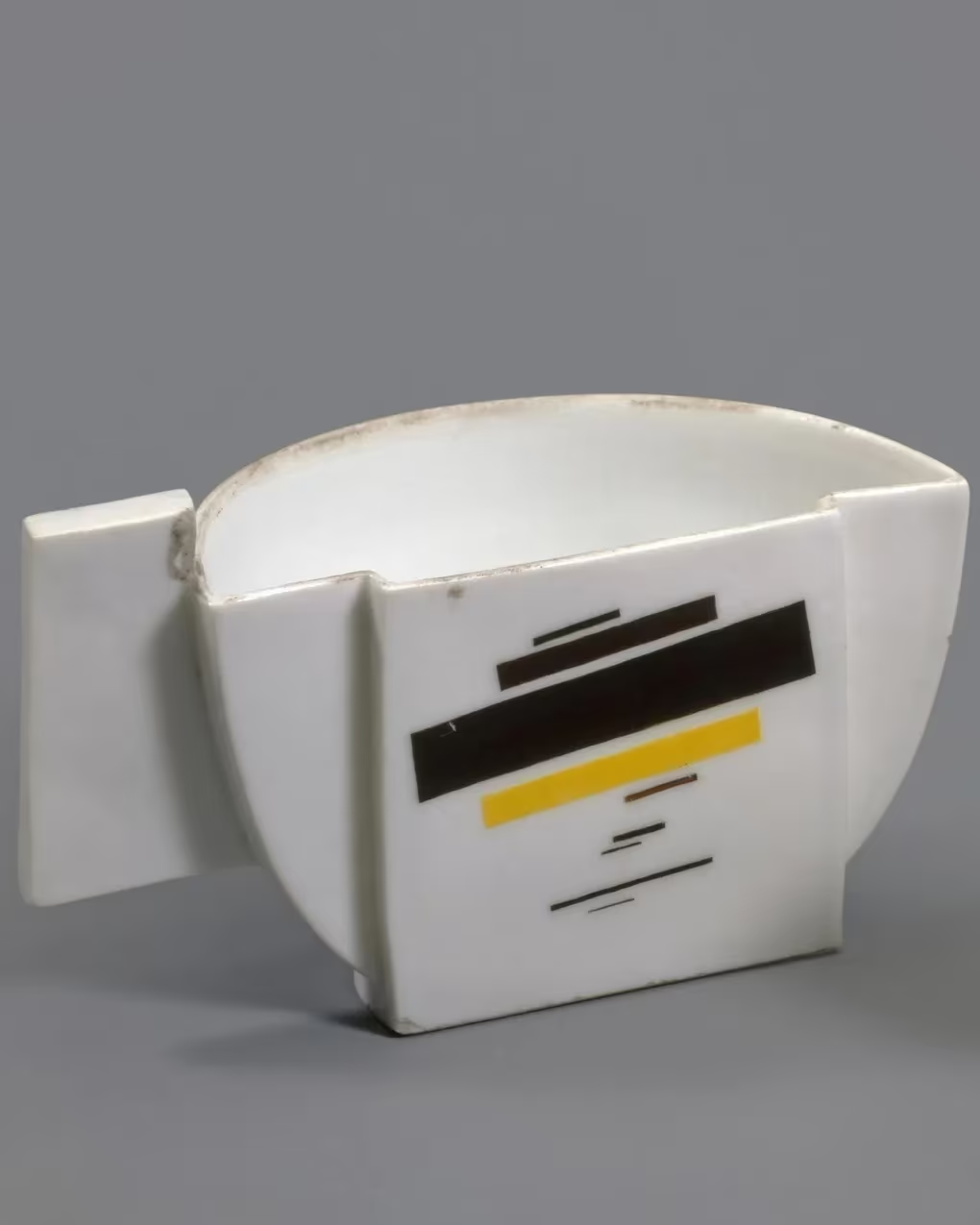
Kazimir Malevich (form), Nikolai Suetin (painting). Half-cup. Overglaze polychrome painting. 1923. The State Hermitage Museum, Saint Petersburg
In the 1950s, when the interior of standard Soviet housing was taking shape, rooms in apartments and communal flats were often decorated with table lamps, embroidered napkins, clocks, and porcelain figurines. During this period, they were produced in large batches at affordable prices, and the subjects were characterized by simplicity and recognizability: Soviet leaders and historical figures, everyday scenes with children and adults, young pioneers, characters from epics and literary heroes. Many of these figurines were produced in series for many years.
Small-scale sculpture saw demand for compositions based on Russian and foreign fairy tales: "Ivan Tsarevich and the Firebird," "The Little Humpbacked Horse," "Yelisey." Artists created multi-figure scenes consisting of separate miniatures, such as "The Prince Putting the Slipper on Cinderella" or "The Stepmother and Sisters." Porcelain factories also produced figurines of Russian writers, with the image of the young Alexander Pushkin being particularly popular. Characters from his works were also frequently depicted: the nightlight "The Fish" based on "The Tale of the Fisherman and the Fish," the figurine "The Shamakhan Queen," the box "The Golden Cockerel," and many other items.

Kazimir Malevich. Teapot with lid. 1923. The State Hermitage Museum, Saint Petersburg
In the 1960s, space themes became widely popular. Yuri Gagarin became one of the main heroes of his time. Porcelain figurines often depicted the famous space explorer, as well as rockets, satellites, interplanetary ships, the Moon, and other planets.
Artists from the Leningrad Lomonosov Porcelain Factory (the new name of the State Porcelain Factory, adopted from the mid-1920s) decorated various items—coffeepots, inkwells, ashtrays—with scenes from opera and ballet. Motifs related to classical art were very popular. The Lomonosov Factory continued to set trends in Soviet porcelain: it was here that all technological and artistic innovations first appeared. Production of figurines from the 1920s was resumed in large batches, including those with figures of artists who participated in Sergei Diaghilev's famous ballet productions. In the 1960s, a series of miniatures inspired by the ballet "The Fountain of Bakhchisaray," based on Alexander Pushkin's poem, was created.
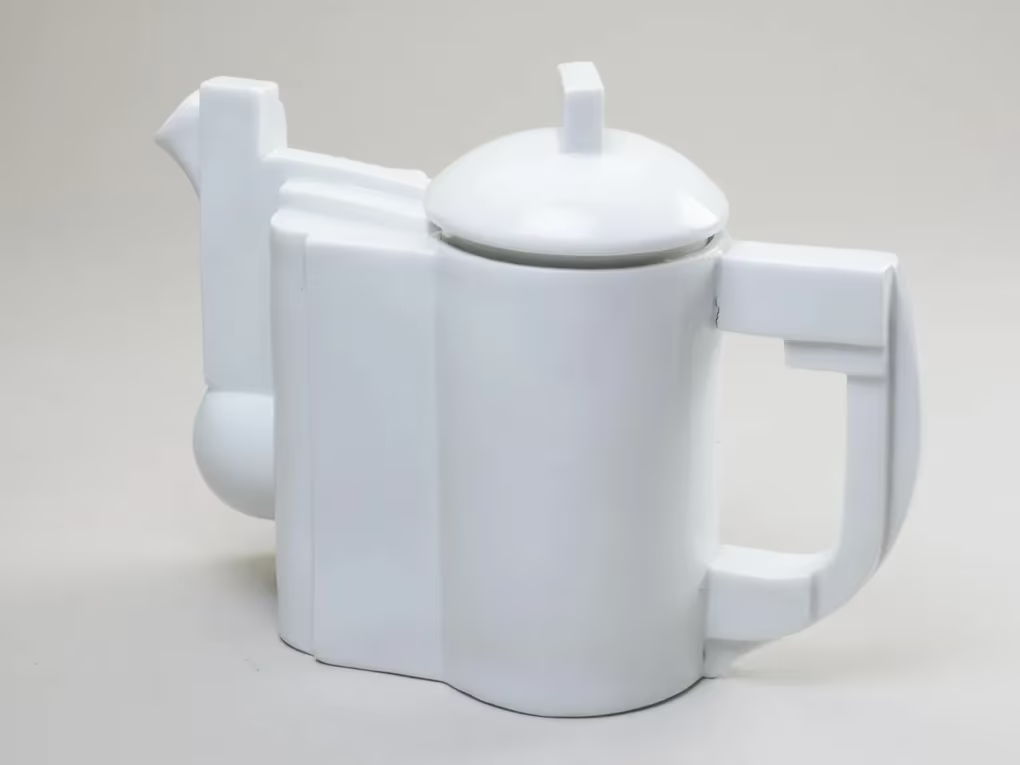
Kazimir Malevich. Teapot with lid. 1923. State Hermitage Museum, Saint Petersburg
In the 1970s, interest in circus themes in sculpture grew. Authors actively experimented with color and form, creating expressive and colorful images. Factories produced sculptural groups depicting circus performances: clowns, trainers, and animals—bears, elephants, monkeys—performing tricks. Figurines of famous circus performers, such as the celebrated clown Oleg Popov, were also popular.
Author: Margarita Kovynova

Kazimir Malevich (composition), Alexander Kudryavtsev (painting). Plate with Suprematist composition. Overglaze polychrome painting. 1923. State Hermitage Museum, Saint Petersburg
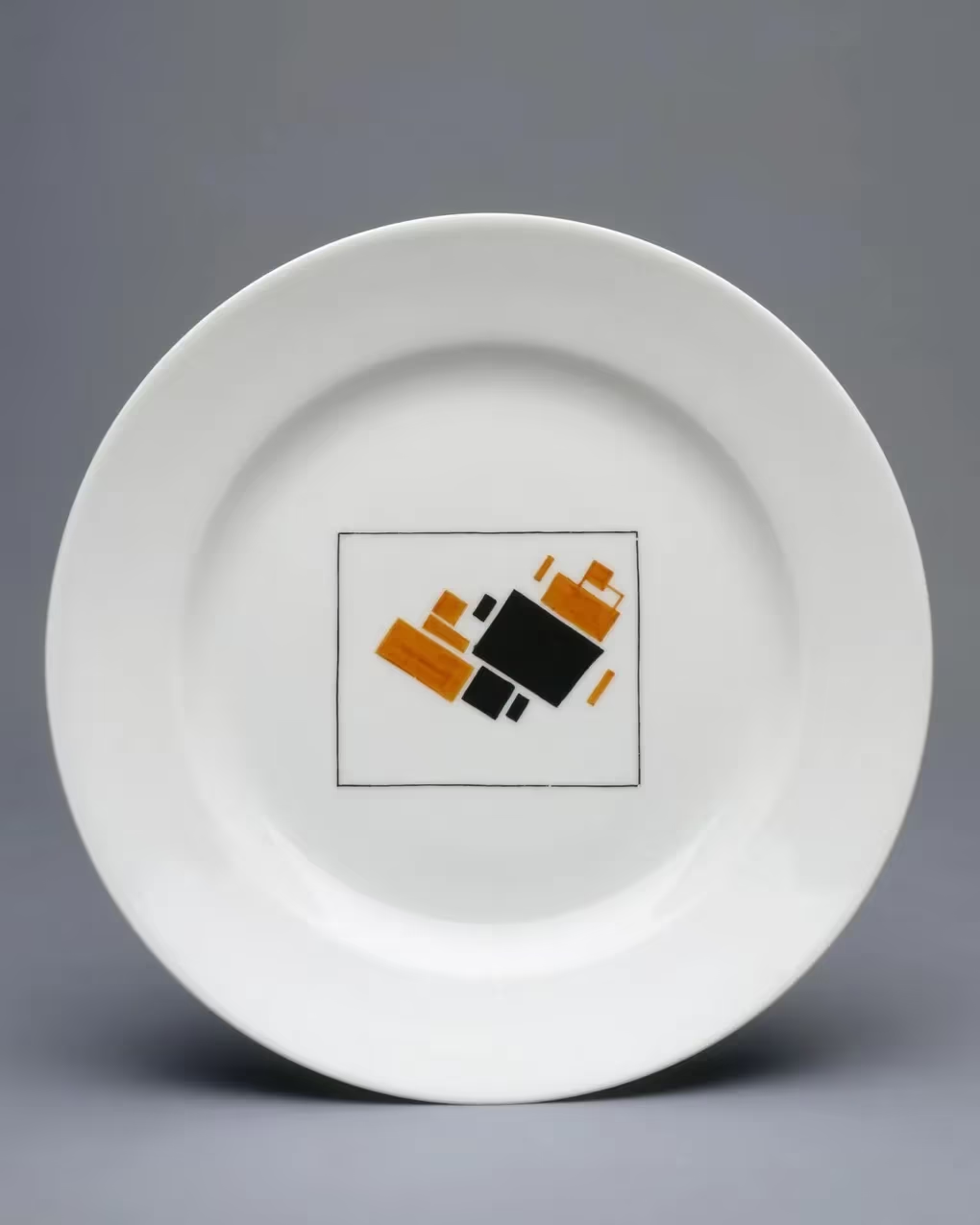
Kazimir Malevich (composition), Alexander Kudryavtsev (painting). Plate with Suprematist composition. Overglaze polychrome painting. 1923. State Hermitage Museum, Saint Petersburg
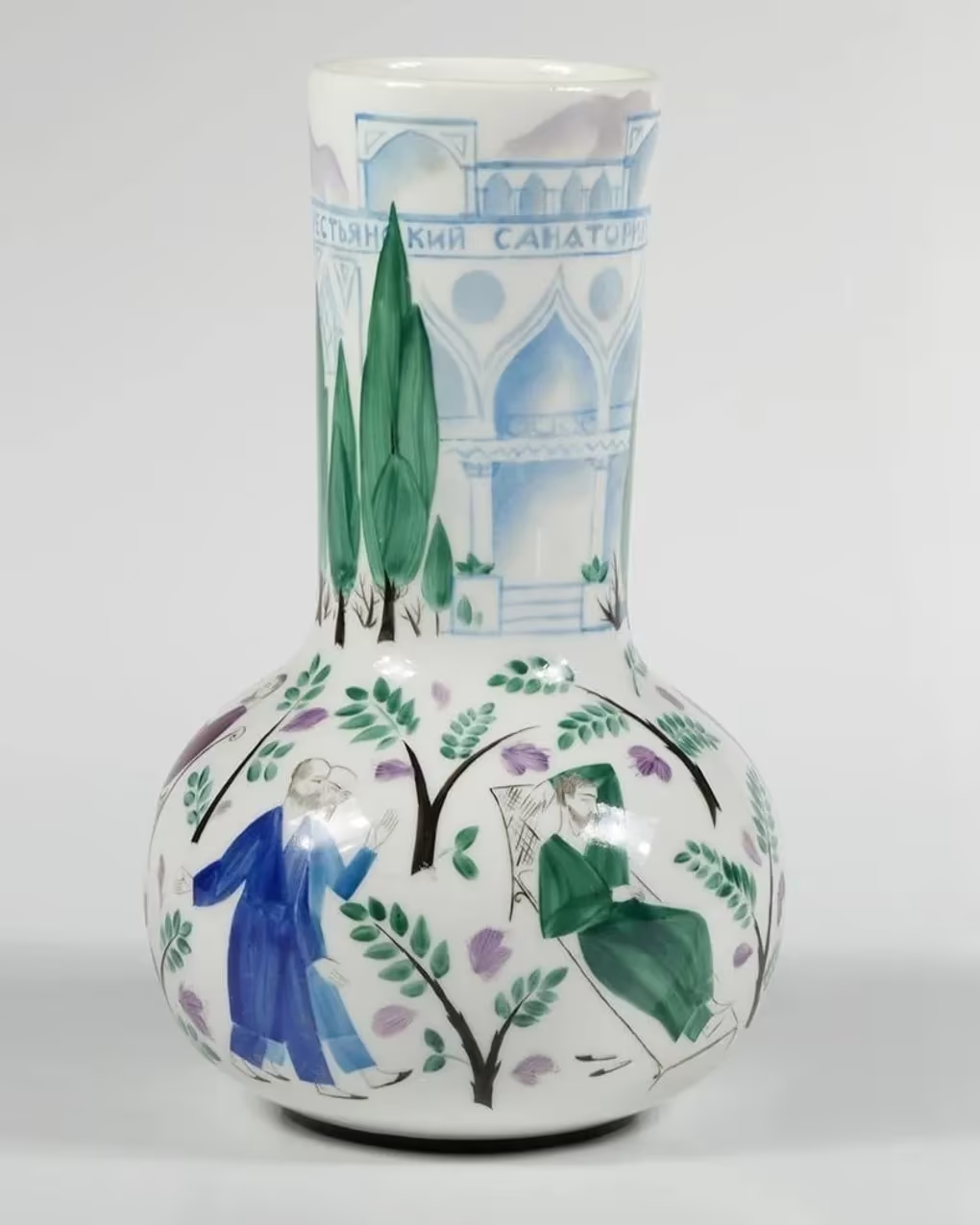
Mikhail Mokh. Vase 'Peasant Sanatorium'. Overglaze polychrome painting. 1930. State Hermitage Museum, St. Petersburg
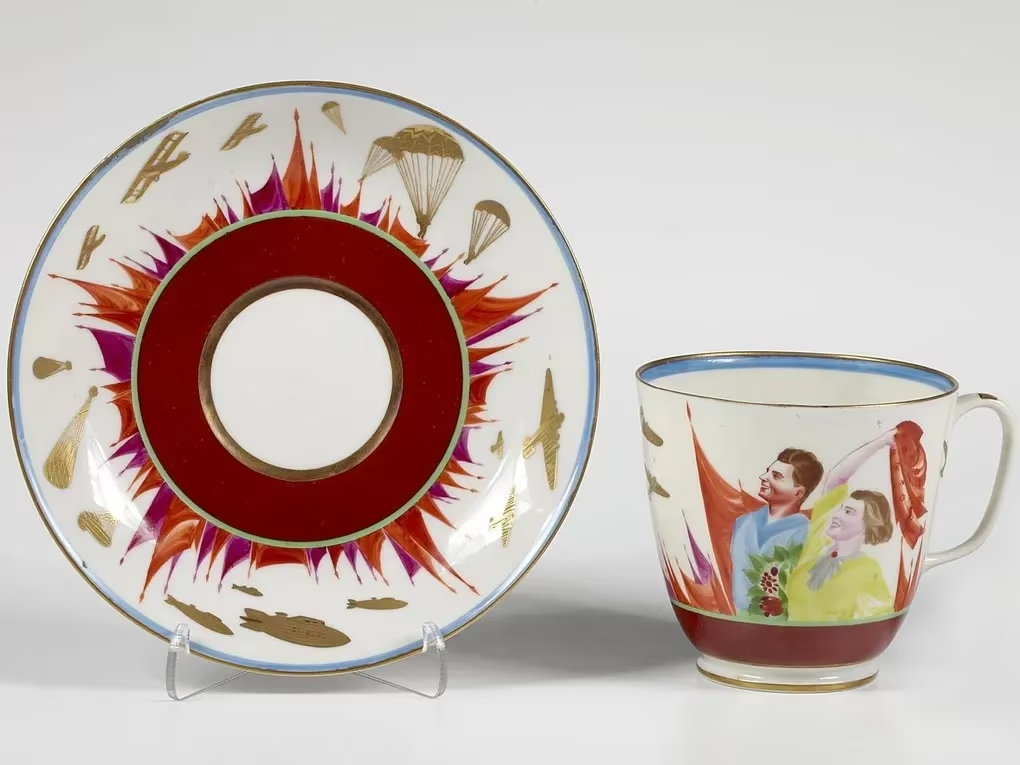
Mikhail Mokh. Tea Set 'Aviation Day'. Polychrome overglaze painting, gilding, engraving. 1936. State Hermitage Museum, St. Petersburg.
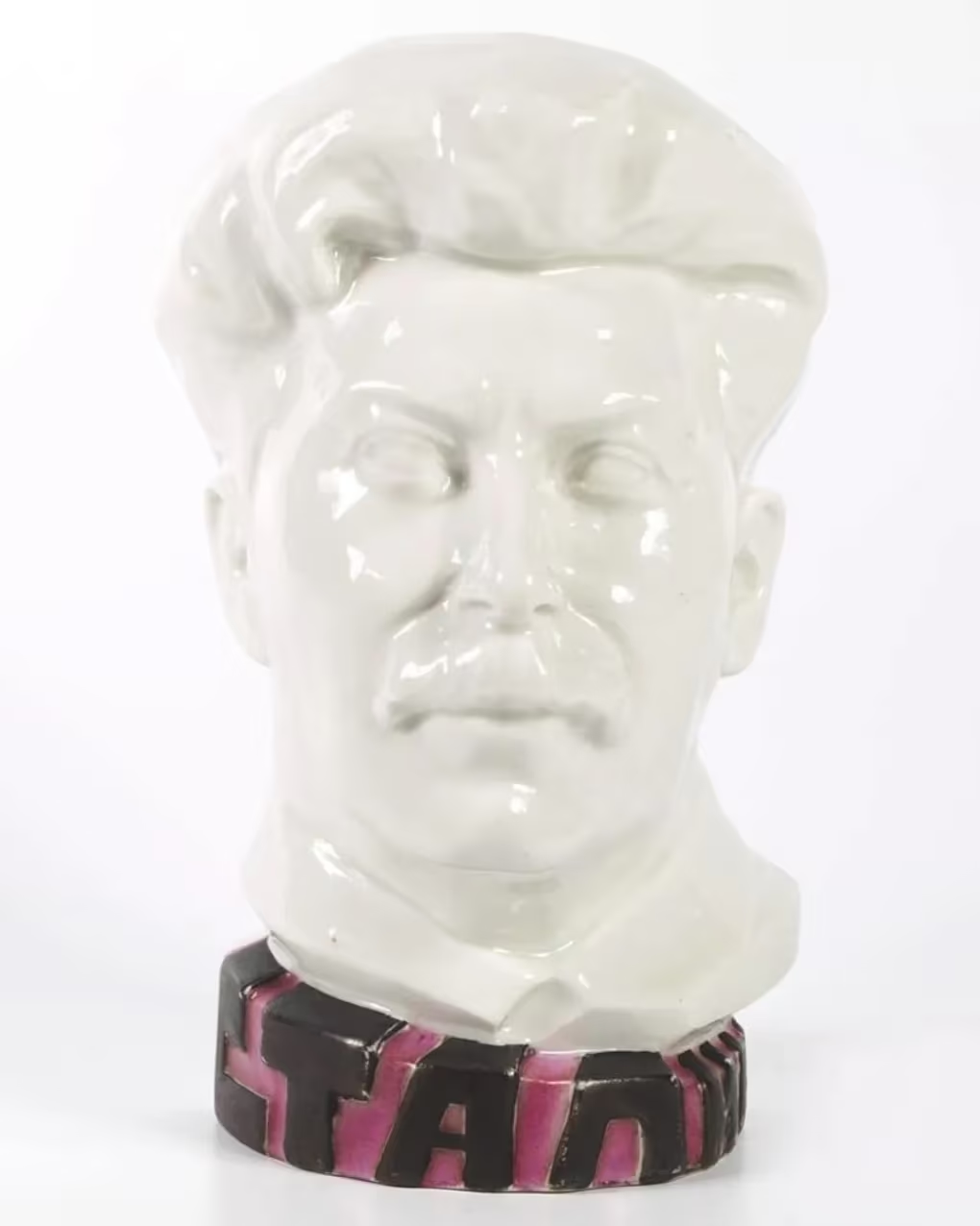
Author unknown. Bust 'Joseph Stalin'. Multicolor overglaze painting, silvering. 1930s. State Hermitage Museum, St. Petersburg.
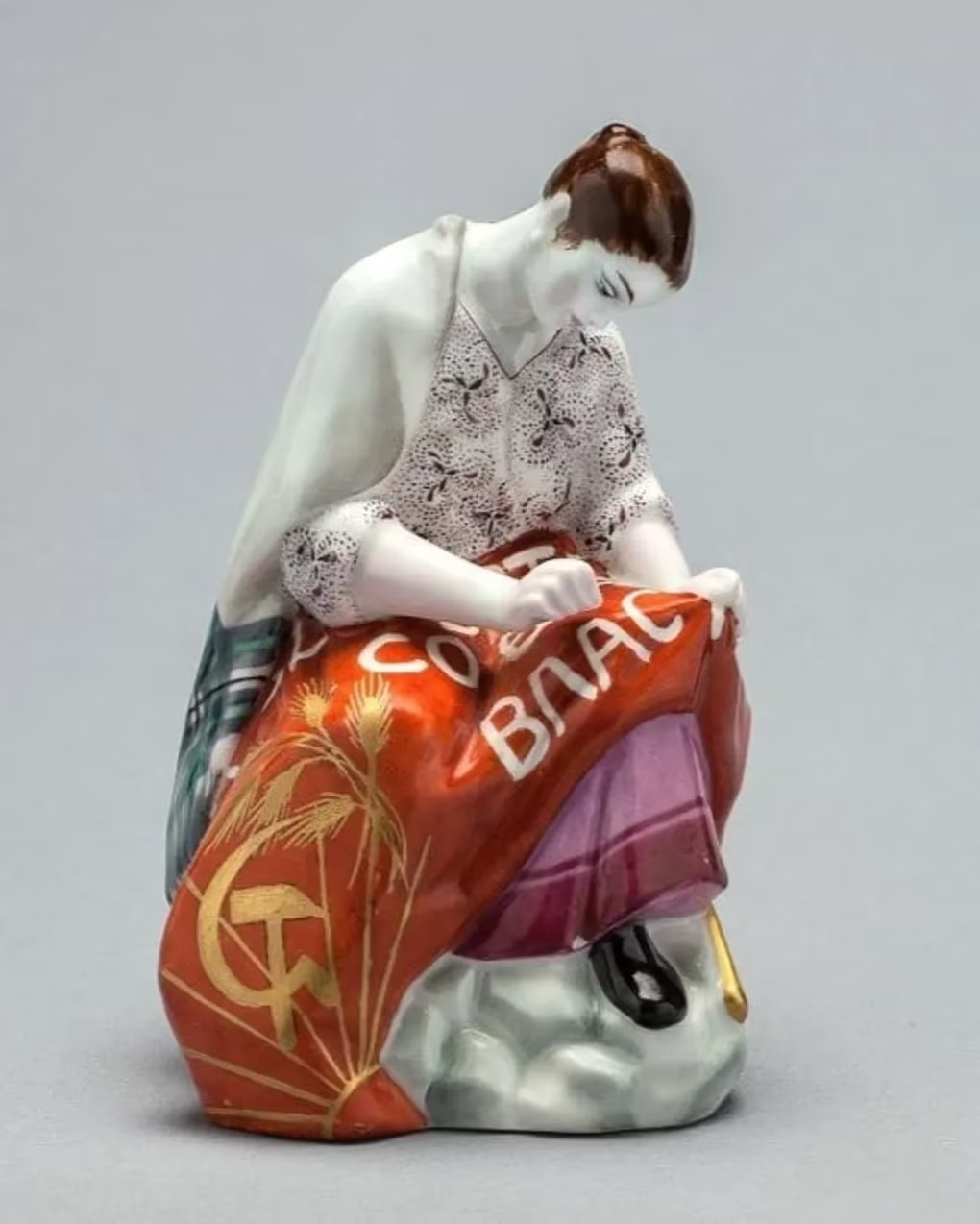
Natalya Danko. Porcelain figure 'Embroidering a Banner'. Polychrome overglaze painting, gilding, engraving. Created in the late 1920s. State Historical Museum, Moscow.
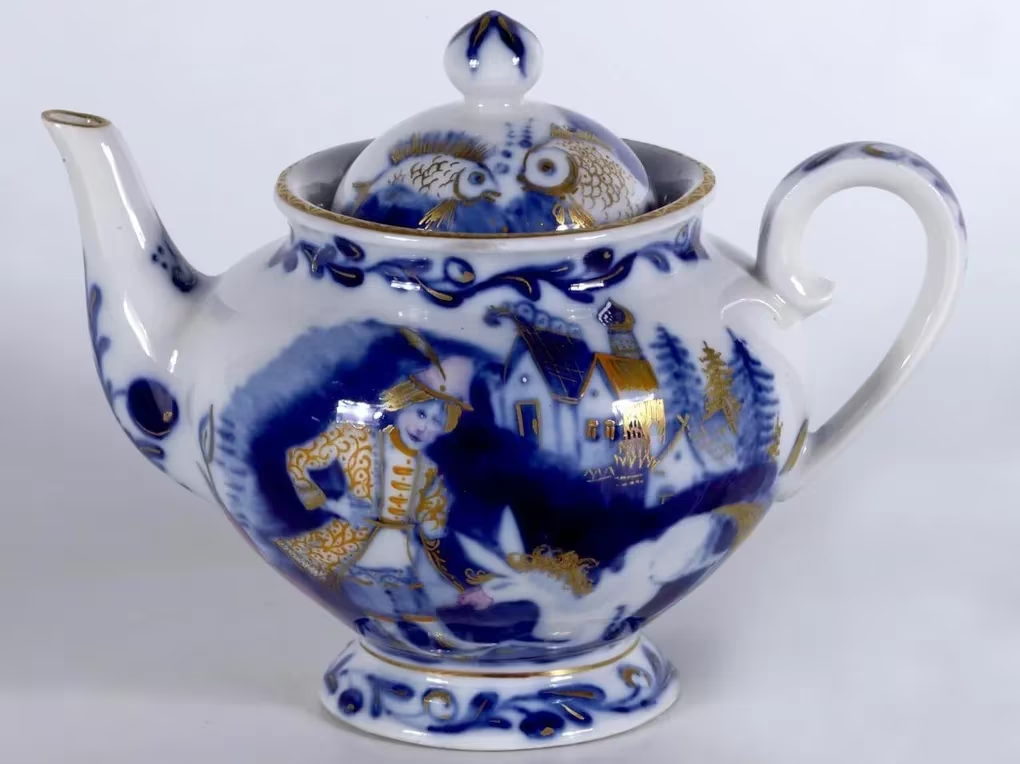
Anna Leporskaya (form), Tamara Bezpalova-Mikhaleva (painting). Small teapot with lid from the service 'The Little Humpbacked Horse'. Features polychrome overglaze and monochrome underglaze painting, gilding, engraving. 1951. State Hermitage Museum, St. Petersburg.
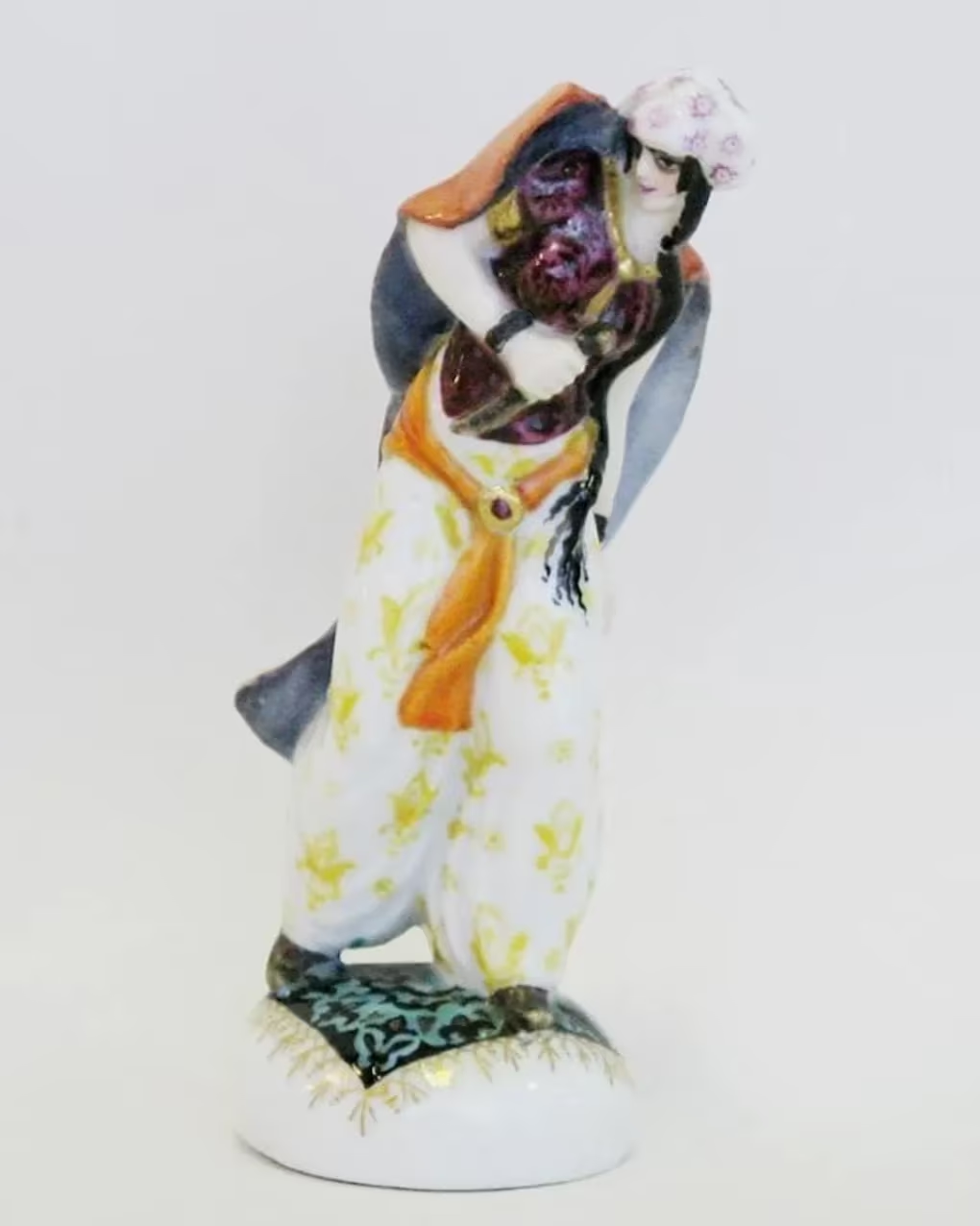
Natalia Danko (model), Elena Danko (painting). Sculpture 'Zarema' from the series 'The Fountain of Bakhchisaray'. Multicolor overglaze painting, gilding. 1923. State Hermitage Museum, St. Petersburg.