
Soviet Agitational Porcelain: History, Prices, and Collectible Value
Learn about agitational porcelain from the early Soviet era: its historical value, auction prices, and role as a symbol of the country. A collectible rarity.

Agitational Porcelain of the Early Soviet Era
Porcelain with agitational themes, created in the first years after the revolution, became one of the recognizable symbols of our country, alongside the works of Fabergé, icon painting, or avant-garde canvases. Today, these items are highly valued and appear at leading world auctions. At the same time, in Soviet times, porcelain tableware and figurines were a common part of the interior in many homes. However, now the best specimens, especially those from the early period, have become a museum rarity. Collectors' interest in such porcelain is explained by its historical value, limited availability, and nostalgia for a bygone era.
The masters of that time gifted the world with absolutely new ornaments and raised the art of small-scale sculpture and porcelain painting to an unprecedented height. The energy of revolutionary transformations and the shift in ideological landmarks breathed new life into this seemingly traditional craft, giving it a fresh resonance. In the first third of the 20th century, the development of porcelain directly depended on complex artistic, industrial, and social processes, which intensified especially after 1917.
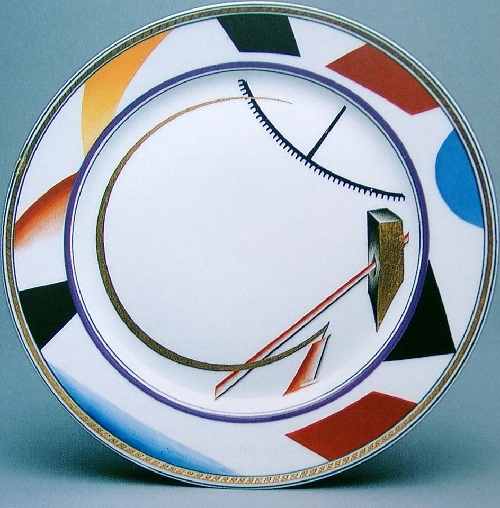
Plate Soviet agitational porcelain
The most striking phenomenon of that time was precisely agitational porcelain. With its bold color palette, dynamic compositions, and symbols of the new era, it performed the same task as posters with slogans—serving as a means of propaganda.
It is not surprising that porcelain items became one of the few export goods of the young Soviet state and found buyers even in countries that did not share Bolshevik ideas. However, genuine works from the 1920s–1930s are extremely rare today and have a high cost, making the circle of their collectors quite narrow. As a rule, the period of flourishing agitational porcelain ended by 1927. Later, original works on revolutionary themes were almost never created, but copies of previous models were still produced, mainly for export. The events of industrialization (from 1927), collectivization (from 1929), and the cultural revolution (1929-1930) were reflected in sculpture, household items, and products made to special orders.
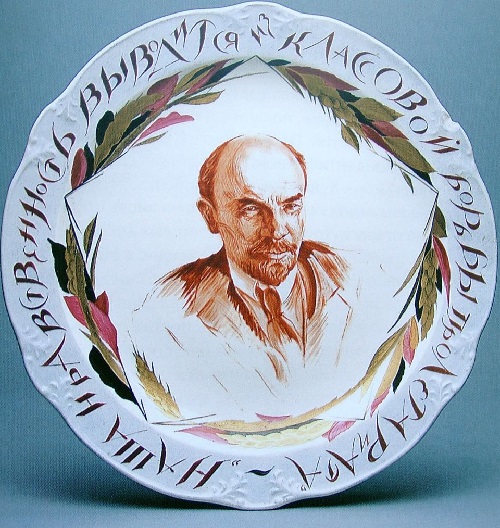
Dish with an image of Lenin. 1924. Soviet agitational porcelain
In the 1920s and 1930s, Soviet porcelain underwent a profound transformation. The most noticeable changes affected the artistic design of the items and, in particular, the technologies for applying decoration. A key innovation was the active introduction of mechanized methods for transferring images, such as printing, airbrushing, and stenciling. Their mass application became one of the main distinctive features of 1930s porcelain compared to earlier periods. At small provincial factories in the 1920s, largely due to economic difficulties, there was a gradual shift away from old, pre-revolutionary forms and ornaments in favor of new models. At the Pervomaiskaya and other porcelain enterprises, the traditions of pottery continued to develop. However, the innovative and revolutionary ideas embodied in the porcelain of Petrograd and Moscow inevitably influenced the products of factories across the country.
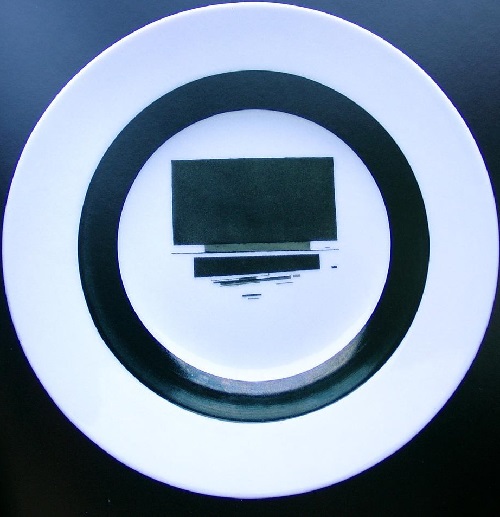
Soviet Agitational Porcelain
For the creation of agitational porcelain, factories were recommended to copy the works of capital city artists to produce unique items with the symbolism of the new state. Thus, in the 1930s, achievements of the era began to be depicted on tableware: the latest technology, architectural structures, metro stations, and hydroelectric power stations. Later examples of agitational porcelain also included portraits of political leaders, such as Stalin and Kalinin, as well as scenes dedicated to important contemporary events. In everyday porcelain, schematic drawings gradually appeared, symbolizing industrialization, the mechanization of agriculture, the fight against illiteracy, the development of education through schools and radio, the spread of public catering, and hygiene standards. Decoration techniques also changed: airbrushing and stenciling were used more frequently, gilding took a back seat, and images were supplemented with appropriate slogans. For example, "for the tractor loan," "Learn by Radio," "Brush your teeth."
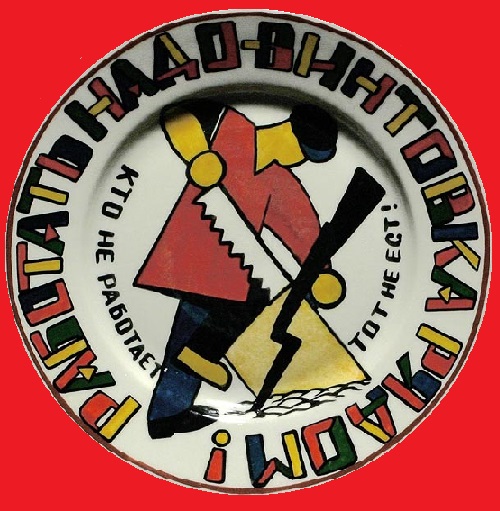
He who does not work, neither shall he eat
Starting in 1931, artistic laboratories began to be established at porcelain factories in the USSR. Thanks to this, key events of those years were reflected in porcelain. Among them were the launch of the first metro line (1935), record-breaking non-stop flights, the construction of the Moscow-Volga Canal (1932–1937), and the opening of the All-Union Agricultural Exhibition (1939). Special attention was also paid to themes of national cultures, education, and the country's defense capability.
Soviet Agitational Porcelain
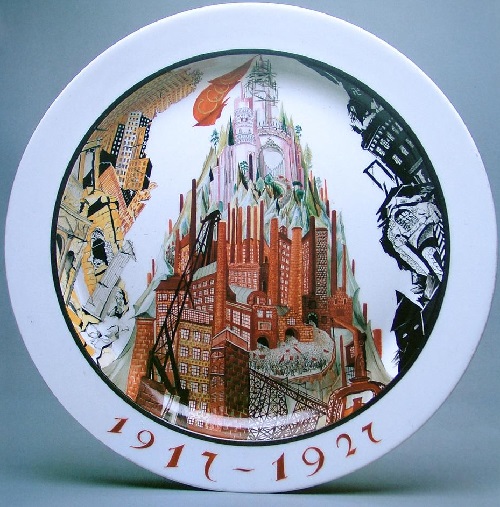
'Way to Socialism', plate. 1927. Painted by artist Z.V. Kobyletskaya
Porcelain items from the 1930s were characterized by the stylistic features of the Soviet version of Art Deco, especially during the period from 1932 to 1941. Typical of the decorative language of this movement was the use of contrasting combinations, such as "fabric-ceramic." Furthermore, products from the Pervomaisky, Dulevsky, and Dmitrovsky factories often featured similar ornamental elements. The "Sitetz" pattern became widely popular, consisting of a composition of small flowers or bouquets scattered across the surface. Floral images were often stylized, and bright color accents created a rhythmic and harmonious design, perfectly integrated into the form of the object.
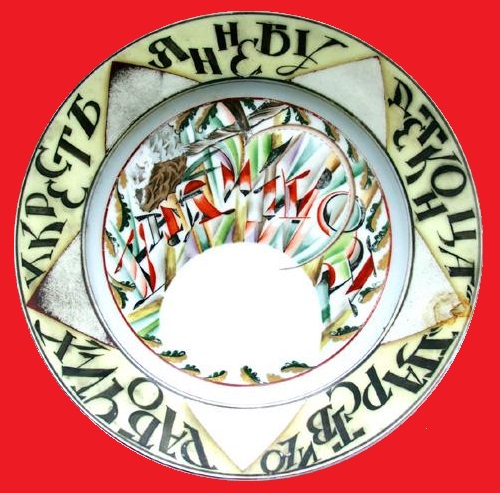
Soviet propaganda porcelain
A porcelain dish decorated with a stylized inscription "There will be no end to the peasant-worker state." Work by artist S.V. Chekhonin, 1922.
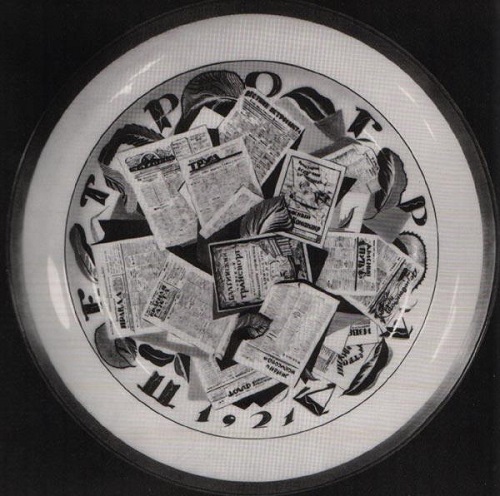
Dish depicting Petrograd newspapers. 1921. Artist Z.V. Kobyletskaya

Soviet propaganda porcelain
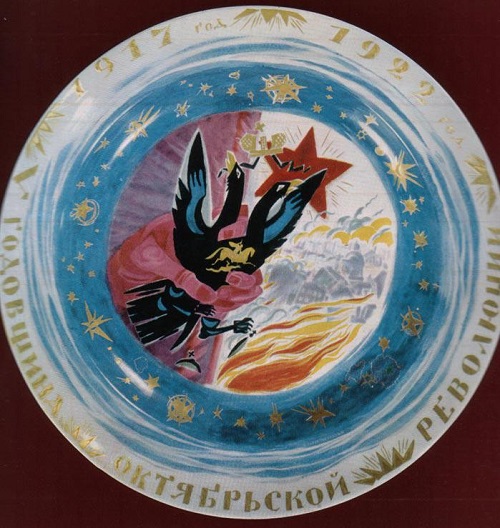
The work "Glory to October," created for the 50th anniversary of the October Revolution. Porcelain, Leningrad Porcelain Factory, 1967.
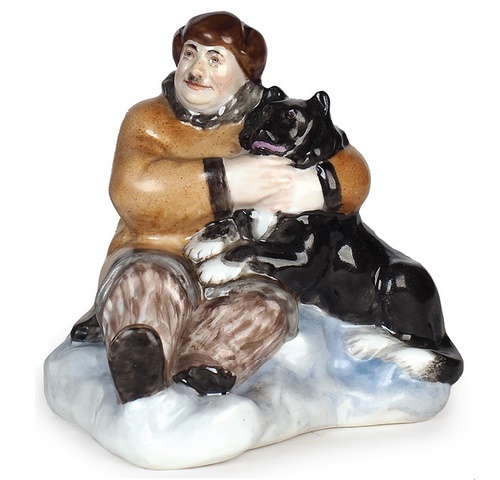
Sculpture 'Papanin with a husky on the ice floe', Leningrad Porcelain Factory, sculptor - Natalia Danko (1892-1942). 1930. Porcelain, overglaze painting
Sculptural composition "Papanin with a husky on an ice floe." The work was created at the Leningrad Porcelain Factory by sculptor Natalia Danko (1892-1942) in 1930. Material – porcelain, technique – overglaze painting.
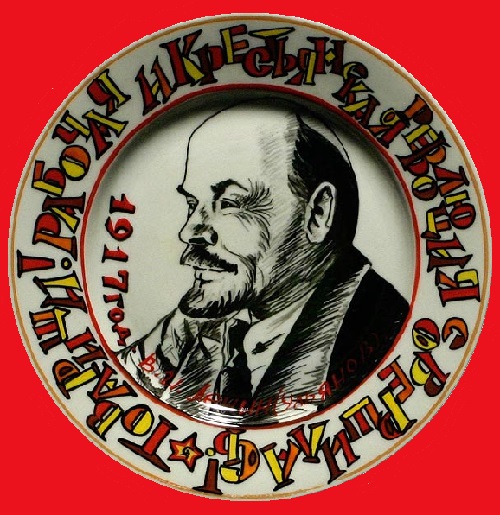
The worker and peasant revolution has happened
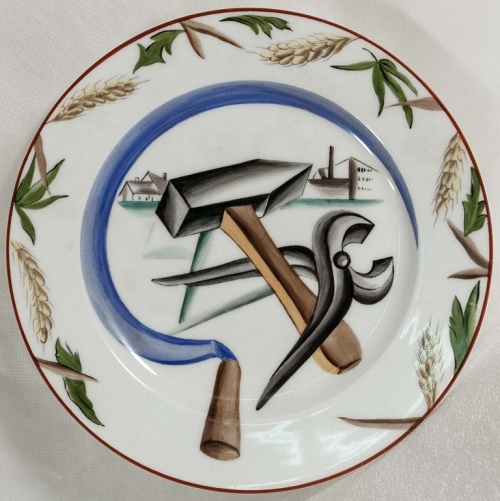
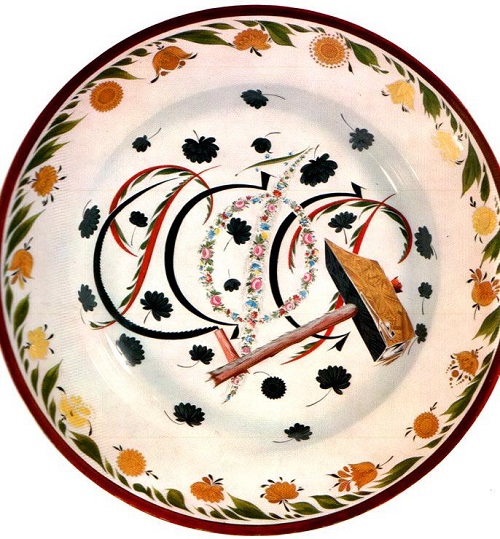
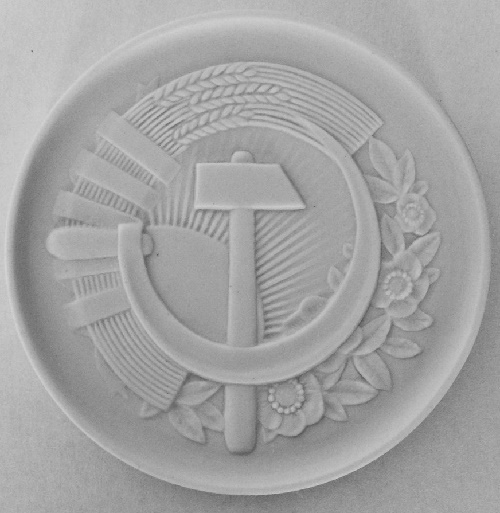
Plate with a sickle, hammer, and tongs. Petrograd Porcelain Factory, 1920. Author Elizaveta Rozendorf
Image of a plate decorated with symbols of a sickle, hammer, and tongs. The piece was created at the Petrograd Porcelain Factory in 1920 by artist Elizaveta Rozendorf.
Information sources used:
magazine "Yuniy Khudozhnik" (Young Artist), 1980 issue
resource humus.livejournal.com
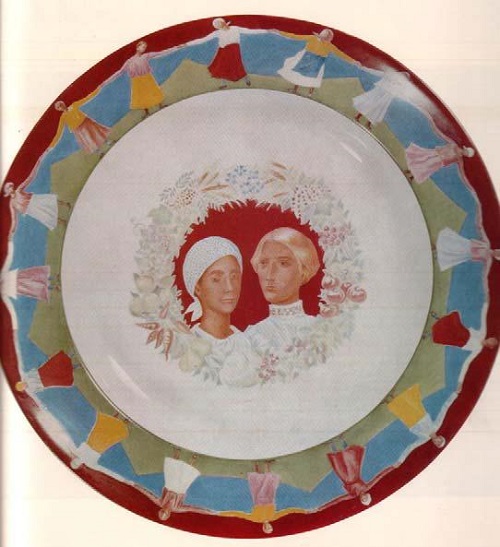
Dish 'Wedding'. Porcelain from 1923. Artist Kuzma Petrov-Vodkin
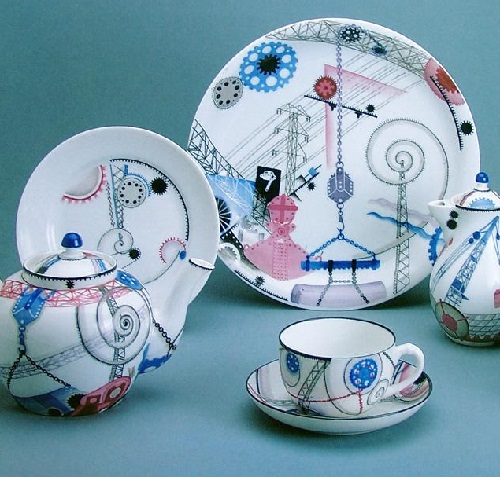
1927. Painted by L.V. Protopopova
Soviet propaganda porcelain
Soviet propaganda porcelain
Soviet propaganda porcelain
Soviet propaganda porcelain
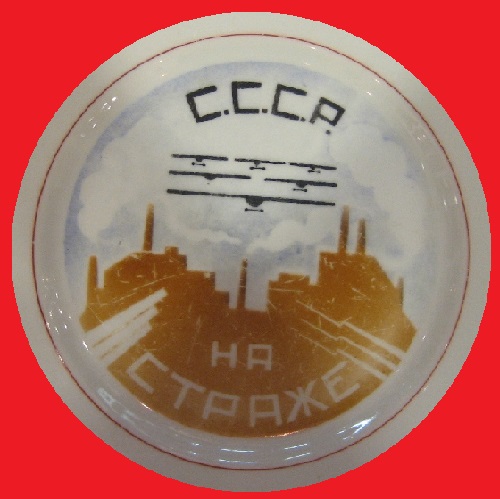
Soviet propaganda porcelain
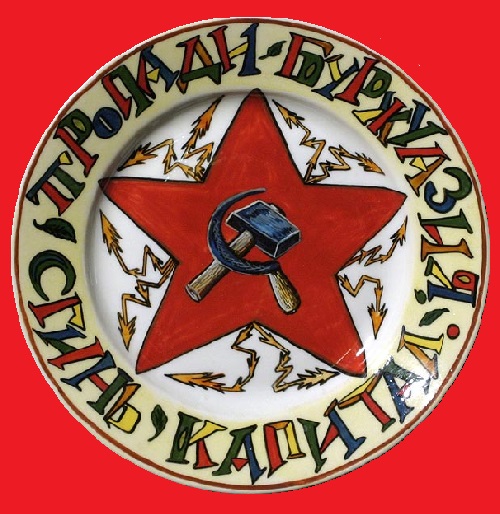
Soviet propaganda porcelain
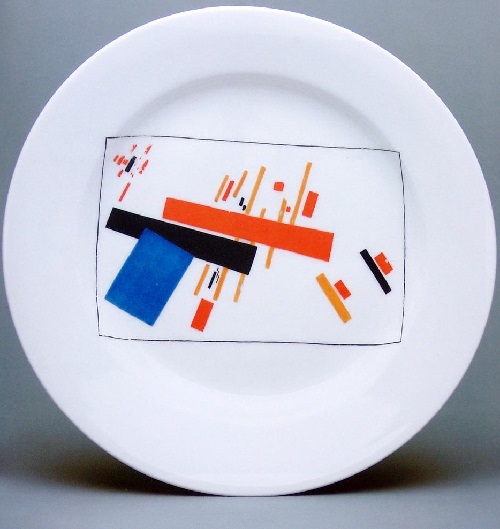
Soviet propaganda porcelain
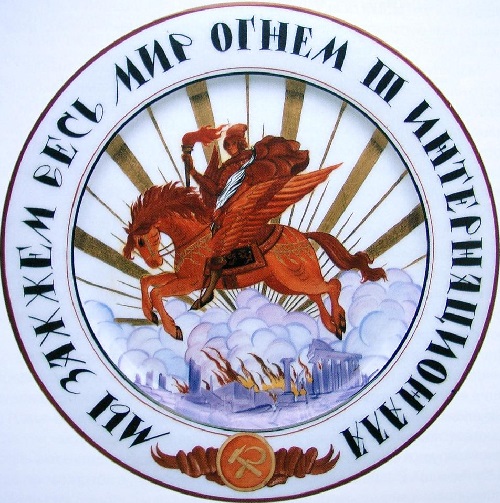
Soviet propaganda porcelain
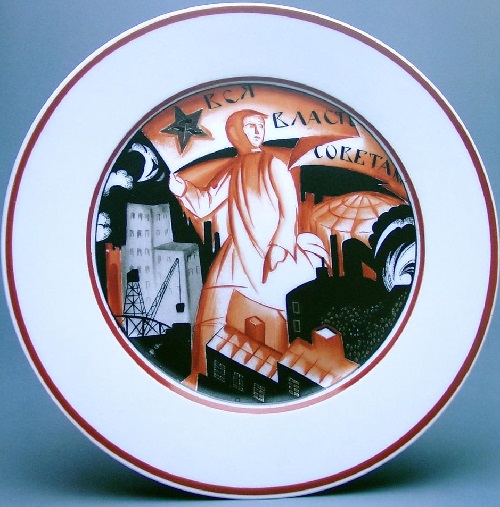
Soviet propaganda porcelain
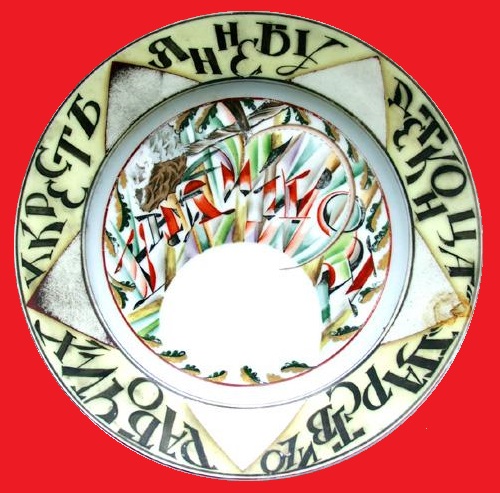
Soviet propaganda porcelain
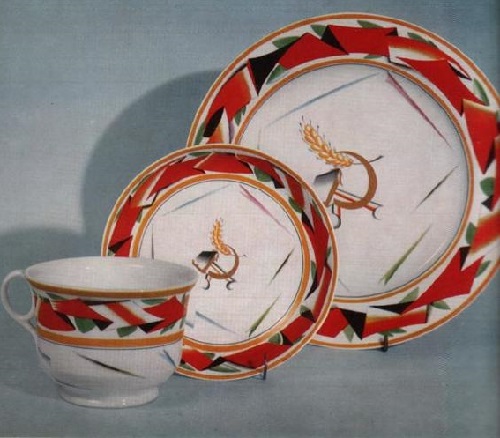
Soviet propaganda porcelain
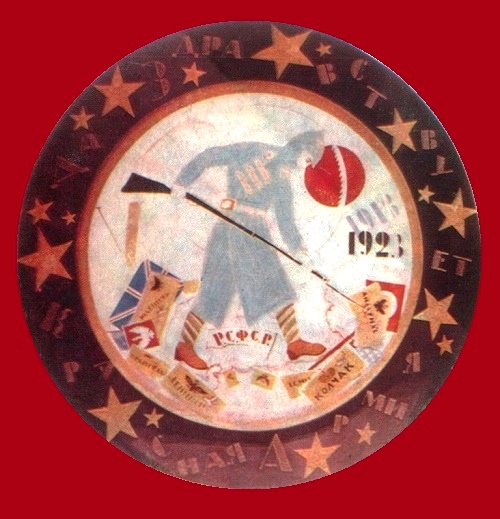
Soviet Agitational Porcelain
Porcelain items with propaganda themes in the USSR
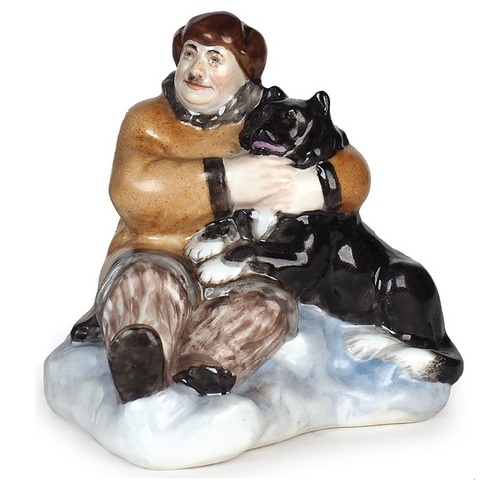
Porcelain sculpture 'Papanin with a Dog on an Ice Floe'. Author - Natalya Danko, Leningrad Porcelain Factory, 1930. Material: porcelain with painting over the glaze.
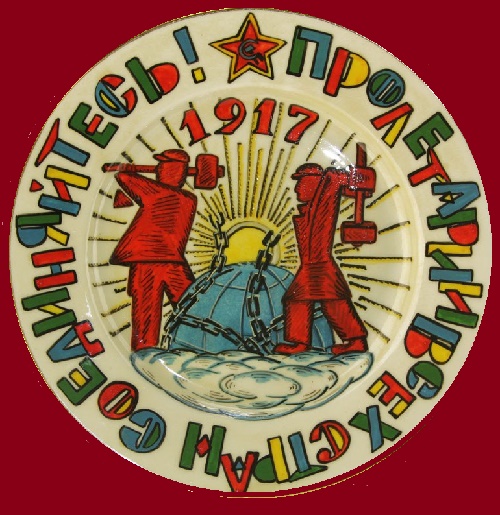
Artistic plate with the slogan 'Workers of the world, unite!'
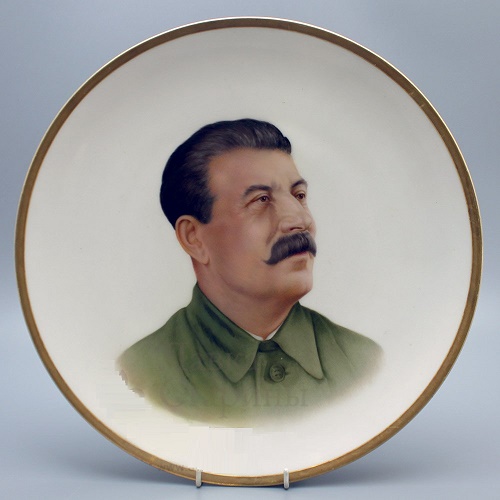
Porcelain plate with a depiction of I.V. Stalin. Production of the Dulevo Factory, 1940s.
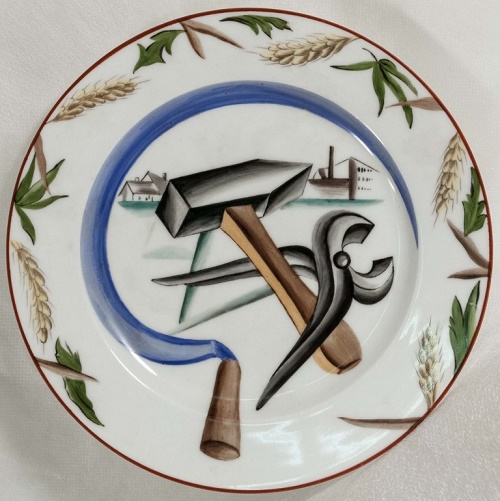
Plate decorated with symbols of a sickle, hammer, and tongs. Made at the Petrograd Porcelain Factory in 1920 by artist Elizaveta Rozendorf.
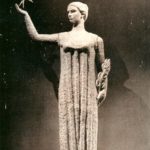
Samples of monumental propaganda art from the Soviet period

Political agitational poster from the USSR era
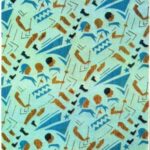
Textiles with propaganda themes in Soviet art

Creative work in the field of Soviet agitational posters
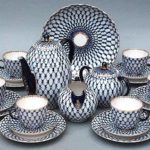
Geometric ornament that became a symbol of Soviet porcelain
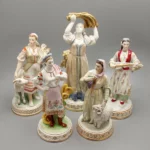
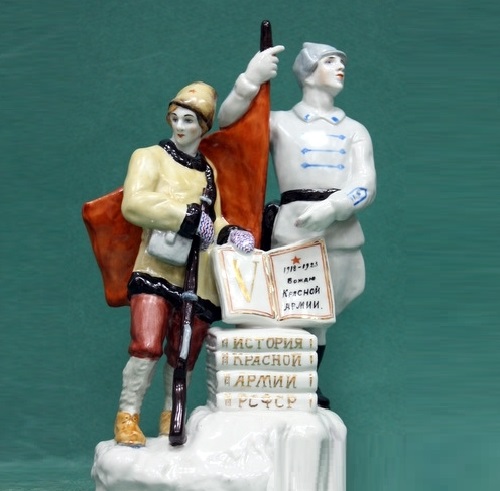
Porcelain figurines from the 'Soviet Socialist Republics' collection. Sculptures by N. A. Malysheva, Dulevo Porcelain Factory, period of the 1950s-1960s.