New York’s Rubin Museum to Shutter, Pursue Decentralized Model
244Feb. 2, 2024
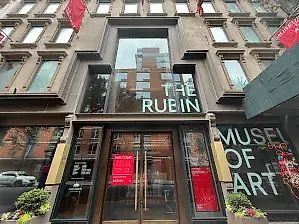
The Rubin Museum of Art, New York, known for placing its trove of ancient Himalayan Asian artifacts in conversation with works by contemporary artists, will shut its doors on October 6. Following the closure, the institution plans to sell its building, lay off nearly 40 percent of its sixty employees, and transition to what museum leadership characterized as a museum without walls, whose exact shape remains to be seen. The remaining staff’s roles will include originating and traveling new exhibitions; providing curatorial and collection resources to other cultural organizations; and developing educational resources in the field of Himalayan art.
The Rubin will additionally administer a prize for Himalayan art and plans to enrich its grant program.RelatedDMITRY RYBOLOVLEV LOSES FRAUD CASE AGAINST SOTHEBY’SLAURIE ANDERSON WITHDRAWS FROM GERMAN UNIVERSITY PROFESSORSHIP AFTER PRO-PALESTINE LETTER RESURFACES “The definition of what a museum is has evolved dramatically in recent years,” said museum board president Noah Dorsky in a statement. “Historically, the Rubin’s culture embraces continual change and evolution, and in our new incarnation, we are redefining what a museum can be.” The Rubin was founded in 2004 to house the South Asian art collection of Donald and Shelley Rubin. Occupying the 70,000-square-foot Chelsea building that formerly served as the longtime home of high-end retailer Barneys, purchased by the Rubins for $22 million in 1998, the museum gained a reputation for its spare, elegant displays and peaceful atmosphere.
One of its most popular attractions, the Tibetan Buddhist shrine room, is expected to be housed elsewhere in the city following the institution’s closure. The Rubin in recent years had been beset by allegations that various works in its collection—which numbers roughly four thousand objects and spans fifteen centuries—had been illegally smuggled out of their native countries. The museum in 2022 repatriated two artifacts to Nepal after researchers discovered they had been stolen from religious sites.
The Rubin also struggled financially,laying off25 percent of its staff in 2019, before the Covid-19 crisis took hold, forcing the museum toapplyfor federal Paycheck Protection Program funds. Museum leadership have said that the closure is due neither to provenance concerns nor to economic woes but is aimed at transforming the Rubin into a global organization..