Porcelain, earthenware, ceramics
Fürstenberg
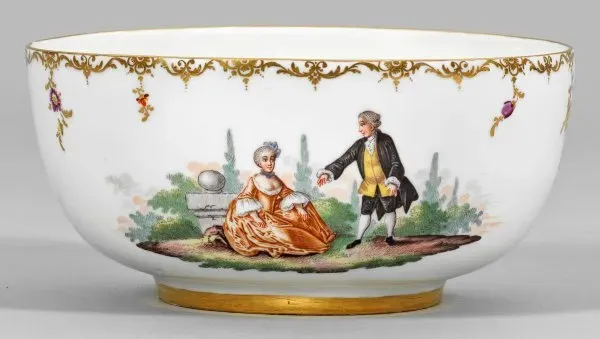
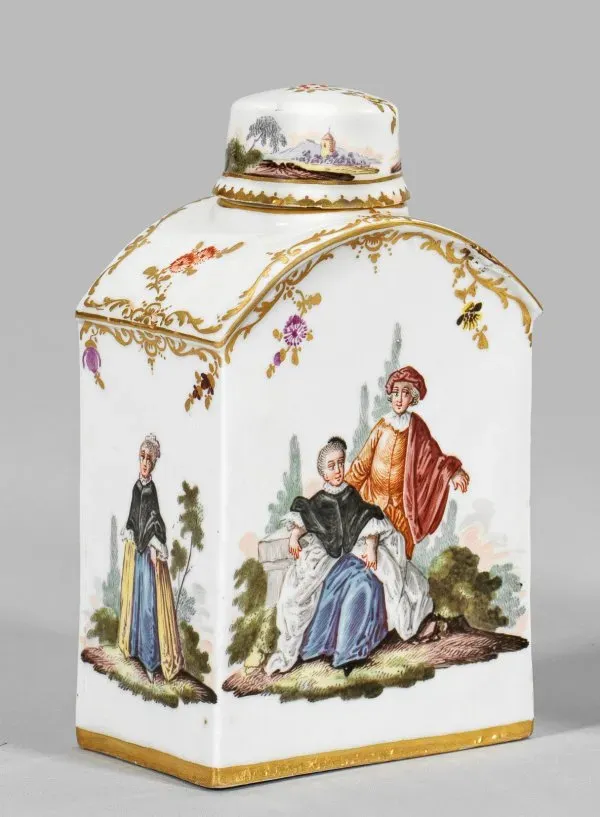
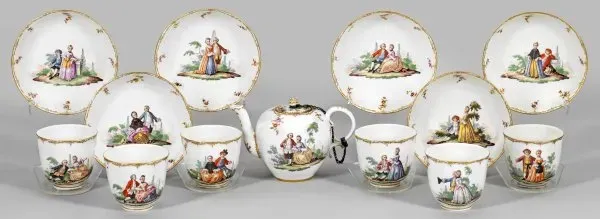
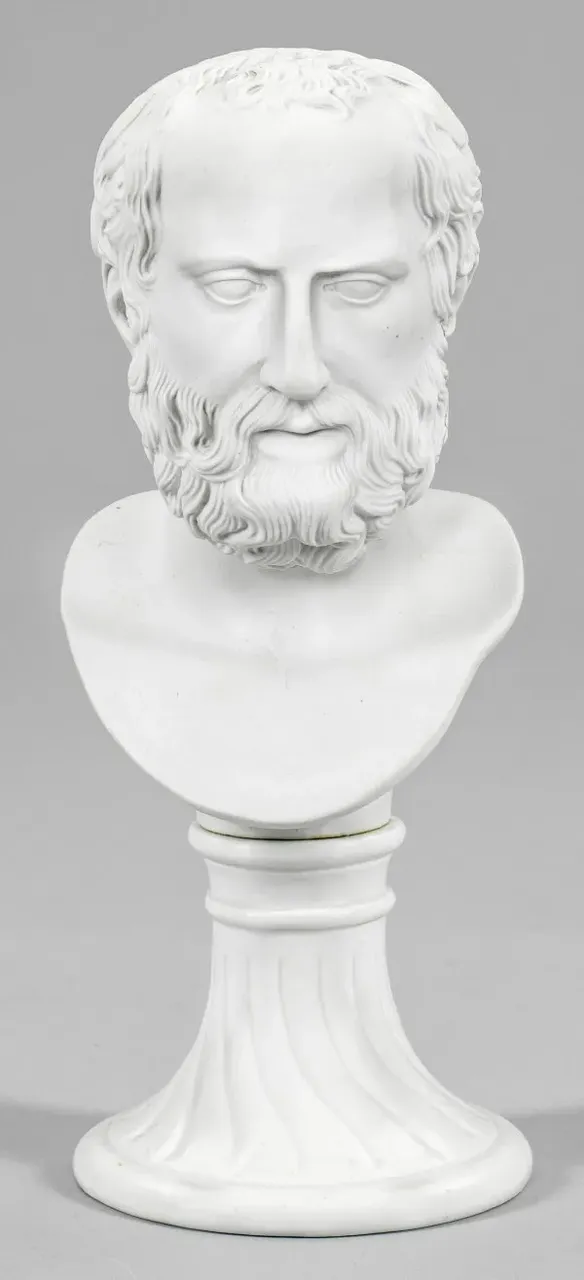
The Fürstenberg Porcelain Manufactory (German: Porzellanmanufaktur Fürstenberg) is one of the oldest porcelain manufacturers in Western Europe, second only to the factory in Höchst, Germany. It was founded in 1747 in the city of Fürstenberg, Lower Saxony, on the Weser River. The products are marked with a blue underglaze letter "F". History: The manufactory was established on January 11, 1747 by court huntsman Johann Georg von Langen (1699-1776) on behalf of Duke Karl I of Brunswick-Wolfenbüttel (1713-1780). From 1750, the manufactory was located in Fürstenberg Castle. The production was intended to serve the purpose of boosting the economy in Brunswick and the Weser region, where there were reserves of wood for fuel and suitable clay (possibly including kaolin). In 1751, the porcelain manufactory employed seventeen people, including engravers, turners, and molders. In 1972, the production was relocated to new buildings near the castle. The porcelain was called the "white gold of the Weser". In 1888, the enterprise was transformed into a joint-stock company (Aktiengesellschaft). During the global economic crisis in 1926, the company had to close. In 1966, the company became a limited liability company (GmbH) as a subsidiary of "Braunschweig GmbH". In December 2019, due to economic difficulties, the shares of the Fürstenberg manufactory were transferred to the state of Lower Saxony. Manufacture's products: The early products of the manufactory were created in imitation of the more famous ones from Meissen. The enterprise was led by I. Benkgraf from Höchst. From 1753 to 1770, the sculptor-modeler Simon Feilner (1726-1798) worked in Fürstenberg, having previously worked at the Höchst factory. Feilner created amusing statuettes on the themes of the Italian theater Commedia dell'arte, mythological subjects, figures of craftsmen, peasants, and shepherds in the style of French Rococo. Feilner worked in Fürstenberg until 1770. "The strong point of Fürstenberg porcelain has always been its picturesque decor with its exquisite color scheme." Since 1795, the enterprise has been led by the French technologist, chemist, and porcelain painter Louis-Victor Gerverot (1747-1829). Previously, he worked in Staffordshire, England, for Josiah Wedgwood. Therefore, in Fürstenberg, he used his experience in the application of claystone masses. For the painting, Gerverot borrowed motifs from the French Empire style - gold on black or bright blue backgrounds. The products of the manufactory are exhibited in the Fürstenberg Museum, the Metropolitan Museum in New York, and the Victoria and Albert Museum in London.