Simone Forti, Giant of Postmodern Dance, Dead at 91
4July 30, 2026
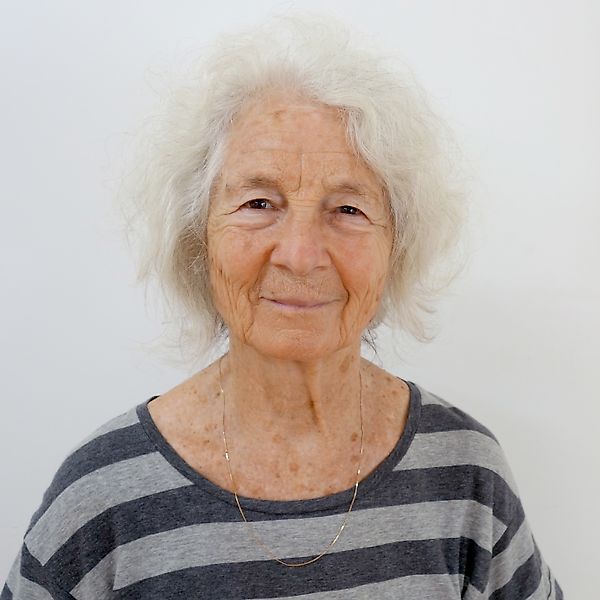
Pathbreaking Italian American artist, choreographer, and dancerSimone Fortihas died at the age of ninety-one. Her death, in Los Angeles, was announced by the Milan-based gallery Raffaella Cortese, which represented her. Training under postmodern dance pioneer Anna Halprin in San Francisco in the last half of the 1950s, Forti burst onto the New York dance scene at the dawn of the ’60s with her seminal “Dance Constructions,” works in which dancers responded to cheap, ready-made objects that prompted improvisational actions such as leaning, climbing, or whistling. The pieces deeply influenced Yvonne Rainer and Steve Paxton, leading them to found the Judson Dance Theater, whose members would reshape modern dance over the ensuing decade in a way that continues to resonate more than half a century later. “This small, radical group of works by Forti was like a pebble tossed into a large, still, and complacent pond,” wrote Paxton years later. “The ripples radiated.”
Simone Fortiwas born to Jewish parents in Florence on March 25, 1935. Three years later, as Fascist leader Benito Mussolini began stripping Italian Jews of their citizenship, the family fled to the United States, eventually settling in Los Angeles. Forti attended Reed College in Portland, Oregon, but dropped out and moved with her then-partner, Conceptual artist Robert Morris, to San Francisco. There, she apprenticed under Halprin, first at her Halprin-Lathrop School and then at the Dance Workshop of Marin, contributing to early works by the choreographer.
In 1959, Forti and Morris moved to New York and fell in with the members of the burgeoning Fluxus movement. Teaching nursery school during the day, Forti spent her evenings studying improvisation and composition at night at the Merce Cunningham Studio under musicologist Robert Ellis Dunn, who introduced her to the work of avant-garde composer John Cage. Through the classes, Forti met Rainer, Paxton, and Trisha Brown, with whom she would collaborate on various projects.
Forti presented her “Dance Constructions” first at the Reuben Gallery in SoHo, as part of a group exhibition with Jim Dine and Claes Oldenburg, and then at Yoko Ono’s Chambers Street loft, dancing alongside Morris, Paxton, Rainer, and Carl Lehmann-Haupt. The performers had only to abide by a brief set of instructions laid out by Forti but otherwise were free to improvise. Morris would later note that the pieces, which spurred what Forti described as “pedestrian” movements, “attacked the notion of dance as a format that required the trained body of the dancer.” The pieces have since been performed all over the world; the Museum of Modern Art in New York acquired them in 2015.
Separating from Morris in 1962, Forti married artist Robert Whitman shortly thereafter; the pair would remain married for six years, with Forti participating in many of Whitman’s Happenings. Following their divorce, she spent 1968 in Rome, where the Arte Povera movement was in full swing. Forti became fascinated with the animals in the city’s zoo, drawn to their repetitive pacing movements. She would go on to incorporate these into her own work, in pieces such as 1975’s Big House, on which she collaborated with musician Peter Van Riper, to whom she was married from 1974 to 1981; and 1976’s Planet, in which several of a group of roughly forty performers imitate the motions of various animals.
The concept of responding to a thing or prompt would fascinate Forti all her life. In the ’70s, with the help of artist and physicist Lloyd Cross, she created a series of small-scale holograms of her own body that were activated by the presence of the viewer, who set them into motion by circling them. The works are considered an exclamatory response to the institutional question of how to collect and display dance, a typically ephemeral form.
The ’80s found Forti, now teaching at New York’s School of Visual Arts, creating a new dance form, “Logomotion,” which blended speech and dance. From this grew her “News Animations,” in which she also spoke, this time responding directly to headlines about such topics as politics and climate change. Around this time she assembled her own dance ensemble, Simone Forti & Troupe, which performed throughout the US through the end of the decade.
Forti spent most of the ’90s living near Paxton in rural Vermont, where she continued to develop work, travel and teach. At the end of the decade, she moved back to Los Angeles to take care of her mother. She would remain there for the rest of her life, teaching improvisation at UCLA and developing new works. She was represented by experimental gallery The Box from 2009 until its closure earlier this year, when she jumped to Raffaella Cortese.
Forti received her first major institutional retrospective at Germany’s Museum der Moderne Salzburg in 2014 and was featured in MoMA’s 2018 exhibition “Judson Dance Theater: The Work Is Never Done”; she was the subject of a 2023 survey at the Museum of Contemporary Art, Los Angeles. Forti was awarded the Venice Biennale’s Golden Lion for lifetime achievement in the field of dance that same year. Her response to the honor recalled the modest movements commanded by her choreography.
“I didn’t know what the Golden Lion was,” she told the New York Times. “If someone has to take the role and stand there holding it, I am honored to be the one to do it for the community.”