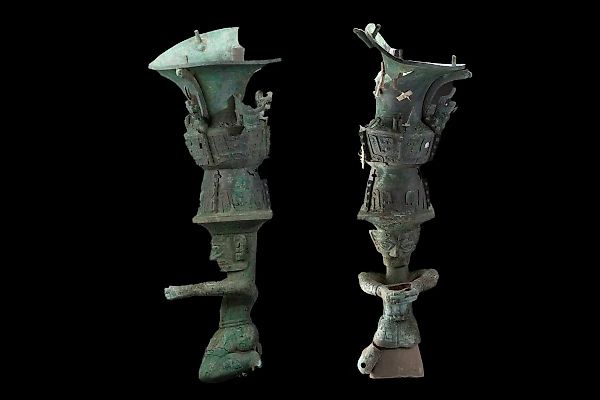
New research suggests that a treasured bronze artifact excavated from the Sanxingdui archaeological site in China is an assemblage of different parts made in different areas at different points in time—“offering fresh evidence of ancient trade networks and advanced metalworking techniques,” according to a report in Heritage Daily. The research released by the Sichuan Provincial Institute of Cultural Relics and Archaeology pertains to a well-known bronze figure—wearing an elaborate head piece and kneeling with its hands extended—that was discovered in the Sichuan Province. Related Articles Hieroglyphs Inscribed on Wall of Ancient Building Reveal Name of Mayan Astronomer for the First Time Archaeologists Uncover Previously Unknown Tomb of Ancient Egyptian High Official The researchers claim that the headpiece, known as a zong, and the kneeling figure exhibit differences regarding their makeup in terms of geography and time, despite the two parts being buried together. “The human figure exhibited significantly greater corrosion than the zong, while laboratory testing identified substantial differences in their metal composition and the geological origin of the ores used to produce them,” according to Heritage Daily. The figure itself seems to comprise separate sections, with a copper base differing from the rest of the piece. Altogether, Heritage Daily reports, “the findings provide further evidence that Sanxingdui had cultural and commercial connections to other parts of ancient China, including the Central Plains, and that finished bronze objects and materials were probably moving from one place to another.”