Silver plate
1.3КDec. 3, 2024Серебро
Collectors and connoisseurs of 19th-century applied art in Russia are undoubtedly familiar with silver-plated items bearing the hallmarks of many Moscow and St. Petersburg masters—such as Fedor Emme, Dorofei Borisov, Vasily Rosenstrakh, Kuznetsov, Dubinin, Ksimantovsky, and others.
No less interesting are the items of Polish "appliqué," for example, the early works of the Warsaw factory of Józef Fraget. The technology that allowed for plating base metal with precious metal came to Russia from France, as thoroughly reported by the magazine "Antikvariat..." in May-June 2002. However, for researchers, the possibility of familiarizing themselves with samples of French-produced silver plate remains a real mystery, as in modern authoritative circles, only two researchers address this topic—E. de Sèvin and Lisa Moor.
In the word-forming context of the French language, the term *plaque* was first recorded at the end of the 18th century. It appeared in Buffon's dictionary in 1770, and later—in the fifth edition of the Academic Dictionary in 1798. In other countries, corresponding designations for this technique can be found, such as *plattierte Waaren* in German and *plated articles* in English. At the beginning of the 19th century, Russia used the borrowed word "aplike" or "appliqué," but it was soon replaced by the more understandable formulation—"nakladnoye serebro" (silver plate). It is also worth noting that items plated with gold were called "double" or *double*.
To this day, in museums and private collections in France, as well as in European collections, including Russian ones, one can find exquisite objects created using the techniques of "plaqué" and "double." These include tableware, household items and utensils, as well as lighting devices. Plaqué items, created as a substitute for solid silver, copy their forms, decorative elements, and surface texture, imitating silver—*argenterie*—and silver-gilt—*vermeil*. Thus, these items occupy a special place in the hierarchy of applied art and were often valued as items of the highest level. Affordable and attractive plaqué items found their place in the lives of the French bourgeoisie, impoverished aristocrats, as well as urban craftsmen and wealthy peasants. Mentions of these objects can be found on the pages of works by classics of 19th-century French literature: whether it is the "plaqué candlesticks" from sales inspected by the heroine of the Goncourt brothers, or the plaqué table service adorning the table of the courtesan Nana in Émile Zola's work, or the box given by Proust's hero to his beloved, which first caused delight (gold!), and then disappointment after being checked by a jeweler.
Europeans have long been familiar with the mechanical technology of coating inexpensive metals with sheet silver, as evidenced by archaeological finds dating back to the Hellenistic period and Ancient Rome. This art was not a novelty for France either—royal decrees and ordinances of the 14th century prohibited the use of plating, fearing counterfeits that imitated solid silver or false coins. For a long time, until 1765, any combinations of precious metals were banned because there were no reliable methods for weighing and evaluating them separately: mixing metals was considered as unacceptable as incest or the crossing of races. Nevertheless, master jewelers in France in the 17th and 18th centuries secretly practiced plating, creating refined items without any identification marks. These rarities have partially survived and can now be found in the Louvre and in various private collections, highlighting the importance of technological evolution in the production of plated items.
Only with the beginning of the reign of Louis XVI in France did master platers begin to practice their craft openly, whereas in England, ahead of France by several decades, this type of production was already actively developing. In bourgeois Europe, the sharp increase in demand for affordable and aesthetically appealing products that replaced traditional silverware became an integral part of entrepreneurial strategy. In 1742, in Sheffield, the largest metalworking center in England at the time, a radically improved plating method was introduced, thanks to the work of cutler Thomas Bolsover. He found an original solution for achieving the perfect combination of a steel knife blade and a silver handle, which significantly expanded the range of metal products manufactured and offered consumers high-quality products at lower prices.
The process of creating silver plate involves several stages. First, a copper (or iron) slab about 4 cm thick, 30 cm long, and 7 cm wide is taken, which is thoroughly cleaned and polished. This slab is then covered with a sheet of silver of similar size, but only 3 to 5 mm thick. The edges of the slab are coated with borax, after which it is covered with a dense, smooth iron plate and heated to red-hot. At this point, the borax melts, and the silver begins to bond with the copper, ensuring a strong adhesion. In the next stage, the red-hot slab is smoothed with a wooden hammer, a process known in France as *lissage*. After this, the material is heated again and rolled through a rolling mill to achieve the desired thickness (laminage). If plating on both sides is required, the entire process is repeated for the second side of the plate. This work, unlike simple cladding, was called "double" (double). As a result, two or three layers of metal are joined without soldering, forming a compact structure. After this, the sheets of gold and silver plate are processed like ordinary metals: they are bent, hammered, stamped, and engraved using mechanical methods. In some cases, the rolled plate was brought to an incredible thinness of 0.02 mm, similar to the production of foil—"паталъ" or "шумиха," as well as tinsel wire—"канитель" in old Russian terminology.
The transfer of Sheffield technology to France left a notable mark in the history of European industrial espionage. For example, a certain watchmaker from Nancy named Deranton gained access to the secrets of Thomas Bolsover and went to Paris, where he joined forces with the master of the silversmiths' guild, Jean-Vincent Huguet. With the support of the Paris Academy of Sciences, they managed to obtain a Royal Patent in 1769, and in 1770, they opened the Royal Manufactory of copperware plated with silver. This enterprise was located in the Hôtel de Fer on Rue Beaubourg in the Marais district of Paris, and its production processes were headed by the royal engineer Gournay. The manufactory received the right to mark its products with a special hallmark, which allowed it to stand out from other manufacturers.
After a decade and a half, in 1785, patents and royal privileges for the production of plated items were granted to two more Parisian manufacturers. Master jeweler Marie Antoine Joseph Tugof, in partnership with his son-in-law Jacques Daumy, opened a factory for silver-plated and double-plated items on copper and iron in Paris on Rue de la Verrerie, at the Hôtel de Pompon, receiving the status of a "Royal Manufactory." At the same time, a certain Monsieur Chanovier was authorized to produce "economical tableware from doubled copper." It should be emphasized that the process of establishing these factories occurred under strict control by the congregation of jewelers and only by special royal permission, indicating the limited production of silver-plated items in France under the old regime.
The first years of the revolution did not bring significant changes to the existing order: a new, fourth manufactory of plated items—Lebeau & Aubry—was founded with special permission from the Directory government. However, it was not until November 1797 (19 Brumaire, Year VI) that a law concerning gold and silver production was passed, proclaiming a "universal and unrestricted right" to use gold and silver plating. From that moment on, any workshop engaged in silver or metalworking could legally expand its range to include silver-plated items, and any aspiring entrepreneur had the opportunity to launch such production on a general basis.
The new regulatory act also standardized the marking procedures for plated and double-plated products. In addition to the usual assay marks indicating the precious metals used, a special mark for plated metal became necessary. This idea originally belonged to the pioneer of French plating, Jean Hugué, who as early as 1769 took steps to honestly inform his customers about the surrogate nature of his products. He added to the usual mark confirming his status as a master silversmith (which depicted a crowned royal fleur-de-lis) a special new mark with a crown and the numbers "3," "4," "5," or "6," indicating the percentage of precious metal in the total weight of the item. His example was soon followed by other manufacturers, such as Daumy.
The regulation for marking silver-containing items, detailed more thoroughly in the subordinate act of 17 Nivôse of the same Year VI, established a clear distinction between the hallmarks for gold, silver, and plated products. For the first two, a diamond-shaped shield was introduced, while plated items were marked with a square hallmark. On this small field measuring 3x2 cm, it was necessary to place: 1) the master's initials; 2) a graphic element or symbol; 3) the word "PLAQUE" or, depending on the production method, "DOUBLE". Alongside this, another, smaller rectangular hallmark with the numbers "10" (most often), "20" (sometimes), and "40" (rarely) was applied. These numbers indicated the specific weight of the precious metal in the item, but these were no longer fractional indicators as they had been with Hugues and Domi, but percentages, according to the new metric system. Furthermore, the old crown, characteristic of the old regime hallmarking, did not return even during the Restoration period or during the reign of Louis-Philippe. The miniature graphic element of the square hallmark, typically a small circle, arrow, knife, torch, or bell, was placed between the master's initials, referencing the complex, multi-layered hallmarking system of French silver, which served as a sign of the local guild.
Practice introduced its own adjustments to the established regulations. For example, some manufacturers added not only initials but also full surnames to their hallmarks, as masters like Balen or Weira did. Often, the master's surname, as with Levre, was placed in the rectangular digital cartouche indicating the percentage ratio of metals. The words "plaque" and "double" were often split into two syllables and written on two lines. However, a more serious violation was the complete absence of the cartouche, although it is believed that cases of counterfeit factory hallmarks on French plating are not recorded. There are also completely unmarked items, whose origin can be presumed to be French, but such attributions remain at the level of hypotheses.
To register new productions, it was necessary to declare the factory mark at the local police prefecture and register a sample of the hallmark with the Guarantee Service. For this purpose, the institution had special impression plates (plaques d'insculpation). Some silversmiths immediately applied the new square hallmark, opening parallel production lines for silver substitutes in their workshops: cost reduction and assortment expansion became a kind of "conversion." In the first decades of the 19th century, the number of specialized plaque and double factories grew, especially actively opening at the turn of the 1820s-1830s in Paris and the Seine department.
Among the manufacturers of plated tableware and utensils, craftsmen specializing in the production of candle lighting fixtures stood out. One of the most notable specialists in this field was the silversmith J.-A. Gandais (Jacques-Augustin Gandais). It is known that he introduced many technological improvements, which enhanced the quality of French plated and doubled items. Gandais introduced a principle that protected the plating from wear by increasing the thickness of the silver layer in areas subject to the most stress during use: on handles, bottoms, and convex parts of objects. Furthermore, he recommended carefully sealing the copper layer on the edges of plated plates, as copper is prone to corrosion and its oxides are toxic. Russian economic reviewers also noted the high quality of products by master Gardele and the work of Jean-Francois Veyrat, who registered his hallmark in 1825.
In addition to tableware and utensils, production technologies were actively used to create plated metal accessories for military uniforms, including buttons for the dress uniforms of military personnel and officials. This specialized practice also contributed to the diversity and accessibility of products, meeting the demands of a time when broad segments of the population sought to possess aesthetically pleasing yet affordable household items.
Applied gold became a focus for manufacturers creating small but representative items for affluent segments of the population. In cases where the use of pure gold would be impractical due to its softness or where its gold bronze would lack sufficient malleability, the choice often fell on doubled copper. This approach was used in making cases, bodies, and stands for various objects, including pocket watch cases, produced by both independent suppliers and branches of watchmaking workshops of well-known French companies. The doubling technique was also widely used in creating the telescopic mechanism of theater opera glasses, which became a Parisian innovation of the first quarter of the 19th century. Optical lenses were placed at the ends of a folding construction consisting of three, five, or nine sliding cylinders made of applied metal. The widest cylinder was often adorned with numerous decorative elements: semi-precious stones, mother-of-pearl inlays, inlaid tortoiseshell, rhinestones, faceted steel, and relief bronze.
Craftsmen responsible for making telescopes usually left their trademark marks on the walls of the upper section or on the outer eyepiece mount. For example, on a telescope with a mother-of-pearl mount from the State Historical Museum collection, one can see the signature of the master Cauchoix, indicating his location—"Cauchoix quai Voltaire a Paris." The telescope also bears the initials of the metalworking partner N. Buron. While another large nine-draw telescope with a tortoiseshell mount and bronze decorations did not bear the signature of the optician-maker, its window had a clear marking "LР / DOU / ВLЕ," belonging to the Parisian plater L. Palmé.
Snuffboxes, caskets, cases, and frames were also adorned with overlays and mounts made of engraved copper, stamped as "double." Such decoration gave the items elegance and status, allowing them to fit into the lives of high-ranking figures in society.
Among the craftsmen registered with the prefectures, it is worth noting that every tenth was engaged in a craft related to the arts. They supplied functional items of a prosaic nature, as could be observed in the lantern trade. The reflectors of carriage lanterns required constant cleaning—ordinary metal plating on these products wore off quickly. In similar contexts, silver plating found its application for other carriage accessories and horse harness decorations, including buckles, plaques, and rosettes. These workshops had a narrow specialization, which allowed them to optimize production by using simplified and economical technologies. Instead of copper, brass blanks were used in production, which were tinned with tin, then coated with a layer of grease and wrapped in thin silver foil, approximately 0.01 mm thick. The semi-finished product was then heated to the melting point of tin, which facilitated reliable adhesion of the silver due to the presence of grease in the composition.
An important symbol of silver-plated production in France was the first official factories, opened by royal decrees and under the patronage of the reigning monarch. This approach was not accidental, as surrogate silver played a significant role in strengthening the state budget and meeting consumer needs at court. Providing sufficiently expressive yet economical tableware and utensils for palace premises, services, guardrooms, ministries, barracks, hospitals, and prisons helped minimize the financial difficulties of the declining old regime.
After the revolutionary changes, plique continued to serve as a means to meet the needs of broad segments of the population due to its affordability. The increased democratization of society and the formation of a "consumer market" over more than fifty years sustained the popularity of silver-plated factories until other, cheaper alternatives to precious metals for middle-class household use began to appear. The "second life" of silver plate, as a material, came later. Although in the 19th century this art was sometimes not taken seriously by collectors, two centuries later, items executed with impeccable craftsmanship and diverse in form became objects of genuine interest among antiquarians and collectors.
French plique, as an imitation of solid silver objects, reproduced the stylistic features and decoration of the argenterie relevant to its time. It emerged during the transitional period between the 18th and 19th centuries and reached its peak in the first decades of the 19th century, vividly reflecting classical motifs accompanying the dominant styles. The main forms of objects were often borrowed from monuments of ancient culture, such as the hydria or krater for vessels, as well as elements showing the influence of architectural forms, for example, columns with capitals in the construction of candlesticks. The bodies of the pieces demonstrate a pursuit of geometrically correct shapes—spheres, cones, or cylinders, as well as their derivatives, like hemispheres and ellipsoids. The bases for vessels and candelabra are most closely approximated to a rounded profile with a smooth rise, unlike the square or figured bases characteristic of English and Russian silver-plated lighting fixtures. The overall aesthetic of the forms is primarily based on lightness and elegance, achieved through tapering proportions, concave shapes, neatly designed handles and spouts, as well as elegant lids.
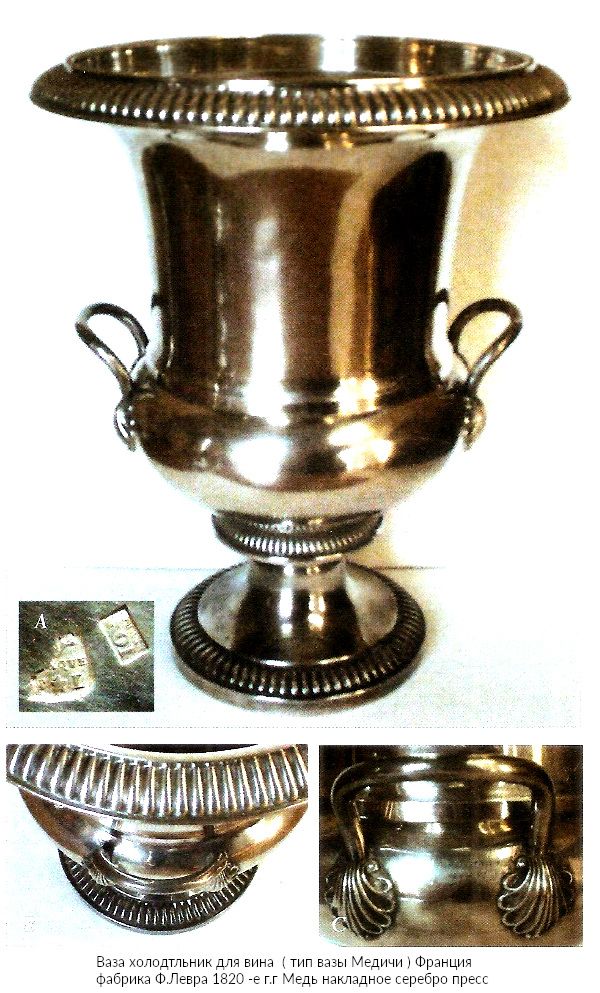
The magnificent representative vases from the collection of the Historical Museum are not only elegant but also functional. These objects most likely served as adaptations for wine bottles or as flowerpots, outlining the ceremonial appearance of the dining table. Their form resembles a classical krater, transformed in the Renaissance style, which distinguishes the so-called Medici type of vase. Each vessel is divided into clear volumetric sections, with the model's structure dictating a clear constructive logic. Three bands of pliable ribbed ornamentation—medium, small, and large—emphasize the key coordinates of the body: the upper and lower boundaries, as well as the center of gravity, lending impressive spatial perspectives of concentric circles. Curved loop handles are neatly attached with attachments in the form of a convex palmette, which enliven the mirrored surface of each vase's walls. The items were manufactured in the workshop of F. Levrat, who was renowned for producing plated metal and received commissions from such prominent figures of the July Monarchy as the Prince of Condé, uncle of King Louis-Philippe of Orléans. Moreover, a large liqueur set, adorned with the coat of arms of the royal relative and Levrat's hallmarks, is now housed in the Condé Museum in Chantilly.
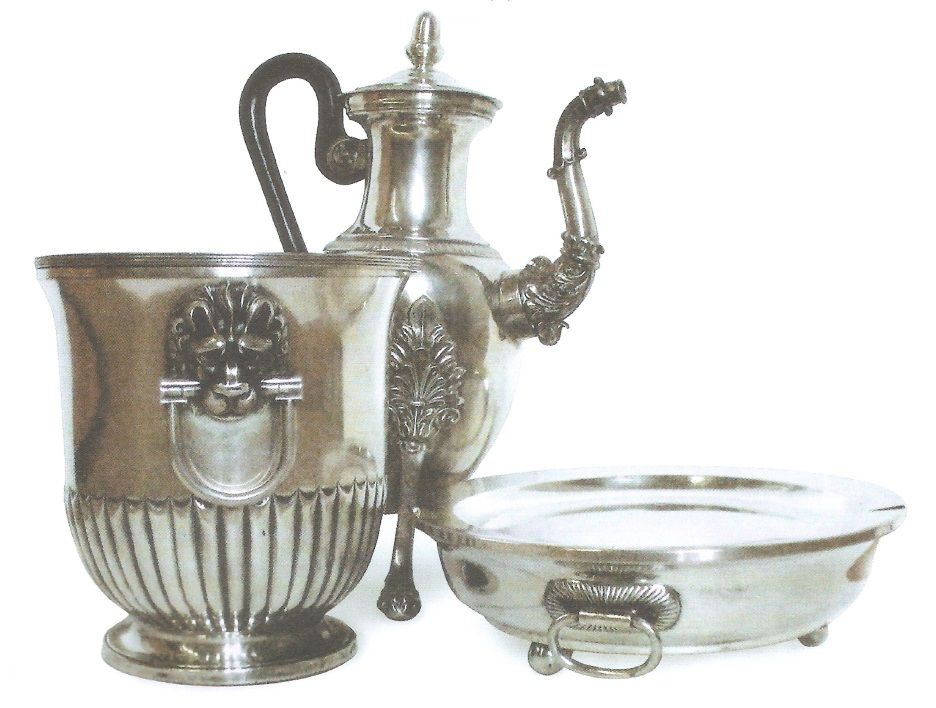
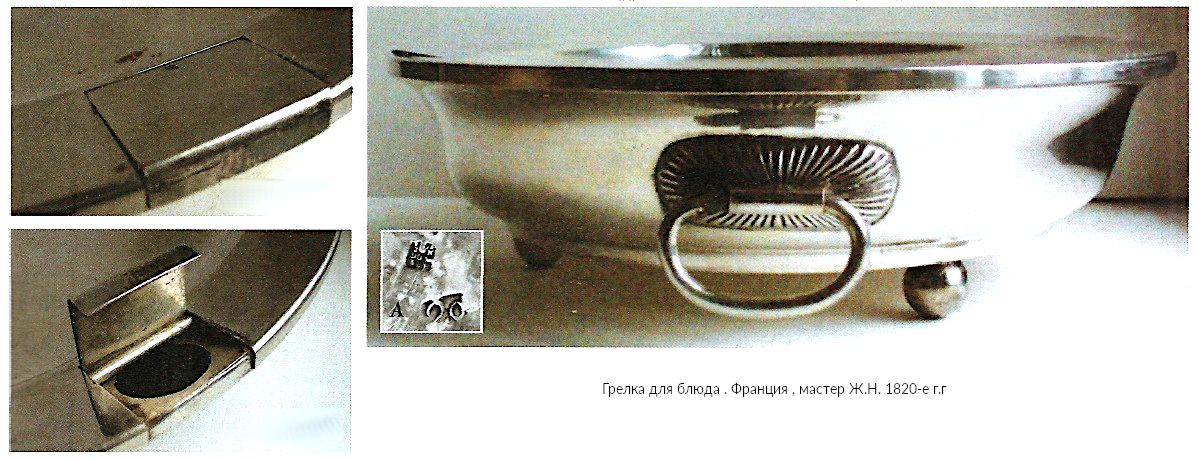
A characteristic feature of French plated goods production, as well as the country's artistic industry in general, is the high level of design. Typically, the design of such objects was developed by professional artists, who took into account the functional aspects of each item. This refined approach can also be traced in the example of a dish warmer—a kind of thermos-stand for a dinner plate, featuring an internal reservoir for hot water. Such an invention appeared in European everyday life in the late 18th century and was often executed in the plique technique. An example is an item created in the 1820s by master J. Nuffer, which stands out for its simplicity and the strict lines of a narrow body corresponding to a classical curve. The form of the object is entirely subordinated to functional requirements: to avoid contact with the cold table surface, the body is set on three hollow ball feet. The loop handles here are made of bent metal tubing, without the use of a wooden or bone bushing, and overheating is prevented by a voluminous hollow overlay with a slot for attachment; the hanging device itself was refined so as not to interfere during the meal. The reservoir opening of the thermos is almost unnoticeable—it is concealed by a rising segment of the rim on an invisible hinge. The sole decoration of the item consists of two relief oval multi-rayed rosettes, which, besides their decorative function, serve as thermal insulation and attachments for the handle, providing a stylish completion to the overall appearance.
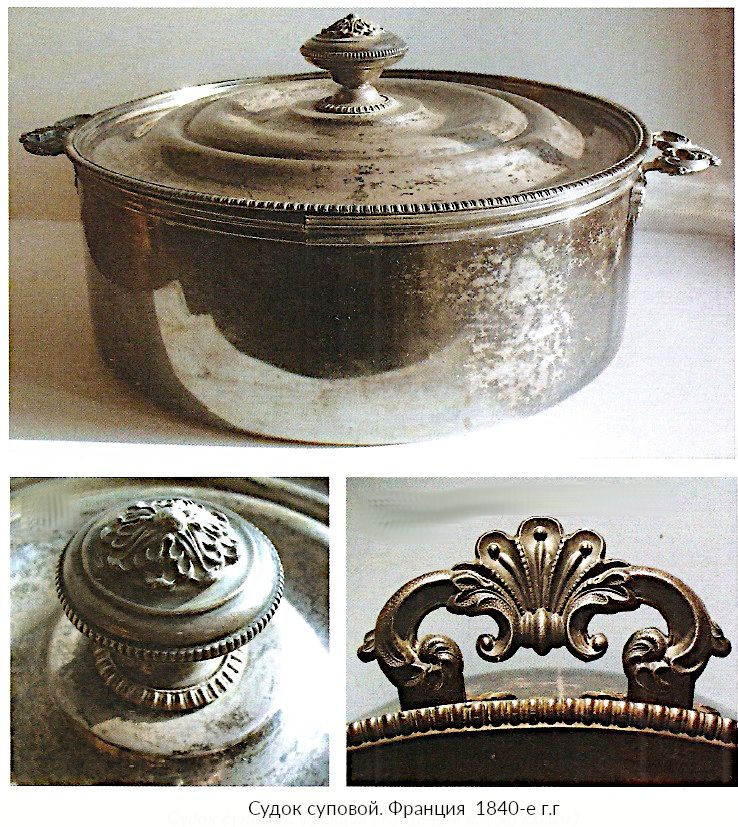
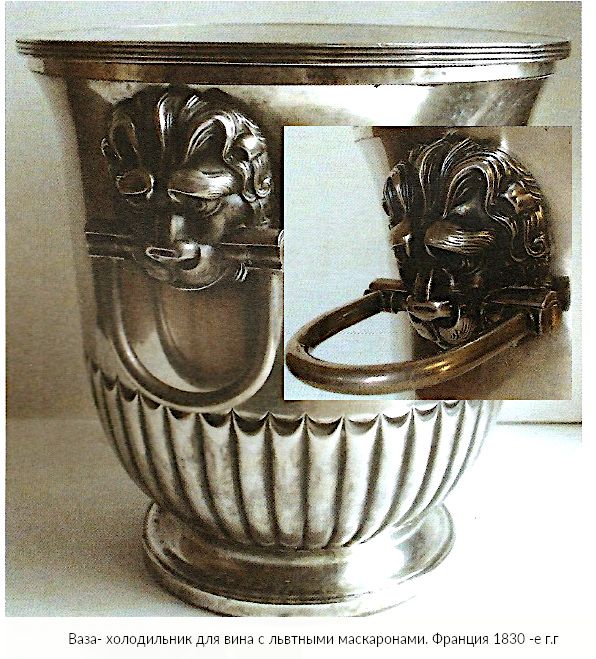
French platers avoided excess in decoration, emphasizing the elegance of forms and the functionality of their products. Clean, reflective surfaces highlighted structural details, and the decor was concise and appropriate. For example, a champagne cooler is adorned with large convex appliqués in the form of lion mascaron, whose expressive features emphasize the constructive idea. These elements are not merely decorative: they become important nodes of the object, thanks to which such elegant engineering solves handling tasks, securing the bowl with a special guard plate that ensures a 90-degree movement of the hinge with curved handles.
Studying the production technology and analyzing individual items allows us to identify key features by which French silver plate can be confidently distinguished from analogues from other countries. First and foremost, this is the quality of the top layer, which gives the items a characteristic white shine. In bright light, the surface reflects surrounding objects, while in shadows, a deep black hue appears. Over time, the items develop a dark gray patina that shimmers with the entire spectrum of rainbow hues. This phenomenon is explained by the use of a denser layer of high-grade silver, characteristic of French production (French platers often used 0.998 silver, while in Russia they used 84°, 88°, and 91° standards).
Modern features of technological culture are visible not only in aesthetics but also in the functional qualities of the products. All edges, rims, necks, and spouts of seemingly ordinary tableware are neatly folded and rolled. These elements can have a rounded-curved or stepped profile but are never found with a flat cut edge decorated with a soldered relief ornament. An important parallel can be drawn here: French items are practically devoid of such techniques, while in Russia, on the contrary, such details are quite common and usually accompanied by a special marking "SILVER BORDURE." This marking adds extra value and status to the items. While Russian craftsmen spent a significant amount of unique silver on creating visually expressive reliefs, the French approach aimed to save precious materials in details where it was truly justified.
At the same time, it is worth noting the variety of forms and the multitude of products manufactured in silver-plating factories. These items, from tableware to small details for military uniforms, such as uniform buttons, demonstrate not only high quality but also characteristic aesthetic features executed within the relevant styles of their time. Moreover, functionality is not compromised in the slightest: every detail is thought out to meet the demands of everyday use, despite the competitive aspects related to production cost-effectiveness.
These trends in production also extended to the creation of more complex combined structures, which utilized malleable silver for respectable models, where inexpensive materials served as a reliable foundation for obtaining stylish yet affordable options. This allowed all strata of society to experience the benefit and charm of aesthetically pleasing objects, which corresponded to the spirit of the time, permeated by a striving for democratization and cultural development.
The quality of the finished items and attention to detail contributed to the formation of the reputation of French platers. These masters, who knew the value of their art, created works not only for wealthy clients but also for the general public, making their products accessible to all who sought to possess beautiful yet reasonably priced items. In this dynamic, one can observe how the art of silver plating, representing a synthesis of aesthetics and functionality, occupies its unique place in the history of applied arts.
Among the many manufacturers of plates and plating items, certain masters stood out, contributing to the development of technologies and practices. Their works often reinterpreted existing forms and functions, allowing the adaptation of items to the relevant needs of their time. The level of training and professionalism of French platers created unique images and forms, making their works notable against the backdrop of the world's artistic heritage.
The interior surfaces of French vessels are processed with equal care. They show no traces of external solder, and the spout openings can be open or decorated with a regular mesh, not simply pierced. The screw grips of the lids are secured from the inside with a polished wing nut ("barashok"), and are also sometimes equipped with a fitted gasket made of sheet metal, which visually merges with the plane of the lid.
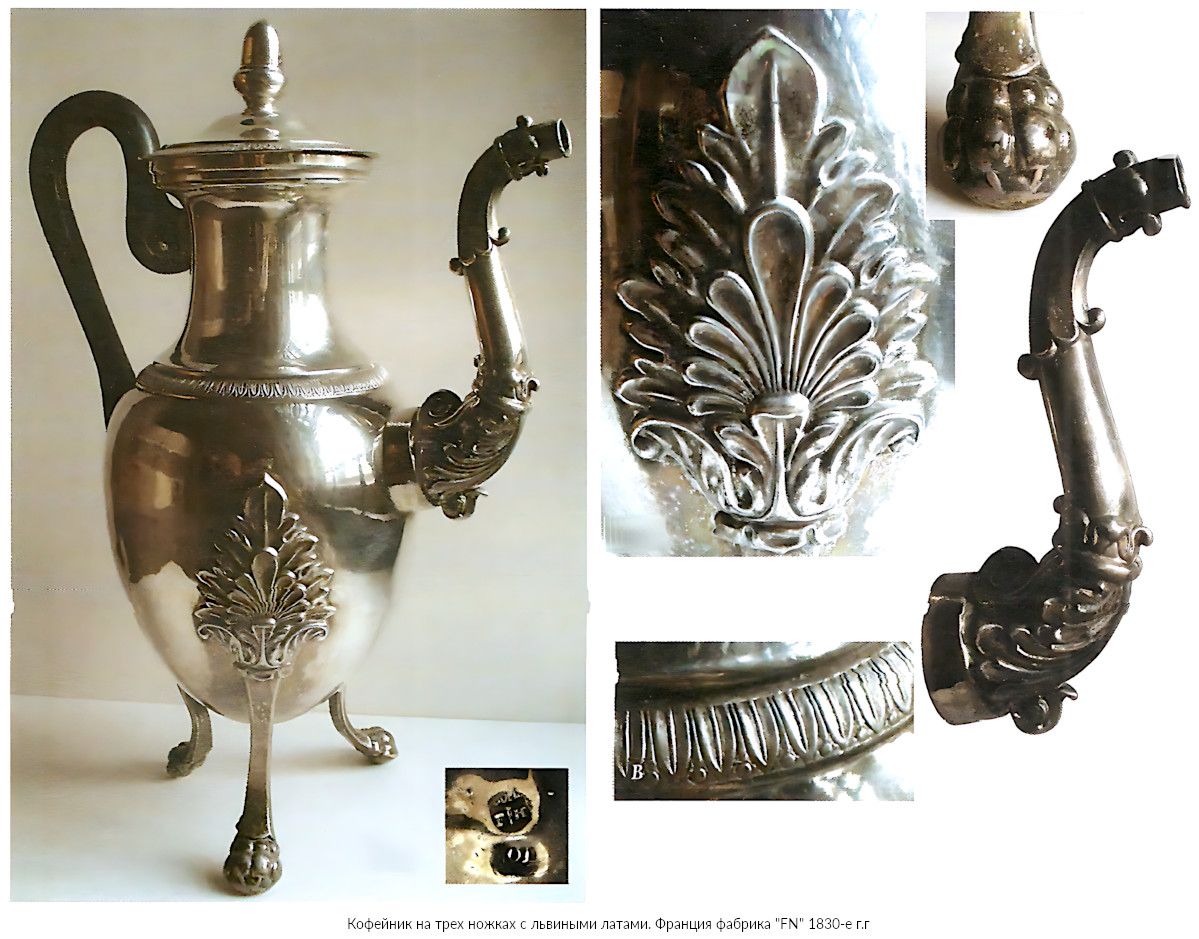
Another characteristic technological feature of French plate is the preference for using voluminous hollow parts. The hanging handles of French items are often elegant tubes, curved into circular or oval shapes. Hollow relief mascaron supports for these handles, as well as attachments for legs, including palmettes and acanthus leaves, with figured overlays and "acorns" (glands) on the lids, also emphasize the high level of craftsmanship. Whereas in Russian items one can find massive handles and legs of samovars filled with tin or lead, the French style is dominated by lightness and elegance of forms, achieved through skillful chasing of hollow parts. For example, a "tripod"-form coffee pot from the collection of the State Historical Museum (GIM), made in the 1830s, has tall, slender legs ending in lion's claws. Despite its apparent fragility, the structure is quite robust, without dents or cracks, indicating its reliability. The lightness of items often becomes evidence of their French origin.
The use of hollow parts eliminated the need for gaskets, inserts, or attachments made of thermally insulating materials such as bone, mother-of-pearl, or horn. At the same time, the large handles of jugs, teapots, and coffeepots are typically made of wood. Carved or turned handles are coated with a layer of lacquer imitating ebony, characteristic of solid silver items. The shapes of these handles are generally loop-like, sometimes featuring a small transverse projection at the top for a finger rest. Also characteristic is the French method of attaching handles to the vessel body: the narrow end of the handle is inserted into an applied groove, and its widened upper part is crimped by convex cheeks, which are connected to a U-shaped plate bracket soldered to the walls. This design may resemble a hinge and likely dates back to ancient methods of attaching lifting lids for jugs and mugs that existed in the Middle Ages.
The appearance and functionality of French plique-à-jour make it unique in the context of European artistic metallurgy. Such pieces captivate the eye with their exquisite architecture of forms and thoughtful construction, confirming the high skill of the craftsmen. It has been repeatedly emphasized that each product is created not only from an aesthetic but also from a practical standpoint, making them indispensable in daily life. Furthermore, the specifics of the manufacturing technology, the precision of the details, and the attention to structural strength also confirm the reputation of French plique-à-jour as a reliable and high-quality product, making it desirable for consumers from all walks of life.
The specifics of the production process for plated items introduce variations that are valued by collectors. Meticulous finishing, care for the smallest details, and the use of high-quality materials ensure the durability and beauty of the items, which is an important criterion for antique objects. This approach indeed highlights not only their aesthetic value but also their inherent functionality, making plated silver particularly attractive on the modern market.
Among the fortunate owners of such items, there are many stories connected with memories of their ancestors, who valued the beauty and refinement of French plating. These items, passed down from generation to generation, became not only functional objects but also symbols of style and status, reminders of noble traditions and the culture in which they originated. As a result, we have the opportunity to observe how such familiar things, seemingly simple in everyday life, become an important part of cultural and historical heritage that deserves attention and study.
The decorative craftsmanship of French silver-plated items is characterized by restraint and meticulousness. The metalwork is minimalist and includes only a few basic artistic techniques. For instance, a specific type of engraving, rare for plated objects, was sometimes used to decorate mirrors, trays, and salvers. While in Russian art this method remained beyond the pale, referred to as "appliqué, embossed with various patterns," French masters did not resort to it, considering the thinness of the applied silver layer.
During the Empire period, the most characteristic decorative element became bands of rolled ornament, most often featuring larger ornamental motifs than those found on solid silver, but with the same familiar symbols of classical art—laurel leaves, acanthus, holly, egg-and-dart, and palmettes. The primary artistic technique for decorating applied silver remained relief ornamentation, which organically combined with the technology of manual or mechanical raising. These techniques created the convexities of the item's body, the multi-profile contours of the rim, and the stepped bases of the stand. Relief accents are clearly visible both in the figured chasing of details and in the plastic expression of the object's functional nodes. The reliefs, applied with stamps and pressed using matrices, possess detailed elaboration, speaking to the high level of French artistic craftsmanship—its taste and perfect proportionality of forms.
One striking example of relief decoration is a three-legged coffee pot with lion's paw feet, bearing a mark indicating 10% silver content and the hallmarks of the Parisian factory of Firmin Hallot, registered in 1826. This item, created already at the end of the classical style, demonstrates refinement. Its large applied leg mounts occupy a full quarter of the item's height. In their silhouette, executed against the smooth background of the body, the contours of an acanthus leaf stand out in relief, with a second layer adding a radiant palmette motif. The coffee pot's spout, given a more complex three-dimensional form, is curved and complemented by a counter-scroll with a festooned edge. The composition is completed by an elegant tripod, whose legs neatly terminate in small paws with convex pads and tiny claws.
French masters creating plated items strove for harmony between practicality and elegance. Their objects, even in their simplicity of form, possess an expressiveness that makes them attractive to the modern consumer. The technologies used for decoration conveyed the spirit of the time, combining elements of classicism and innovation with the consumer trends of that era.
Often encountered are sectional linear patterns and geometric shapes that, although simple, became the foundation for complex artistic solutions. This emphasized the skill of French jewelers and demonstrated their ability to combine simplicity with artistic expression. Technological research in this aspect shows that even the slightest details of an object were considered from the standpoint of aesthetics and functionality, ensuring the durability and longevity of the pieces.
It is important to note that such items as trays, salvers, and accessories are not merely functional objects but also symbols of status, meeting the demands of their time. They brought an atmosphere of refinement and luxury into the home, which elevated the prestige of their owner among peers. The artisanal approach to quality and finishing turned every detail into a work of art, and by considering the requirements of buyers, this production created a unique sense of belonging to high society.
Let us also note that the influence of artistic movements and social changes had a significant impact on silver plating. The variability of forms and decoration expanded considerably under the influence of current fashion trends, to which craftsmen actively responded by developing new solutions. The changes that occurred in the cultural and social environment enriched the market with new experiences, merging traditional forms with innovations in design and technology.
As a result, silver-plated items did not merely retain practicality; they became part of the cultural language of their time, reflecting the needs and ambitions of society. These objects, among which one can find both utilitarian and more luxurious items, decisively entered the interiors of homes and public spaces, creating a visual dialogue between art and everyday life. Today, each of these works continues to tell its own unique story, confirming the skill and creativity of French masters of that period.
It is important to emphasize that decorative elements without functional load, so common in the works of Moscow masters such as Emme, are significantly less frequent in French plique. For example, "shirts" of garlands, foliage, and medal impressions only occasionally appear in the design of French pieces; their place is taken by concentric relief ornaments, designed as bands of flowers and leaves. The edge-masking features found in Russian "appliqué" are absent in French objects, where decorative elements merge with the overall form. These patterns manifest themselves on the convex shoulders of vessels and along the rims, often slightly set back from the edges. The relief bands used on the stepped bases of candlesticks and candelabra can range from graphically thin lines to voluminous and expressive forms that create a play of light and shadow. The reliefs could be embossed on separate strips of plated metal and then joined to the main body of the object, or they could be formed directly during the sheet metal working process. All seams and joints, regardless of the assembly method, are concealed with such meticulousness that it is difficult to suspect their presence.
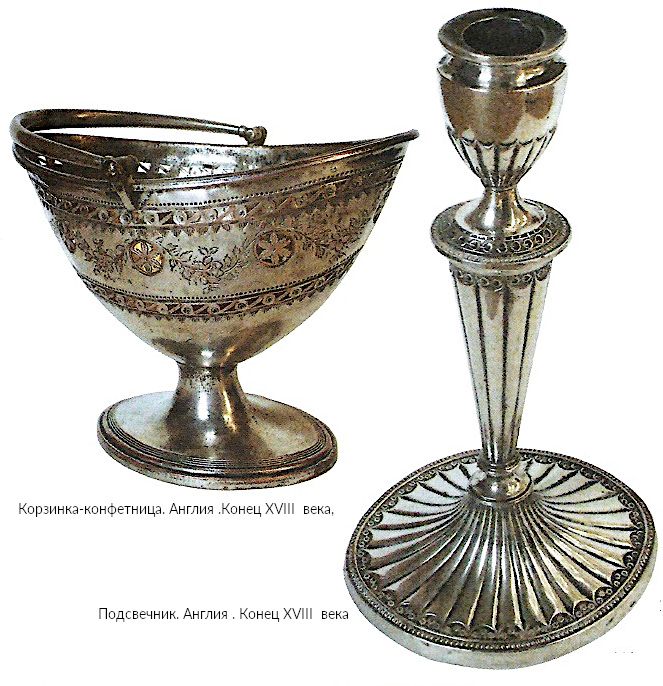
Comparing French plique with products from other European centers reveals the uniqueness of this technology and the distinctive features of the French style. In particular, it is important to note English Sheffield plate, which, being a pioneer in this field, focused on rococo forms and decoration that dominated the first half of the 19th century. Taking into account the blown and laconic forms of Sheffield products, German, Polish, as well as Russian masters, such as Emme and Ksimantovsky, adapted their models to these traditions. Unlike English products, French pieces are characterized by classically clear and harmonious volumes, radiating light and a playfulness of form. The adoption of traditional antique forms of English candlesticks, such as square bases and S-shaped branches of candelabra, also became entrenched in the manufacturing practices of Poland and Russia. The reason for this similarity was the long-standing practice of exporting English goods to Russia, which in turn influenced the perception of their aesthetic qualities. The St. Petersburg "Listok promyshlennosti, remesel i iskusstv" (Industrial, Craft, and Arts Bulletin), a supplement to the "Zhurnal obshchepoleznykh svedenii" (Journal of Generally Useful Information), even noted: "English appliqué firmly asserts itself, although it yields to French in the elegance of forms." But this reputation was not limited to appearance alone; in every detail of the model, one could feel the influence of cultural traditions and artistic heritage, which shaped high demands for both design and quality of workmanship.
It is worth remembering that the French, in creating their pieces, focused not only on functionality but also on aesthetics. They are characterized by a pursuit of lightness of form and elegance, which allowed them to become true masters capable of transforming utilitarian objects into works of art. This devotion to the ideals of beauty and practicality is clearly evident in everything, from simple cups to complex creations such as figurines and lighting elements. Every component was thought out to the smallest detail to withstand the test of time and emphasize the status of their owners, creating symbols of prestige and sophistication.
Characteristic features, such as the avoidance of excessive decoration, also distinguish French plique-à-jour among similar products from other countries. Work was carried out on various original solutions and unique techniques in processing and finishing. These technological innovations ensured high product quality, making the final pieces original and relevant, which attracted numerous clients who valued both aesthetics and functionality. As a result, the skill of French jewelers allowed them to create true masterpieces that continue to amaze with their beauty and elegance to this day.
Created with detailed attention to all aspects, these objects form not just a functional but also a cultural context of their time. Their technology and aesthetics became the antithesis of "antique" aesthetics, reflecting a more modern, dynamically changing society. Each piece of silver-plated ware holds not only practical value but also historical memory, becoming an integral part of the artistic heritage that rightfully deserves study and preservation for future generations.
One of the most striking features of English Sheffield silver became the line of products that possessed the exquisite taste of the Adam brothers. This original Neoclassical style, familiar to us from the works of Wedgwood and the interiors of Charles Cameron in the Tsarskoye Selo Palace, significantly influenced silver-plated items produced in Sheffield and Birmingham in the late 18th and early 19th centuries. The stylization of Roman-classical "Pompeian" forms is evident in the contours of vessels and candlesticks, which strive to create complex combined geometric volumes. Characteristic features include chiseled "intaglio" engraving of oval medallions and cascading semicircular thin leafy garlands, which give the pieces a special charm. The finest lowercase openwork piercing, adorning the edges and necks, makes the walls of the metal vessel resemble delicate lace. These artistic techniques, brought together, create a unique and somewhat contradictory image, characteristic of British applied art of the Modern period.
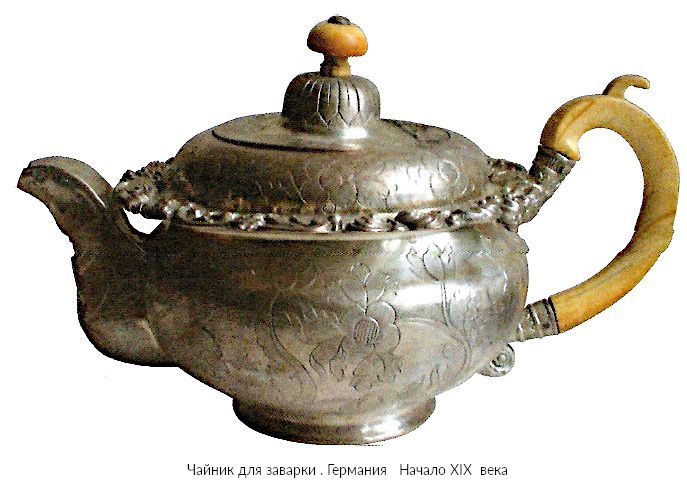
Regarding silver plating in Germany, the situation is more complex, largely due to the lack of specialized literature and precisely attributed items. However, as early as the beginning of the 19th century, plating workshops began to open in Berlin. If we consider the working hypothesis about the German origin of the unmarked early 19th-century teapot from the collection of the State Historical Museum, we can note that its properties differ significantly from French technologies and production methods. An important feature is the simple "cut-out" sheet developments from which parts such as the lid and spout are formed. A hollow applied relief border conceals the soldering line, and the embossed ornament on the surface of the body is created manually using a matting punch, leaving textured marks on the smooth metal. A mechanical combination of various styles is observed in the pairing of Empire-style handle ferrules with the eclectic shape of the body. At the same time, the unfinished edges of the parts and the thin layer of silver, as well as the presence of bone grips and a handle, raise questions about aesthetic preferences.
Comparison with English products highlights that German plated silver has its own unique characteristics, which perhaps do not deserve the same level of attention from collectors. Nevertheless, the production practices of this period in Germany still reflect an era of dynamic changes in design and technology, bringing diversity and novelty to the market. Each region, by creating its own particular approach, forms unique stylistic features, making the study of silver plating a particularly fascinating pursuit.
At first glance, comparative analysis seems to clearly favor French production; however, an interesting fact: numerous economic publications, including the "Leaflet of Industry, Crafts, and Arts," noted that "French appliqué did not enjoy the attention or recognition it fully deserved." In the years since French plating masters gained some advantage in production, they found themselves overshadowed by their English counterparts. Alas, failures in export markets caught up with French manufacturers, causing dissatisfaction and disappointment among them. Summarizing the work at the Paris Industrial Exhibition of 1846, a Russian correspondent for the "Journal of Manufactures and Trade" reported: "The production volume of French silver-plated items remains at the level of eight million francs, and participation in this sector involves two thousand workers. However, under the pressure of customs restrictions, this industrial branch could not achieve success either in design or in prices and was displaced in foreign markets by English analogues."
Moreover, in the mid-19th century, French production of plated items and the entire artistic metalworking industry faced the threat of a fundamental restructuring, provoked by the technological revolution. Innovative chemical and electrochemical methods significantly altered existing technologies. Traditional mechanical methods of joining metals were replaced by new copper-nickel alloys—such as nickel silver and German silver—which provided a durable and bright metallic luster. Electroplating allowed for the creation of perfectly even and smooth coating layers, which could be applied over inexpensive copper alloys. Discovered as early as the 1830s, these new technologies rapidly developed and became increasingly relevant on the European industrial stage. Russian economic observers noted that within a decade, the cost of items made from silvery alloys had decreased by a quarter. By the 1840s, "electroplated German silver" began to displace products made from silver plate from the market.
Thus ended the era of plating production, which had lasted in France (excluding the preceding period) for about half a century and left behind a collection of high-quality artistic and household items, created to allow the population to enjoy beauty that was unattainable against the backdrop of a shortage of pure silver.