В нашем Telegram-канале — редкие картины, старинные предметы роскоши и увлекательные рассказы о мире коллекционирования. Подпишитесь и откройте для себя сокровища искусства!
Secret Lives of Forgotten Masterpieces: What Lies Behind the Glitter of Church Relics
1.2КJuly 1, 2025Серебро
Let's be honest: when was the last time you stood before an antique object without thoughts of dust, museum etiquette, and boring captions?
Yet behind every gleaming object lies an entire drama, encoded in silver and gold leaf. Few have heard of the intrigue, cunning, personal ambition, and sometimes, hidden pain that fill these seemingly "faceless" relics.
How many notice that within the ornate swirls of an antique tray echoes the reverberations of European cultural revolutions?
Or that an ordinary church salt cellar is actually a key to understanding imperial intrigues?
I promise: by walking this path with me, you will see not only 18th-century art differently, but also the roles of the people who stood behind the creation of these objects.
Perhaps this will help you discover unexpected facets in your own life—after all, each of us, in one way or another, keeps our own relics.
Archbishop's Fashion as the Scenography of a Worldview
Moscow in the mid-18th century. A city where Baroque domes seem to have gathered in a round dance, and within monastery walls—an eternal competition between tradition and novelty. At the center of this fragile balance is Metropolitan Platon Levshin, a figure mature beyond his years. He is 30 years old, and for the anniversary, Empress Catherine II presents a special gift—purple Venetian velvet (befitting royal blood) and money to create new vestments.
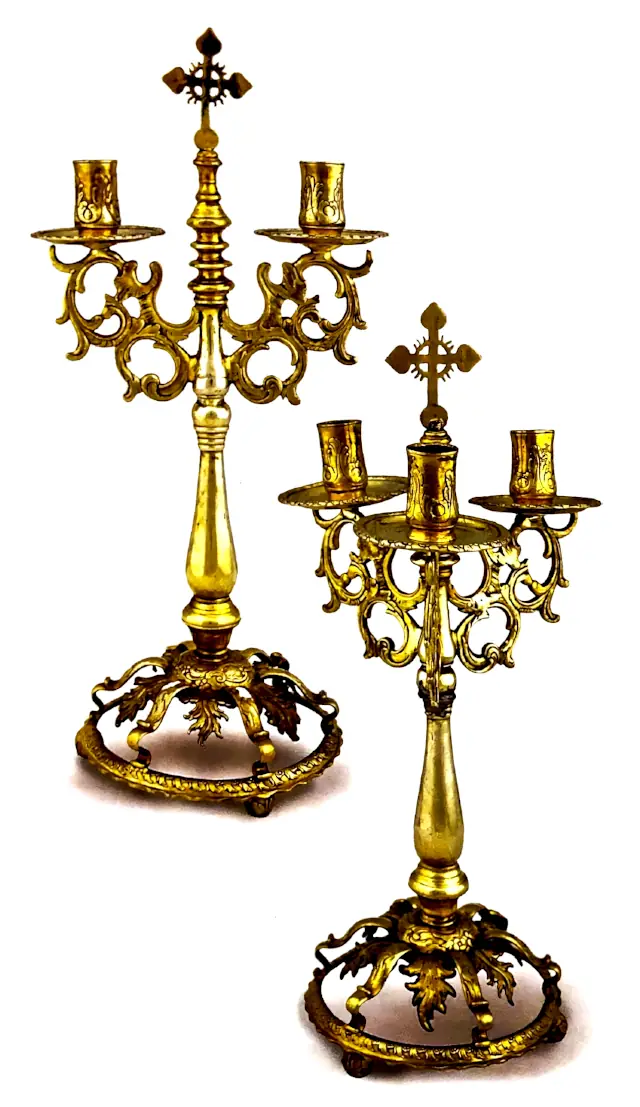
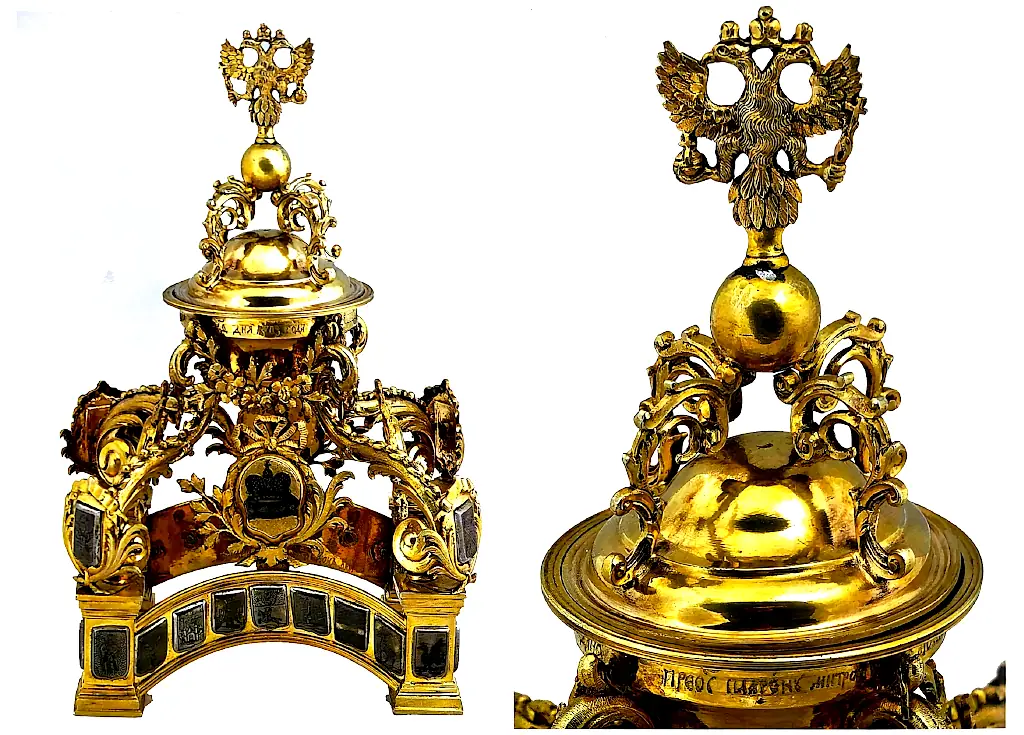
Archbishop's Candlestick (trikirion). 1768.
Platon dreams: let the monastery shine so brightly that even the icons gasp. He does not limit himself to vestments—he commissions new church candlesticks, hand-washing vessels, plates, and staffs from the best masters in Moscow and St. Petersburg. At this moment, he essentially becomes the director of a whole alchemy: he melts down old, half-decayed silver, giving it a second life—now as an embodiment of himself, his idea of beauty.
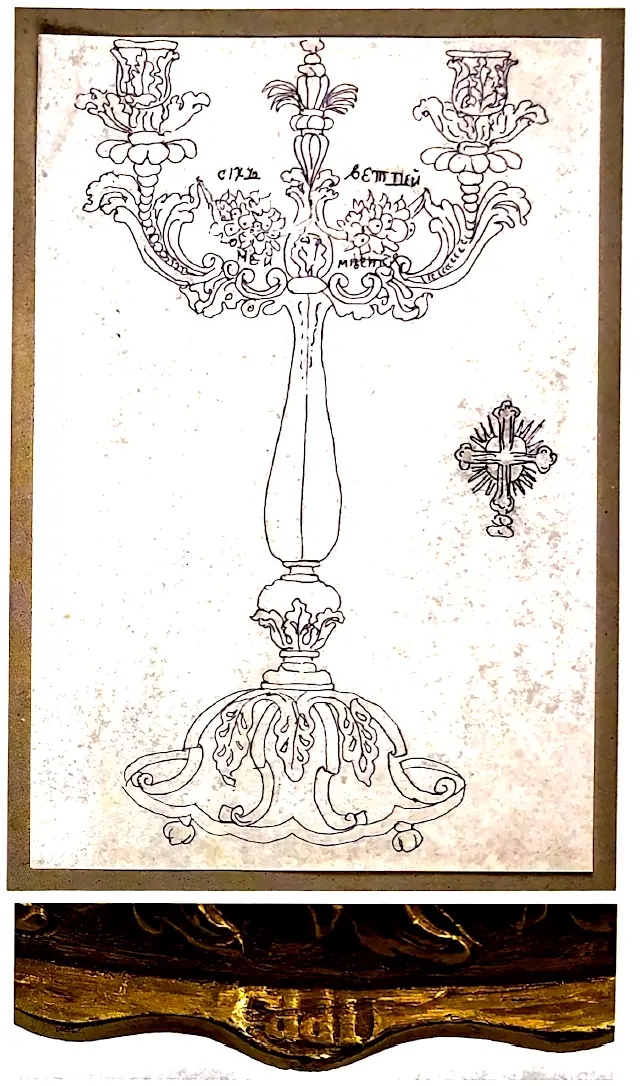
Hallmark of the English master Johann Peter Roberts on the archbishop's candlesticks.
In these details lies an unexpected injection of Europe into Russian culture. Contracts with invited masters contain surprisingly modern requirements: to create objects not only "in the manner," but with individuality, lightness ("as light as possible, so that hands do not tire"), and high artistry.
The English silversmith Johann Peter Roberts receives blueprints where Baroque still seems to clamor, but soon the foreign artist rejects outdated luxury: "in the current manner, it is not fitting for them." The Baroque's lush grape leaf gives way to the energetic fragility of Rococo—the fashion of a new era, unexpectedly finding its way onto the Moscow liturgical table.
Candlesticks are not merely ritual objects.
This is a manifesto: The Moscow Church is open to European winds, capable of absorbing foreign tastes, making them its own, and—pay attention—thereby asserting its intellectual freedom. And indeed, in every detail lies an internal generational conflict: old masters grumble, young ones experiment, and Plato's task is not only beauty but also ideology.
And today, such decisions—as with many major designers now—were born not for external polish. It is a way of speaking to future generations, as if leaving an encrypted message: look deeper, do not fear change, do your own thing.
The Secret Language of Symbols: Silver, Gold, and the Enigmas of Style
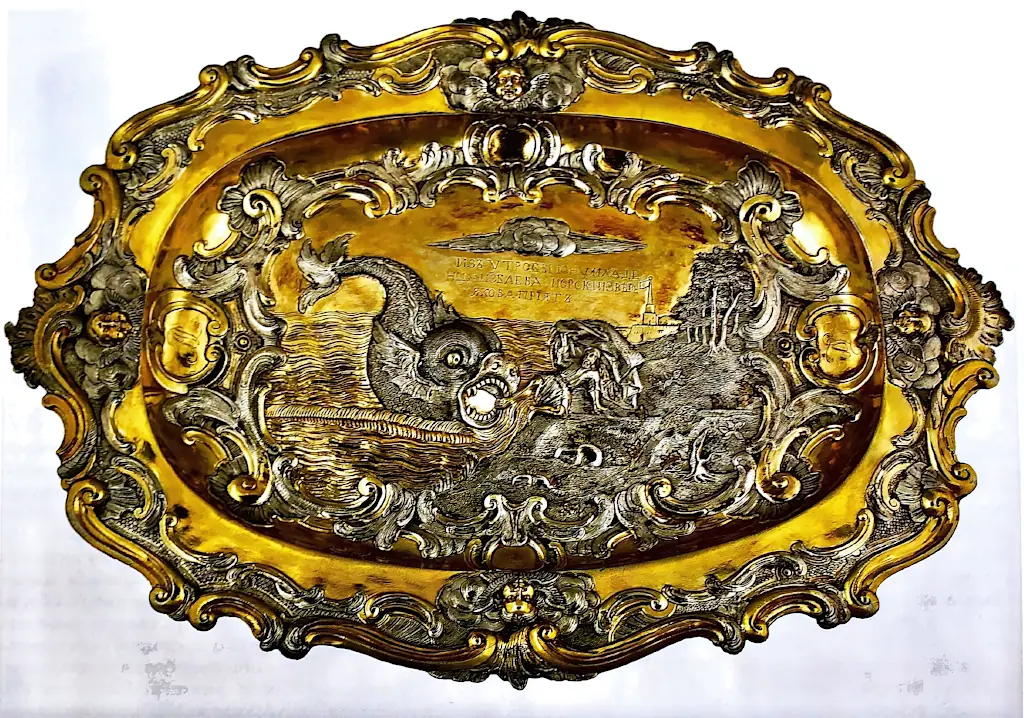
Let us move to the workshop. A table sparkles with fine shavings, the heat of metal like the pulse of time. Master Klas Johan Ehlers—a German from St. Petersburg—receives an order: a heavy silver dish and a ewer, which will not only amaze guests with the refinement of Rococo but also tell an entire biblical story.
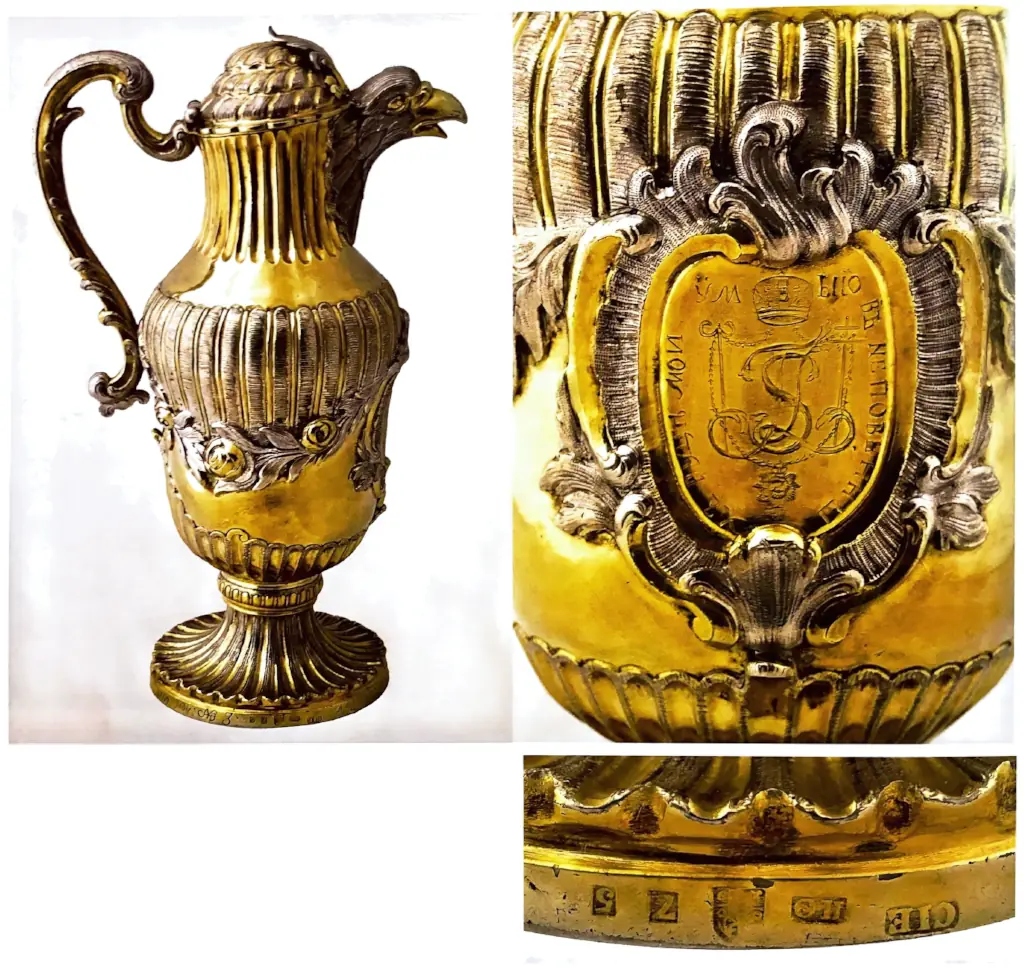
Hallmarks on the ewer and dish by silversmith Klas Johan Ehlers.
The ewer—a gleaming vessel with a bird-shaped handle, a slightly magical, animal-like face. Engraved on the dish is the story of Jonah and the whale, an ancient myth of hope. The monastery inventory would certainly note whose initiative was behind the subject—the Metropolitan himself chose this motif, hinting at an inseparable connection with the Resurrection. In every curve lies a clue, in every decorative line—a way to conceal or emphasize the essence of the world.
In an era when churches served as media centers, the artistic program of an object was subtle politics, a visual message: "See? I know not only the canons but also the meanings."
Even the "incomplete gilding" (due to lack of funds) becomes not a flaw but a refined artistic technique: the silver gleams against contrasting backgrounds, as if illustrating the eternal struggle between flesh and spirit.
This is not merely tableware—it is a "code" that every initiate can read.
Today's artists, designers, and programmers similarly embed Easter eggs, hidden ironies, or homages to their idols. It is no coincidence that Rococo, once a courtly trend, is returning in architecture or fashion: fashion is always a play on meanings, the skill of dressing feelings in new forms.
Objects Bearing Destiny: Between Mystery and Revelation
Turn the page further—and you see not only monumental items but also intimate, personal objects. Here is a tiny manuscript on Persian parchment, written on the thinnest, almost transparent leather—as if the paper itself wants to vanish, dissolve in time. This book contains the service rite of a bishop, but also a hidden, almost magical meaning: rumor has it the leather is made from snake skin—a symbol of wisdom and the eternal struggle against evil.
The binding is a silver lace in which the life of the grapevine swirls. The artist draws inspiration from German book covers, taking the form from the West and the vibrant symbolism from the East, weaving together a unique cultural DNA of Russia at the turn of the century. The book seems to become a bridge between the Old and New Testaments, between the ancient and the modern, between the sacred and man.
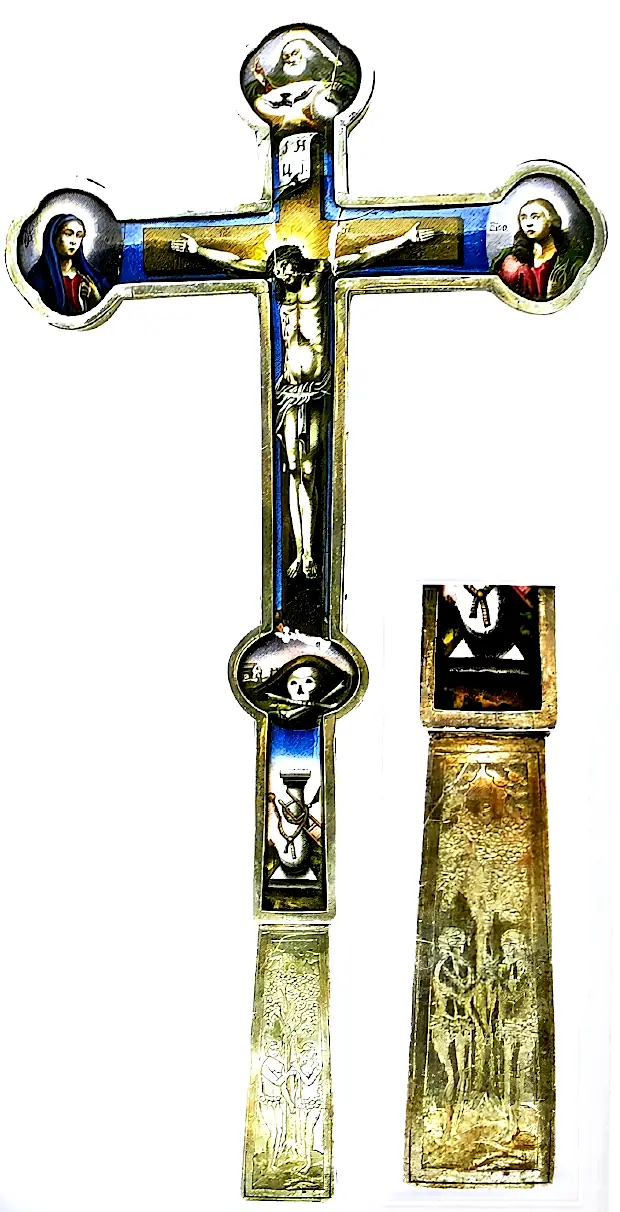
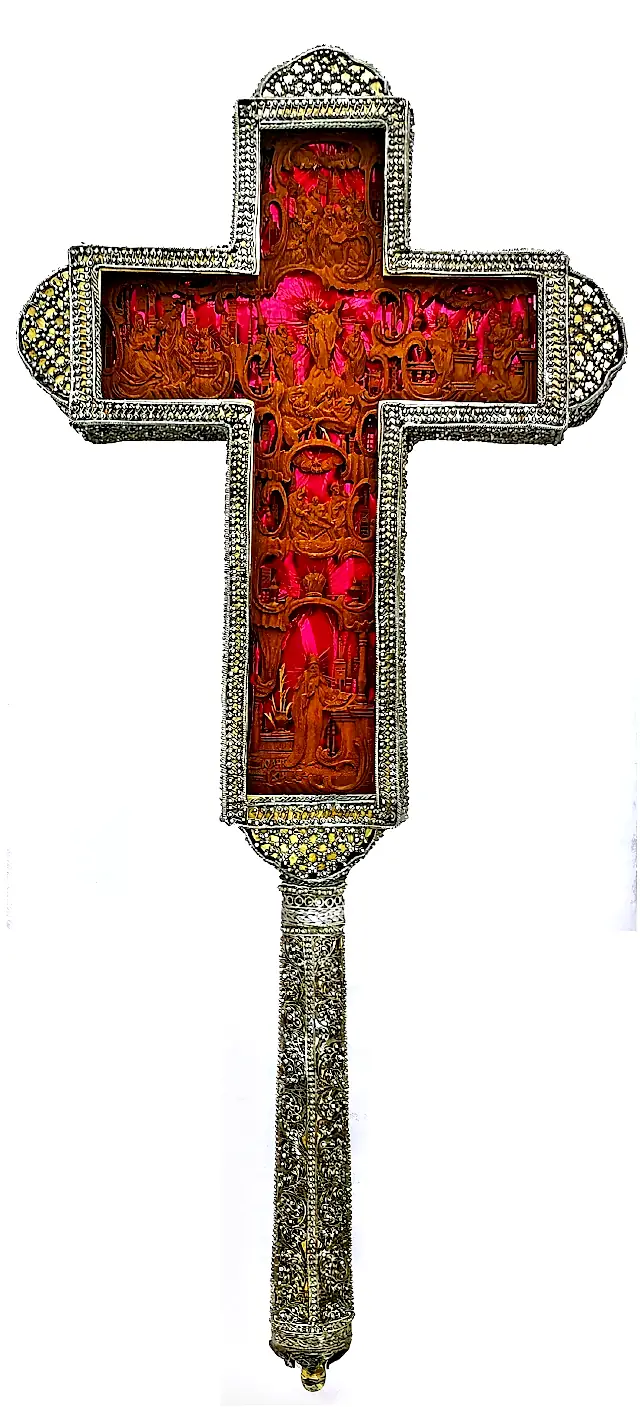
Or a wooden prayer cross—the work of an anonymous genius who may have been trained at the Academy of Sciences. It depicts scenes of the rarest iconography: Christ the "Gardener" after the Resurrection, Saint John, the scene of the Fall, Pentecost with the Cosmos.
This is not just religious contemplation—it is a personal astrological calendar, a diary of spiritual journeys, a book read not with the eyes but with the heart.
Partly because the meaning of the entire "plot" is still unclear—doesn't the same mystery lie within each of us?
The fate of relics is equally astonishing: some vanish without a trace, others echo and migrate between monasteries, being reborn in new forms. This resembles the world of digital memes and remixes: any story can return in a new guise as long as there are those who resonate with it.
A Gift That Reveals Secret Connections
But it also happens that an object is a sudden guest at a major event, a turning point in destiny. The year 1787: Catherine II celebrates the anniversary of her accession to the throne. Moscow artisans present her with a salt cellar—a symbol of the sovereign's favor. A day later, the gift, laden with titles and coats of arms, is returned not to anyone, but to the newly appointed Metropolitan Platon. At that moment, the "salt cellar" ceases to be mere tableware—it becomes a bridge between the throne and the church, a sign of invisible loyalty and (perhaps) a secret agreement.
Documents reveal: it is not the decoration but the inscription that explains why the object is so important to its new owner. Royal items in the monastery received new names, new narratives, new symbols.
Just as today, an object entering a museum often gains a new biography through the contexts of curators, exhibitions, and articles written about it.
Don't you recognize in this any object that begins to mean more to you than it actually was?
Your Key to the World of Relics
Now, looking back, it is impossible to view any antique object merely as a beautiful trinket. Each relic is a secret diary of its era, intertwining passion, intrigue, personal choice, and the dream of beauty that transcends time. Their fate is both our heritage and a reminder that any object comes to life when you discern the story behind it.
And if you suddenly find yourself in front of a museum display case, linger a little longer. Look closely at the delicate lines of the silver candlesticks, find the barely noticeable monogram, try to hear the other life hidden behind the engraving.
What object from your past has hidden its meaning?
What could it become for future generations?