Artistic casting of the Urals
304Nov. 25, 2024Скульптура
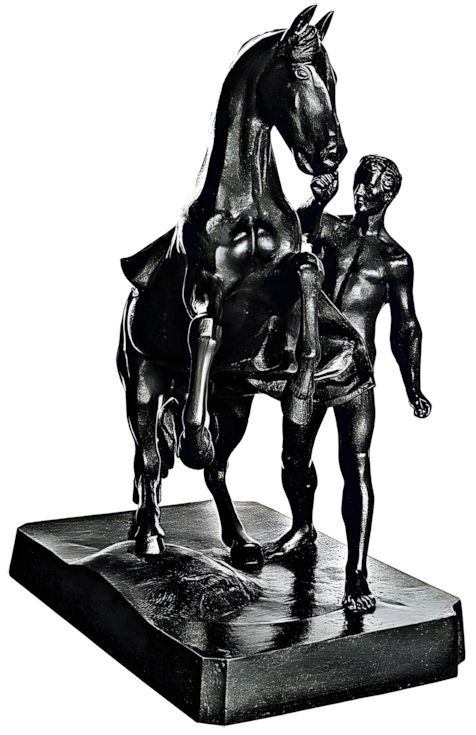
By 1938, the artistic production at Uralmashplant had achieved significant results. Modern equipment and the use of advanced technologies allowed for the creation of castings that were not inferior, and sometimes even superior in quality to the products of the Kasli plant. Figurines and large sculptures produced by the workshop's masters found admirers both among local residents and beyond the region. The demand for cast iron products grew, and the plant began to actively participate in various exhibitions and fairs, showcasing its artistic castings.
Among the most famous works of that period, one can highlight not only themes traditional for Kasli masters, such as the horse and rider, but also new ones, created in the spirit of the times—sculptures reflecting the achievements of the Soviet era. Cast iron pieces depicting workers, collective farmers, and soldiers, created at Uralmash, added extra value to the works, emphasizing a renewed perspective on art within the context of socialist realism. These items sparked interest among collectors, and gradually, owning such castings became a sign of status and prosperity.

By the late 1930s, a unique "foundry brotherhood" had formed at Uralmash, which included not only experienced masters but also young workers eager to learn from their senior comrades. This led to the transfer of skills and secrets of artistic casting from one generation to the next. Many aspiring masters, inspired by the successes of their predecessors, sought to create their own original works, which were distinguished not only by quality but also by a unique style, enriching the plant's overall assortment.
However, against the backdrop of overall successes in the production of cast iron artistic casting, the lens of change in the 1940s, particularly on the eve of the Great Patriotic War, presented serious challenges for Ural enterprises. The situation on the fronts required the redirection of resources and human energy to other needs, and artistic production faced the threat of reduction. The forgotten passion for art, unfortunately, had to take a back seat, giving way to the realities of a wartime economy.
Nevertheless, even under wartime conditions, preserving the skills and knowledge of the foundry artists became crucial for the future revival of artistic casting. The specialists who worked during those difficult times understood the value of their craft and tried to pass on the lessons learned to young masters, so that after the victory, the former glory of Uralmash as a production center for artistic casting could be restored.
With the end of the war, the question of resuming artistic production at the plant arose. The masters, returning to peaceful life, undertook the study of archives and lost technologies, and within a few years Uralmash once again became a sought-after producer of artistic castings. Unique traditions were revived, and new directions also emerged, allowing fresh ideas and craftsmanship to be introduced into the art of casting.
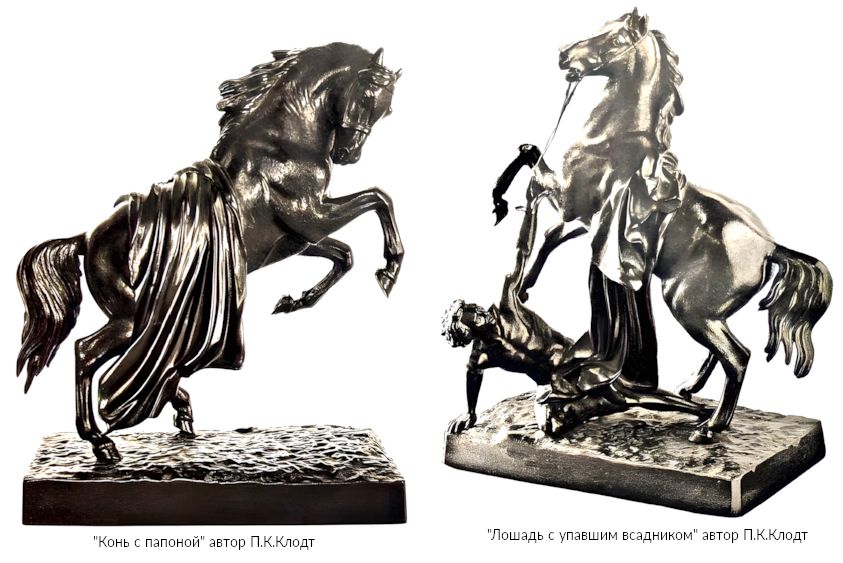
The history of artistic casting at Uralmash, which began in the 1930s, continues to be an integral part of the region's cultural heritage, and the products of the plant's masters are still valued by collectors and connoisseurs of beauty.
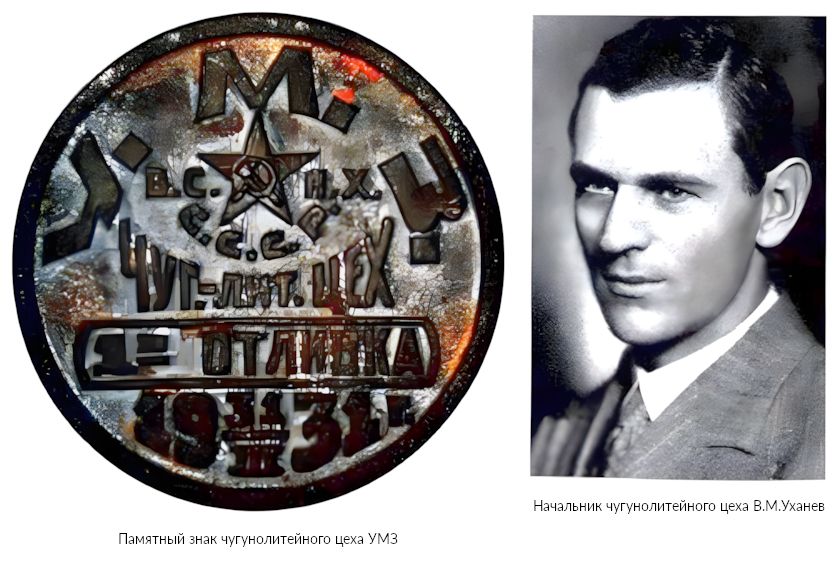
The recollections of Nikolai Ilyich Zakharov, a veteran of workshop No. 34, allow us to better understand the specifics of artistic production at the Uralmash plant. "...practically all castings were created based on models from Kasli, and over three years a significant number of various products were cast. Each of them bore the mark 'UZTM'. However, in fact, the castings were not stamped that often. The oval stamp with the stylized abbreviation 'UZTM', although approved in 1933 in connection with the renaming of the Ural Machine-Building Plant to the Ural Heavy Machine-Building Plant, only came back into force from the end of 1934 for main products. Artistic castings, which were not on the list of the workshop's main products, were not subject to stamping. The stamp was placed only on castings intended as official gifts, as well as on items ordered by state and party institutions for awarding winners of various competitions. Small household items, such as ashtrays, were not subject to marking, although they were in high demand and popular as gifts.
The initiative of the Uralmash workers to produce artistic castings was enthusiastically supported by the party and Soviet authorities in Sverdlovsk. This process was actively covered in the Ural press, which ultimately stimulated the management of the Kasli plant to resume its previously closed production in mid-1934. In Kasli, work began again on forming a team of molders and chasers, as well as on inviting experienced masters to train young people. Assembling the model collection was not without difficulties, including the need to retrieve bronze models from the Sverdlovsk Regional Museum. Thus, the interest and creative approach shown by the Sverdlovsk residents helped the Kasli residents resume the foundry production of 'cabinet' small-form sculpture.
In the summer of 1934, the workers of Uralmash presented the writer A. M. Gorky with several samples of new Ural artistic cast iron. In response, he sent them a thank-you letter, in which he noted: "It seems that now, when our working people are beginning to decorate their homes, your work is very timely and will surely be in demand. However, it seems to me that the black color makes the figures gloomy, and many may not like this. Could there be an option with bronzing the cast iron? If this is possible, it would be worth expanding the assortment and increasing the sizes of the products so that they are suitable for decorating squares and building ornamentation. One could create copies of famous sculptures from both antiquity and modernity, for example, copies of Rodin's 'Balzac,' as well as works of our leaders and Soviet sculptors, for instance, 'Women of the East'..."
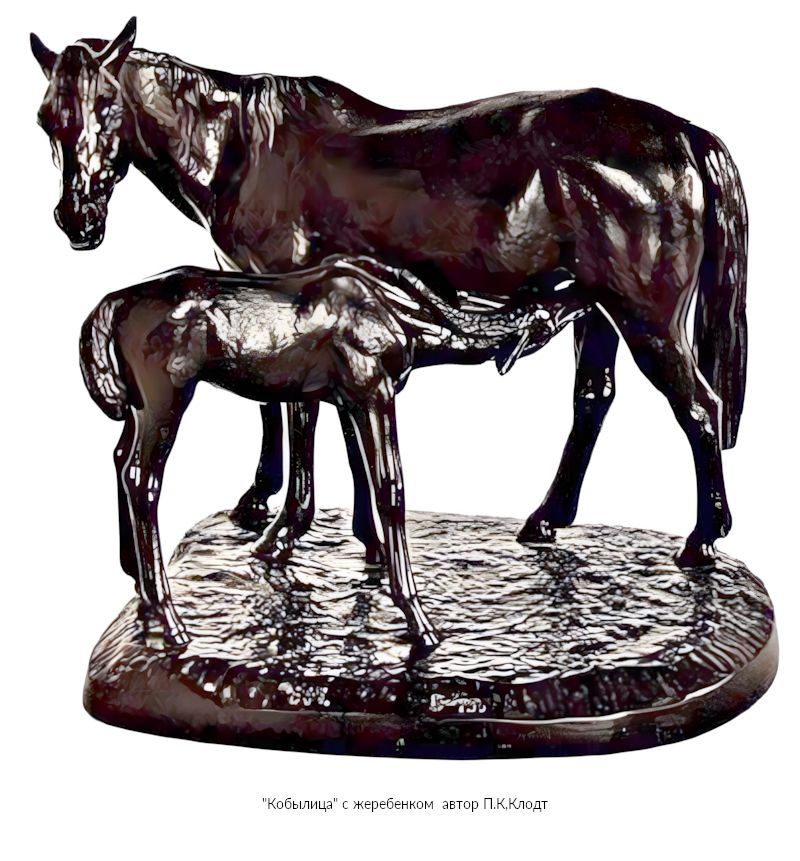
Gorky's letter demonstrated public interest in the works of the Uralmash workers and emphasized the importance of the aesthetic aspect in artistic casting. This served as an additional incentive for individuals at the plant to continue experimenting and expanding their creative horizons, seeking new forms of expression that could generate even greater interest from the audience. The masters' striving for innovation and improvement of their works anticipated the plant's further successes after the war, when traditions were restored and new ideas were implemented, leading to the enrichment of artistic casting.
The continuous development of artistic production at the Uralmash Plant in the 1930s and beyond became the foundation for the formation of unique creativity and collaboration between masters of various generations. The combination of traditions with modern views on art contributed to the creation of works that continued to evoke admiration and recognition up to the present day, leaving an unforgettable mark on the cultural history of the region.
Gorky's advice became a real incentive for the Uralmash workers, and in the period from autumn 1934 to summer 1935, the plant created many unique items for decorating the interior of the Uralmash Plant club. Among them, it was decided to cast bas-reliefs of such iconic figures as Lenin, Stalin, and Ordzhonikidze, as well as figurines and busts of production leaders. All these works were executed from original models by the talented sculptor Nikolai Nikolaevich Gorsky, about whom much is known today.
Nikolai Nikolaevich Gorsky (1900–1981) was born in Rostov-on-Don, where he received his artistic education by graduating from the evening department of the Art School. His path then led him through the Kharkov Art School and the Kiev Art Institute, where he studied under the renowned professor F.G. Krichevsky. In January 1932, Gorsky moved to the Urals, to Sverdlovsk, to lead the fine arts circle at the Uralmashplant club. In 1933–1934, he was actively engaged in drawing and created a series of linocuts, including portraits of famous figures—Lenin, Stalin, Kalinin, Gorky, Chekhov, Pushkin, as well as Luxemburg and Liebknecht. A year later, he produced plaster works "The Molders" and "The Skater-Athlete," and by early 1935, his portrait busts of the first Stakhanovites of UZTM had been cast in iron. From mid-1934, Gorsky worked as an instructor at the Sverdlovsk Regional House of Amateur Art, organizing exhibitions for amateur artists and publishing interesting articles in local publications. The announcement that the Kaslinsky Plant needed sculptors became a turning point for him, after which he moved to Kasli, where he worked as a factory sculptor (1935–1939) and taught at the plant's School of Artistic Casting Masters (1937–1940) and at Vocational School No. 18 (1941–1944). Gorsky became the author of numerous sculptural portraits, including those of Pushkin and Gorky, as well as figurines such as "Rabfakovtsy," "Papanin's Team," "Marina Raskova," "The Liberated Slave," and figures for the fountain "The Fisherwoman" (cement, 1936) and the sculptural composition "Motherhood" (cement, 1939). After the end of the Great Patriotic War, he continued teaching at the Art and Craft School in Rostov (1946–1949). With the departure of N.N. Gorsky, Uralmash and its iron foundry suffered significant losses, as great hopes had been placed on him to expand the range with modern models of "Kasli-style" artistic casting for UZTM.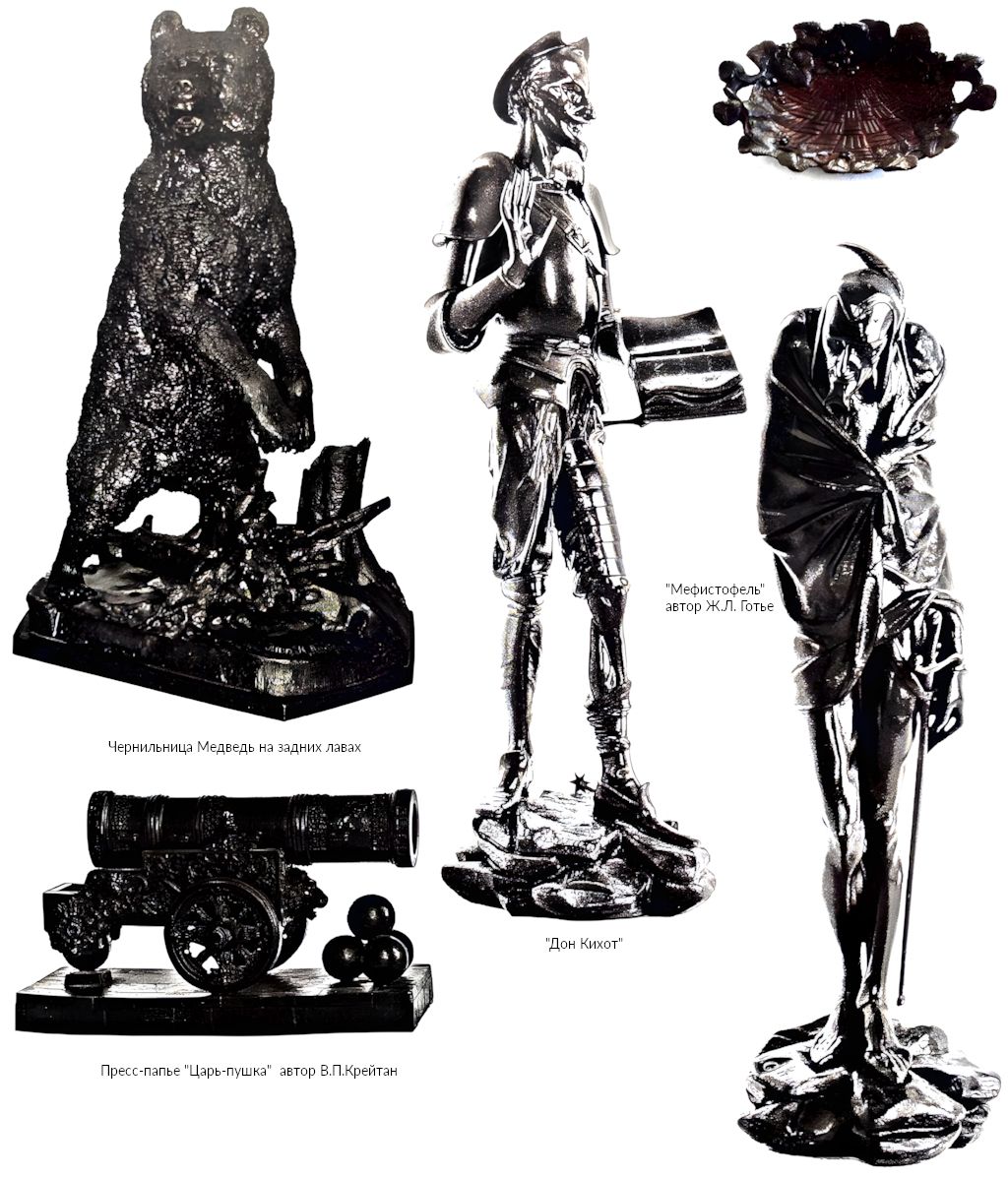
For the 25th anniversary of the Sverdlovsk State Academic Opera and Ballet Theater named after A.V. Lunacharsky, which served as the "cultural patron" of the Uralmash Iron Foundry, an entire display case featuring 25 of the plant's best examples of artistic casting was presented. Unfortunately, by the time of "perestroika," only two large castings remained in the theater—"Don Quixote" and "Mephistopheles."
Despite the significant achievements of Sverdlovsk foundry workers, artistic casting did not receive sufficient development. At the end of 1935, the newspaper "Izvestia" reported that "...artistic casting at Uralmash is losing its legitimate status and finds itself in an illegal position." The director of Uralmash, Comrade Vladimirov, explained this by saying that artistic casting distracts the workshop from fulfilling its main tasks, adding that its economic feasibility was questionable. However, the latter statement cannot be agreed with, as the demand for artistic casting was high. In the note "Artistic Plaster Products," published on February 18, 1936, in the newspaper "Uralsky Rabochiy," it was reported that "The Sverdlovsk Museum of Artistic Cast Iron is organizing the mass production of plaster copies of the best works of the Kasli masters." The list of selected copies mentioned such famous works as "The Prisoner of the Caucasus," "The Demon," "Don Quixote," and other works, totaling 20 items. For educational institutions, monuments and busts of great Russian writers and composers were planned to be made.
By the end of 1936, all the craftsmen who had previously been invited to Sverdlovsk had returned to the Kasli plant.
In the spring of 1937, unexpected events occurred—the director of Uralmash, L.S. Vladimirov, was arrested. In mid-1937, the new plant management decided to completely cease the production of artistic casting at UZTM. At a general party meeting of the iron foundry workshop held on September 11, 1937, the workshop head V.M. Ukhanov was reprimanded "for connections with an enemy of the people—the former director of UZTM Vladimirov," and on November 4, he was expelled from the Bolshevik party "for organizing the production of bourgeois casting, which distracts the workshop from its main tasks." Soon, V.M. Ukhanov was also arrested and executed on January 14, 1938. He was only rehabilitated on November 3, 1956, posthumously. In our opinion, the breakthrough of artistic casting at Uralmash was largely undermined by the political repressions of 1936-1937, and not by the events of the Great Patriotic War, which until recently was considered the main cause of stagnation.
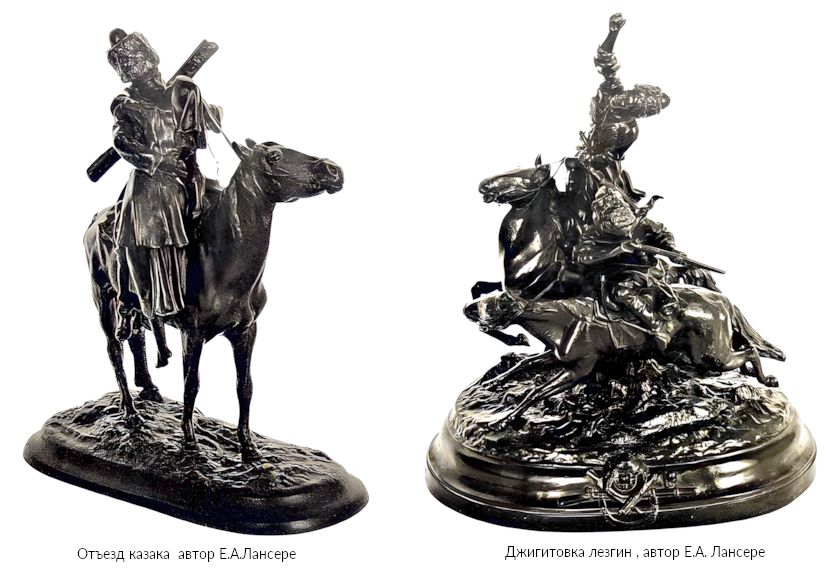
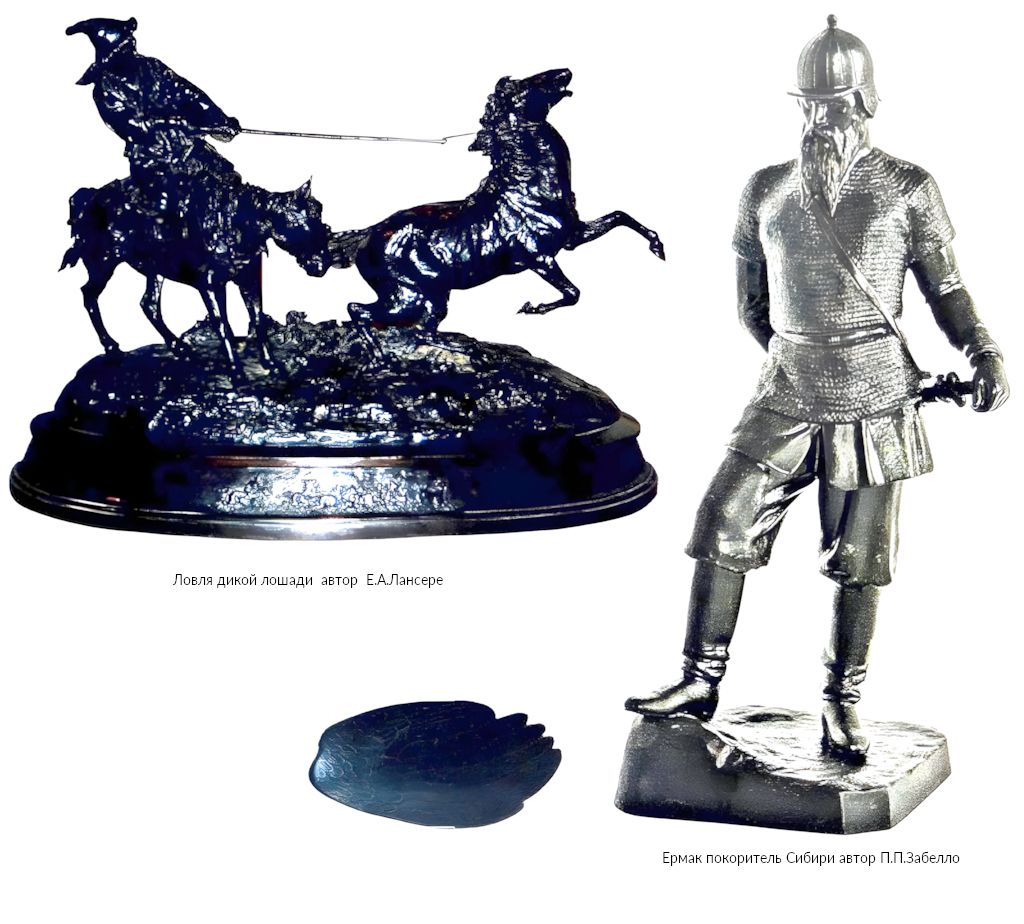
In the years preceding the Great Patriotic War, artists and foundry workers of the Uralmashplant continued to create unique examples of artistic "cabinet" casting. In the 1940s, cases of fulfilling orders from high-ranking officials and party leaders of Sverdlovsk were recorded. One striking example was the creation of the sculptural group "Catching a Wild Horse" by the famous sculptor E.A. Lanceray in 1944, which the plant's masters presented to Mr. Stephanson, the secretary of U.S. President F.D. Roosevelt, during his visit to Sverdlovsk.
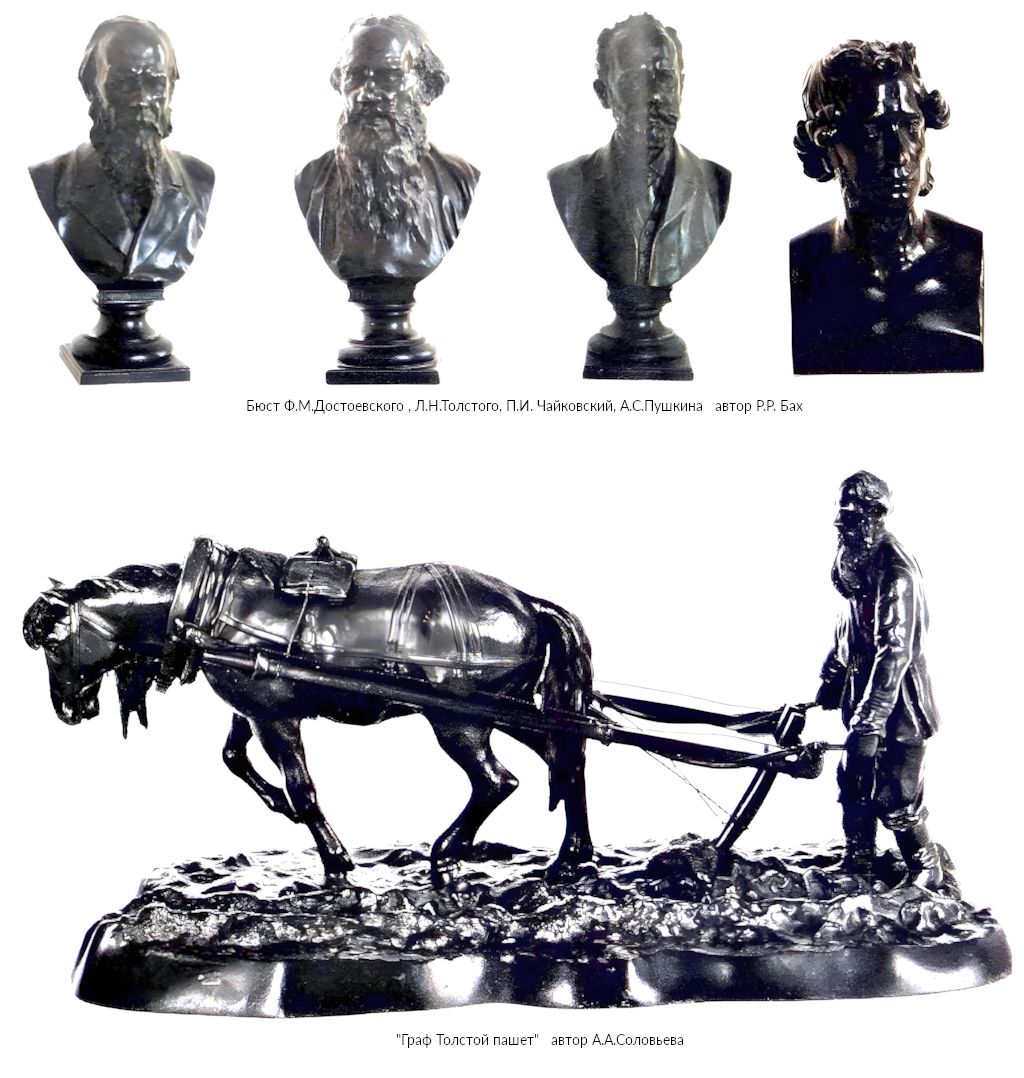
However, despite such individual achievements, the overall quality of artistic castings produced by UZTM in the 1950s-1960s significantly declined compared to the samples made between 1934 and 1937. Many of these works lost their artistic value and did not generate the proper interest from collectors. Nevertheless, samples of artistic casting from that time can still be found in museum collections and private holdings, although their number is quite small. The problem lies in the fact that until recently, these items were not systematically collected, as researchers were not aware of the "Kasli roots" of Uralmash's iron casting production. Furthermore, for the accurate attribution of unmarked castings, it was necessary to restore a complete catalog of all models produced at this plant, as well as to know the history of how each specimen entered a collection.
The well-known Ural local historian and collector of Kasli artistic castings, I. M. Peshkova, noted in her article "Kasli at Uralmash," published in the newspaper "Uralsky Rabochy" on February 26, 1998, that finding an artistic casting with the Uralmash mark is a real stroke of luck for a collector. We can add that the unique specimens of artistic "cabinet" cast iron, created between 1934 and 1937 at the Uralmash Plant, undoubtedly occupy a special niche among antique rarities of the Soviet period. This is a source of pride, as such rarities can still be discovered—the main thing is to know how to recognize and appreciate them.
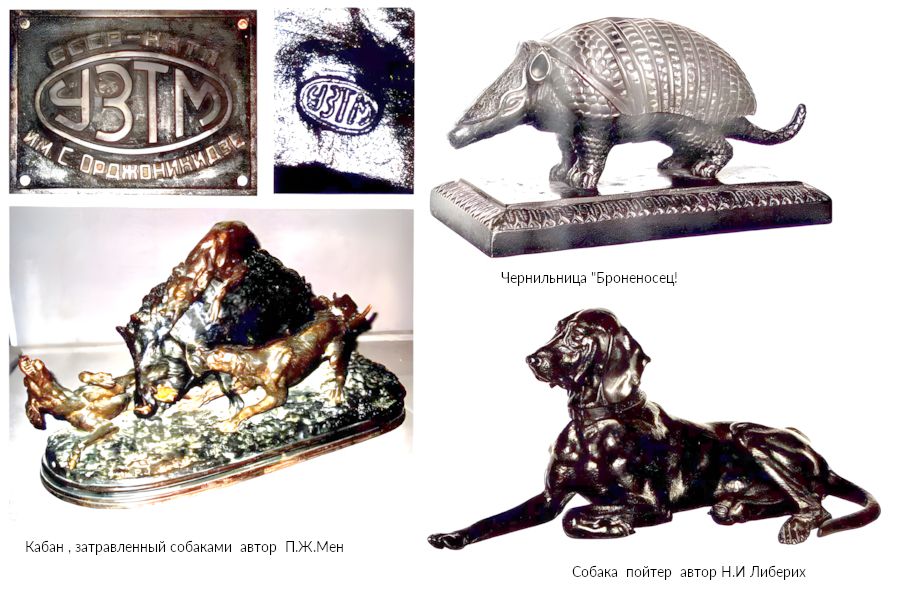
To preserve and revive interest in the works of Uralmash artisans, it is important to remember that artistic casting is not merely a production process, but an art that combines traditions and modern ideas, a unique style, and high craftsmanship. Preserving this heritage is crucial for future generations, who will be able not only to admire the works but also to draw inspiration from the richness of Ural artistic culture. Recalling the successes of the craftsmen of the 1930s, it is important to continue studying and popularizing their work, which will help maintain a living connection between the past and the future of artistic casting at Uralmash.
Despite the difficulties and losses, the history of artistic casting at Uralmash continues to inspire both masters and art lovers, underscoring the undeniable significance of these works for the region's cultural heritage. We are obliged to preserve this contribution to history so that future generations can not only acquaint themselves with the achievements of their predecessors but also move forward, creating new unique works in the spirit of the Ural tradition.