В нашем Telegram-канале — шедевры живописи, истории уникальных артефактов и эксклюзивные находки. Присоединяйтесь!
Nazi porcelain
2.7КNov. 21, 2024Фарфор
In 1933, the National Socialists came to power, and from that moment on, the implementation of a new ideology began in Germany. Strict regulation and rigid control of all aspects of life contributed to the formation of an extraordinary societal structure, which manifested itself first and foremost not in monumental art, but in the art of small forms, including decorative works and everyday objects.
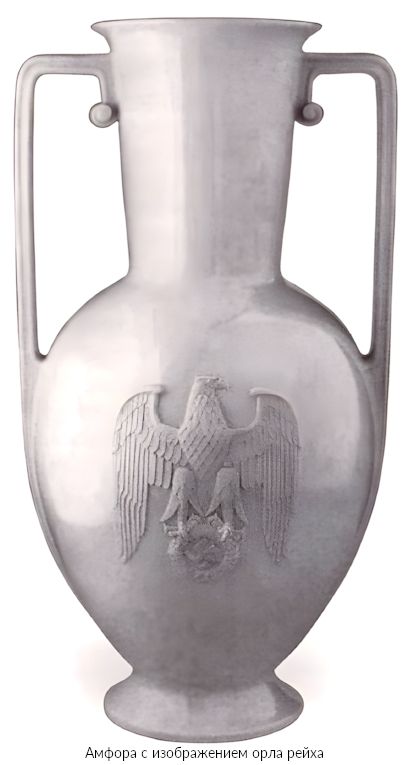
Everyday objects became an effective means of manipulating public consciousness. Even items used in daily life were intended to serve the new ideals. The choice of themes, forms, motifs, and methods of decorating objects used in everyday life testified to the greatness of the German people, the military and civil power of the Nazi state, as well as its connection to the Ancient Roman Empire.
The ideology of the new regime was most vividly manifested in its system of symbols. The most common among them became the swastika (an ancient solar symbol associated with infinity and potential energy), the eagle (a symbol of the supreme god Zeus/Jupiter and an imperial symbol of antiquity), the cross (a symbol of the four elements, the four cardinal directions, and life), wreaths or oak leaves (symbols of vital force and immortality, significant to Germans), swords (symbols of military power), and other recognizable signs from various areas of human activity—submarines, torpedoes, motifs from city coats of arms, and the head of the Greek goddess of wisdom, Athena.
A distinctive feature of porcelain items produced in the factories of the Third Reich was not only their visual symbolism. The choice of themes and motifs in small sculptures, military plates and plaques, as well as the shapes of candlesticks and tableware, reflected both the political ideas of Germany's totalitarian system and the everyday life and customs of that time.
Among the many porcelain manufactories in Germany during that period, an outstanding enterprise, at least from an ideological standpoint, was the Allach-Munich manufactory. It was considered an "SS enterprise," a category that also included companies such as the mineral water producer "Apollinaris," the furniture factory "Edel," the publishing house "Nordland," and a firm engaged in producing swords for the needs of the SS.
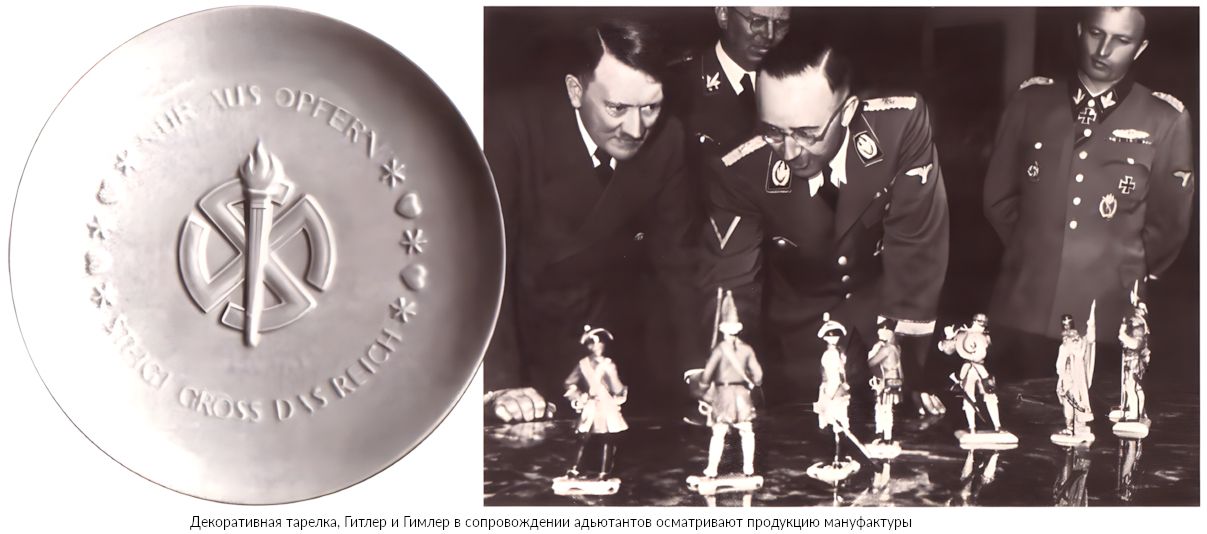
The manufactory, founded on the order of H. Himmler and being his "pet project," began its work on January 3, 1936. However, it functioned as a private enterprise until it received the status of Germany's main porcelain factory. This is evidenced by product samples dated 1934, including the famous "Standard Bearer" figurine, and entries in the accounting books for 1935. The founders of the manufactory were Himmler's close friend, the artist Karl Diebitsch, the sculptor and designer Theodor Kärner, and two businessmen—Bruno Galke and Franz Nagy.
Until December 20, 1938, the factory was under the management of the cultural department of the personal staff of Reichsführer-SS H. Himmler, who also served as the artistic director. However, he officially headed the manufactory only in 1938, when it was transferred to the jurisdiction of the SS Administration and Economic Service (1939–1942, later also called the SS Economic Administration Office). The main task of the manufactory was to serve political propaganda, develop cultural tastes, and raise the cultural level among the so-called true Aryans—the selected members of the SS. Economic gain was not a priority; although it is known that before the war, the enterprise generated profits of up to 100%.
Very little is known about the final years of the manufactory's existence. With the end of World War II, its activities as a Nazi enterprise ceased.
The history and nature of the porcelain production are best demonstrated by the products themselves. The most significant of them are now rarities on the antique market, which is explained by the limited edition of "elite" items (with the exception of mass-produced animal figurines), as well as the numerous bombings of Munich and the destruction at the end of the war. It is reported that so-called "political" porcelain figures began to be destroyed even during the war, when flames consumed both the products themselves and almost the entire archive of the manufactory. Some documents were destroyed by the enterprise's employees attempting to conceal their financial crimes.
The only surviving original catalog is a document dated 1936, containing 40 items from the manufactory. This catalog is not accessible to researchers, as it was part of Adolf Hitler's personal collection and later ended up in the Library of Congress in the United States, retaining its status as a classified document. The main sources of information about the manufactory's products to this day are the memoirs of contemporaries, reprints of the 1937 catalog and its variants and supplements from 1938 and 1939 (Porzellan-Manufaktur Allach-Munchen. Verzeichnis der Erzeugnisse. Liste 1938/39. Verlag ?), as well as the items themselves, many of which are in private collections.The complete list of the manufactory's models from various years includes about 240 porcelain and ceramic items. The main focus of the Allach manufactory was the production of small porcelain sculptures. These items, most often intended as gifts for high-ranking state officials, reflected the key ideas of the Nazi movement. Among them were figures of soldiers from different eras and contemporary times, German peasants and craftsmen, bathers and dancers, ancient gods and symbolic city figures, as well as various animals. The tasks of the "SS enterprise" also included the manufacture of various award items—decorative plates and plaques with appropriate decoration. The porcelain sculptures from the manufactory are now rare, and these award items are unique, as they were created in single copies. Only the production of lamps and vases, which met the requirements of the ideology, can be called mass production. Tableware was produced only by personal order of the SS chief or the Führer himself. All porcelain items (except for the "Fencer" figure) were glazed, some of them were painted, while others were left white.
As for the ceramic items of this enterprise, they are also very rare today. Among them were some of the most significant works of the manufactory: the imperial eagle, the head of A. Hitler, and the "Julleuchter" lamp, which became a symbol of the new social order and the most mass-produced item of the manufactory. Interestingly, they were not glazed, which created the impression of the first items of ancient Germanic tribes.
One of the central themes of porcelain sculpture, a source of pride for Allach-Munich, became military figurines, depicting both famous historical personalities and collective images of representatives from various military units. Within Nazi ideology, the emphasis on cultivating the ideal soldier through models from the past became especially relevant from the early 1930s onward. During this time, decorative soldier figurines, adorning furniture, fireplaces, and other rooms, began to actively appear in the product ranges of various German manufacturers, including well-known ones such as Meissen, Nymphenburg, the Oldest Porcelain Factory, Hutschenreuther, and others, as well as in glass production, for example, Rosenthal. The Allach manufactory also joined this trend, directing its best efforts to the production of "porcelain soldiers."
Practically all "military" items were created from sketches and models by the manufactory's outstanding master, Theodor Kärner, and in some cases, by his student Richard Förster. Kärner was responsible for the cavalrymen, while Förster worked on the infantrymen. It is worth noting that after 1942-1943, there are no further mentions of Kärner's models, leading to the assumption that Förster became the sole author of both cavalry and infantry figurines. Three figurines from the infantry series (1943-1944) were created by Adolf Röhring, whose name appears in the 1938-1939 catalog alongside a figurine of a horse and birds (a thrush and a greenfinch).
The theme of the "equestrian monument," popular in porcelain sculpture since the 18th century (for example, in Meissen and Nymphenburg), in Nazi Germany acquired a triumphant and heroic significance, inheriting the traditions of ancient Greek culture. This theme was particularly beloved by Kärner, who mentioned in a post-war catalog of his works: "Depicting riders in the costumes of their time is one of the favorite areas of my creativity." Himmler also repeatedly emphasized that the cavalry figurines were the best creations of the chief artist of his favorite porcelain factory. One of Kärner's paintings depicting a mounted courier was even purchased by the Reich Chancellery and exhibited at the Great Exhibition of German Art in 1941.
T. Kärner, who previously worked at Nymphenburg and Rosenthal, created for Allach the models for all hussar figurines, as well as a dragoon, a cuirassier, a pandur (Slovenian infantryman), and the famous "Old Fritz."
The main characters of Kerner's porcelain sculpture became the Prussian King Frederick the Great and his best warriors. "Old Fritz" – an affectionate nickname given to this king by his soldiers during his lifetime – became the name of a porcelain figurine created by Kerner. In the "mythology" of the Third Reich, Frederick the Great symbolized the ideal German virtues of a ruler: love for the homeland, the people, and culture. In 1932, J. Goebbels called him "the first Nazi," and Hitler himself considered himself his spiritual son. A painting by A. Menzel depicting Frederick hung in the Führer's office, and under a glass dome stood his porcelain figurine (a product of the Elteste Porzellanfabrik, Volkstadt). Such analogies were actively drawn in mass culture as well, as seen, for example, on a surviving Elteste advertising poster depicting Frederick the Great with busts of him and Hitler, presented as successors to the great king-commander.
The popularization of the image of the great king began as early as the late 1920s: feature and documentary films, engravings, and porcelain figurines, which were produced both from new models and based on 18th-century examples. The use of models from that century is observed at the Meissen, Fürstenberg, and Rosenthal manufactories (based on models by Louis Tuaillon), as well as at lesser-known factories: Kochendörfer in Osterode and Ackermann & Fritze in Rudolstadt. The Royal Porcelain Manufactory in Berlin even reproduced items used by the king himself.
The Prussian Officer
One of the characteristic features of Kerner's models became the unconventional depiction of the rider not on a walking horse, but on one standing calmly. The king gazes intently forward and slightly to the right, as if observing the course of a battle; his gaze is focused and determined, but the external calm only emphasizes the warlike spirit of this historical monarch. As examples, one can cite the engraving by D. Chodowiecki and the woodcut by A. Menzel from Kugler's biography.
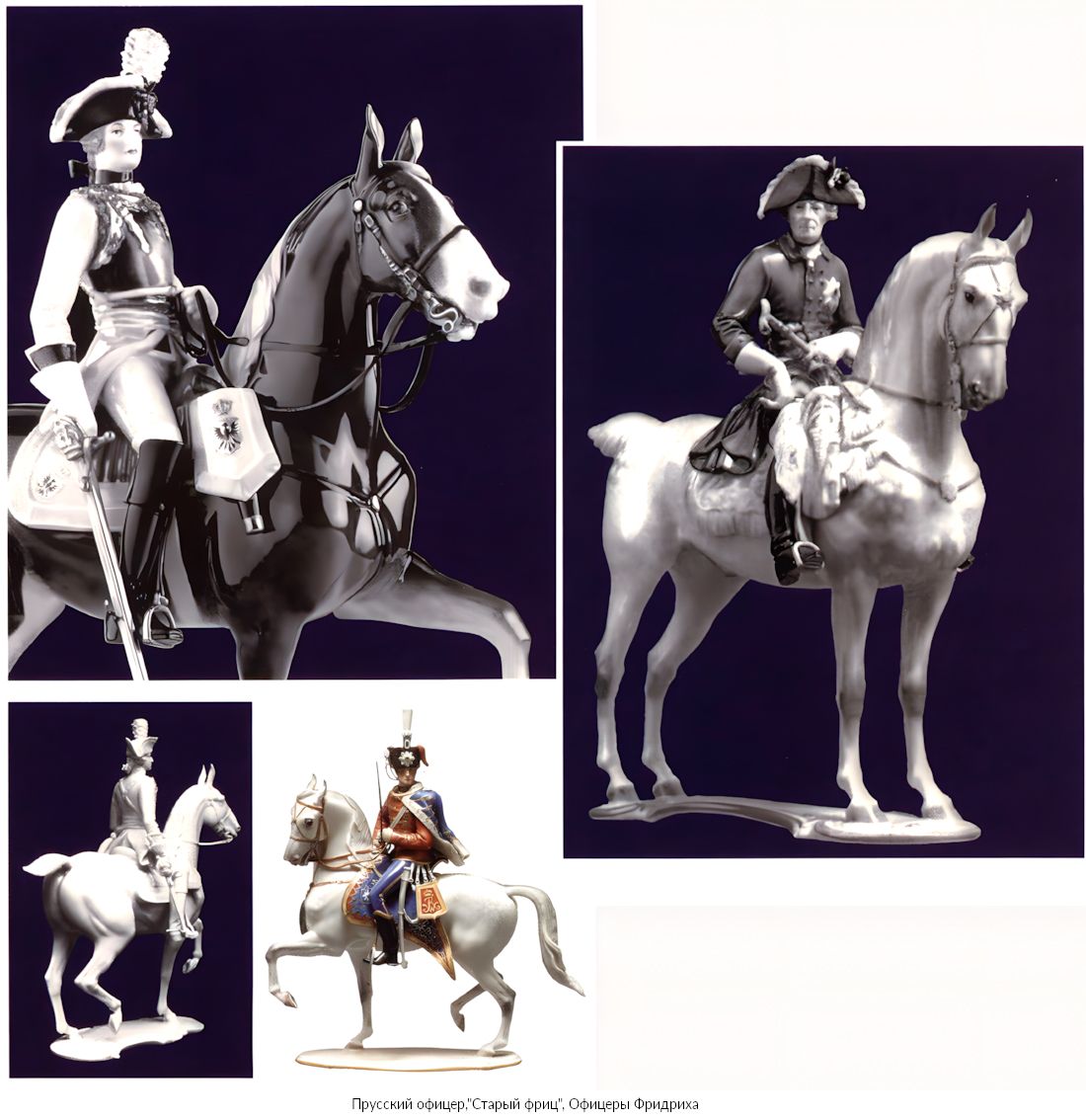
The figure of Frederick from the Allach manufactory was in high demand among high-ranking SS officers. It is known that in 1939, T. Kerner produced 36 figures (32 white and 4 colored), and the very next year the Führer ordered 100 such figures without painting.
Frederick's officers are collective images of Prussian warriors, but among the figures are also well-known personalities from military history, such as the battle-ready "Hussar Officer von Zieten" (Hans Joachim von Zieten, 1699–1786), the "Malachowski Hussar" (Paul Joseph von Malachowski, who died in 1774), and the "Cuirassier Officer Seydlitz" (Friedrich Wilhelm von Seydlitz, died 1728). The figure of the latter likely held particular interest for the leaders of the Reich, including Hitler himself, and was also produced by other manufacturers. It became one of the most popular models and was frequently mentioned—it adorns the cover of the 1937 catalog and is noted twice in the premises, including both painted and unpainted versions. Production of this figurine continued until 1945, and it was one of the most expensive: the white version cost 75 Reichsmarks, and the colored one 170. In 1938, nearly 100 pieces were produced, and in 1939, already 129.
T. Kärner studied uniform samples from the time of Frederick the Great using lithographs by A. Menzel, which served as a detailed analog to a dictionary for him. This can be seen by closely examining the image of the hussar von Zieten.
In addition to lithographs and engravings, in Allach, as in Nymphenburg where Kärner previously worked, works from the past were also used, particularly 18th-century pieces by the renowned porcelain artist F.A. Bustelli, who created many models of hunters on horseback. His works were highly esteemed among the leaders of the Third Reich. The orientation toward these Rococo-era works manifested primarily in the decorative form of the base, adorned with rocaille scrolls, reminiscent of the era when the miniature's hero lived—the golden age of German porcelain.
The infantry figures by R. Förster, intended to reflect the virtues of German Landsknechts, Prussian soldiers, and Austrian warriors, remained the main products of the manufactory until 1941, when production volume declined due to emerging economic difficulties.Among such figurines, one can note the "Knight Maximilian" (the last nationalistically inclined ruler of the German Empire, Emperor Maximilian I in the "mythology" of the Third Reich), the "Landsknecht" and the "Brandenburg Musketeer circa 1700" (both in modern-era uniforms), as well as the "Butler-Dragoon of the Wallenstein Era"—a symbol of fearlessness and loyalty to the Kaiser. The next theme after Frederick was the Wars of Independence and the struggle against Napoleon (1806-1812): the "Dragoon of 1806," the "Grenadier of the Bavarian Line Troops (Drummer) of 1809," and the "Great German Knight," symbolizing the unification of Germany with Austria.
Among the rare military-themed manufactory pieces are figures of famous German knight-commanders, ordered by Himmler from June 1944 to early 1945: "Prince Eugene" (a European commander and diplomat), "Frundsberg" (Georg von Frundsberg, father of the German Landsknechts), "Götz von Berlichingen" (a figure from the Peasants' War period), and "Knight Franz" (a hero of the German Reformation, a fighter for secularization). These names were assigned to new SS divisions created in the summer of 1943, with the aim of strengthening morale and faith in victory.
This parade of diverse military branches and eras became a unique illustration of the historical development of military uniforms, which themselves became a symbol of Hitler's Germany. In Nazi society, uniforms were worn by practically everyone and symbolized a strict hierarchy, dividing society into castes or estates. Uniforms were worn by party officials, civil servants, bureaucrats, soldiers, and peasants. One could determine a person's affiliation with a specific organization (sports, youth, women's, etc.) by their uniform. Thus, the craftsmen sought to convey the details of the costume and uniform as accurately as possible in the porcelain sculpture when creating the figurines.
The second important theme that Allach porcelain focused on were the so-called "images of the Nazi movement," including figures of military personnel from that era.
One of the most significant products in this category is the "SS Standard Bearer," which became a direct allusion to the mythological events of the "Beer Hall Putsch" on November 9, 1923. In Nazi ideology, the "Blood Flag" of the putsch was given the status of a relic, commanding special reverence and serving as a symbol of the new power structure. The porcelain figurine of the standard bearer, created by T. Kärner in 1934, held a pseudo-religious significance, almost that of a cultivated cult. From later catalogs, it is known that it was never sold; it could only be an SS prize, and displaying it in shop windows was strictly prohibited (a case is known involving a shop owner in Poznań, Wartenberg, who incurred Himmler's wrath by putting this figurine on display).
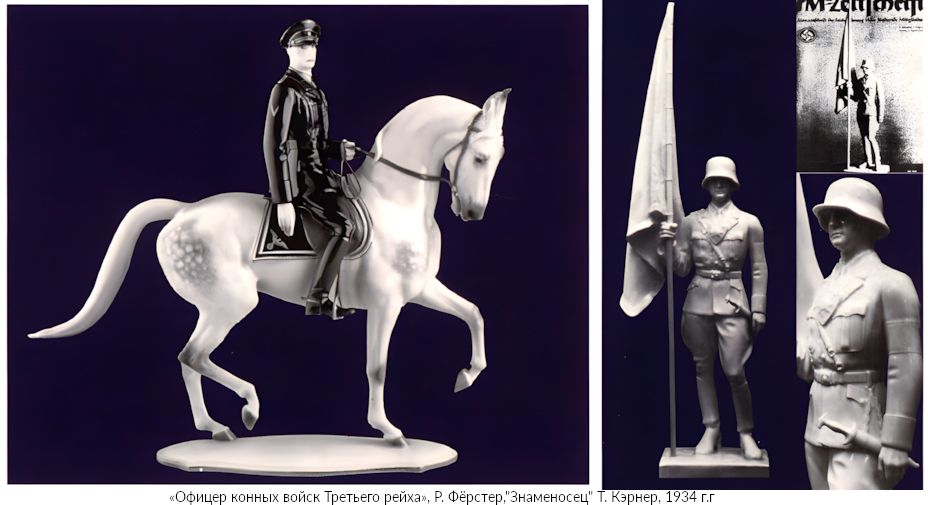
Kärner's standard bearer figure depicts him in SS parade uniform, with a steel helmet and a heraldic heart-shaped emblem on his chest. In his right hand is the flagpole—it does not directly depict the relic, only hinting at it. Unlike the "historical figures," the "SS Standard Bearer" has a strictly rectangular base, devoid of any historical reminiscences, emphasizing its modernity. All this creates obvious references to ancient and Renaissance sculpture, lending the figure seriousness and inner dignity.
Another well-known product of the manufactory is the "Officer of the Third Reich Mounted Troops," which may have been created by R. Förster (meaning it was produced only after 1942). This figurine also demonstrates the continuity of traditions. Other figures representing the Nazi army appeared in the collection, such as the "Luftwaffe Officer," "Pilot," "Police Officer," and "Worker."Among the figures associated with the symbolism of the Nazi movement, the "Fencer," created by O. Obermaier, stands out. Hitler placed great emphasis on the physical development of the nation and the athletic training of youth. In *Mein Kampf*, he formulated the "duties of the state," including "encouraging youth to engage in sports and training them to an unprecedented level." State policy showed a tendency to blur the lines between sports and military training. The ideal nation was to be strong, healthy, and physically developed. Sports instilled discipline, a sense of teamwork, and a will to win in individuals. Lack of physical fitness made a career in the SS impossible.
It is not surprising that the manufactory chose fencing to depict an athlete. One of the government members—Chief of the Reich Main Security Office, General Reinhard Heydrich—was a renowned fencer and multiple tournament winner. His image became the perfect role model for physical education and enjoyed immense popularity in Nazi culture. Notably, one of Heydrich's portraits features a fencer figurine, possibly awarded to him as a prize.
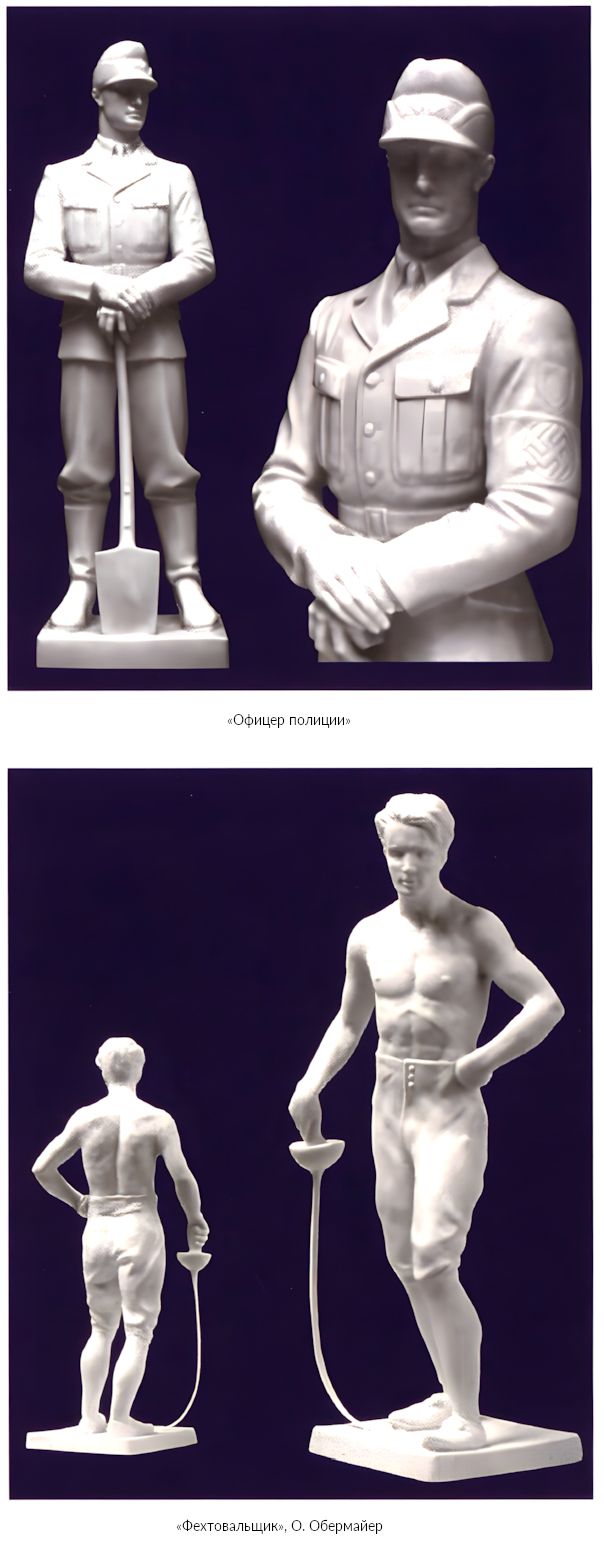
In addition to overtly ideologically directed products, the manufactory also produced a range of other items that less directly displayed the militaristic spirit of their time. The assortment included decorative figurines, more entertaining than ideological in nature: dancers, nude bodies, national types, and the like.
The most notable in this series were the peasant figurines, harking back to traditional "peasants" in porcelain art. All are depicted in national costumes, which in this context carry symbolic meaning, personifying the German nation, its connection to the native land and traditions. In this series of works, created from models by R. Förster, such types became known as the Bückeburg couple, Upper Bavarian, Black Forest, Hessian, and Frisian. The series may have continued, but information on other models is lacking.
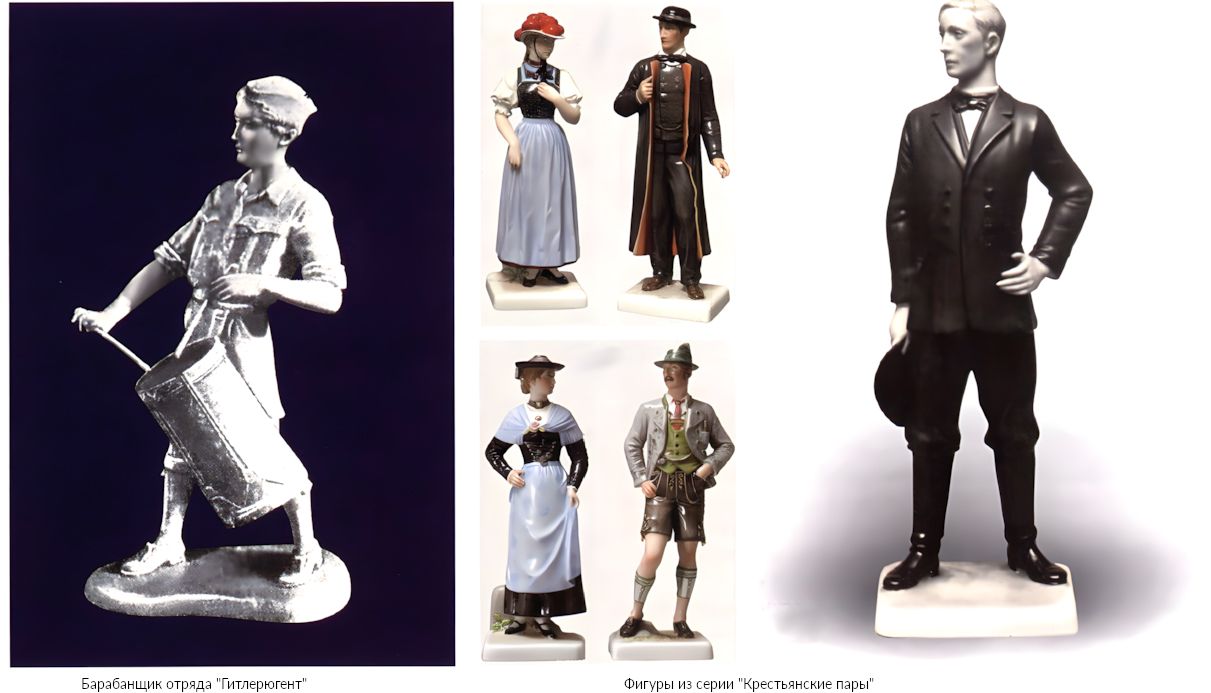
It is noteworthy that at the Allach manufactory, peasant figurines were produced not only in painted versions, as was common for traditional items where the variety of color details in clothing played an important role. Most often, they were created unpainted, from white glazed porcelain. Thus, despite the popularity of colored figurines, the catalogs offered specifically white ones, emphasizing not their entertaining aspect but the embodiment of an abstract idea, for which the simplicity of material and conciseness of decor were more appropriate. The absence of entertaining folkloric motifs makes these figures resemble political ones, as their appearance is also serious and majestic, and their postures exude solemnity. The rigid, geometricized square base enhances this perception. The peasant from Allach becomes not an image of an ideal peasant, but a symbolic embodiment of national traits and roots.
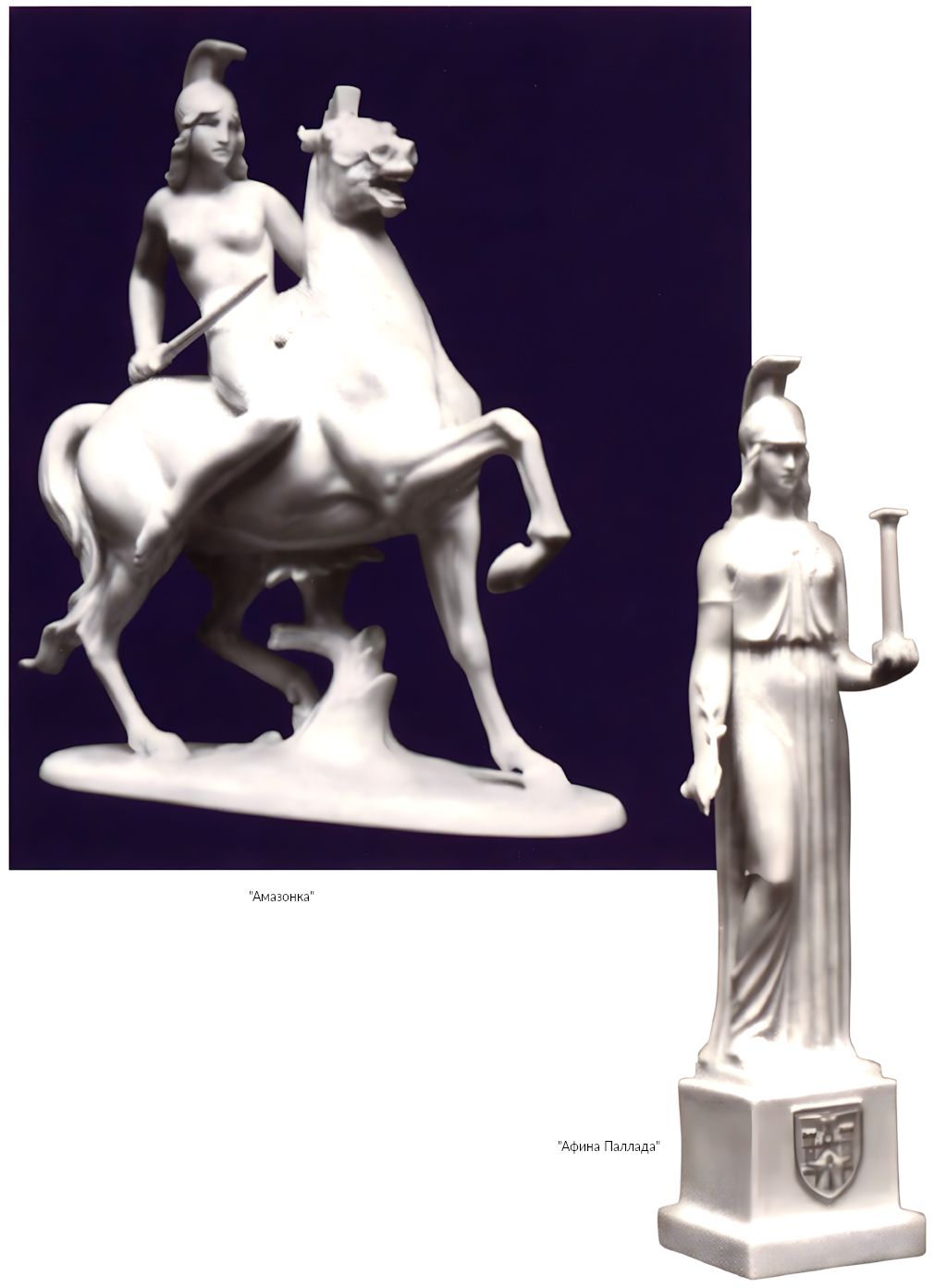
"Amazon", "Athena Pallas"
Among the decorative figures, one can also find nude depictions, ranging from quite unpretentious entertaining allegories to more serious compositions with classical allusions. For example, the allegorical series "The Seasons," executed from models by F. Nagy, includes four elegant figurines, each representing the symbolism of the corresponding season: spring with a flute and a bird on the base, summer with a straw hat, a sickle, and ears of grain, autumn with a killed hare and a club, winter with a bonfire. It is known that "The Seasons" were produced only in 1937 and only in white. This is the only instance of the entire series of figures being recalled from production. Possibly, the reason was poor sales, but then it should be considered that several other figures should also have been excluded. Most likely, this is explained by a weak connection with the ideas of national art of that period. Today, these figurines have become rarities on the antique market.
Among the productions, bathers executed by R. Förster stand out. One of them depicts a girl emerging from the water, who, holding a towel behind her, seems to deliberately display her nude body to the viewer. This image harks back to the figures of classical Venuses, which was one of the most popular motifs in the art of the Third Reich. It is known that the models for the porcelain items were created by one of the most successful official artists of Nazi Germany, F. Klimsch. At the Great Exhibition of German Art in 1939, he presented a nude female figure, created at the Führer's directive in the style of Greek models. For the Rosenthal porcelain manufactory, he executed models of a crouching and a reclining nude, as well as a figure of a Naiad.
Another porcelain "Venus" from the Allach assortment is depicted as if caught by surprise: she covers her breast with one hand and pulls up a veil with the other. This image follows the familiar classical iconography of the "Venus Pudica" (Modest Venus). However, for this figure, one can also find more contemporary prototypes, such as the "Bathers" by E. Falconet, one of which evidently provided the Allach figure with its characteristic gesture of the right hand.
Among the decorative items of the manufactory, several variations of the figurative group "Mother and Child," executed according to K. Dibich's models, can also be included. The popularity of the motherhood theme in the Nazi state was explained by the official demographic policy, the basis of which was the conviction that the German nation could establish world domination only by multiplying the "good blood" of its people. In the porcelain sculpture of Allach, this theme is presented in various ways: from imitating classical statues, such as Athena (in strict, static figures of mothers with children), to simple scenes where a mother plays with a child (in the spirit of 19th-century genre sculpture). In the former, more official, almost heraldic compositions, the theme of childhood and maternal pride dominates, perceived as part of the national heritage (by analogy with "A Roman with Portrait Busts of Ancestors"), while in the latter case, these are more intimate depictions, full of lyricism, uniting mother and child.
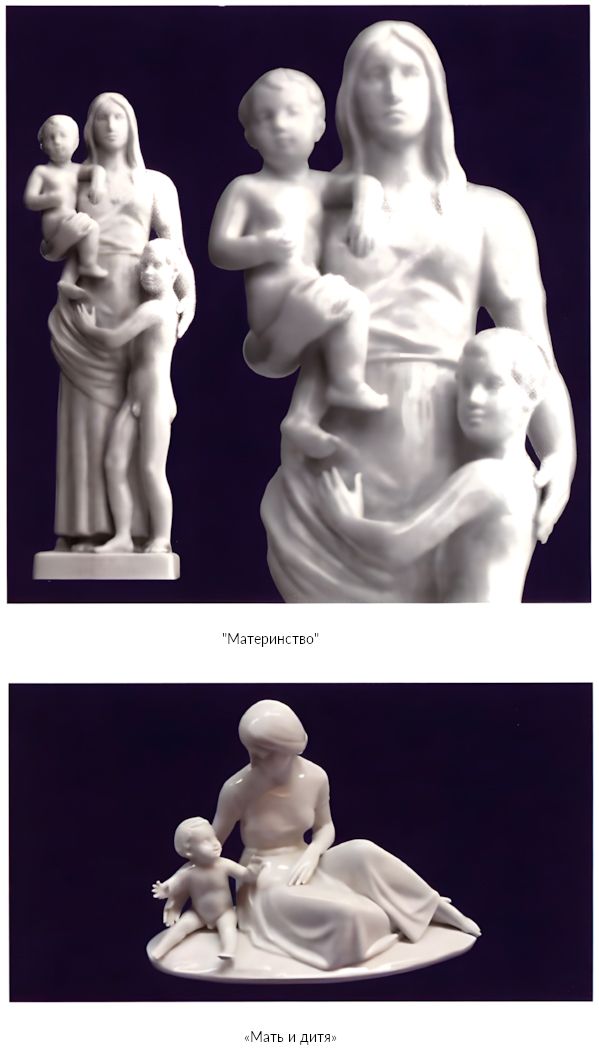
"Mother and Child," "Motherhood"
In the structure of the new German society, Athena—the Greek goddess of war and wisdom—was perceived as a symbol of art and science, embodying the Germanic-Aryan culture and its connection with Greek civilization. This is precisely why the figurine of "Athena Pallas" was never painted, striving to keep it pure white, which further associated it with ancient Greek marble sculpture. It is known that the image of the goddess also adorned the medallion of the German Order of Merit for Art and Science and was part of the design of the House of German Art.
Another significant ancient heroine in the manufactory's product range was the "Amazon." The nude woman with a weapon also symbolizes the disposition of a warlike nation. Interestingly, Amazon figurines were found in practically every porcelain manufactory of that time. Allach produced them, like many other items, exclusively as gifts, not offering them for free sale.
The true roots of a mighty nation were also to be reflected in the so-called Moorish (or Moriscan) dancers (from English "morris," French "moresque," Spanish and German "Morisk"—a popular medieval dance in the Eastern style). These figurines were reduced copies of late Gothic statues by the German sculptor Erasmus Grasser, created around 1480 to decorate the dance hall of the Munich town hall (suggestions about the original location of the figures, now housed in the Munich City Museum, were put forward in 1902). Of the 16 statues, only 10 have survived to this day. R. Förster reproduced only 6 models in porcelain, but only 5 of them were put into production.
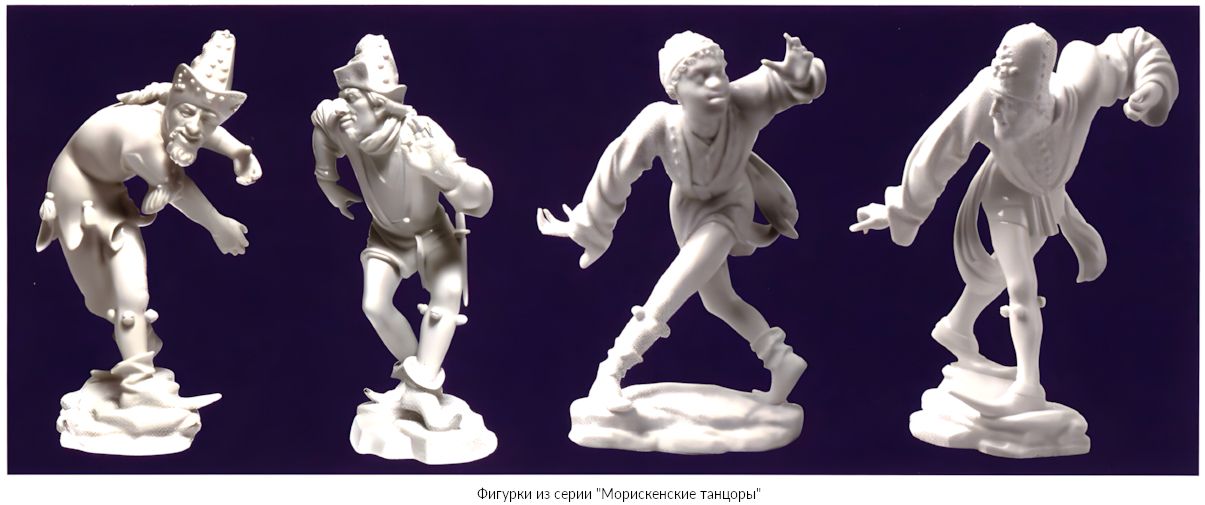
They were meant to embody the local national traditions of the great German culture, rooted in the Middle Ages, in contrast to classical antiquity's images. All figurines created from 1939 to 1943 were intended exclusively for high-ranking officials, as gifts from the city, and were never available for sale.
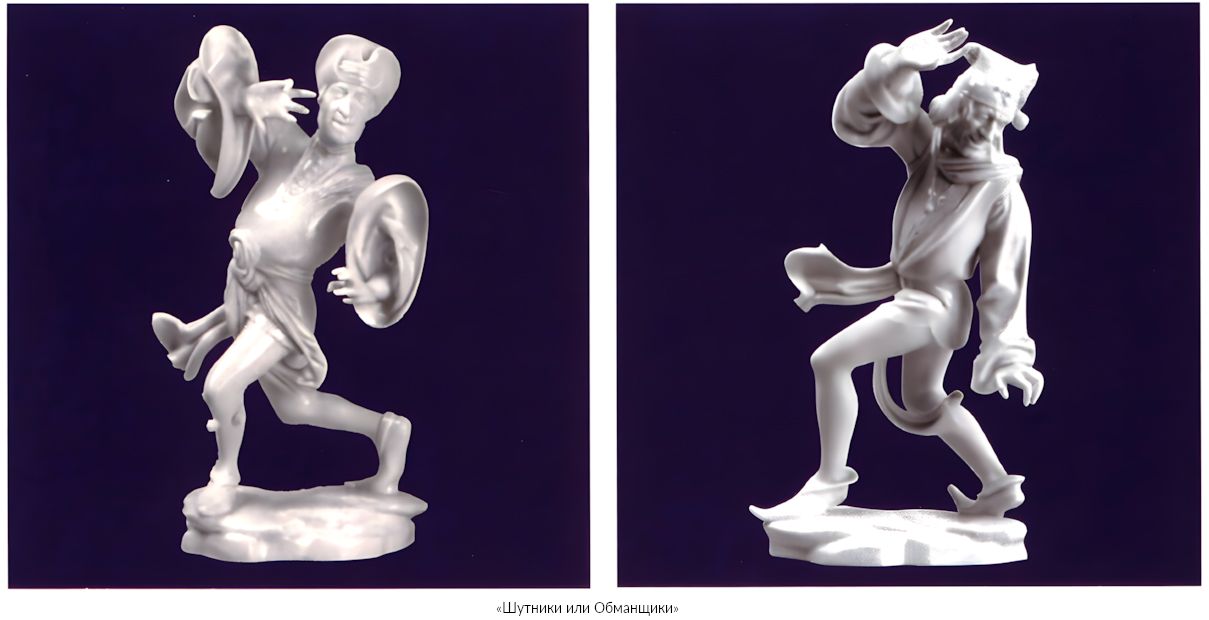
"Jesters or Tricksters"
However, they were so popular that the manufactory decided to launch a new series of dancers, which were named "Jesters or Tricksters," imitating Gothic art and embodying the folkloric carnival-fair images of the Middle Ages. The most famous among them remained Till Eulenspiegel, a hero of German folklore.
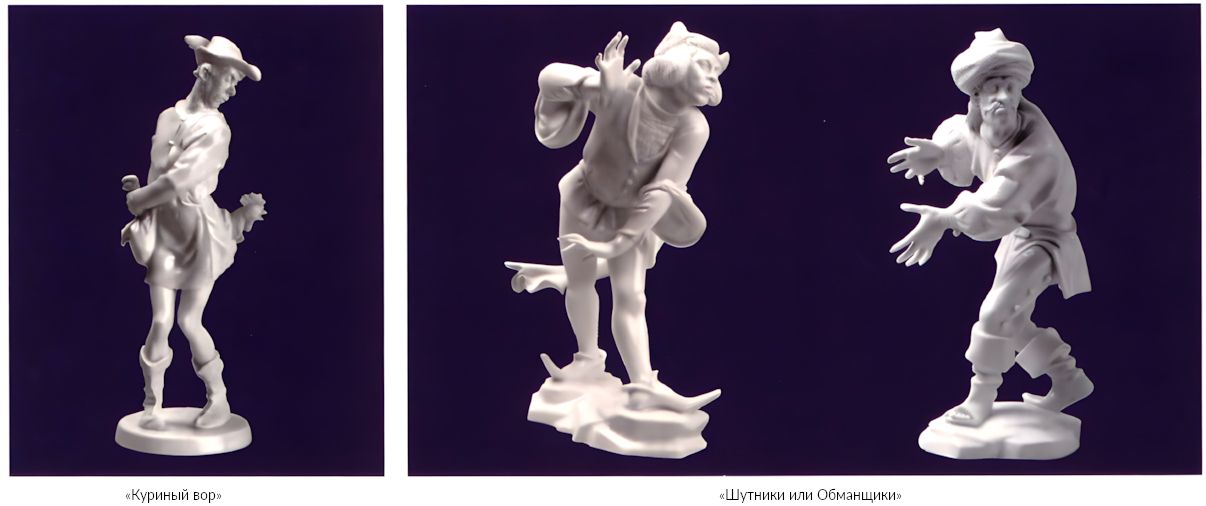
It is in this spirit that another figurine, "The Chicken Thief," was executed. This is not an original work by the manufactory's masters but a replica of a large statue from the fountain in the bird market square in Aachen, created by G.I. Pagel (1911–1913). This cheerful figurine depicts a roguish character who has stolen two roosters, one of which is making a fuss and crowing, thus giving away the thief. The creation of replicas of existing artworks may be explained by a shortage of artists and the difficult economic situation of the enterprise during the war.
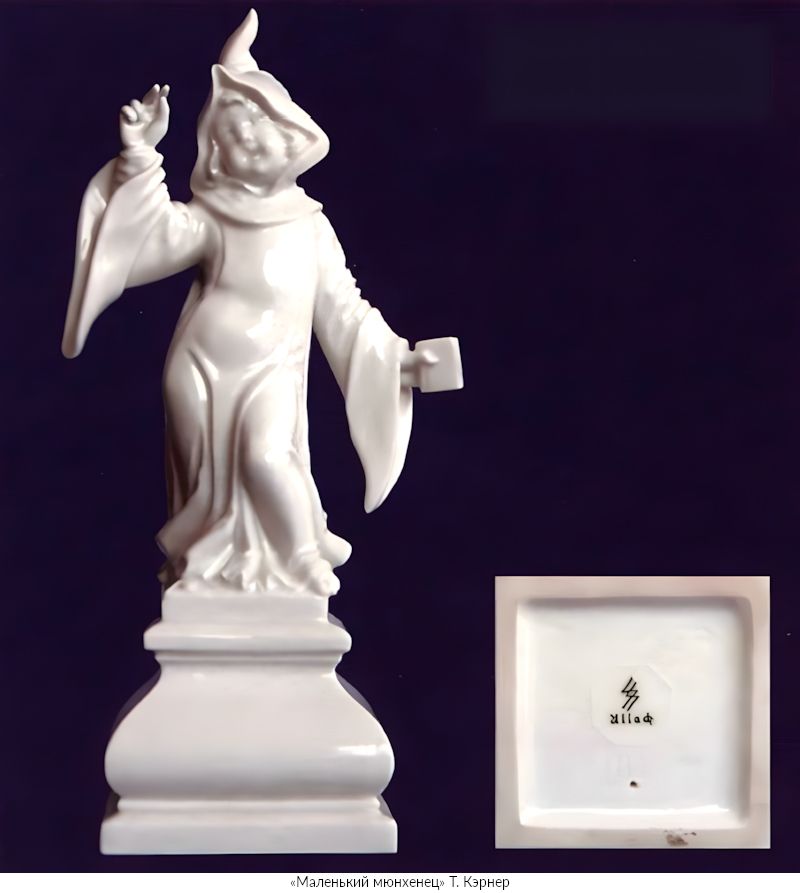
Among the figurines possessing ideological significance are the "City Emblems" of Berlin and Munich. The two largest cities of the Nazi state: the first is the capital, and the second is the heart of the Nazi movement, symbolizing the connection between Germanic Nordicness and southern antiquity. The symbols became the "Berlin Bear" and the "Little Munich Man." There is no documentary evidence of what these figurines were used for or how. Since they were produced in large quantities, it can be assumed they were souvenir items, also conceived within the context of cultural policy aimed at shaping societal taste. Possibly, such figurines were used as prizes in various competitions, which is supported by an inscription on the base of one of them. The figurine of the Munich man, modeled by T. Kärner, in a medieval monk's tunic with a hood borrowed from the city's coat of arms, became one of the manufactory's most popular products—1,802 were produced in 1938 alone.
One of the most popular themes presented at the manufactory was the depiction of animals. This theme already had its roots in the fine art of porcelain and was particularly developed during the Art Nouveau era, partly made possible by the Copenhagen Porcelain Manufactory. Their works became a stimulus for the further development of the animalistic genre in Nymphenburg's works, especially at the beginning of the 20th century, where many figurines were created under the guidance of masters such as T. Kärner, W. Neuhäuser, and W. Zügel, who later also joined the work in Allach.
It should be noted that images of animals were widely popular in the art of the Third Reich. For example, in 1937, an exhibition of the animalistic genre was held in Berlin, covering works from the 19th century to the present day, which sparked broad public interest and discussion in the press. At the state level, guidelines were even established on how to depict animals realistically. The director of the Berlin Zoo, commenting on the exhibition, emphasized the importance of knowledge of animal anatomy and behavior, which was lacking among avant-garde artists of the 1920s, particularly representatives of German Expressionism.
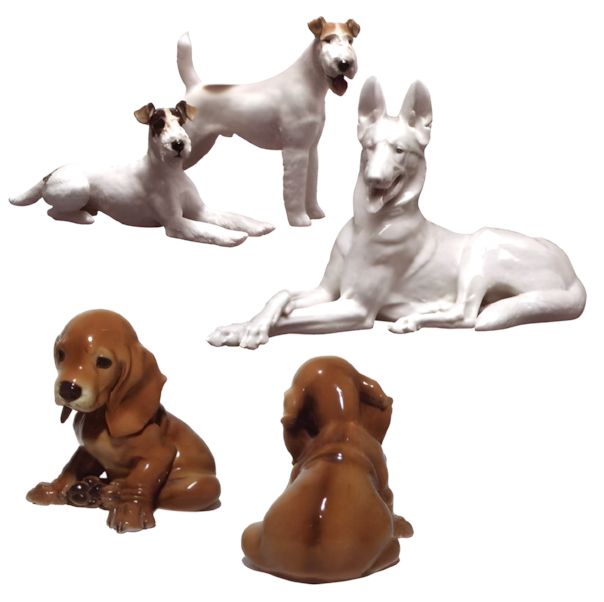
Animals
The depiction of animals became a symbol of the closeness of the German people to nature, which necessitated the requirement for realism and plausibility in their execution. For instance, it is very interesting that, unlike H. Göring, H. Himmler, like A. Hitler, was opposed to hunting, believing it disrupted the natural order. After the war, he planned to introduce a series of laws for the protection of nature and animals. Non-naturalistic depictions of animals, which included implausible colors and distorted proportions, did not receive approval at the state level, and a law was passed to protect national symbols, including animals.
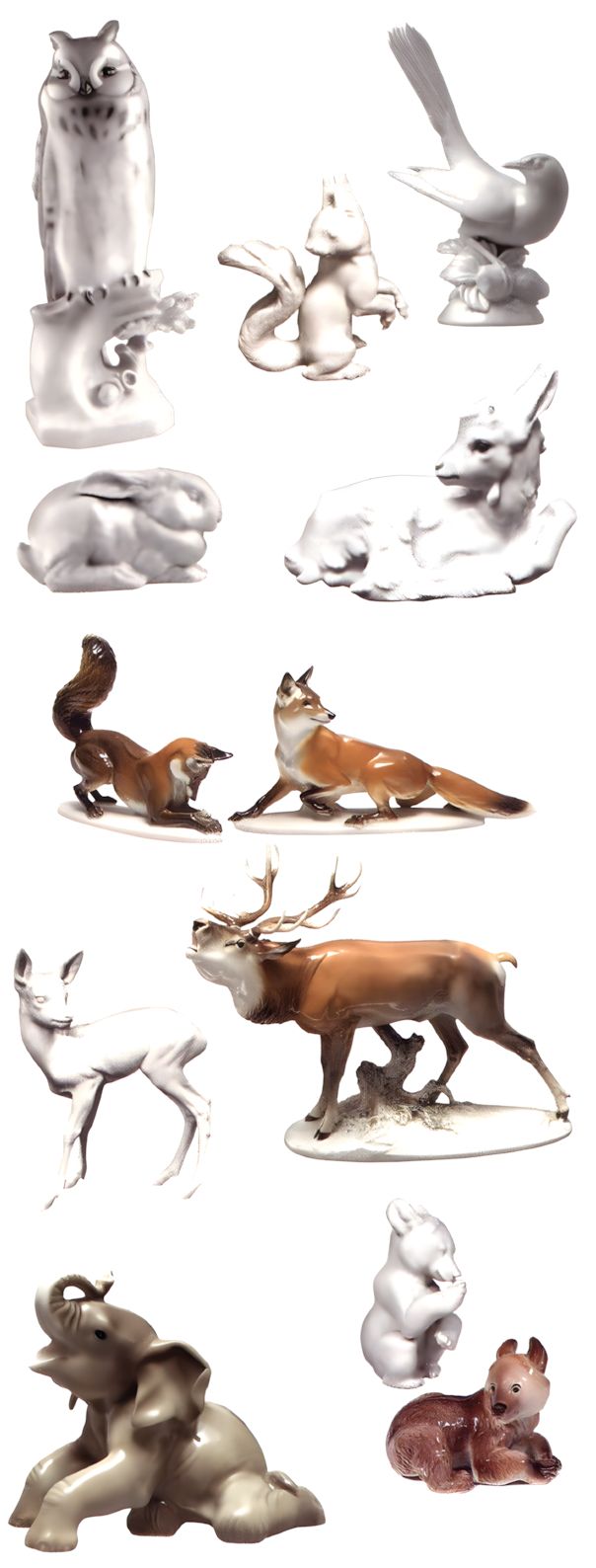
Nevertheless, adherence to the principles of naturalism did not diminish the symbolic significance of the depicted animals. In 1935, Max Ernst, one of the leading German animalists of the 1930s-1940s, published an article in which he presented a semantic interpretation of various animals: the sea otter was associated with a thief, the bear with a friend, the beaver with a builder and athlete, the panther with power and strength, and the Great Dane was considered a friend and helper of humanity. Naturally, the state symbol—the imperial eagle—was not forgotten.
Animal figurines from the Allach Manufactory became perhaps the only product that represented wide accessibility and became truly beloved by the people due to their plausibility and recognizability. They were used to decorate interiors—chests of drawers, fireplaces, and sideboards—creating coziness and a warm atmosphere in the strictly regulated space characteristic of a true German. This group of products can be considered an analogue of Meissen porcelain figurines and includes both domestic and wild exotic animals.
Among the first, dogs of various breeds stood out the most. These included shepherds and fox terriers, dachshunds of different types, and even attractive mutts (models by T. Körner, O. Obermaier, and F. Nagy). Such figurines quickly found their owners and achieved a high level of recognition among party functionaries, and T. Körner earned a reputation as an outstanding animalist.
Among domestic animals, there were also figurines of cats and farm inhabitants—sheep, rams, lambs, and goats. Perhaps the choice of motifs was influenced by the traditions, widely spread in Germany, of creating animal figurines for Christmas nativity scenes. Interestingly, the "Jumping Horse" figure held the title position in the manufactory's catalog for 1938–1939, emphasizing its representativeness. It was made based on a model by T. Kerner, who had previously created similar figures at other manufactories.
As for wild animals, presented as "Beasts of the German Forest," among them are foxes, deer, roe deer, hares, and fauna characteristic of this part of Europe. These figurines, like the domestic ones, were executed with adherence to realistic principles, emphasizing a naturalistic approach. Perhaps the deer figure possessed a certain symbolic meaning, as this image held an important place in Germanic mythology. The hare, in turn, is a popular hero of European folklore and symbolizes Easter. This theme also found its reflection in other porcelain manufactories, for example, at an international exhibition dedicated to hunting.
Among the exotic animals produced by the manufactory, one can likely find only elephants, whose popularity in European cultures is mainly associated with circus performances. These mighty animals were depicted in a tamed and trained form, emphasizing submission to human will.
The theme of symbols of power was also not overlooked. There are at least two known examples depicting the imperial eagle in the manufactory's ceramics. One specimen, made of gray-brown unglazed clay based on a design by W. Krieger, was a limited batch of an exclusive product, most likely intended for state needs. The second version, known from a wooden sculpture by T. Kerner, was created in only three copies by personal order of H. Himmler for the courtroom in Wewelsburg, the place where the SS leadership took a solemn oath. This eagle, adorned with a swastika and a wreath of oak leaves, with its head turned to the left (like the party eagle), was named the "Eagle of Power."
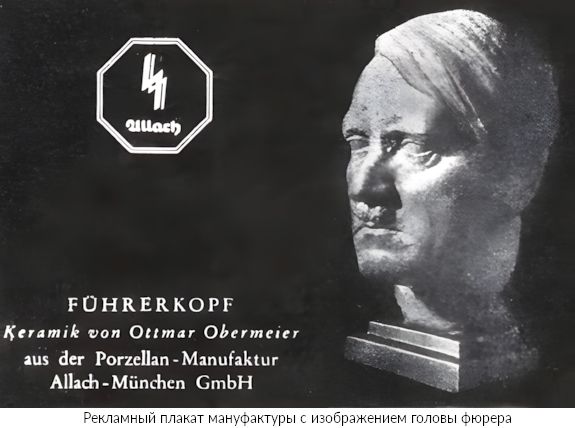
Among the significant works of the manufactory are also portrait depictions. These include a ceramic head of Hitler (by O. Obermaier) and a porcelain portrait of Göring (by R. Förster). While the former was intended for serial production from 1940 onwards, the latter was created exclusively in 1943, possibly as an alternative to the bronze bust presented at the Great Exhibition of German Art in 1941. Within the context of the manufactory's work, ceramics were regarded as a special material, contrasted with the delicate, refined porcelain, possessing its own intrinsic value. It was considered the simplest and most accessible material used by humanity since ancient times, and simultaneously the raw material from which gods created humans in myths and religions. It was in ceramics that the manufactory's artists realized their most significant works, closely tied to the supreme authority.
Interestingly, another piece—the head of a "Warrior in a Helmet" (by T. Kärner), also made of unglazed gray-blue ceramic—cost twice as much as the Hitler head and was likely not intended for wide sale. It is known that from the early 1930s, the head of Hitler became a popular decorative motif. Tableware featuring the Führer's image was in demand, and examples of porcelain with Nazi symbolism and party colors (black, white, and red) appeared. However, fearing the discrediting of party symbols and mockery, the government distanced itself from this matter by a decree in 1933. From that moment, only selected manufacturers were granted the right to depict the Führer or party symbols, among which was the Allach Manufactory.
Overall, the diversity of the aforementioned works limits the range of the manufactory's small sculptures but does not preclude the existence of other, less significant pieces. As already noted, non-figurative items were also produced here, which did not occupy a central place in the enterprise's work. These products were less exclusive but were produced in larger editions. This category mainly includes items with Nazi symbolism: swastikas, meander patterns, runes, and other signs. Most often, these were mass-produced items.
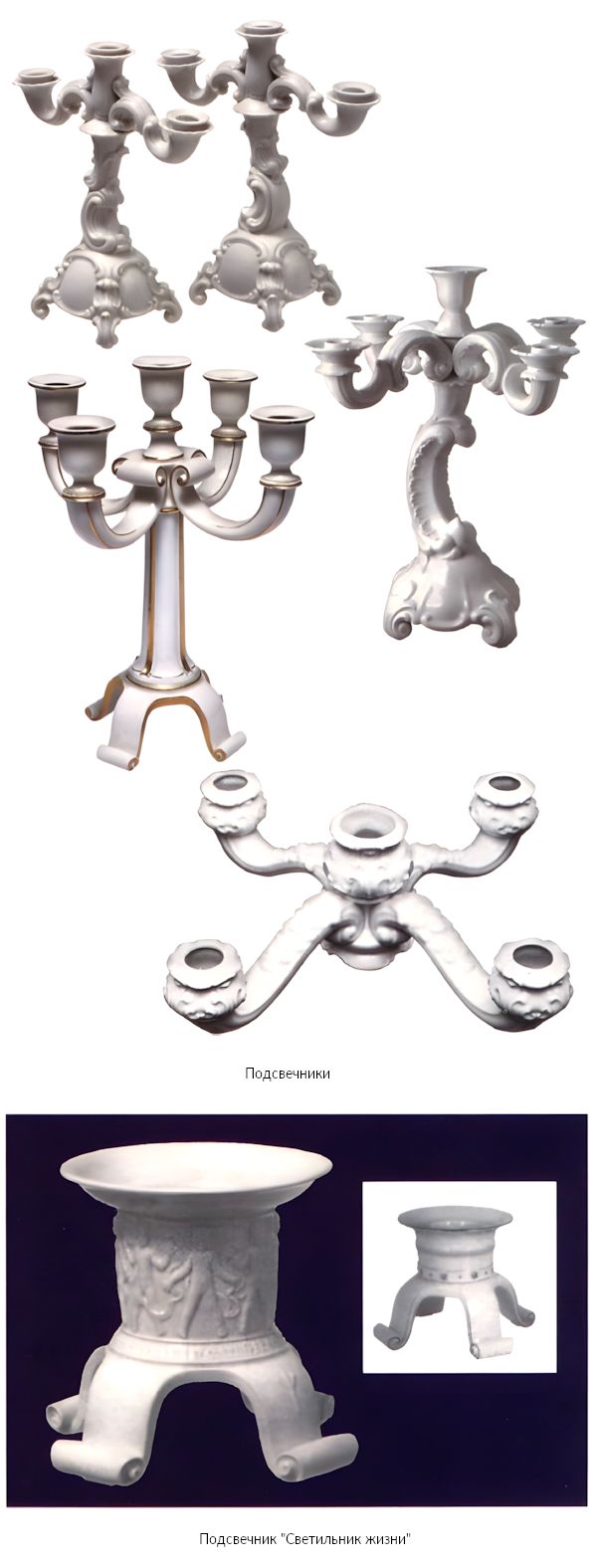
Among the non-figurative products of the manufactory, candlesticks were the most popular. Some of them are interpretations of barbarian models from the first centuries AD or ancient archaeological cultures. Others, in turn, are banal variations on the theme of mass production from the 19th century.
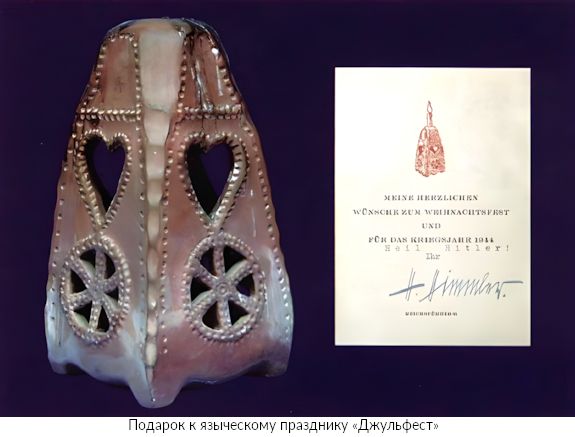
A Gift for the Pagan Festival "Julfest"
One of the most well-known works in this category is a terracotta lamp of a special shape, known as the "Julleuchter" (Yule lantern). It was decided to create this item as a gift for the pagan festival "Julfest," which was celebrated in midwinter and gradually merged with Christmas as Christianity spread. By the specific directive of A. Hitler, this festival was recognized as a state holiday and represented a New Year's celebration, symbolically returning to ancient Germanic roots. It was scheduled for December 22, coinciding with the winter solstice, and became one of the first steps on the path to replacing Christianity with pagan beliefs, where the most important element was the image of light—a symbol personified by the sun rotating in the sky and the swastika.
The creation of such a lantern began in 1935 when it was first manufactured at the Allach Manufactory as a gift for H. Himmler, based on a model of an ancient Germanic lantern found during archaeological excavations. Subsequently, this lantern became a gift for SS officers and was perceived as a sign of special honor.
The lantern is shaped like a truncated pyramid, approximately 20 cm in height. Its walls are cut out in the shape of a heart and a six-spoked wheel. The edges of the symbols and walls are adorned with relief borders, which give the production characteristic features of artisanal craftsmanship. The design incorporates two candles: one inside and another on the top platform. The small light at the bottom symbolizes the passing year, while the more powerful one represents the beginning of the new year. It was from this candle that the Christmas tree was prescribed to be lit.
Following the tradition of the winter solstice, in July 1939, H. Himmler decided to organize a festival dedicated to the summer solstice. A similar lantern was made from porcelain to distinguish it from the previous one. According to ancient Germanic customs, the summer solstice symbolized a time for concluding new marriages and conceiving children. In this context, the winter solstice festival turned toward reflecting on the past, while the summer one pointed to hopes for the future.
In accordance with the new ideology of light, the Allach Porcelain Manufactory produced countless candlesticks, executed in various styles from different eras and with variations in technique, allowing the products to be presented to a broad audience within German society.
Most candlesticks have an expressive, almost sculptural form, with elements of floral ornamentation. The manufactory's craftsmen mistakenly believed that such models aligned more with the traditions adopted in the Reich Chancellery of the era of Prussian military might than with the refinement of the Rococo style from German manufactories of earlier times.
The lamp, crafted in a form reminiscent of ancient altars, features a frieze with depictions of children, referencing Renaissance sculpture with putti. The lamp's legs are designed in the shape of twisting scrolls and were intended as gifts to SS officers' families upon the birth of their fourth child, earning it the name "Lamp of Life."
Among the manufactory's products are also decorative plates and plaques, widely featuring Nazi symbolism. These typically bore unique dedications and were created as one-of-a-kind pieces.
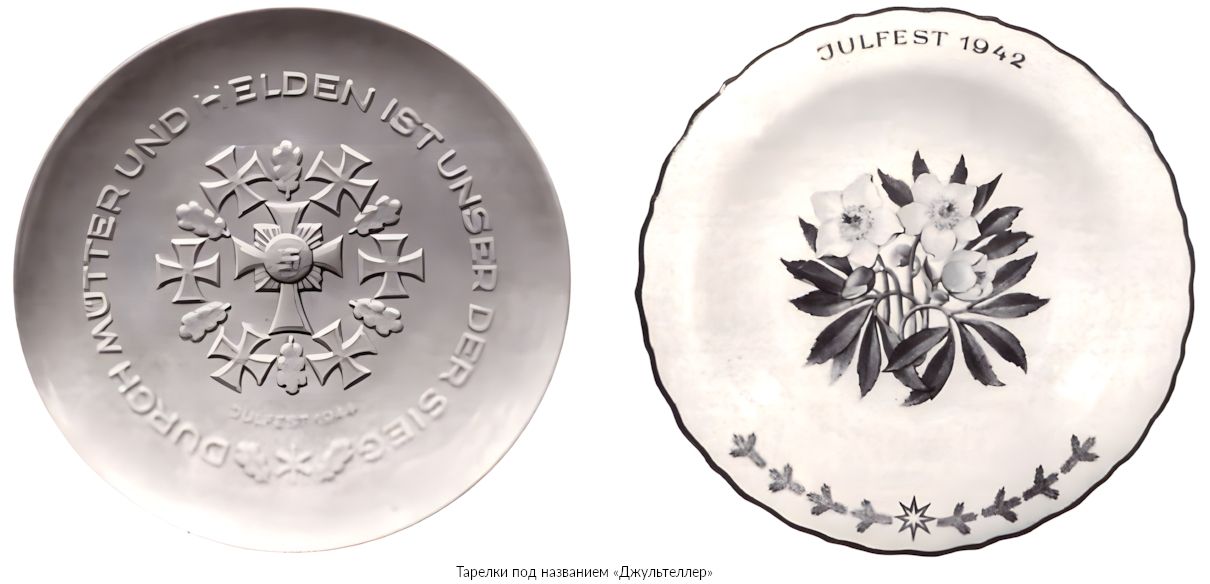
For the country's main holidays, plates called "Julteller" were created. Most were made on the order of H. Himmler, who personally presented them to his officers and specialists from various departments. They were usually produced from white glazed porcelain and decorated with relief runes or symbols of various organizations. One well-known model, which never entered production, is a plate depicting the Cross of Honor of the German Mother, surrounded by a "wreath" of oak leaves alternating with the Iron Cross. An inscription encircles it: "To victory, thanks to our mothers and heroes." Painted plates with floral compositions and poetic lines were typically made on the order of Oswald Pohl, the economic head of H. Himmler's apparatus.
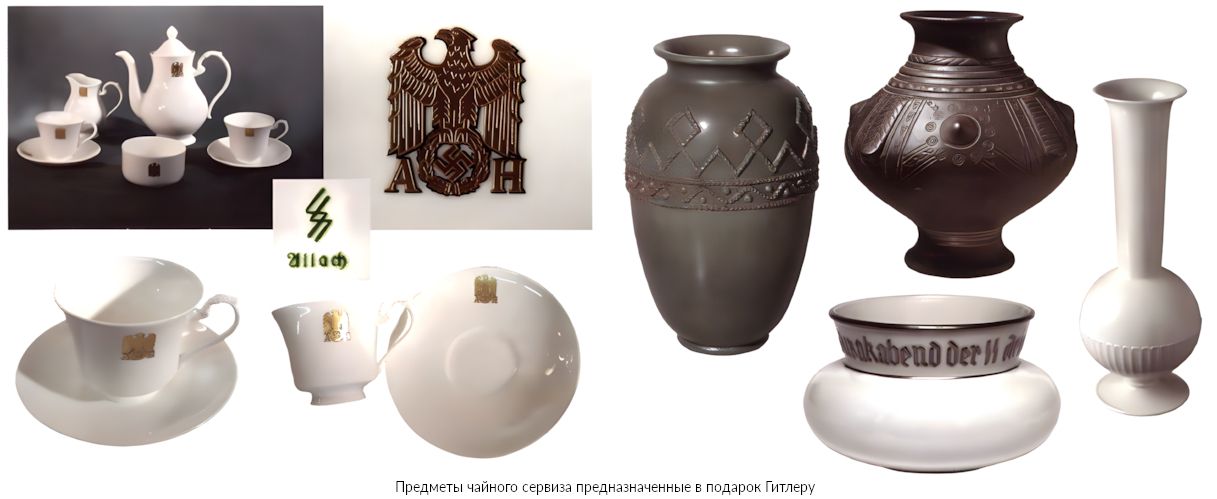
The tableware produced by the Allach Manufactory is a truly unique phenomenon. As mentioned, its main focus was not the mass production of tableware. However, exceptions were made for special orders from the Führer or the head of the SS. Large dinner and tea services were usually produced as gifts for birthdays or significant holidays for Adolf Hitler, Heinrich Himmler, and other high-ranking officials. These items stand out for their clear and precisely calibrated forms, reminiscent of the elegant porcelain of the Classical era. They often remained unpainted, with the sugary whiteness only accentuated by small heraldic eagles of the Reich or images of the Führer—the sole ornaments on the cups and plates. An exception are the services made for the passionate hunter Göring, designed in Rococo styles and decorated with pastoral and hunting scenes.
Products for the General Public
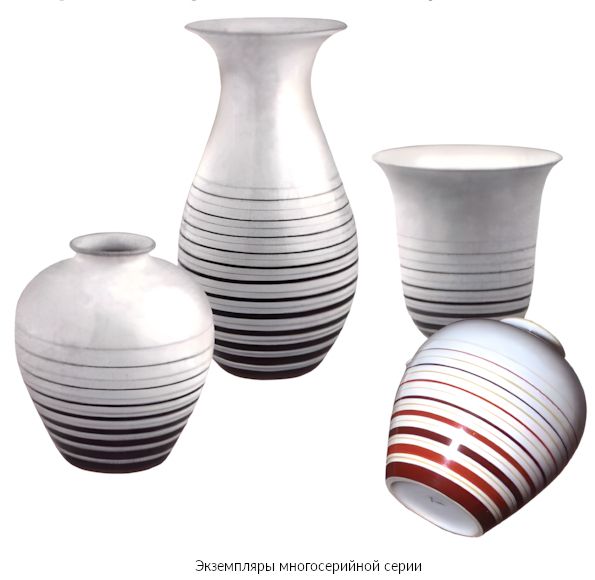
The only product created for mass production was vases, which are divided into two main types. The first type includes vases imitating ancient vessels, and the second consists of surprisingly laconic, geometrically simple vases, modestly adorned with a strict ornament of horizontal stripes of varying widths.
Daily Life and Routine
At the main porcelain enterprise of Hitler's Germany, small sculptures predominated, while non-figurative representative items occupied a less significant place, and household items were almost entirely absent.

Marks of the Allach Porcelain Manufactory
Today, items from the Allach manufactory hold high value among collectors and enthusiasts of porcelain and German history. However, they cannot be found in large quantities on the market. Unlike such well-known porcelain manufacturers as Meissen, Nymphenburg, or Rosenthal, the Allach manufactory existed for only a short time, and its products were destroyed along with its owners during the bombings. These items can be acquired primarily through auctions at major auction houses, rather than on online auctions or in small antique shops, where Allach porcelain is extremely rare, and especially at flea markets, where many sellers have not even heard of a manufactory with that name.
Among the most likely and accessible purchases, the main items are considered to be serial vases and candlesticks, in particular, the famous "Julleuchter," which became almost a mandatory attribute of every German family of that time. Prices for these items range from 100 euros (for the "Julleuchter") to 500 euros (for other variants), depending on the edition and size. Animal figurines are slightly more expensive. Their large production run and lack of pronounced ideological significance have allowed these items to remain in demand on the antique market in the post-war years. They can be purchased online from well-known and lesser-known antique dealers, as well as in "military antique" shops in Moscow. On average, prices for such figurines range from 1000 to 2000 euros. Thus, the "cheapest" bear figurines (for example, fighting bears, bears pulling out a splinter, or licking their paws) will cost approximately 1150–1250 euros; slightly more expensive are figurines of foxes, fox terriers, and dachshunds—from 1200 to 1400 euros. Next come squirrels, fawns, kids, and hares—from 1600 to 1800 euros per figurine. However, prices for rarer specimens, such as a shepherd dog, can reach 3500–4000 euros. It is also necessary to mention the fairly common souvenirs—"little Munich residents"—whose cost today ranges from 1000 to 1500 euros.Next are figurines of Amazons, bathers, mother with child, Hitler Youth trumpeter, and peasants, whose prices are already in the thousands and range from 6500 to 8500 euros.Undoubtedly rare and, accordingly, expensive items include figurines made to special orders and released in small batches for high-ranking SS officers and those close to the Führer. This segment features military figurines from both historical and Nazi periods, as well as athletes. Prices for this exclusive manufactory's products can reach tens of thousands of euros. However, it is difficult to specify an average cost for such items, as it varies depending on uniqueness and condition. For example, the famous fencer figurine, extremely rare in complete preservation with an intact rapier, can be valued at approximately 15,000 euros. Items released in limited quantities, such as allegories of the seasons, have practically not been encountered recently.
Also among unique finds are personalized plaques and commemorative bowls and plates, the cost of which can reach 10,000—20,000 euros (while their unnamed counterparts cost 1,200—2,800 euros). Items from table services belonging to the Führer himself or his closest associates can also appear in the collections of history enthusiasts; for a plate from such a service, one would have to pay from 1,250 to 1,500 dollars, and for a two-person tea service that was never delivered in 1945 — 9,500 dollars.
Specimens from Multi-Series Collections
Today, once-popular busts of Hitler, which were massively destroyed after the war, have become very rare. Their owners can expect sums around 50,000 euros.
To conclude this overview of the Allach porcelain market, it is worth cautioning novice collectors against ill-considered purchases without prior study of the manufactory's marks. Many models created in Allach, after the manufactory's closure, were transferred along with their authors—for example, the famous modeler T. Kärner—to other factories in Nymphenburg and Rosenthal. This applies, in particular, to the very popular and currently accessible animal figurines, which may directly replicate Allach ones but actually turn out to be not so rare (and consequently, not expensive) and have no relation at all to the history of the short-lived but brilliant German manufactory Allach-Munich, which shared the fate of its creators.