The Porcelain Trail of the Revolution
300Nov. 21, 2024Фарфор
Among collectible items, there are few things whose value was already determined by their contemporaries. Soviet propaganda porcelain belongs to such accessories. This unique genre became a means of mass propaganda, yet it was produced in limited editions. Porcelain intended for decorating homes was obtained only by the luckiest collectors. This highlights that its origin, flourishing, and decline echoed one of the most eventful periods in Russian history.
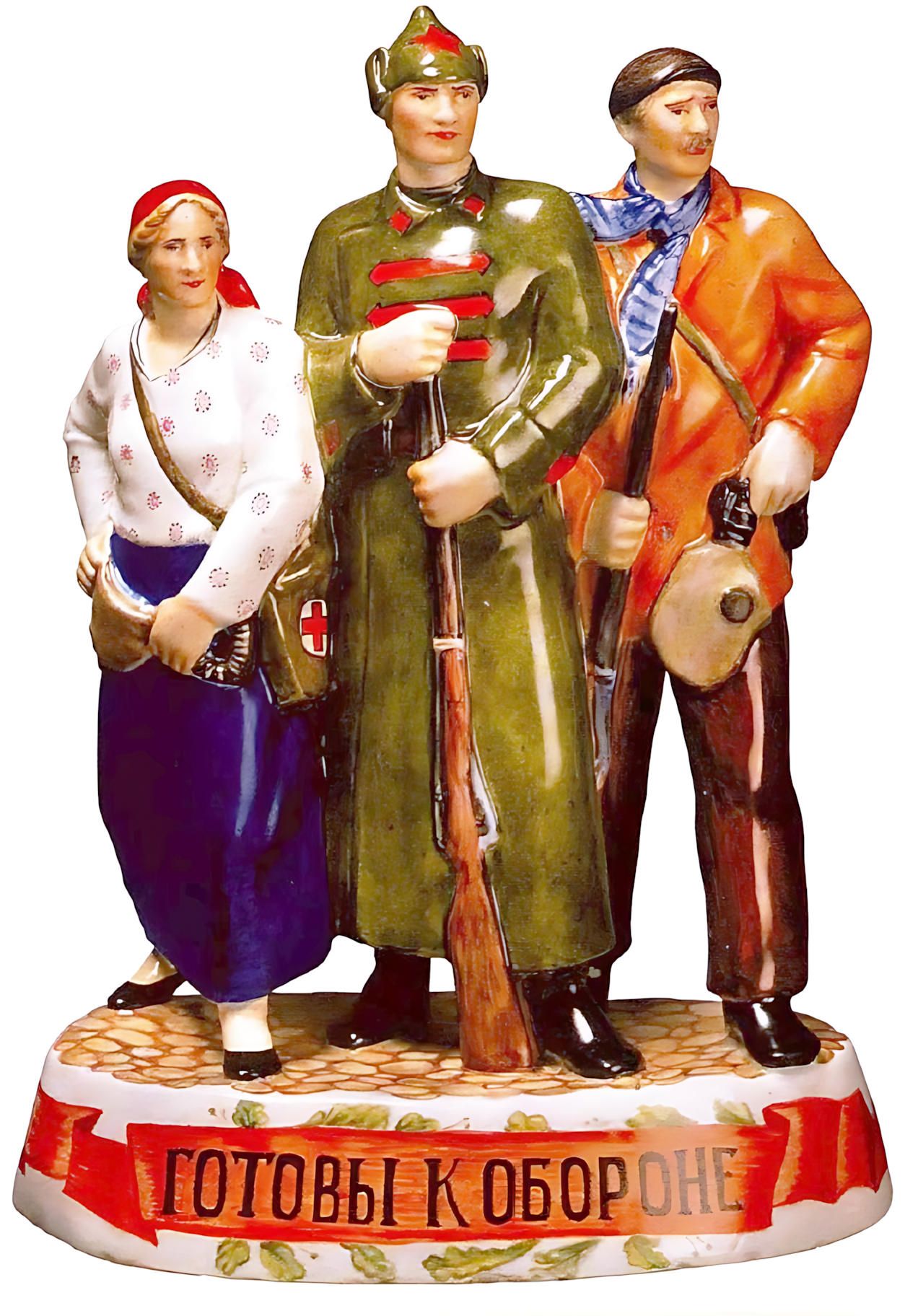
N.Ya. Danko, model "Ready for Defense," Lomonosov Porcelain Factory (LFZ), 1932
Propaganda porcelain represents a unique phenomenon with no analogues in world art. Light, exquisite, and elegant, it carried an extraordinary ideological load, which ceramic products were not endowed with either before or after the first half of the 20th century. Perhaps the only examples from world practice could be small faience items created during the bourgeois revolution in France in 1789, or porcelain commemorative items that appeared after the Patriotic War of 1812. However, these rare attempts to adapt porcelain for ideological needs were merely a drop in the ocean compared to the possibilities this art form offered.
Before the 1917 revolution, no one expected a sharp rise in Russian porcelain production. Artistic searches for new meanings and forms were practically suspended. The Imperial Porcelain Factory continued to produce exclusively academic pieces. The design and quality of its products were tested by time and approved by the royal family, which was the main customer for porcelain. Endless replicas of antique models ensured successful sales, but they did not meet the challenges of the time.
At the International Exhibition in Paris in 1900, Russian porcelain debuted in disgrace. Imitation of Western models and stagnant trends were fully apparent. These "imitative" items, despite their significantly lesser value at the time, today command considerable prices on the antique market. At a time when powerful trends were forming in art, the canonical imperial porcelain looked like a relic of the past. Artists of the new direction tried to change the situation: the "Mir iskusstva" (World of Art) members offered their services to develop new collections relevant to their time. However, their calls were not heeded, and traditional forms continued to dominate.
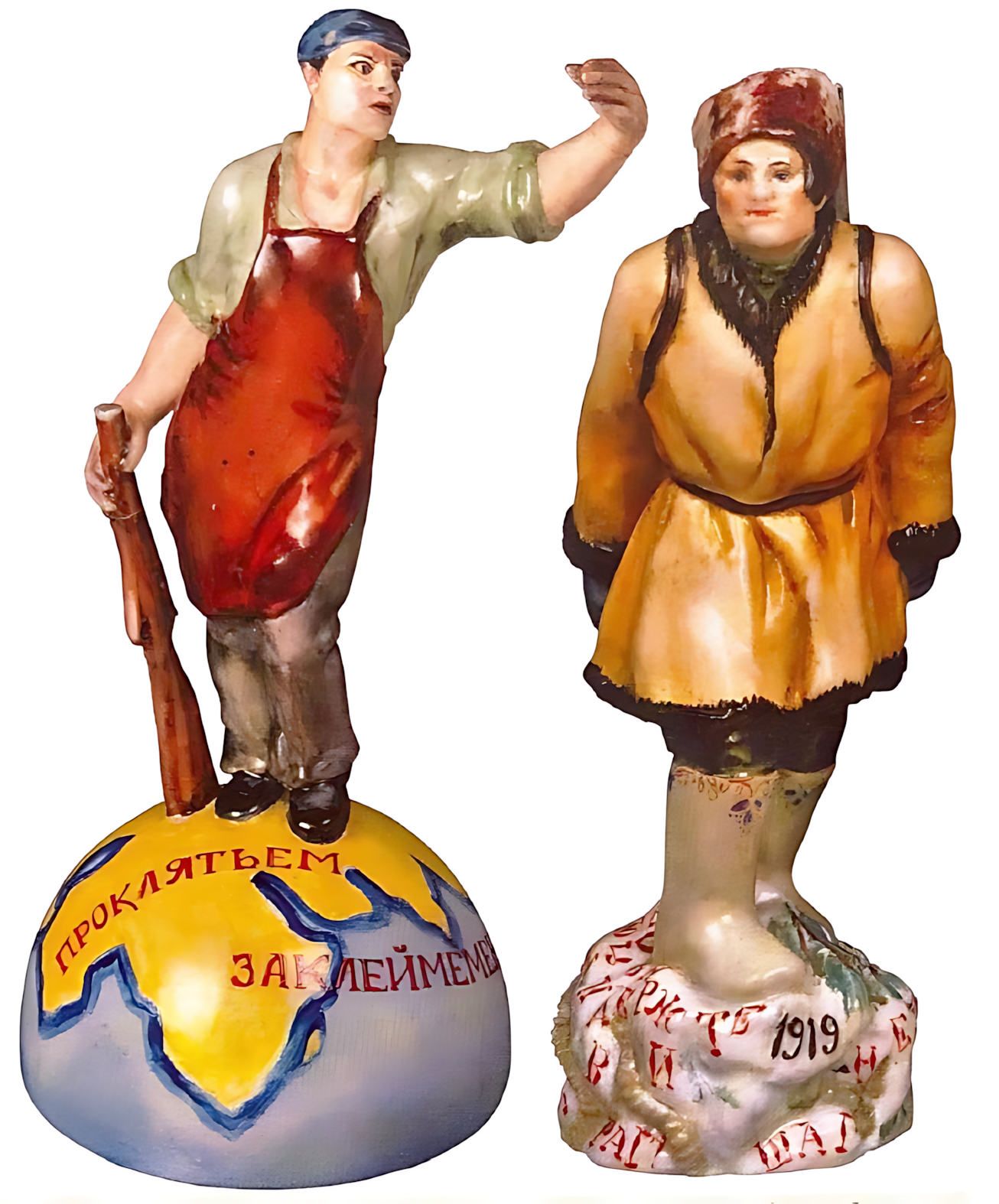
"Call from the East," paperweight for an inkwell, model by N.Ya. Danko, 1920; "Partisan on the March," model by N.Ya. Danko, 1919
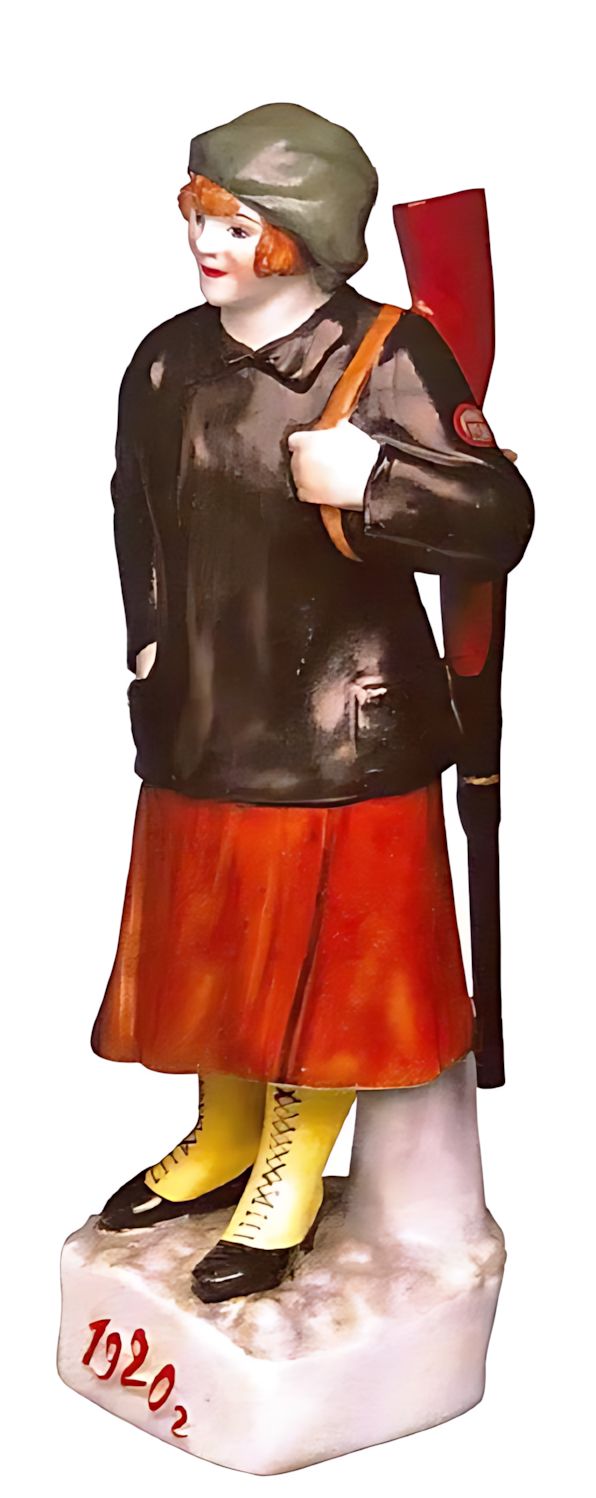
"Militiawoman," model by N.Ya. Danko, 1920, State Porcelain Factory (GFZ), 1923
It is hard to imagine, but in the very thick of the revolutionary transformations of 1917-1918, when the country was engulfed in chaos and devastation, the young Soviet government turned its gaze to porcelain. This material, seemingly unrelated to complex political and social changes, became one of the symbols of the time. During the "mobilization of industry," the porcelain factory in Petrograd, known as the ceramic laboratory, began to change its specialization and draw attention to artistic production. The State Porcelain Plant for a time became not just a place for making tableware, but also a platform where new ideas were born. Porcelain of that time acquired a new function: it was not only to decorate people's lives but also to become an effective means of agitation, reminding them of the revolutionary spirit.
What role did this porcelain play in shaping the new culture?
Why did it become such an important part of the agitation process?
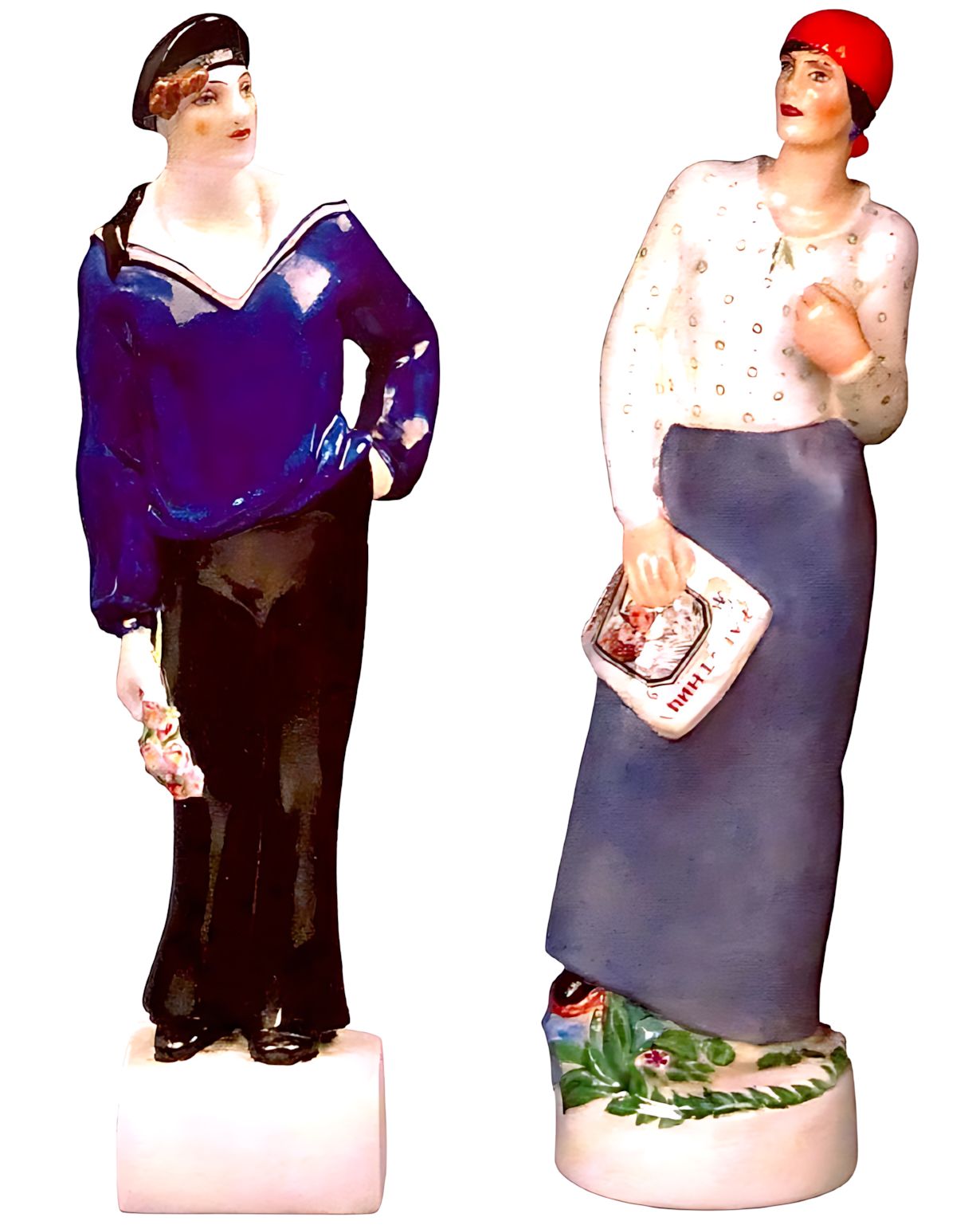
"Sailor with a Bouquet of Flowers" 1918, "Working Woman Giving a Speech" 1923, models by N.Y. Danko
The factory's warehouses were filled with many undecorated items, and in conditions of total scarcity, the white field of porcelain presented an ideal canvas for creating agitational slogans. A bold idea was employed here: that every household object could carry the idea of change. The plant's artistic director, S. V. Chekhonin, a talented master and graphic artist, became one of the initiators of this movement. It was in August 1918, under his leadership, that a large-scale program of "monumental propaganda" began. The plant received a state order to create busts of such outstanding personalities as Karl Marx and Karl Liebknecht, as well as utilitarian-decorative objects with revolutionary slogans. The busts of these historical figures were created by famous sculptors such as V. Kuznetsov and N. Danko. With each new piece by major masters of architecture and sculpture, porcelain was imbued with meaning—it became part of the state strategy. One of the brightest examples of agitational porcelain was the "RSFSR" plate, which became the "face" of this movement. This sketch was presented in 1918, and the plate itself was executed only a few years later, but it already became a symbol of the new era, incorporating slogans full of ideological messages: "Workers of the world, unite!" and "He who does not work, neither shall he eat!". In 1919, V. V. Kuznetsov created the figure of the "Red Guardsman," which became an important milestone in the history of Soviet porcelain.
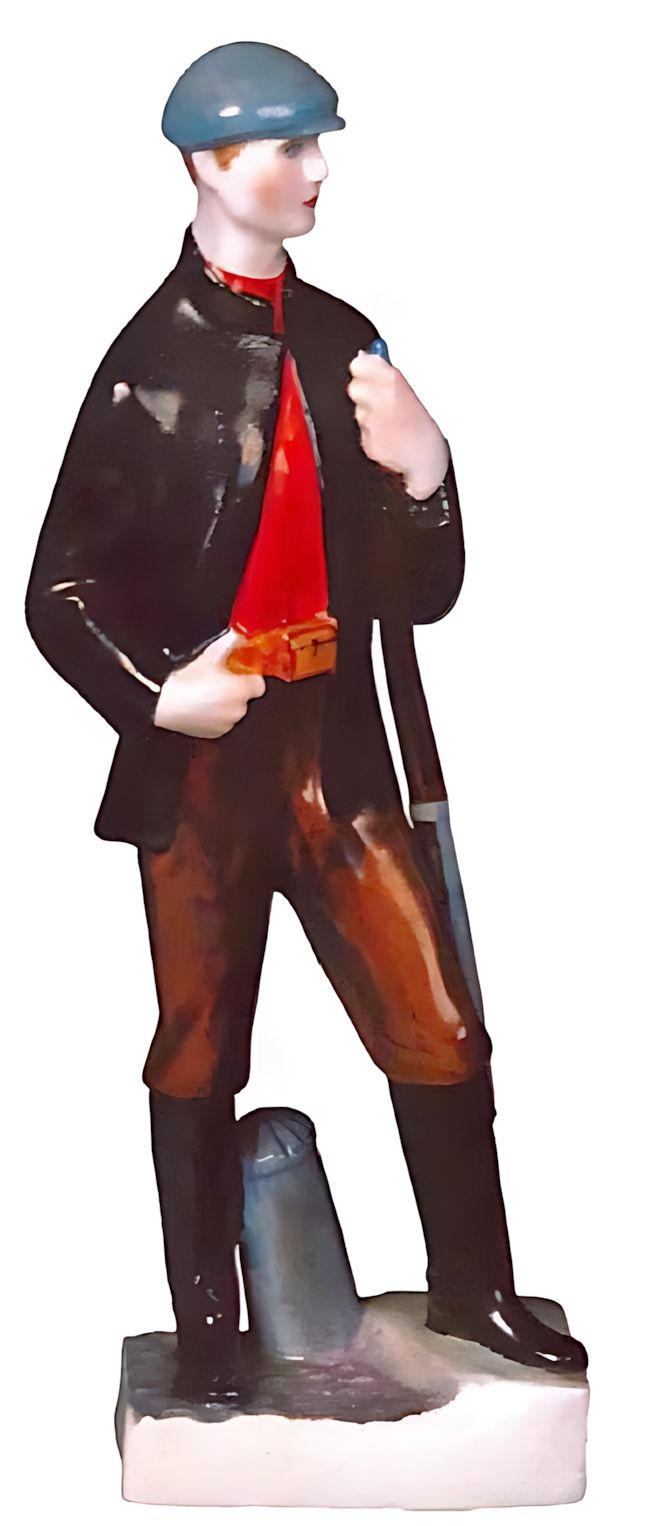
"Red Guardsman," model by V.V. Kuznetsov 1918, SPP 1922
This image became not merely a decorative element, but also a symbolic expression of the ideas of the new order. Instead of the usual sentimental works, porcelain sculpture appeared on the stage, reflecting a constantly changing world. The works of masters such as Natalya Danko supplemented the evolution of porcelain art with new paths.
She created characters such as "Partisan on the March" and "Sailor with a Banner," turning each sculpture into an element of propaganda. Other talented artists also worked at the factory, such as M. Adamovich and R. Wilde, each contributing to the development of the new style. However, despite the high spirit and ambitious plans, the quantity of porcelain produced remained limited. The factory's limited capacity did not allow for the production of more than three hundred copies in a series, making each piece a true work of art. Is it not surprising that great masterpieces could be sent to exhibitions abroad, while workers and peasants never gained access to them?
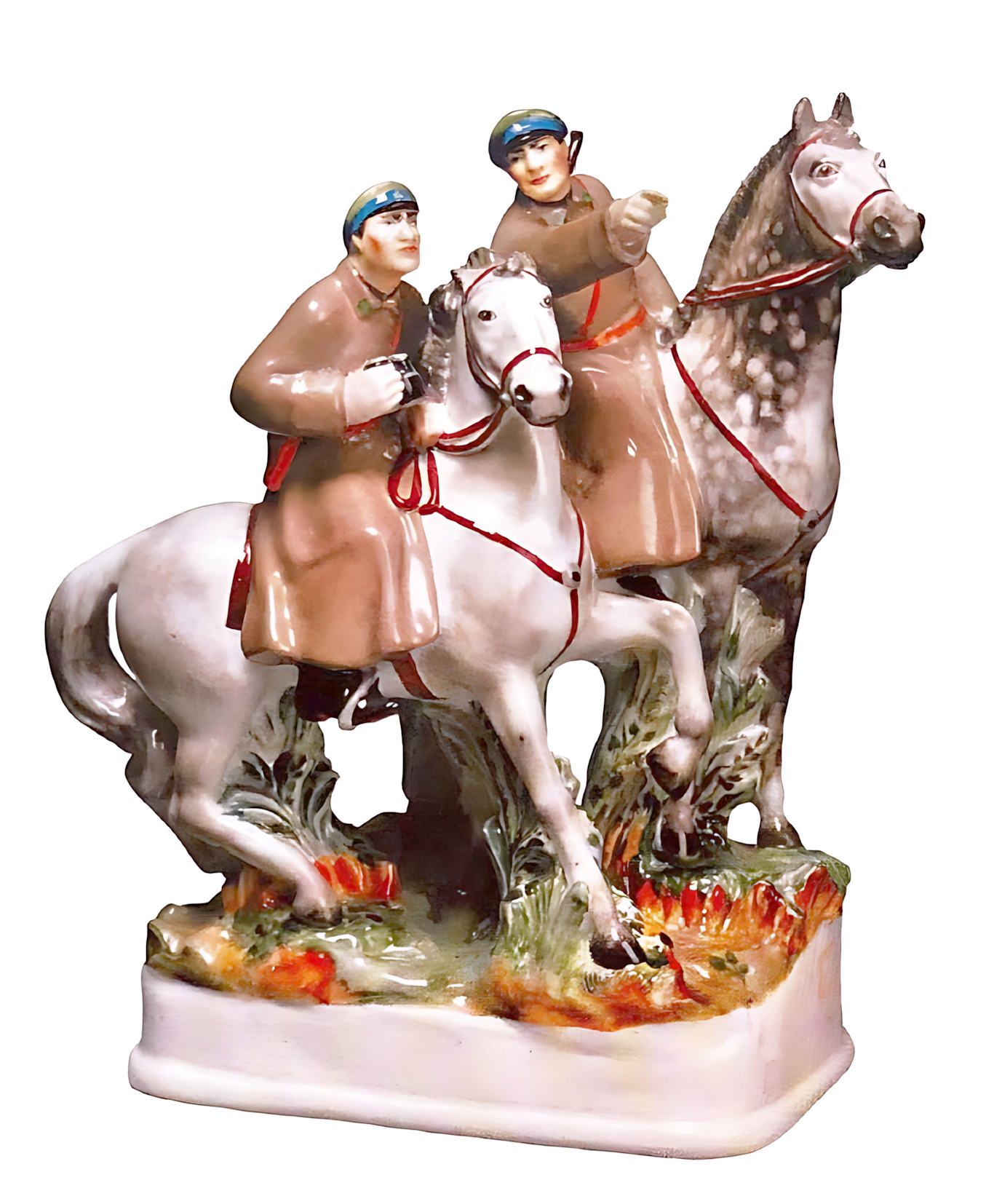
"Horse Patrol" model by N.A. Danko 1935
As A. Lunacharsky believed, porcelain was to become a true representative of the young Soviet Union abroad, opening new horizons for Soviet culture. And V. I. Lenin's thoughts that when the economy strengthened, this porcelain would become accessible to everyone, underscore the high expectations for this movement. Porcelain, as a symbol, tool, and means of expression, awakened in people's minds hope for a better future, and its creation became an important part of the cultural heritage that is worth studying and remembering.
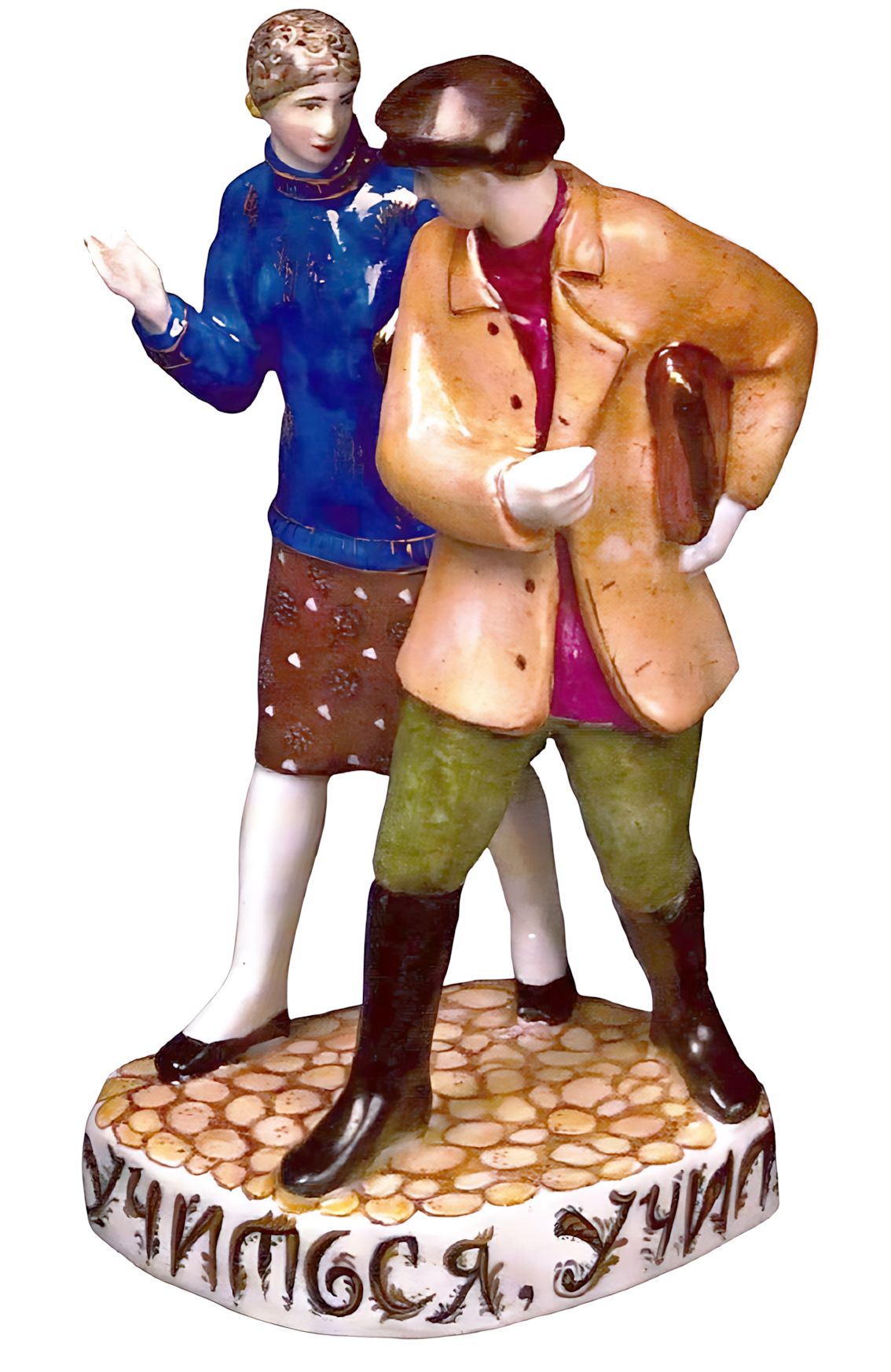
"Activists (Workers' Faculty Students)" model by N.Ya. Danko 1930s Lomonosov Porcelain Factory 1930s
Elena Danko, a talented artist and sister of the famous sculptor Natalya Danko, recalls Petrograd of those days. This city, plunged into darkness and cold, with worn-out streets and silent buildings, was nothing but a reflection of the times. In the windows of houses, stars left by recent bullets glowed, and on 25th October Avenue, porcelain items displayed for show shone brightly, attracting the gazes of passersby. Red stars, sickles and hammers, adorned with flowers, created unique images, representing a new era that was just beginning to take shape. On snow-white plates were amusing figurines of Red Guards and sailors, as well as tabletop chess sets, filled with the life and symbolism of the time.
Each of us who has ever seen this porcelain can imagine that atmosphere. The proletariat could only admire those wonders of art, while the true connoisseurs—foreign collectors—were desperately eager to acquire these masterpieces. Starting from 1920, Soviet artistic porcelain was successfully presented at exhibitions in cities such as Riga, Berlin, London, Paris, and others. These exhibitions became the pinnacle of success for the porcelain, which soon turned into a high-investment item: collectors staged real battles for each unique piece, which also testified to the high artistic level of these works.
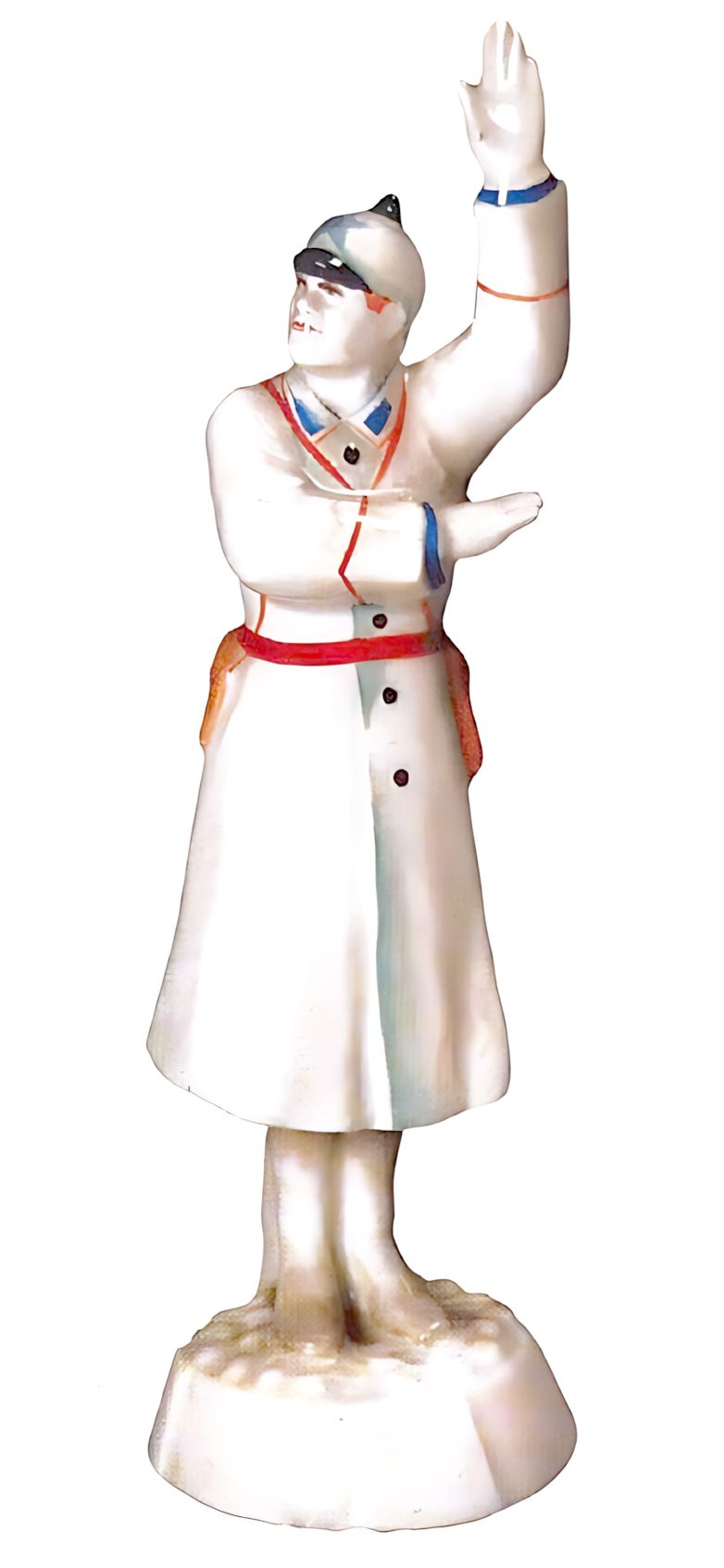
"Militiaman - Orudovets" model by N.Y. Danko, 1933
The emergence of interesting facts only adds spice to this topic. The magazine "Echo" in 1922 wrote about an auction in Stockholm where a porcelain plate with a depiction of V. Lenin reached an unimaginably high price. This turned out to be far from a random moment—collectors actively sought to acquire items linked to famous historical figures. And indeed, Leniniana became an entire field that attracted attention not only from collectors but also from artists striving to work with these images.
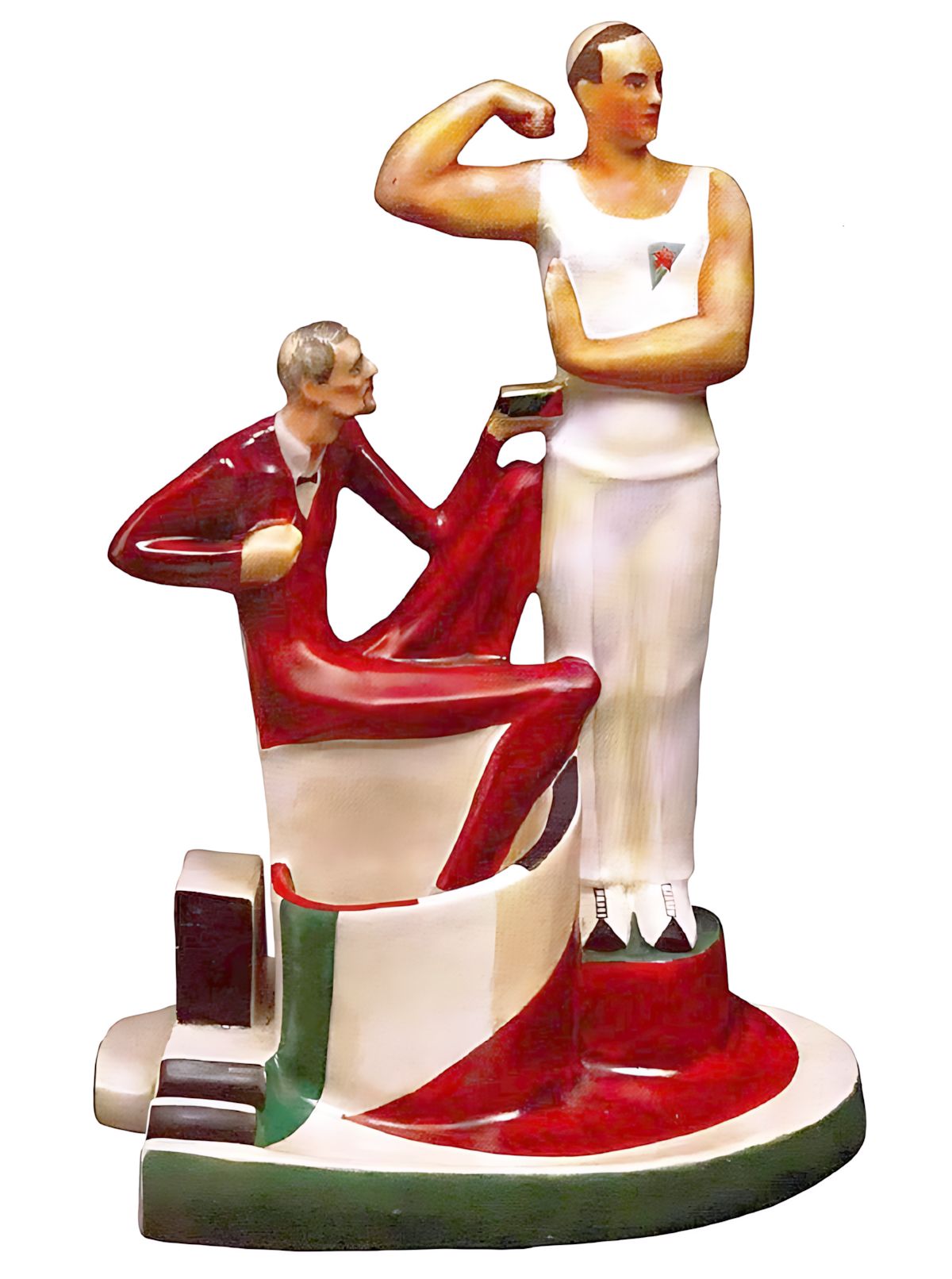
Smoking set "Smoker and Non-Smoker" model by N.Y. Danko, 1930-1931
Furthermore, the magazine "Among Collectors" mentioned how visits by foreigners noticeably increased interest in Russian artistic products. The price of porcelain almost doubled, and interest rapidly grew both in new works and in antique ones. 1925 became a landmark year when Soviet porcelain was presented at the World Exhibition in Paris, where its works received the highest awards, including a gold medal.
Masters such as D. Ivanov, N. Danko, and others attracted collectors with their theatrical figurines. For example, the work "Ballerina T.P. Karsavina" in the image of the Firebird and "Dancer M. Fokine" in the role of Ivan Tsarevich captivated the hearts of viewers. Later, in the late 1920s, collectors began to take an interest in works with national motifs; sculptures like "The Accordionist" and "The Dancer" appeared—this was connected with the search for a new aesthetic, deeply inspired by traditions.
Today, Soviet propaganda porcelain holds a significant place in museum collections both in Russia and abroad. It generates lively interest among collectors, and the works of masters such as S. Chekhonin, N. Danko, A. Shchekotikhina-Pototskaya, and many others are highly valued. Interestingly, even works by less well-known authors can have a high appraisal due to their rarity.
It is also worth remembering other porcelain factories, such as the Dulevsky or Dmitrovsky. Although their products often fall short of the quality of the Lomonosov Porcelain Factory's works, they still possess their own unique charm. Each new piece of propaganda porcelain that appears at auctions becomes a real event, and rising prices and sudden forgeries only underscore the growing popularity of this art. What can we expect next? Is there a noticeable trend towards a return of interest and towards new, original directions in art? All that remains is to observe and be ready for new discoveries in the world of artistic porcelain.