В нашем Telegram-канале — редкие картины, старинные предметы роскоши и увлекательные рассказы о мире коллекционирования. Подпишитесь и откройте для себя сокровища искусства!
Porcelain: The Art of Creation and Restoration from the Layers of Time
4.6КJan. 28, 2025Фарфор
The Origins of Restoration
As soon as humans learned to create objects from available materials, the need arose to restore them when something broke or was seriously damaged. Archaeologists studying ancient vessels from various cultures and eras often find clues indicating the use of glue and mending techniques. One of the earliest known adhesives was bitumen, a natural resin formed from the weathering of petroleum. This material was still used to fill cracks and repair minor defects in ceramics. Artifacts in the British Museum, dating from 7000–1500 BCE, serve as examples of primitive but effective repairs carried out using bitumen. The earliest mending method was likely threading a cord through holes drilled in the edges of shards, allowing fragments to be joined. Later, bronze and lead began to be used for bonding, ensuring the durability of restored works. This is how many masterpieces of ancient vase painting have survived, saved from destruction.
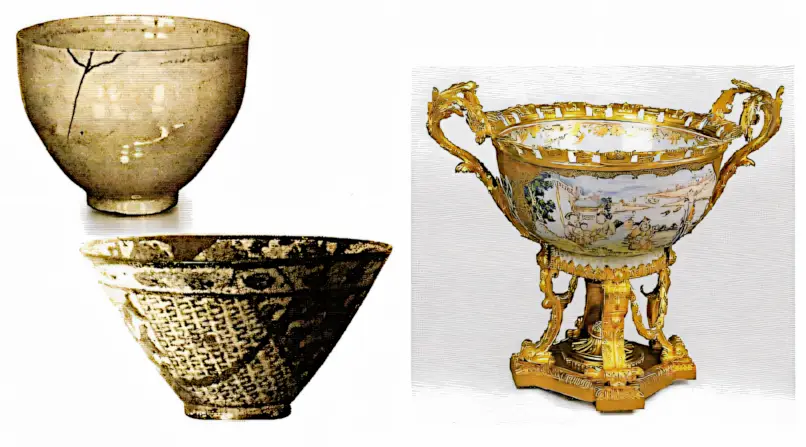
With the advent of the Renaissance in Europe, when the first collections of antiquities began to form, the profession of the restorer also emerged. These specialists sought to conceal the traces of time, restoring the complete appearance of damaged artifacts so they could once again become objects of admiration and value. Their methods remained relevant in the 17th–18th centuries, against the backdrop of growing interest in antiques and porcelain. However, from the beginning of the 19th century, under pressure from the demand for antique decorative items, restorers began to reunite fragments from various sources, creating "fantasy" pieces. Surprisingly, glue seams and even shards became a sign of authenticity, and forgers often artificially imitated them. Since the 1950s, museum practice began to pay more attention to removing traces of old restorations. Specialists recommended preserving only the original parts, allowing viewers to activate their imagination during contemplation. Today, a scientific approach to reconstruction and loss compensation is becoming the norm in museums worldwide, and interest in the history of restoration is only growing. Masters of the past left no records of their methods, and to uncover their secrets, we rely on rare written accounts and modern discoveries.
Secrets of Eastern Masters
Significant mentions of porcelain restoration are undoubtedly found in its homeland—China. Valuable vessels, works of master artisans, and cult attributes were subject to restoration to preserve their visual aesthetics. Starting from the 16th century, Chinese manuscripts contain recipes for adhesive compositions and advice on restoration techniques. To join fragments, masters used plant-based adhesive mixtures, such as gluten from wheat or rice, mulberry sap, bamboo resin, as well as additives like lime, fish glue, egg white, and vinegar. Finely ground porcelain usually served as a filler. In some cases, restorers covered damaged areas with low-melting glaze and fired them. This method was known long ago and was used by potters, presumably the first restoration masters, to correct flaws in the glaze. One 16th-century Chinese treatise mentions that a re-fired item "will look almost the same as the old piece." Although a change in color might be observed, the Chinese preferred restored items to new ones—this remark highlights their deep respect for ancient objects and the art of preceding masters.
Masters of Japan
Among the countries where ceramic restoration has long-standing traditions, Japan is noteworthy. Here, as in China, the art of repairing porcelain items skillfully combines aesthetic value and a philosophical approach to antique objects. Japanese masters applied various techniques to restore damaged porcelain items, including a method known as "kintsugi," which involves filling cracks with gold or silver resins. This is not merely a repair process but a whole philosophy based on respect for the object's history and acceptance of its imperfections. The art of "kintsugi," where visible traces of damage become part of a new creation, gives rise to unique items, each telling its own story. The Japanese view their restored objects as symbols of resilience and continuity, and each crack in the porcelain is not a flaw but evidence of the object's life, its journey to the present.
Thus, the approach to restoration adopted in Japan differs from the Chinese one, affirming the idea that beauty can lie in imperfection and aging, which enriches the very concept of an artifact's value. This represents another aspect of the perception of time and heritage preservation in Eastern culture. The ways in which Eastern masters dealt with losses formed an overall picture of respect for the past and dedication to craftsmanship, which has significantly enriched restoration traditions over the centuries.
Art and Craftsmanship in Modern Times
Today, the art of restoration has reached a new level with the application of modern technologies and materials. However, the philosophy established by predecessors continues to be fundamental. Masters who carry on the traditions of ancient times view restored objects with the same respect as their predecessors, understanding their historical, cultural, and emotional value. The scientific methods used in our era help preserve artificial and historical objects, but combining such work with the spirit of traditions is undoubtedly a more complex task. This synthesis allows for the creation of masterpieces that continue to amaze and inspire generations.
In Japan, meticulously restored items were often perceived as more valuable finds than new ones. This view resonates with the philosophy of Zen, which includes the concept of "sabi" — the transient charm of the everyday. There is a well-known story about the tea ceremony master Sen no Rikyū (1521-1591). Once, while visiting someone, he was struck by the beauty of the "Unzan" tea caddy but did not utter a word about its merits. Distraught, he broke this beloved object; however, his Teacher, gathering the fragments, brought it back to life. Later, inviting Rikyū to his place, he served tea from that very restored tea caddy. The master's attentive eye instantly recognized the familiar object: "Could this be the same tea caddy I saw before?" he asked. — "Now it truly possesses 'sabi'." This tea caddy, which had changed many owners, was deemed priceless precisely because of its long life journey. Drawing on folk wisdom, the Japanese noted that items preserving traces of their past are especially valuable. From the 17th to the 19th centuries, the restoration of high-quality ceramic items was carried out using "golden lacquer" — "maki-e." At that time, the Japanese discovered that lacquer, extracted from the tree of the same name (Rhus verniciflua), served as an excellent natural adhesive. Over time, artisans learned to evaporate the sap to achieve the desired thickness. While the glued seams were still damp, they were dusted with the finest gold powder, giving the objects a special charm. Parallels with China are also evident — artisans used gold leaf in combination with a popular adhesive obtained from the secretion of lac insects (Laccifer lacca). "Golden restoration" likely originated in those distant times when pure gold was used to restore precious celadons. This was linked to the belief in the magical properties of celadons — their heavenly color suggested that the glaze would turn a dark shade if poison entered the vessel. The use of gold in this context held special significance, emphasizing the purity of the material and highlighting the beauty of the object itself. However, even restoration done using more accessible materials yielded surprising results, and precious metals continued to be used only for the connecting staples that held the shards together. Sometimes during the restoration process, artisans might combine gold and silver staples, which both saved costs and recreated an exquisite visual effect.
Secrets of European Masters
In the medieval era, Europe began to discover the magic of porcelain, which, as historians note, became known from the end of the 13th century. This amazing substance quickly gained respect and soon earned the title "white gold." Porcelain was stored in treasuries and was considered an object worthy of royal residences. Historical records mention how even fragments of this valuable material were set in gold, granting them the status of precious stones. For example, to create the mounting for the bowl of Queen Isabella I of Castile (1451–1504), jewelers used a full 344 grams of gold, demonstrating the grandeur of this piece.
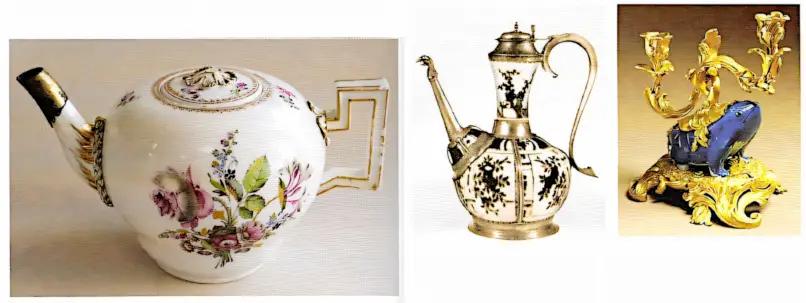
With the beginning of active trade with the Far East in the 16th century, porcelain became more accessible, though it remained an expensive pleasure for the select few. Louis XIV preferred to drink broth from a Chinese porcelain bowl, complemented with silver handles crafted by European masters. The 18th century became a time when silver mountings gradually began to give way to more economical options—gilded bronze or brass imitations. However, the tradition of mounting porcelain in metal continued to live on into the 19th century, adding an element of luxury to every object.
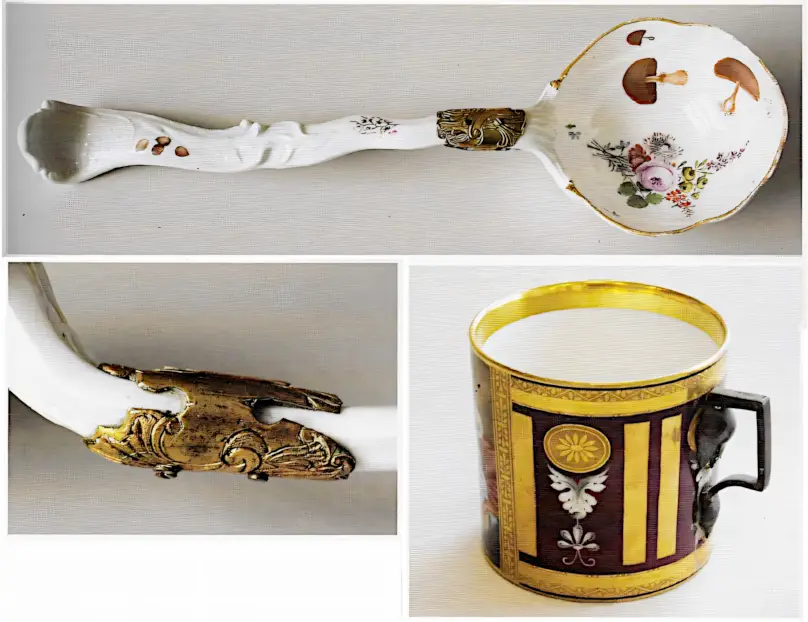
The Dutch, who became the leading traders with China and Japan, showed incredible ingenuity by adapting Eastern wares to the needs of 18th-century Europeans. For instance, their exquisite vases and jars with lids, thanks to metal mountings with handles, were transformed into beer mugs, and the lids were often made of porcelain already in Europe. Some pieces of export porcelain were joined together using skillful metal mounts, creating original items "in the Eastern style." These metal elements served not only for decoration but also had practical value: they protected damaged objects from further destruction. Broken handles of teapots and jugs were replaced with metal ones, and concealing rims hid chips and cracks, restoring integrity. Fragments of valuable pieces were revived when they were carefully joined using "sleeves" of lead or other metals. Sometimes, after repair, an object would change its purpose: if a bottle's long neck was broken, the edges were ground and polished, turning the vessel into a rounded shape with the possibility of adding a metal lid, which allowed it to be used as a jar or a scent vase.
In the 18th–19th centuries, the ancient method of joining fragments of an object using metal clamps or staples remained popular. From the mid-17th century, the Chinese primarily used copper wire for this purpose; in Europe, various metals were used. The clamps were inserted into holes drilled halfway through the thickness of the shard. Surprisingly, there are repairs of this type, masterfully executed on thin-walled items. Staples were threaded through holes punched all the way through. Sometimes the clamps or staples were so skillfully tinted to match the color of the object's surface that they could be mistaken for part of the decoration. Although many modern restorers consider this method destructive, capable of spoiling the appearance of the piece and leading to stains from metal corrosion, collectors often prefer to leave old repairs. The reason for this is the ability to trace an interesting stage in the "life" of the object and confirm the authenticity of all joined parts. However, when most of the fastening elements are lost, such items may be on the verge of falling apart into pieces.
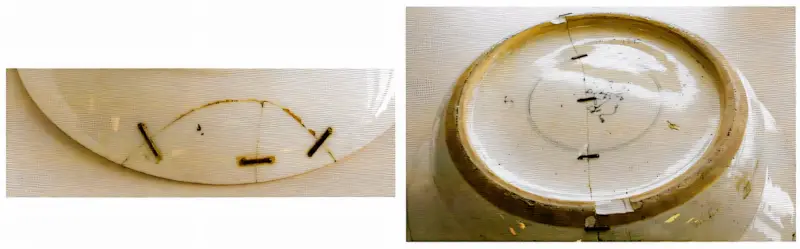
Another common restoration method became joining fragments using wooden or metal pins. Sometimes any available materials were used as pins, from forged nails to twisted paper. This method likely appeared as early as the 18th century and has since continued to be used by some craftsmen engaged in commercial restoration, although they prefer pins made of corrosion-resistant materials. Using such restoration in everyday life is undesirable, but if one must deal with curious items, it should be known that this method is more reliable than ordinary gluing, which can come apart due to thermal fluctuations or exposure to cleaning agents. In pin restoration, a "cement" is applied along the seam joining the fragments; for example, in the 19th century, animal glue mixed with chalk or plaster was used. For sculptures, pins were usually inserted into glue or plaster poured into the internal cavity of the figurine. These methods were also used to attach other parts, such as broken-off heads and hands.
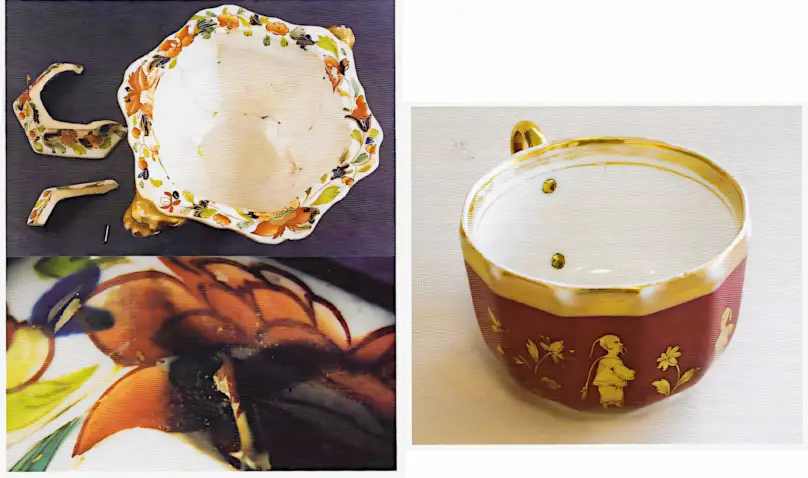
The method using pins is considered more successful in terms of the result obtained, since the traces of intervention are not as pronounced as when using staples or clamps. However, it is worth noting that the presence of fastening elements inside porcelain items can also lead to their damage. Porcelain, being an object of use, is subject to washing, which, in turn, causes corrosion of the hidden metal reinforcement. There are known cases where items fell apart due to cracks caused by the expansion of the pins.
Adhesives
Adhesive compounds play an important role in the restoration of porcelain, providing craftsmen with the ability to restore the integrity of items. Over the centuries, craftsmen have experimented with various mixtures, leading to the emergence of many recipes based on natural components. One of the first known types of adhesive was, for example, animal glue, obtained from the skin, bones, and tendons of animals. Such glue exhibits excellent bonding properties, but its drawback is sensitivity to moisture, which limits its use in more modern restoration practices.
With the development of chemistry in the 19th century, synthetic adhesives appeared, which significantly simplified the restoration process. They possess superior strength and resistance to environmental influences. For instance, epoxy and polyurethane compounds have become favorites among restorers due to their high adhesive properties and durability. Modern craftsmen increasingly turn to them to ensure that restored items are not only beautiful but also practical. However, these materials have their nuances. For example, strong chemical compounds can cause damage to the original ceramic fabric.
At the same time, the use of extracts based on natural substances remains a popular approach in restoration, especially in cases where the preservation of historical authenticity is of paramount importance. Craftsmen working with porcelain may use natural adhesives based on plant materials, such as glue made from rice flour or cassava root, which combine ease of application with the ability to consider the aesthetic perception of the restored item. These compounds, possessing sufficient strength and safety for delicate materials, bring life back to priceless artifacts without compromising their famous, special beauty.
Regarding the creation of adhesive compositions for porcelain restoration, Europeans in the 18th and 19th centuries turned to the rich experience of Chinese masters, showing deep respect for it. Thus, "Chinese" glues came to refer to vegetable gelatin (agar-agar) and shellac, known in the Middle and Far East since the 17th century. The book "Friend and Advisor to Rural and Urban Householders...", published in 1893, contains an interesting description: "A method for preparing one of the best Chinese cements, Chio-Liao, which is perfectly suited for gluing leather, marble, plaster, as well as porcelain items, has recently been revealed. The preparation of this cement is quite simple: 54 parts of slaked lime are mixed with 6 parts of powdered alum, and then 40 parts of thoroughly whipped fresh blood are added, after which the mass is ground until a homogeneous consistency is obtained." Here we encounter a recipe for an adhesive in which the main component is animal blood albumins. It should be noted that most traditional "cements" for gluing porcelain contain both plant and animal base ingredients with various additives.
The category of animal glue includes casein, glutinous (hide, fish, bone glues) and combined types. Casein is a complex protein formed during the curdling of milk under the influence of enzymes and was used for gluing porcelain in a mixture with quicklime, ammonia, or a borax solution. Recipes from the mid-19th century strongly advised adding grated cheese to the adhesive composition; according to English tradition, Gloucester and Suffolk cheeses were considered the best, while in Italy, buffalo milk cheese was preferred. Plant-based glues were extracted from gums, starch, dextrin, and natural rubber. Natural resins, such as shellac, dammar, and rosin, were also widely used in adhesive mixtures, to which turpentine or resin from pine and teak wood was added.
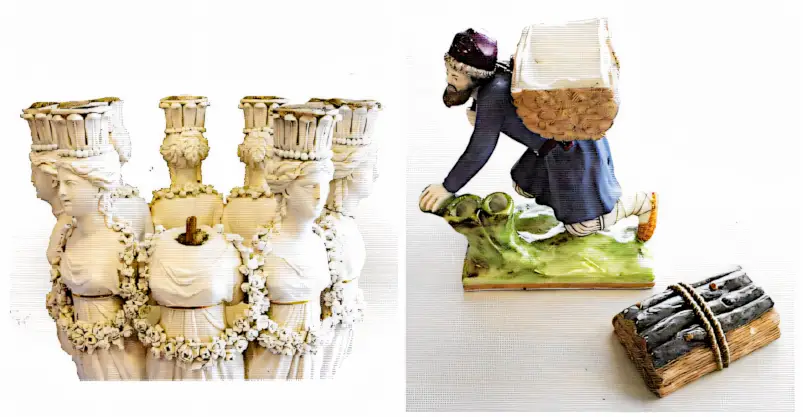
In the second half of the 19th century, patented compositions for bonding ceramics began to appear on the world market, among which cellulose nitrate, known as "celluloid," stood out. In the early 20th century, adhesives under the brand "Rapid," as well as "Sindetikón" (animal glue) and office glue, which was an aqueous solution of sodium silicate also known as liquid glass, were popular in Russia. It is noteworthy that despite the wide selection, literature for housewives continued to recommend homemade recipes, sometimes quite exotic. One encyclopedia mentions using freshly collected snail mucus for gluing porcelain, and a supplement to the journal "Selsky Khozyain" (The Rural Host) from 1903 provides an interesting guide: "If significant cracks that leak water form in a porcelain cup, simply rub the broken areas with dry bitter almonds; after this, the cracks will no longer allow liquid poured into the vessel to pass through."
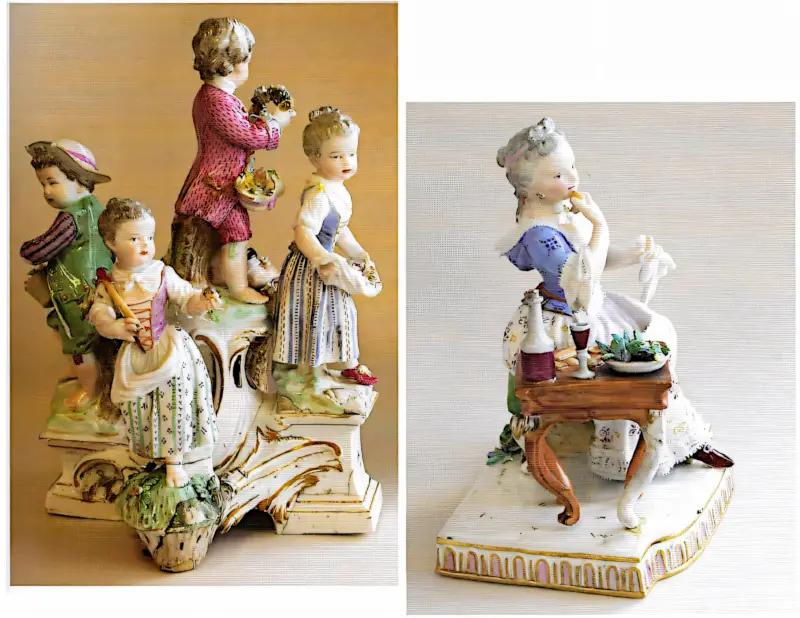
By the mid-20th century, phenol-formaldehyde adhesives had entered the market, the most well-known brands being BF-2, BF-4, and BF-6, used in medicine for treating microtraumas. In everyday life, BF-2 was more commonly used, intended for heat-resistant joints. However, these adhesives, like many others, had certain drawbacks—over time, they underwent degradation, exhibited darkening, compromised heat and moisture resistance, and the bonds became irreversible. Scientific achievements in the field of polymers in the 20th century provided porcelain restorers with a wide selection of adhesive substances, offering a range of advantages over traditional methods. Among them are polyvinyl butyral (PVB), epoxy and polyester resins, cyanoacrylate, and silicone-based adhesives. Despite this, the task of creating an ideal means for bonding porcelain can still be considered relevant.
Compensation for Losses
Using glue to bond fragments of a porcelain object is only the beginning of the restoration process. Even after the item is successfully joined, noticeable losses may remain: missing areas of glaze, chips and nicks along the edges of cracks, as well as cases where entire fragments were unavailable—be it vase lids or pedestals. The work of compensating for these absences requires significant effort and experience. Since ancient times, both fired and unfired clay, as well as plaster, have been used for such tasks.
Most often, the same adhesive composition used to join fragments was applied for filling seams, often with the addition of white lead to achieve the desired shade. Sometimes, the mastic mixture included glue combined with other fillers—such as porcelain or marble chips, gypsum, kaolin, or chalk. In the late 18th to early 19th centuries, sealing chips and dents frequently involved using sealing wax or specialized mastic based on wax, shellac, and rosin.
A significant role in restoration work also belonged to the practice of using fragments obtained from other objects, which was characteristic even of ancient China. Sections selected from other items were sometimes so skillfully executed that they created the illusion of the original work by a master with access to porcelain scraps. There were even "attached parts"—handles, spouts of jugs, and lids—that could be taken from items with a similar style. Lost parts of sculptures or molded decor were restored using elements made of wood, bone, or papier-mâché.
When it came to individual parts, the approach to their selection could range from the most successful to less successful, depending on the craftsmen's efforts. Some skilled artisans preferred to create these elements themselves, while others ordered them from porcelain factories. However, later additions often differed from the original, evident in the painting, composition quality, shades of colors, and gilding. In modern times, gypsum with added PVA glue (gypsopolymer), as well as cyanoacrylate compositions and epoxy resins with various fillers—talc, glass microspheres, and pigments—are actively used to compensate for losses. Mastics such as Milliput or Remoset, and sometimes even dental materials, are becoming increasingly popular, enabling craftsmen to arm themselves with modern means to grant forgotten objects a second life.
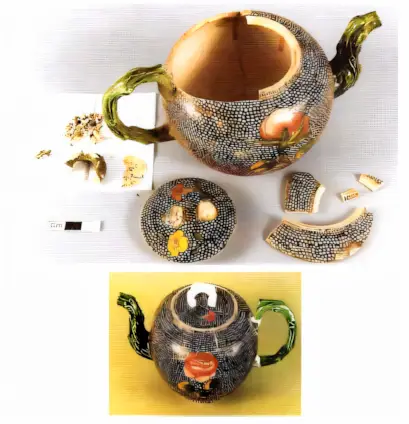
The final stage of restoration involves meticulous tinting of fillings and any additions to match the main tone of the ceramic body and the character of the painting. Metal, wood, or bone replacement parts are first primed, then painted, after which a protective varnish is applied. Oil paint is most often used for tinting, covering not only the glue seams and the additions themselves but also extensive areas of the original surface to conceal residual traces of restoration. For instance, when restoring the fingers of a figurine, the entire hand is often repainted, which can sometimes distort the authentic appearance of the work. It is noteworthy that varnish coatings made from natural resins darken over time and lose their original brightness themselves, especially those based on white pigments. To imitate gilding, gold leaf, imitation gold leaf—thin metal sheets of copper with zinc added—as well as special bronze paints, which are a mixture of bronze powder with varnish, are used. Modern workshops provide restorers with a wide selection of paints and varnishes, and each specialist chooses the most suitable ones for their practice and material.
Manufacturing Defects and "Honest" Damage
In addition to damage incurred during use, porcelain items can suffer from manufacturing defects arising from deviations in the production technology. Such flaws include deformations, cracks, crazing, bubbles, blisters, as well as various defects in the gilding and paint layer. It is important to note that such "marks" often become the subject of close attention by masters, as they can indicate the era of the item's creation and its connection to known manufacturers. The porcelain masters of the 18th century were true innovators, experimenting with available materials and facing difficulties in controlling kiln temperatures, which prevented them from achieving the precision available to modern producers. Therefore, broken Eastern porcelain from that time was often purchased with minor flaws, and such items, offered for sale at reduced prices, were quite acceptable to buyers. Consequently, items with acceptable molding and firing imperfections were a common occurrence on the market. They were often painted, and small cracks or defects were masked by depicting delightful floral patterns, leaves, and even insects in those spots. There were special decorative techniques designed to conceal flaws; for example, dark spots of an iron nature appearing in the recesses of plates could be masked by mixed compositions, splashes of floral bouquets. Interestingly, in 19th-century St. Petersburg, there were specialized shops selling defective tableware, and this tradition has survived through the times: shops at production facilities still successfully sell items of "non-sort quality."
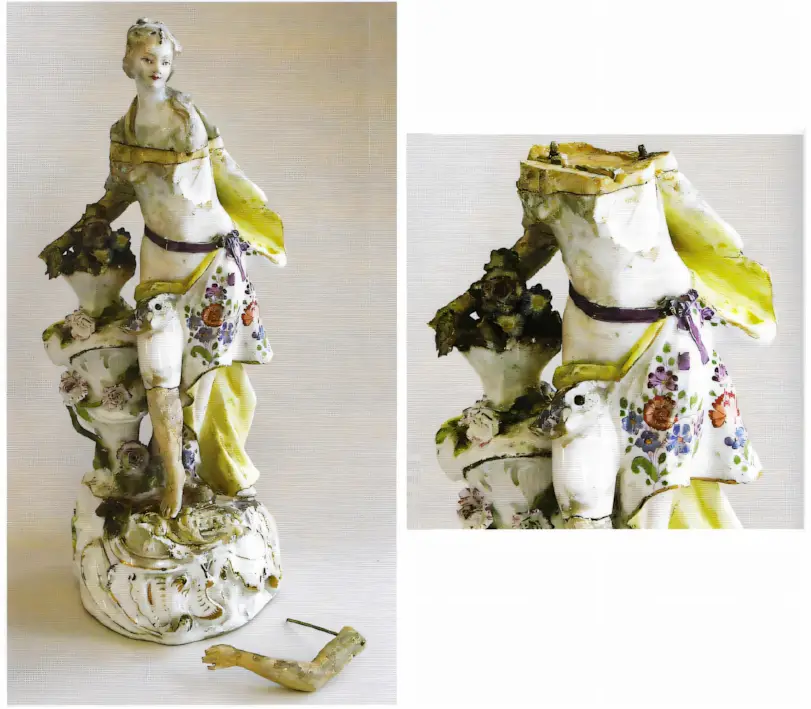
Manufacturing defects, particularly those caused by poor design, usually do not reduce the value of an item as much as losses caused by damage from use. Most collectors and antiquarians prefer intact items, so damaged items may be less desirable on the market. Restoration costs often exceed the actual value of the damaged artifact. Nevertheless, even in relatively good condition, antique items show traces of their past: wear, chips, scratches from cutlery on plates, ink stains on inkwells, tea and other beverage stains, as well as limescale deposits inside vessels. Are such items hopelessly ruined? It is interesting to note the opinion of the famous dealer and collector of English porcelain, D. Godden: "Some believe that any damaged items, regardless of the extent of their damage, should be rejected. This advice may be correct if you have a thick wallet and are investing your money, not collecting. But if you are a true collector, you understand that this is bad advice. I am even horrified to think how many interesting items I might not have acquired if I had only sought intact pieces. Measures of 'honest' damage, such as cracks or chips, will not stop me, especially when it comes to everyday items. I am sure: they testify that the items have survived two centuries." Indeed, in the skilled hands of modern restorers, it is possible to achieve almost invisible results. To determine if an item has been restored, you can perform a test—tap the item to hear the sound: clear and pure or dull and alarming. Useful aids in this process can be a magnifying glass and an ultraviolet lamp. It is essential to carefully examine even perfectly preserved items, as they may turn out to be either crude fakes or factory reproductions with removed or forged marks.
A Bit More History
The history of porcelain is full of bold experiments and adherence to traditions, making it a remarkably interesting subject of study. Since its inception, both the production techniques and the approaches to its restoration have changed significantly. From the 14th century, when the first porcelain items began to be made in China, to the present day, this unique material has undergone a complex evolutionary path. The secrets of Chinese masters remained a mystery for centuries, attracting the attention of European collectors and researchers. Starting from the 16th century, when porcelain became widespread in Europe, it began to be regarded as "white gold." It became a symbol of status and luxury, attracting many respected masters, each of whom contributed something of their own to the art of its restoration.
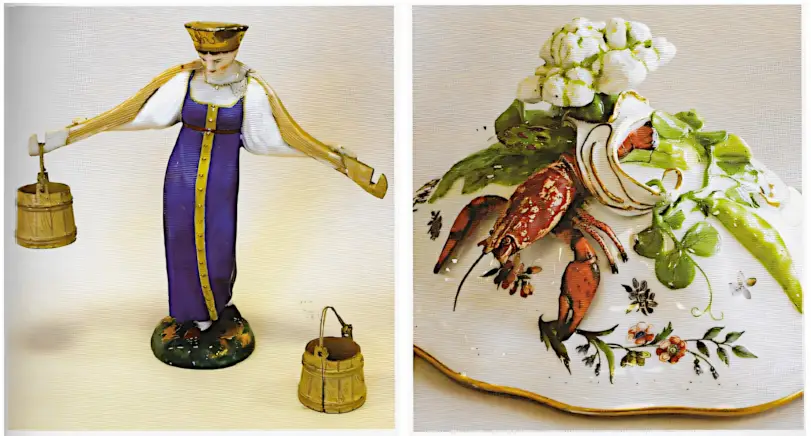
Parallel to this, restoration methods also developed. Until the 18th century in Europe, it was considered normal to cast "lost" elements from other objects, which sometimes made it possible to create amazing specimens that, however, did not always uphold the idea of originality. Subsequently, despite economic difficulties and fluctuations in interest, the connection of restoration with the original concept and aesthetics became a priority for masters. Quick and sometimes inappropriate restoration methods gave way to an understanding of the value of unity and the originality of each artifact.
There are many documents and records about how in the 17th-19th centuries, professional restorers challenged time and their own art, creating masterpieces that were admired and that continue to inspire generation after generation today. The rules they established over the centuries formed the scientific basis for modern restoration techniques, namely the synthesis of the idea of respect for historical objects and modern technology, which allows experts to preserve history for future generations. This ongoing tradition of treating vulnerable artifacts helps us understand how important history is and how classical art continues to influence our perception of art as a whole.
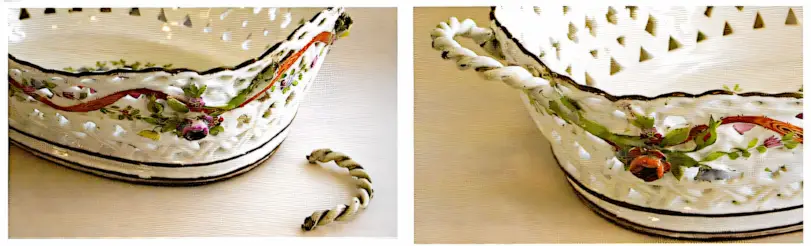
Finding enthusiasts willing to store porcelain fragments in their homes is quite difficult. If your valuable item has broken or was acquired in an unsightly condition, you can try to restore it yourself, but the result may greatly disappoint you. Unfortunately, professional restorers often face the consequences of unsuccessful amateur repairs, which only exacerbate the problem. Errors can arise from insufficiently high-quality gluing, the use of non-durable or irreversible adhesive compositions, as well as unprofessional grinding of edges, which ultimately damages the original surface of the item. The process of dismantling and correcting the consequences of such DIY attempts can take a lot of time and require significant financial costs. Therefore, it is wiser to immediately turn to specialists, who in the field of porcelain restoration, a fragile and still priceless material, are never short of work.
The history of the porcelain restorer profession remains a blank spot: very little is known about the practice of restoring items in Russia. The first mentions date back to the 1770s of the 18th century. Researcher P. Stolpyansky writes in his 1915 article about how on the Admiralty side, on Malaya Millionnaya Street, lived a foreigner named Petr Ies. He was probably the first who came to St. Petersburg exclusively for repairing porcelain and faience, as well as dolls and figurines. Interestingly, for gluing he used a mixture of garlic and lime, but claimed that the smell did not remain on the item.
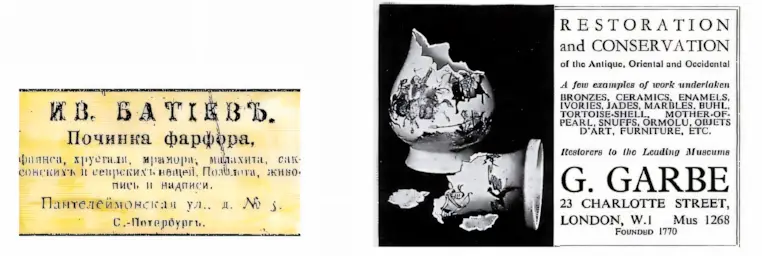
Porcelain restoration was not only done by specialized masters; it was an additional source of income for restorers working with items of other materials, as well as for bookbinders. The clients ordering the services were private individuals, antique dealers, and merchants who had their own masters working in their shops, handling minor orders. For example, in St. Petersburg at the turn of the 19th and 20th centuries, such specialists as G.I. Zenger, the owner of an antique shop, and M.E. Obukhov, the owner of a crystal workshop and porcelain repair shop, offered porcelain restoration services. V.I. Ivanov, who owned a shop on Nevsky Prospect, also had a workshop where restoration work was carried out. Special workshops engaged in repairing and gluing old tableware successfully operated under the names Gil and Batiev. It is known that damaged items from imperial residences were sent for restoration to the Imperial Porcelain Factory. Professionals, of course, had their own trade secrets, which were passed from master to apprentice. And publicly available advice on restoring items could be found in numerous publications on the topic of household management and in magazines such as "Remeslennik-lyubitel" (The Amateur Craftsman) and "Domashniy remeslennik" (The Home Craftsman).
By the beginning of the 20th century, when museums found themselves with a vast multitude of ceramic objects, including archaeological finds requiring meticulous restoration, scholars began to master this field. They turned to studying the ceramic material itself and searching for adequate means for its restoration. The renowned chemist M. Farmakovsky, one of the authors of the book "Ceramics, Its Technique and Preservation," published in 1926, noted: "Modern approaches and methods in the field of conservation and restoration began to form only at the end of the 19th century. This was the moment when it was necessary to put an end to exclusively practical knowledge, while the existing artisan restorers surrounded their methods with an atmosphere of secrecy and quackery...". The principles Farmakovsky speaks of still form the foundation of modern museum restoration practices. The main ones are the preservation of the original and the reversibility of the materials used. The question of how permissible additions are can sometimes become quite delicate. Usually, such additions should be noticeable, even if they imitate the appearance of the original, to avoid falsifying the object's history. There are techniques that allow adherence to the principle of "six feet - six inches," according to which corrections will be invisible from a distance of six feet but clearly expressed from a distance of six inches.
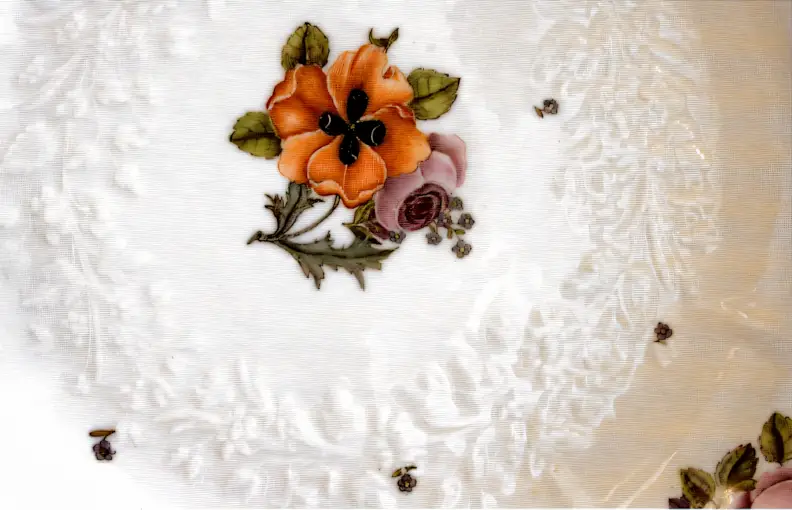
Commercial restoration, as already mentioned, adheres to a different approach, in which all flaws should be maximally concealed. Such complex work requires significant master qualification, the use of expensive materials, and time. Therefore, the high prices for such services are quite justified. If you plan to turn to a renowned specialist, be prepared for a long queue and some waiting. In any case, it is worth discussing the details of the restoration in advance and familiarizing yourself with examples of the master's work to prevent misunderstandings.
A Few Tips for Storing Porcelain
It is important to handle restored objects carefully. It is best to wipe them with a soft, dry cloth rather than wash them under running water, especially hot water, as this can lead to the separation of glued seams or the clouding of toning. The same applies to overheating objects in overly bright display cases. Plasticine, which is often used to fix lids or secure items on shelves, leaves hard-to-remove marks on restored areas and on unglazed porcelain. One should also avoid using strong adhesives for attaching tags or adhesive tape, which can not only pull off toning but also damage the original gilding of the object.
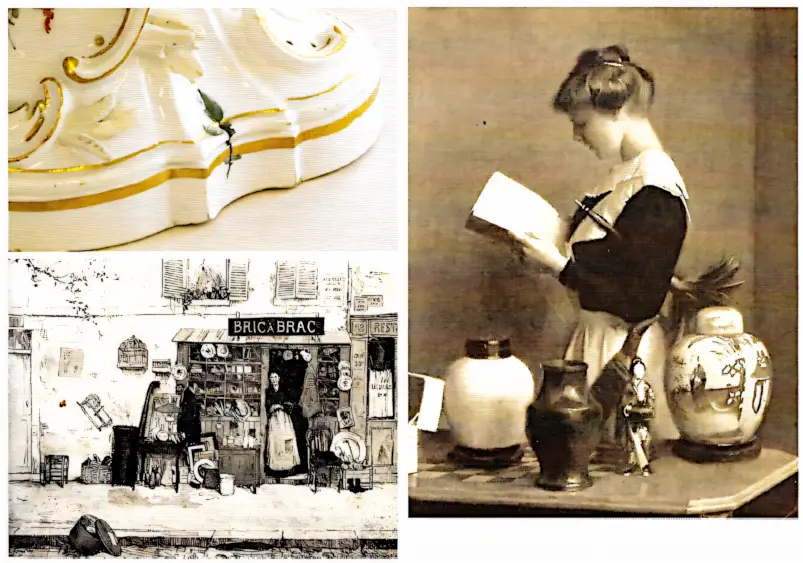
Careful handling of porcelain objects is the key to their longevity, as confirmed by centuries of practice. If a housewife carefully washes her favorite mug with baby soap using a soft brush, she significantly reduces the likelihood of damage. This is the essence of "preventive conservation," which in recent years has gained increasing popularity and become an important element of restoration work. To keep porcelain in perfect condition, one should follow a number of simple recommendations. For example, washing should be done in warm water using natural bristle brushes and neutral detergents, strictly avoiding abrasives. Then the items should be thoroughly rinsed under running water, otherwise, after drying, they may leave subtle but unpleasant streaks. Household bleaches are a real threat to porcelain; such products can cause irreparable damage. It is especially important to be careful when handling porcelain that contains metal elements—mounts or pins—as fluctuations in temperature and humidity can lead to negative consequences.
It is best to store a porcelain collection in glass display cases, which allow one to admire the beauty of the items while simultaneously protecting them from dust. Dust not only worsens the appearance but can also easily settle in small cracks and seams. Shelves should be organized so that they are clearly visible and conveniently accessible. Overloading should be avoided by placing larger items at the front and leaving smaller pieces in the background. Special stands for display or hanging should not leave scratches, and if flat items, such as plates, are stacked on top of each other, paper napkins must be placed between them. For packaging and transportation, it is better to use sturdy plastic or paper bags with reliable handles instead of newspapers.
This axiom becomes even more relevant when it comes to preserving high-value porcelain. It is much easier to prevent damage than to engage in restoration later. A careful attitude towards "white gold" will allow valuable items to delight the eye and retain their appeal for many years.