Для тех, кто ценит красоту и историю. Присоединяйтесь к сообществу ценителей!
Secrets of Sensual Power: How Zinaida Serebriakova's Nude Art Reveals the Hidden Psychology of Female Beauty
3.0КJune 30, 2025Живопись
When was the last time you looked at a masterpiece and caught yourself seeing something more than just what is depicted? Do you ever have the feeling that behind the thinnest skin of brushstrokes hides an entire universe?
Zinaida Serebriakova's nude collection is not just a series of portraits; it is an encrypted chronicle of eras, personal dramas, and the search for one's own beauty and the meaning of femininity.
Almost everyone knows Serebriakova thanks to her famous self-portrait "At the Dressing Table", where she is young, fresh, and shy. But few suspect that the true secret of her art lies in the depiction of the nude female body.
And if you are reading these lines, you have secured a ticket to a very special journey: now we will lift the curtain into Serebriakova's studio, where not embarrassment, but a subtle, free femininity becomes the main subject of inspiration and serious conversation.
The Embodiment of Beauty: Nude as Philosophy and a Challenge to Time
Imagine a dusty St. Petersburg studio from the early 20th century, the mixed scent of oil paints and vanilla, soft northern light gliding over a model's bare back.
In this moment, Serebriakova seeks in the female body not only harmony of form but also a philosophy of beauty, where everything is genuine, real, deeply human. Unlike her contemporaries, Serebriakova does not allow herself frivolity—her nudes are strict, ascetic, and yet stirring.
She seems to address the eternal, not allowing a casual glance to turn the female body into an object—on the contrary, she makes it a symbol of inner freedom.
At the beginning of her creative journey, she also depicts men: pencil sketches held in the Russian Museum hint at efforts to convey anatomical truth. But quite quickly, it becomes clear to the artist that the theme of female nature reveals another layer of her soul. The female body for her is not just a form, but a metaphor for life, strength, mysterious calm. Yes, the Impressionists teach us to see the picturesqueness of light; yes, the Symbolists seek hidden meanings. But Serebriakova is ahead: she elevates the sense of the feminine principle into an independent value.

Tradition and Rebellion: Serebriakova's Nudes Through the Prism of Eras
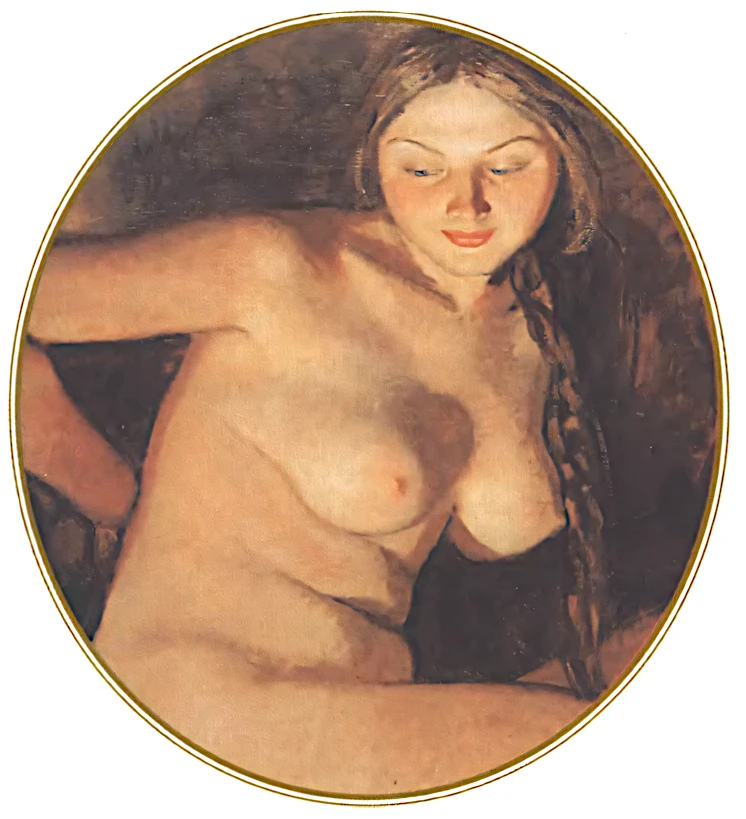
"The Bather," painted by Serebriakova in 1911, is like a quiet revolution. There is no stamp of special aristocracy, no hint of voyeurism. Inside is a mixture of classicism and impressionism: the figure is smooth and static, like an ancient statue, but the background pulsates with sunspots. It seems the young woman in the painting cautiously offers the viewer trust, rather than throwing down a challenge—a rare psychological move.
But the most radical aspect of the work is a new, completely non-aggressive attitude towards nudity. Serebriakova rejects the fetish of eroticism: the bathers in her paintings are not exotic but understandable and close, almost domestic. They look at the world the way a woman looks at herself in the morning silence of her room. Psychologists call this "self-compassion": accepting the body without punishment, without shame, with love, albeit sometimes with a touch of sadness.
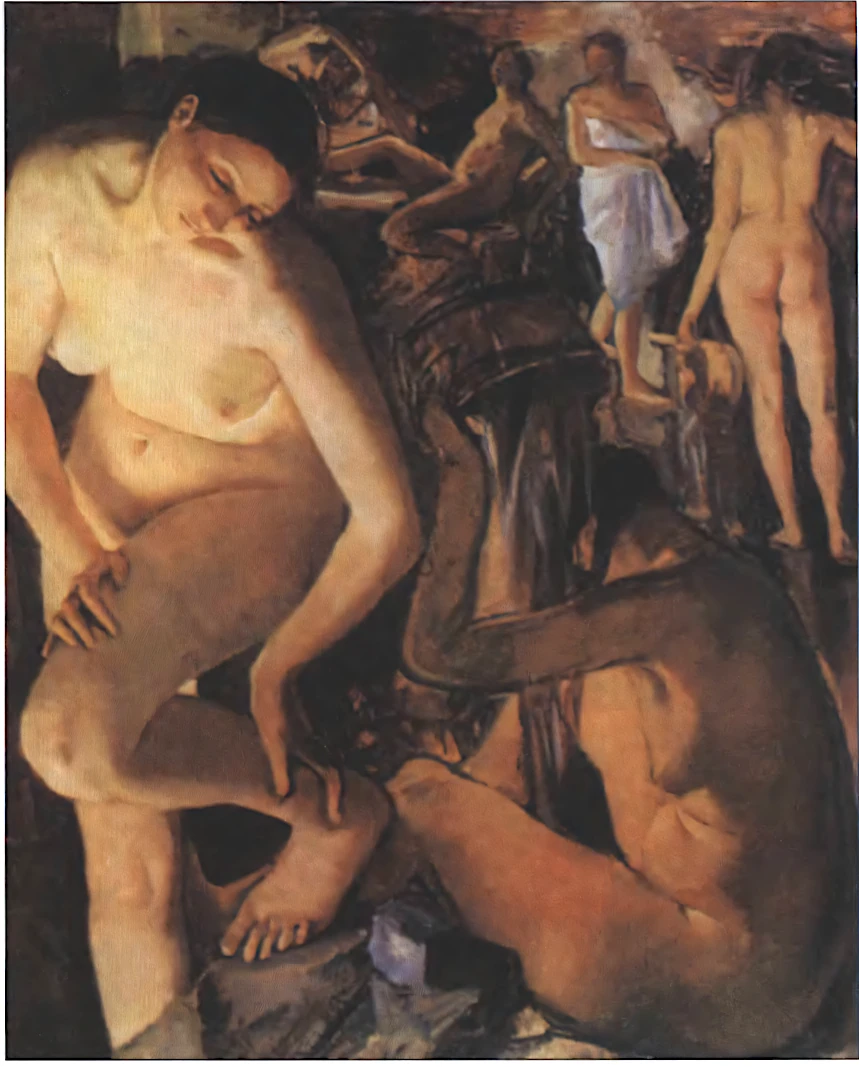
In 1913, the monumental "Bathhouse" appears: a fusion of passion for the classics and folk roots. There are no athletic bodies here—Serebriakova finds monumentality in the generalized forms of simple women, not idealizing them but capturing them like the columns of an ancient temple of Russian daily life.
The painting is built on a paradox: the female figures are simple and artless, yet there seems to be more individuality in them than in the theatrical images of Art Nouveau. Thus, a style is born that would later be defined as Neoclassicism—realistic yet spiritualized.
Art at the Junction of Catastrophes: Dialogues with the Future
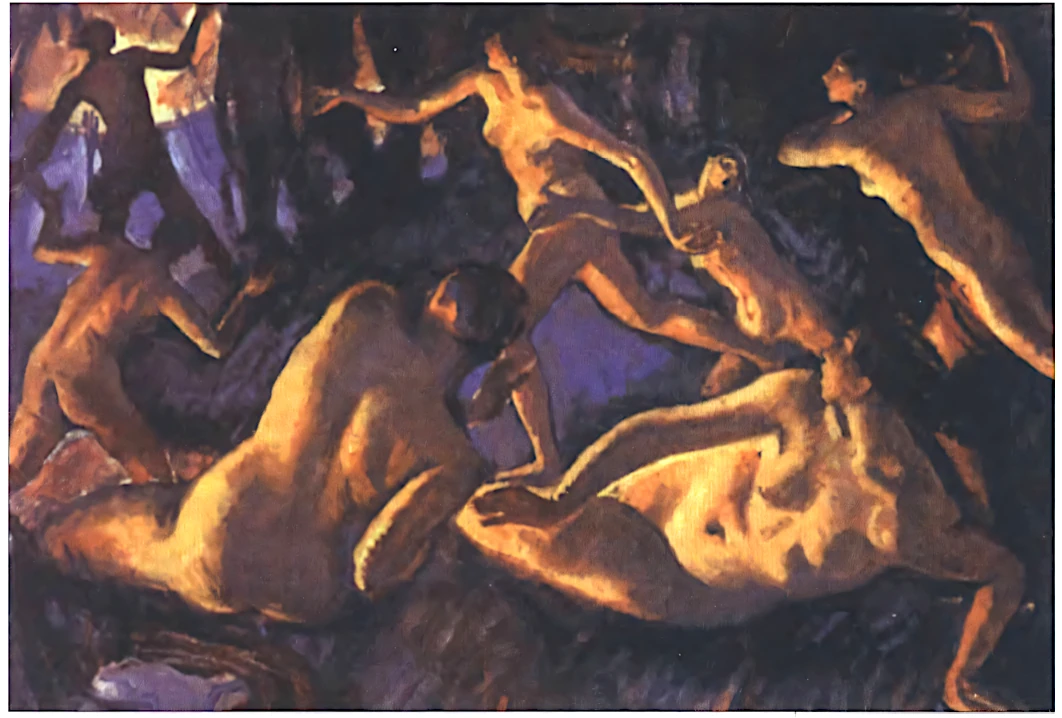
The storm of 1917 approaches. Anxiety grows in Serebriakova's studio: she begins the mysterious "Diana and Actaeon," where an ancient plot suddenly acquires tragic modernity. The poses are tense, the colors fractured, the atmosphere crackling with fear and foreboding. That is why no one can definitively interpret this canvas: here, myth becomes a personal confession and a collective nightmare. Serebriakova does not finish the painting—so powerful is the storm of feelings that erupted into the painting.
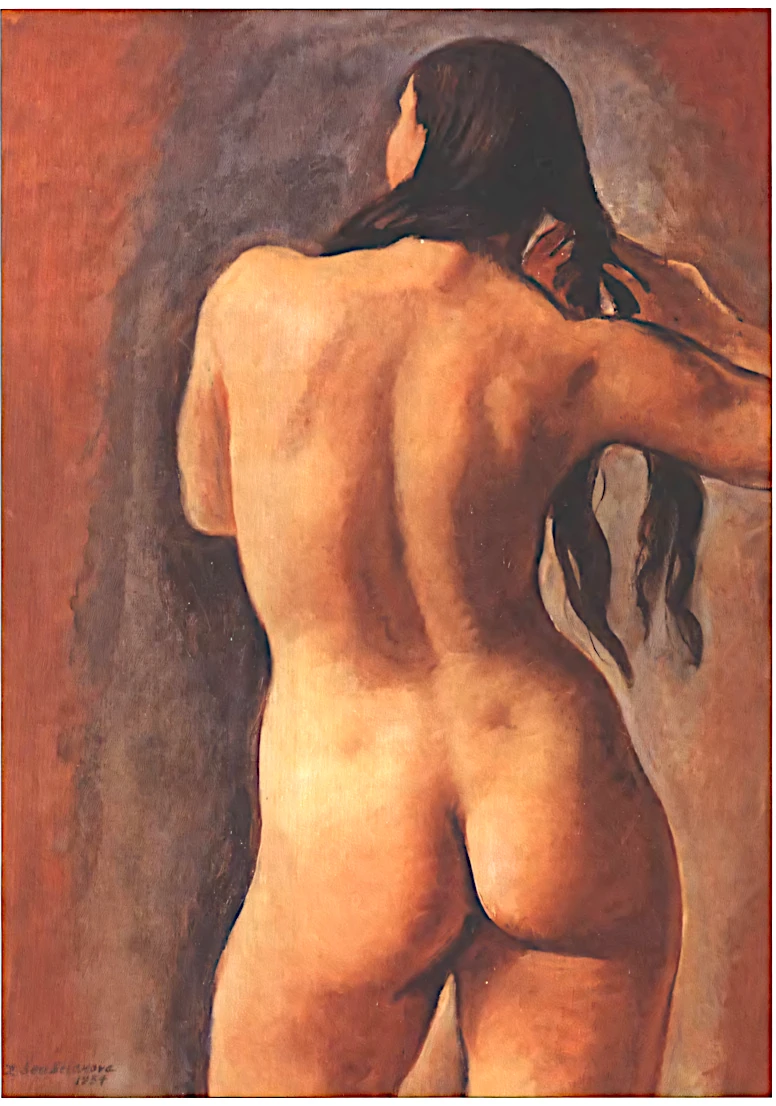
This is no accident: the 20th century shatters the former meanings of art. Beauty ceases to promise healing; tragedy becomes the obsessive tone of the time. "Diana and Actaeon" is like a harbinger of all the losses awaiting the artist: the death of her husband, emigration, the loss of home, homeland, and familiar way of life.
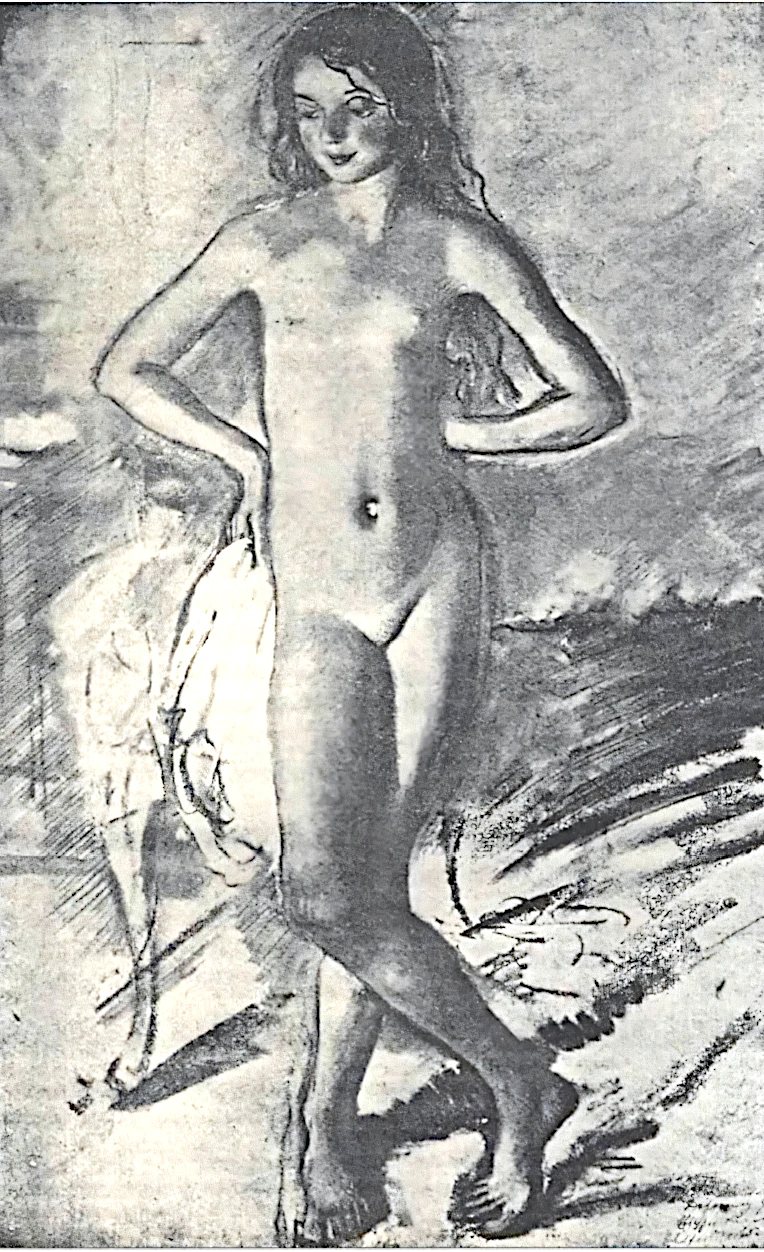
Yet it is precisely in the theme of the nude that Serebryakova finds the last surviving island of harmony. Her women are tense, their gaze piercing, almost defiant: "Why are we the symbol of a lost paradise?"
Paris, Africa, and That Very French Charm
After emigrating to France in the 1920s, a visible mutation of style occurs: her mastery of the nude body gains a new drive. In Paris, Serebryakova no longer justifies herself with classical subjects: the female body is now a self-sufficient universe, without disguises or allegories. The nuances of femininity become richer: shyness fades, and frank strength appears. When in one painting a sleeping model slightly inclines her head, and in another—a foreign "Moroccan woman"—floats in a stream of warm light, it is clear: rapture and pain have acquired a French charm.
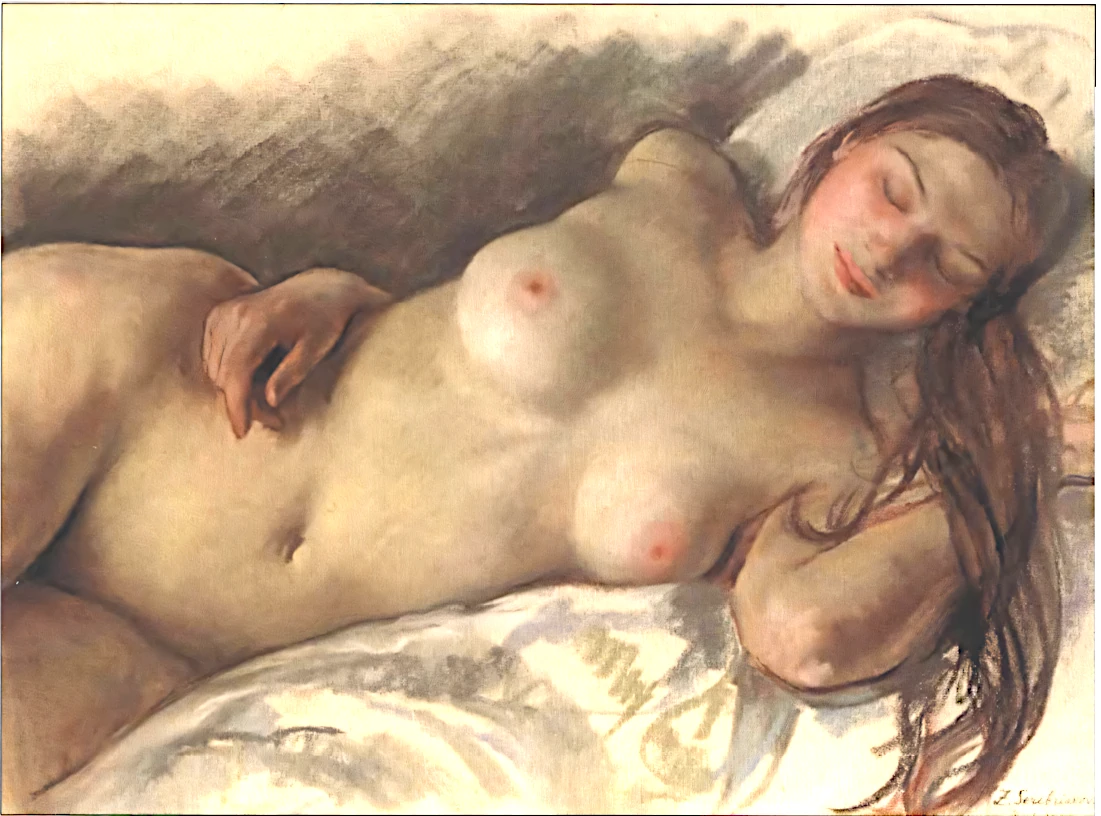
A special stage is the Moroccan series, born from collaboration with Baron Brower. African color, golden and blue tones, and the exoticism of the Art Deco style give the works a different breath.
Critics compare Serebryakova to Matisse, but she has different priorities: she does not so much transform nature as dissolve in it her tremulous perception of the female state—a moment of fleeting happiness.
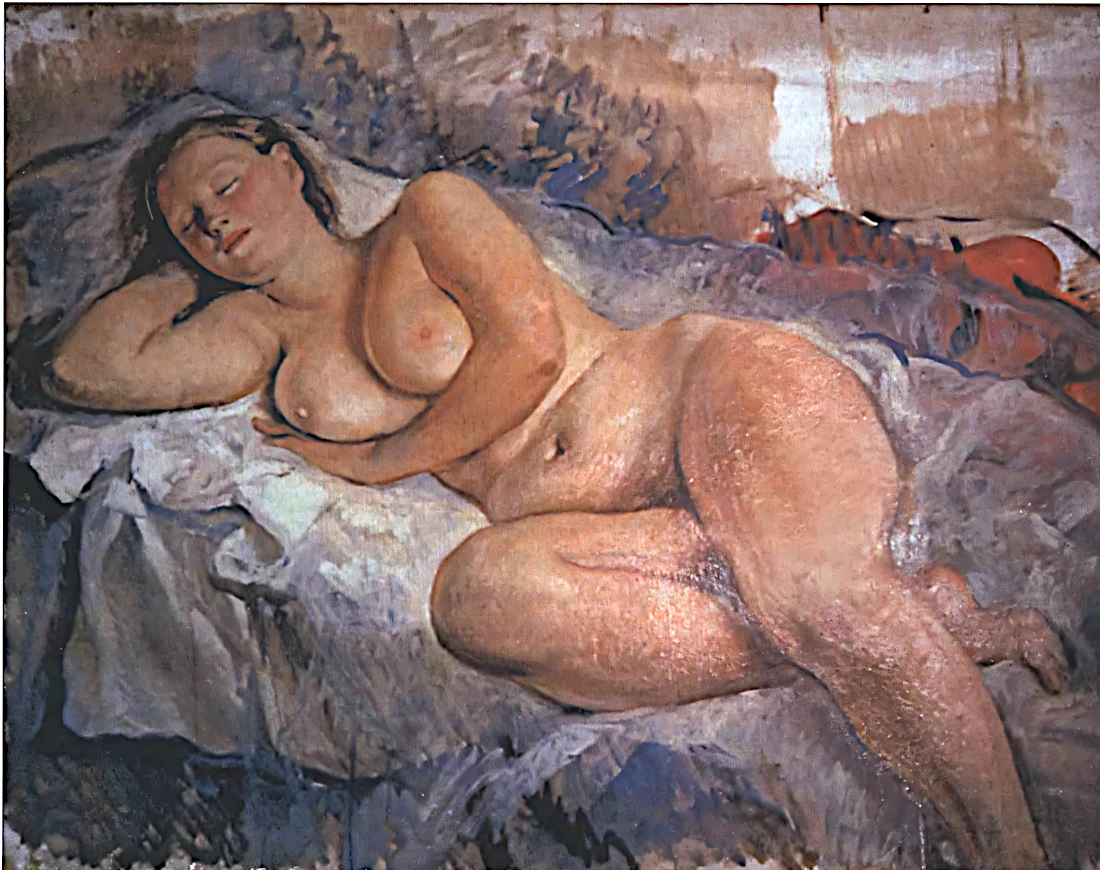
Her Moroccan girls are viewed with delight by both the French public and Russian emigrants: in every fine line—lightness and fire simultaneously.
Against Time: Cultivation of the Nude and Farewell to Utopia
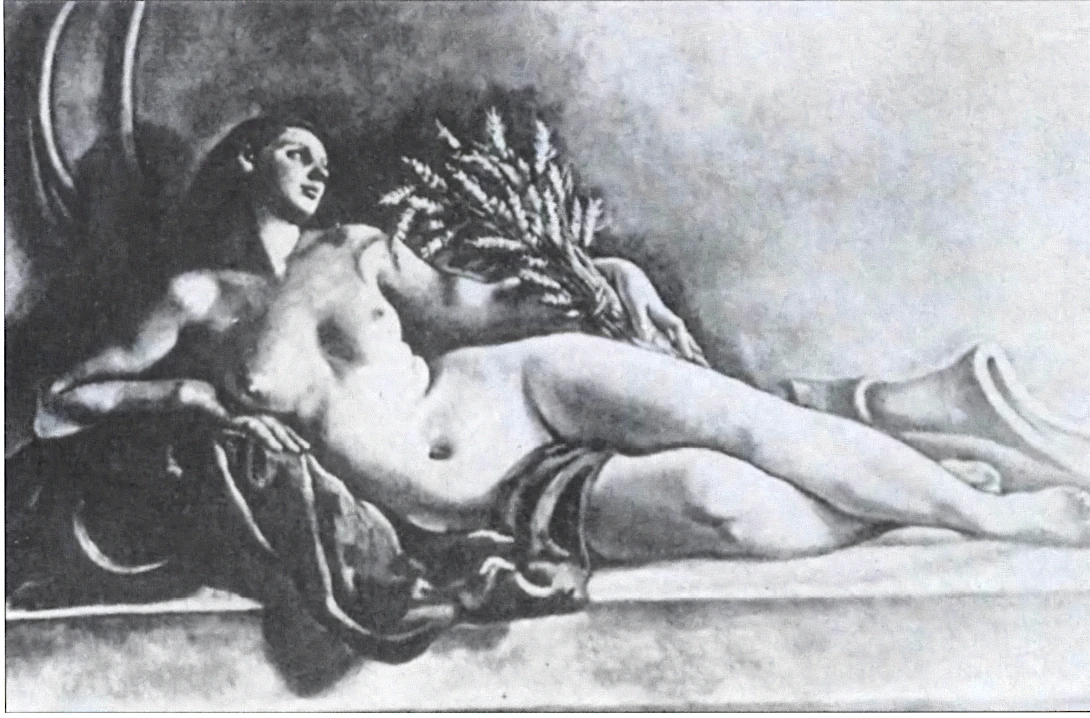
The Paris period is not only a liberation of the theme but also its many variations. In Brower's house, Serebryakova paints panels with allegories—her muse transforms "Justice," "Art," and "Light" into young nude women. The girls have lost their former shyness, gained play of light and shadow, confidence in their torsos.

But everywhere an organic naturalness remains:
- Not a single grotesque pose
- No feigned passions
- Everything is alive, everything is filled with anticipation.
Contemporaries were surprised: is it possible to paint nudes like this?
Without the filter of idealization, yet at the same time—without a hint of vulgarity. This is a new Russian great silence, filled with vintage elegance. Serebryakova remained faithful to the nude until the end—even when most artists turned to symbolic landscapes, still lifes, or illustrations. The female body for her is the tree of life, an icon of time, and a personal confession.
The Aesthetics of Everyday Life: The Art of Living "Here and Now"
The paintings of her later years are no longer images of an ideal, but a hymn to the practice of being. Nude models sleep, barely smile, remain immersed in themselves. They no longer hold fragile hopes for universal harmony—only the joy of a fleeting moment: acceptance of oneself and the world around. The artist's hand is free, her brushstroke—more precise than before. Serebryakova paints for herself and her daughters, as if wanting to stop the time of love and life.
Serebryakova's late nudes are a lesson in maturity: true beauty cannot prevent revolutions and losses, but it can be a quiet island of happiness, even if the world is crumbling around. Thus, utopianism disappears, and simple happiness is born. The motto "art for art's sake" changes its address: not to the future, but to the silent today, "here and now."
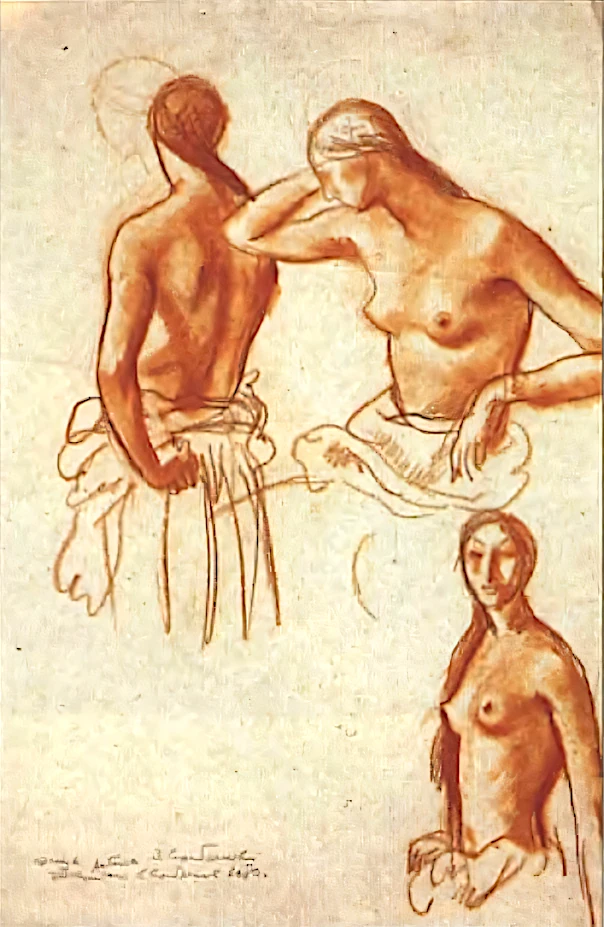
Echo of a Century: What Do Serebryakova's Nudes Teach Us?
Today, Serebryakova's nudes are not merely a tribute to old traditions. They are a mirror for ourselves: our vulnerability, accepting itself, and an inner strength that doesn't need to shout. The courage to be naked—to be visible, yet simultaneously to keep one's mystery—that is what captivates in these works.
The allure of Serebryakova's nudes lies in that they invite a personal dialogue: how do we look at ourselves?
What beauty do we value, and what beauty are we afraid to acknowledge?
Serebryakova's paintings hold before the viewer's eyes not a naked body, but the mystery of the choice to be oneself despite everything. One can linger longer before her unfinished "Diana and Actaeon": perhaps in this gaze lies the most honest art—to look at pain, beauty, loss, and love with open eyes.
....
Each new generation reads Serebryakova anew. And each answers in its own way to the challenge of her calm, confident, sometimes sad femininity.
And which painting helped you accept yourself?
Was there a work among Serebryakova's pieces after which you looked differently at the mirror or at a loved one?