Soviet Union Cup Holder
293Nov. 28, 2024Разное
The podstakannik (tea glass holder) is an object familiar to almost every resident of countries that were once part of the Soviet Union. Moreover, in Russia, it is impossible to find a person who has never held a podstakannik in their hands or seen one on the shelves at home. These metal items are commonly found in ordinary apartments, at dachas, and are invariably present on trains, accompanying travelers on long journeys.
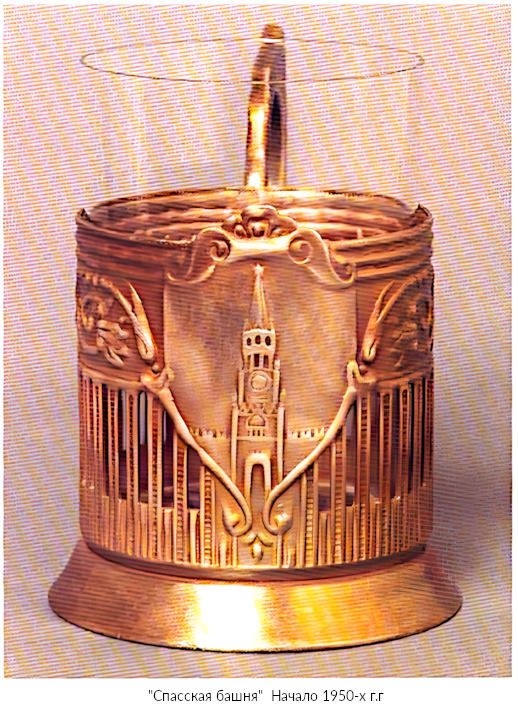
Of course, the podstakannik as an attribute of tea drinking, as well as an object of art and history, was known long before the formation of the Soviet Union. But it was in this vast state, occupying 1/6 of the Earth's landmass, that the podstakannik was given a new status. It was no longer just a protector of hands from hot tea, but a kind of symbol of labor achievements, a mouthpiece for military victories, and a marker of great history.
It remains a mystery to this day how exactly the podstakannik transformed from a boring attribute of bourgeois life into an object that became an integral part of Soviet identity. This item, imposed by total propaganda and intended to evoke a sense of pride in their country among Soviet citizens, emphasized the unity and power of the servants of the new order.
The emergence of podstakanniks in the mass consciousness is associated with the mid-1920s. There are several important reasons that influenced the spread of this item.
Firstly, the new state opted for cheaper and more accessible materials, such as glass, moving away from traditional porcelain and faience tableware. Thus, the need arose for a protective element that would safeguard the hands of workers from burns when they used hot glasses of tea.
Secondly, this period saw the active development of railway infrastructure, which, in turn, led to an increase in passenger traffic between various regions of the country. During long journeys, there was a need for items that would provide comfort and convenience for passengers, and the podstakannik became one of such useful accessories.
The third reason that contributed to the popularization of podstakanniks in the Soviet Union was the formation of a strict "corporate" style, which became characteristic of leaders of both large and small party structures. At this time, various attributes appeared in the offices of high-ranking officials: massive desks, lecterns with carafes, tunics, and leather briefcases. In this context, podstakanniks became an integral attribute, symbolizing the status and solidity of their owners, as well as reflecting the spirit of the era.
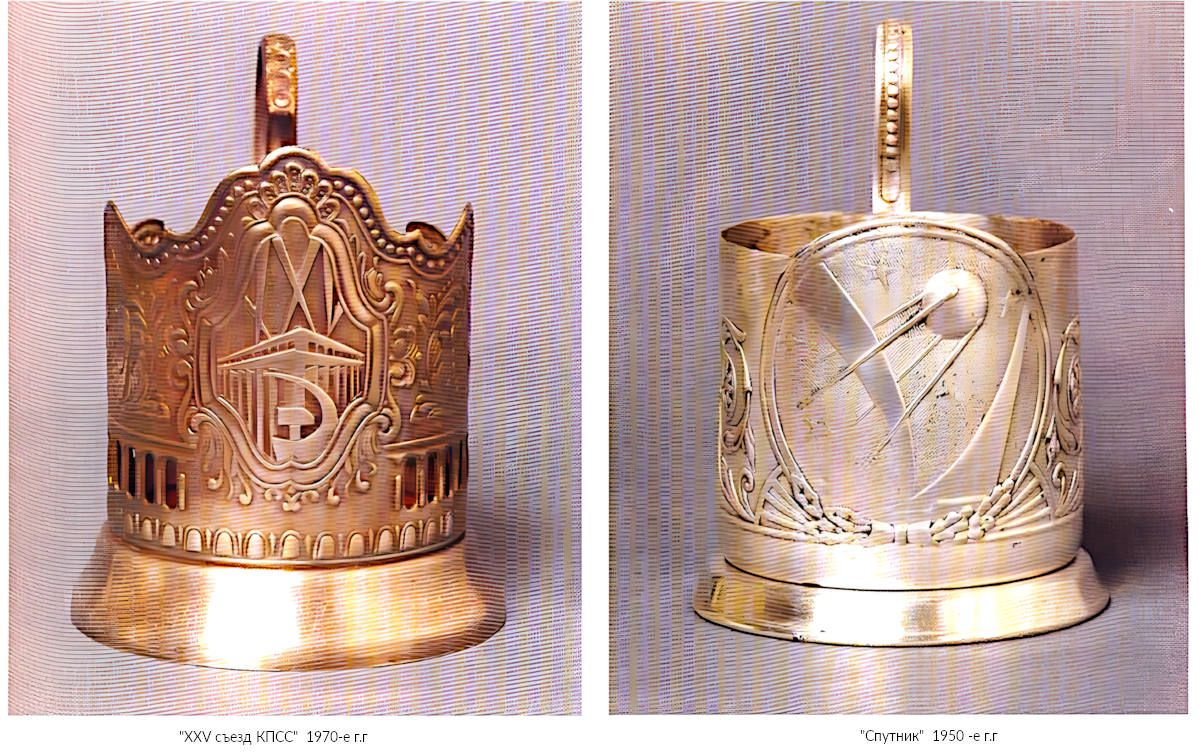
Moreover, an important factor contributing to the mass production and diversity of glass holders was the onset of active industrialization and the growth of mineral extraction in the country. The mechanization of production processes, along with increased metal volumes, not only met the state's construction needs but also made it possible to produce glass holders in a wide range. This complex symbiosis of monetization and the mass of metals led to glass holders becoming popular and accessible to all strata of society.
Today, it is practically impossible to recreate the exact number of glass holders produced during the Soviet period. They were manufactured by dozens of different enterprises, and each release can be considered a separate work of art. At the same time, numerous models were dedicated to a wide variety of themes, ranging from historical events to cultural symbols. Therefore, for the most avid collectors, it represents a real treasure trove, where each specimen can tell its own unique story. However, despite the presence of many items in private collections, reference literature collecting information on the form, themes, and production technologies of glass holders remains scarce. This is surprising for one simple reason: in a planned economy like that of the USSR, such sources theoretically should have existed. Nevertheless, bewildered collectors find themselves in the role of pioneers, daily discovering new horizons and making fascinating finds.
Classifying glass holders becomes relevant in this situation and can be done according to three main parameters: material, theme, and manufacturing technique, which allows for a more detailed study and understanding of this phenomenon and its place in Soviet culture.
Product Material
Aluminum and stainless steel glass holders found their place in mass production and the everyday life of the Soviet person. These materials became symbols of accessibility and practicality, embodying the spirit of the times. Aluminum glass holders, thanks to their light weight and corrosion resistance, were popular among citizens who valued convenience and simplicity. At the same time, stainless steel, with its high strength and durability, attracted those seeking more status-oriented and aesthetically pleasing items.
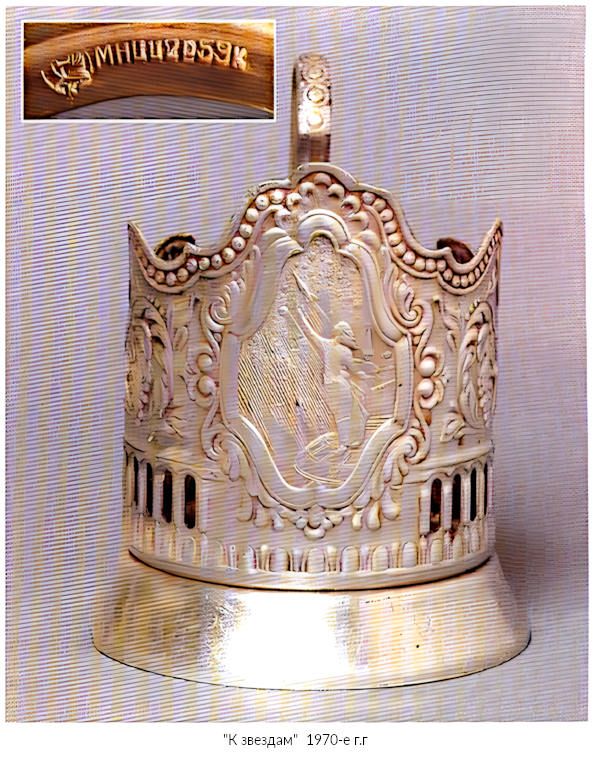
Aluminum glass holders were inherently practical: they are not afraid of rust, easy to wash and maintain, and also distinguished by their low cost. On various trips and at dachas, this option was an ideal solution for those who valued convenience and functionality. Stainless steel glass holders were often additionally processed to improve their appearance: polishing, a matte surface, or even satin finishing added sophistication to the item and emphasized its status.
Stainless steel glass holders were encountered in more formal situations. They were preferred at banquets, meetings with high-ranking guests, or official receptions, where not only functionality but also visual perception was important. Such glass holders could have engraved symbols or colored emblems, which emphasized the significance of the event and the status of its participants.
The thematic focus of glass holders made from these materials mainly revolved around reflecting sports, achievements in labor, and symbolic imagery related to the country's development. Craftsmen producing aluminum and stainless steel glass holders also experimented with shapes and patterns, giving them an original appearance. There were both more strictly designed items and those that pleased the eye with bright images and lively patterns.
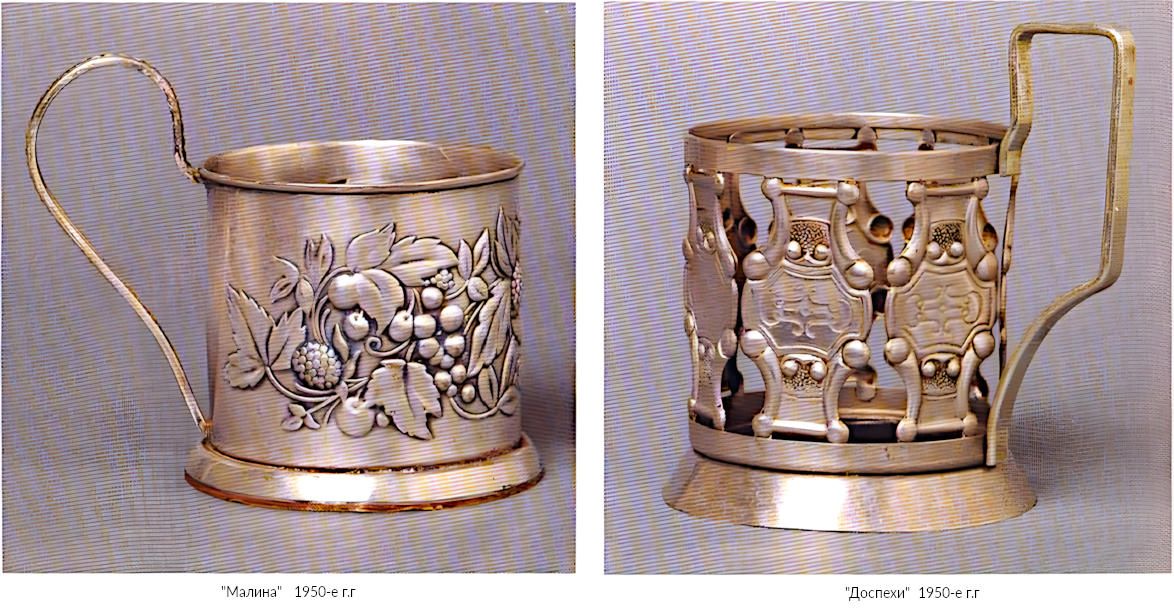
It should be noted that aluminum and stainless steel glass holders are not as diverse in theme as their nickel silver counterparts, but they still embody certain aspects of Soviet culture. The simplicity and accessibility of these glass holders made them an integral part of everyday life, and their numerous variations emphasized the character and preferences of the people using them in their daily lives.
Glass holders made from various materials together create a whole gallery of Soviet cultural identity and continue to attract the attention of collectors and history enthusiasts. Each type of glass holder represents different aspects of society, its aspiration for comfort, as well as attachment to its roots and traditions. These small but significant objects carry the history of an entire era and will forever remain an important part of Russia's cultural heritage.
The thematic focus of glass holders made from various materials was quite diverse, reflecting the main cultural and social moments of that era. For example, many bronze and silver glass holders were often adorned with complex and intricate patterns reminiscent of folk art traditions. They served not only as functional items but also as a kind of status symbol for their owners. Such items were often given as gifts for significant events, such as anniversaries or weddings, and became family heirlooms.
Unlike the more mass-produced aluminum and stainless steel glass holders, bronze and silver items had their own unique themes. They often depicted various historical events, mythological heroes, or landscapes.
For example, one can find glass holders with images of great figures such as Pushkin, Tolstoy, or Tchaikovsky, which emphasized the significance of Russia's cultural life. Some glass holders could bear symbolism related to social repression and the country as a whole, reflecting the state of society in those years. These items had artistic value and often became collectibles, highlighting the art and skill of jewelers.
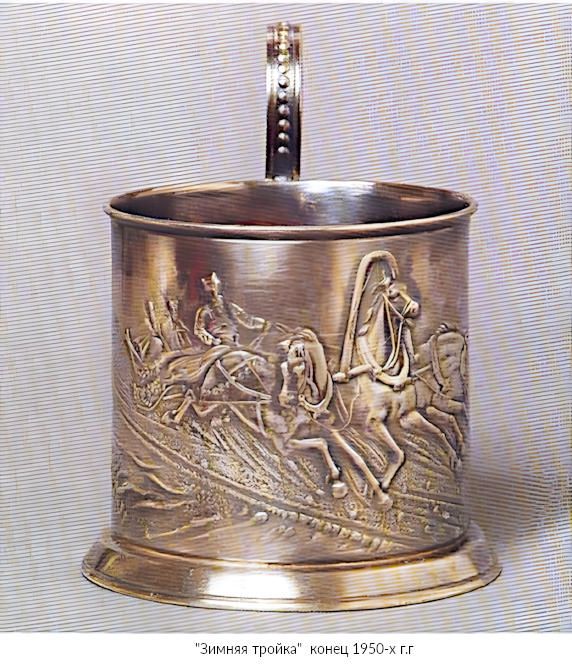
There were also exclusive specimens intended for special events and high-ranking guests. These glass holders often justified their high price through the use of unique processing and inlay techniques, making them veritable works of art. For example, one could find items with gold or silver plating, creating an effect of luxury, which undoubtedly drew attention to their owners themselves.
Bronze and silver glass holders typically served not only for tea but also as elements of interior decor. They were often used to create beautiful table settings, where they added sophistication and style. In such an atmosphere, the refreshment became a true ritual, and the glass holders complemented the overall ensemble, emphasizing the social status and taste preferences of the hosts.
Moreover, such glass holders often acted as symbols of national identity, reminding of the harmony of art and culture. The themes of these items combined both tradition and modernity, allowing for the preservation and transmission across generations of important steps and achievements in art. Each glass holder had its own history, and their artistic execution allowed for discussion and exploration not only of the design but also of the cultural and historical roots.
Bronze and silver glass holders not only performed their direct function but also embodied an entire era, elevating the status of tea drinking and becoming an integral part of cultural heritage. These art objects continue to interest collectors and researchers, evoking admiration and awe with each examination of their form, finish, and symbolism. Each specimen offers an opportunity to glimpse into past times and understand the role they played in the lives of people connected by the place and spirit of their country.
In conclusion, glass holders of various origins, including aluminum, stainless steel, bronze, and silver, create a complete picture of the diversity of Soviet culture and everyday life. Their themes and execution features remain relevant and interesting for study, allowing for a full understanding of how small things can fundamentally influence the perception of history and its place in the life of modern society. These unique objects serve as an existential reminder of how rich and diverse the Soviet period was throughout its history.
The thematic spectrum of glass holders created during the USSR era is very diverse, and we will try to highlight the most notable directions:
- — Symbolism of the Soviet Union, reflecting the ideological postulates and achievements of the state. On many glass holders, one can see the coat of arms of the USSR, flags, and other attributes that served as visual symbols of national pride.
- — Anniversaries of historical events, such as the 1917 Revolution and the formation of the USSR. These dates became important milestones in the establishment of Soviet power and were often commemorated on artistically designed items.
- — Memorable events, such as party congresses and exhibitions showcasing the successes of socialist construction. These events inspired artists and craftsmen to create glass holders capable of capturing the spirit of the time.
- — Architectural monuments, which embodied the achievements of Soviet architecture and urban planning. Images of buildings, bridges, and various structures that became iconic for the era found their reflection on glass holders.
- — Famous personalities, such as great writers, scientists, and artists, whose portraits or monuments could adorn glass holders. These items became not only functional but also cultural, emphasizing the importance of the individual in Soviet life.
- — Railway themes, reflecting the significance of railways for the country. Glass holders with images of trains and railway symbolism became important accessories for travelers and served as symbols of the very concept of movement.
- — Fairy tales and characters, reflecting the rich tradition of Russian folk literature. Images of popular fairy-tale characters enlivened glass holders, making them not just utilitarian items but also part of cultural heritage.
- — Representatives of flora and fauna, which became relevant on glass holders through various ornaments and stylizations. Images of animals, birds, and plants added artistic and aesthetic elements to these products.
- — Compositions of flowers and fruits, which gave glass holders brightness and decorative appeal. These stylizations often drew on the traditions of folk art and demonstrated the skill of craftsmen.
- — Glass holders made using filigree (filigree) technique, presented a variety of patterns and forms, becoming a kind of artistic exploration and experimentation with metal.
- — Stylization to resemble antiquity, which sought to create an atmosphere of nostalgia for past eras, adding uniqueness and romanticism to the products.
The production technology of glass holders developed in parallel with the progress of mechanical engineering and technology. It is important to note that in mass production, adherence to high standards of manufacturability and acceptable manufacturing costs is necessary. The most common techniques used to create glass holders in the Soviet Union include:
- — Casting, which allowed for the creation of highly detailed forms, including original and intricate patterns.
- — Stamping, which, through the use of presses, enabled mass production in short timeframes without compromising quality.
- — Engraving, found on higher-class podstakanniks; it added uniqueness and artistic value to the items.
- — Filigree (skan'), requiring significant skill and experience, allowing for the creation of delicate and elegant patterns that became the ornamentation of the pieces.
In the initial stage, small batches of podstakanniks were produced by private artels to meet the internal needs of the Ministry of Railways. With the onset of widespread industrialization in the Soviet state, which rapidly transitioned to large-scale production, new technologies were introduced, such as high-precision stamping, centrifugal casting, and automatic soldering. The only manual process in these production methods remained the creation of stamps and molds, which required significant expertise and qualifications to use.
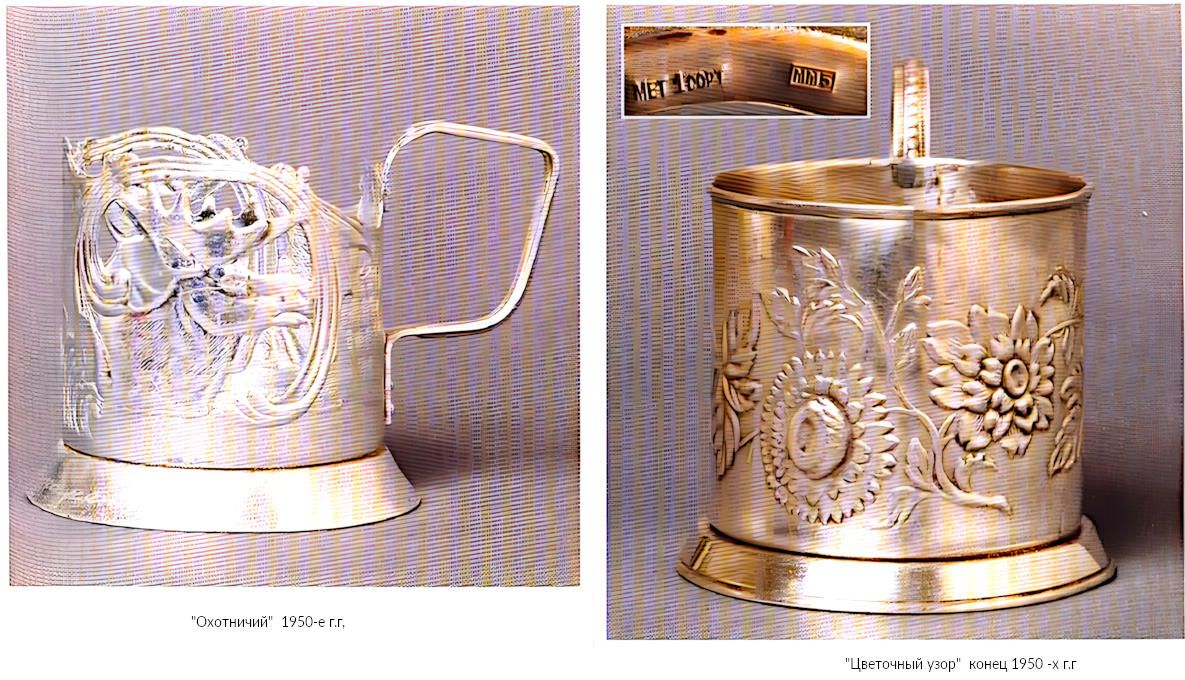
With the development of these technologies, podstakanniks became not only household items but also works of art, contributing to their popularity and widespread distribution. Each generation of these items could tell its own story, and the process of their creation became an important aspect of cultural heritage and a symbol of the era.
The diversity of themes and technologies reflected in podstakanniks demonstrates not only the aesthetics and measures of the time but also that exquisite connection between history and everyday life, which allowed these items to occupy a special place both in collections and in people's daily lives. Each era imposes its own demands, but the podstakannik remains a faithful travel companion, a symbol of coziness, and is meant to be a mediator between history and modernity.
In the modern podstakannik market, there is a revival of interest in both vintage specimens from the Soviet era and new designer solutions that reflect current trends. Collectors, antique enthusiasts, and simply lovers of tea culture actively seek unique models that fit into their interiors or collections. At the same time, handmade craftsmanship and an individual approach to creating podstakanniks attract the attention of artists and artisans who wish to contribute to preserving traditions and developing this skilled craft.
New cup holders can be made not only from traditional materials such as metal or glass, but also from modern composite materials that provide lightness, durability, and an unusual aesthetic appearance. Designers experiment with shapes, textures, and colors, creating cup holders in a wide variety of styles—from minimalism to art deco. Such products become not just household items, but true art objects capable of decorating any table and becoming the center of attention at events.
Imported cup holders also occupy their niche in the market. Craftsmen from other countries, for example, Ukraine, Belarus, and the Baltic states, add elements characteristic of their cultures and traditions to their products, which contributes to expanding the choice for buyers. In this diversity, it is easy to get confused, but for a true connoisseur, each model carries its own history and uniqueness.
In addition to being an element of utilitarian everyday life, cup holders have also taken on the function of souvenirs. Many models are released with images of iconic places and monuments, becoming important signs on which outstanding moments and personalized themes can be captured. Such souvenir cup holders are becoming popular not only among tourists but also among locals, as a way to remember their native culture and history.
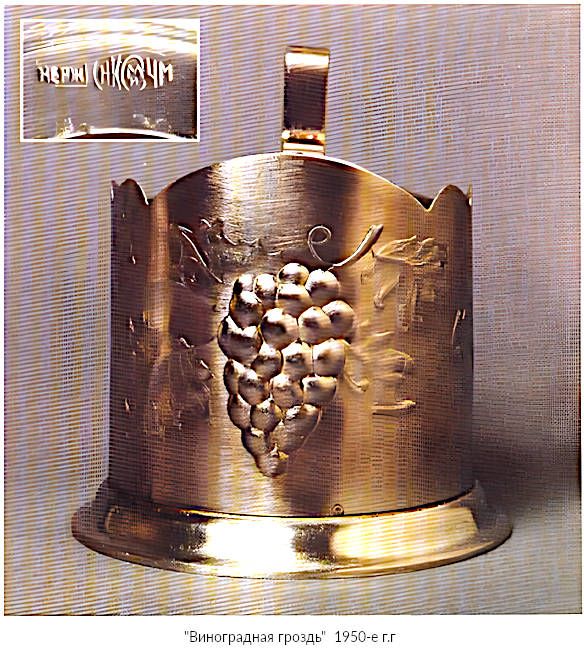
However, it is important to note that with the growing interest in cup holders, the number of counterfeits and replicas has also increased. The market features fakes that do not match the originals in terms of material quality and execution technology. Collectors and buyers should be attentive and informed about what to look for when purchasing to avoid disappointment. Knowledge of the key characteristics and differences of original products will help in this matter.
An important aspect of the modern cup holder market has become the use of digital technologies. Online stores and platforms for collectors facilitate broader access to rare specimens, as well as the possibility of exchange and sale among enthusiasts. Social networks also become places for discussions and experience sharing, where participants can share their finds, making glass and metal cup holders a genuine heritage passed down from generation to generation.
Now, a cup holder is not just an element of tea service, but also part of the design concepts of modern cafes and restaurants, where creating a pleasant atmosphere is important. Author-designed cup holders made by renowned designers, who strive to make tea drinking aesthetically appealing and unusual, are becoming increasingly popular. This development indicates that interest in cup holders is alive, continuing to keep pace with the times while maintaining a connection with history.
The modern market for glass holders is a vivid reflection of the diversity of various design approaches, materials, and styles. It is filled with both the heritage of the past and fresh ideas, making it attractive to at least three categories—collectors, designers, and simple tea lovers. The glass holder, having survived many stages of development, has become a true symbol of cultural heritage, uniting people and inviting them to contemplate the history and uniqueness of each found specimen.
The glass holder, like a bridge between the past and the present, continues to live, evolve, and enrich our cultural and historical identity. Its significance remains important not only in the context of daily life but also as an object of deep reflection on the place of arts in our everyday existence. Ultimately, the glass holder is not just an accessory but a part of our history, which will continue to be passed down and preserved in the hearts and minds of future generations.
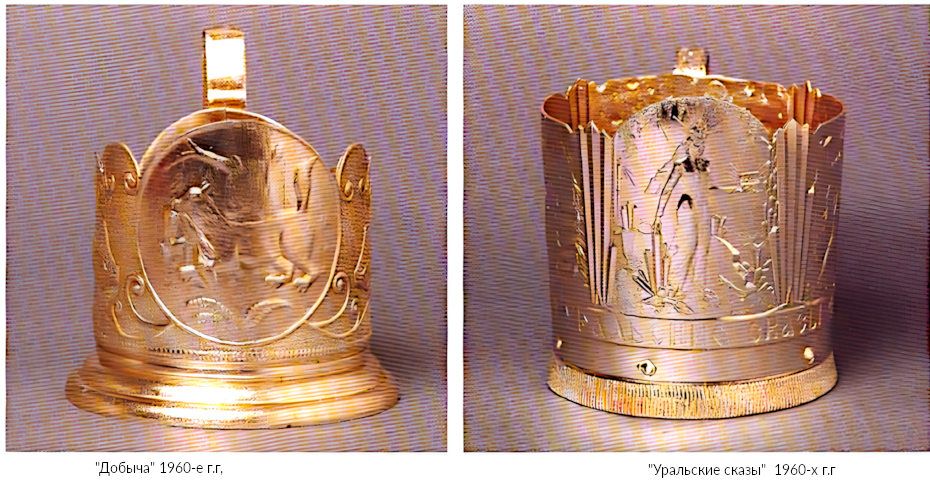
Today, on the Russian antique market, the segment of glass holders remains quite narrow.
Currently, this unique tea attribute has not yet gained a sufficient number of admirers, and many modern Russians do not perceive it as an antique or a valuable collectible item. Perhaps this is precisely why the overwhelming majority of glass holders can rightfully be considered accessible to the masses. Thus, for example, nickel silver glass holders can be found within the range of 10–50 US dollars per piece, while stainless steel and aluminum models are valued at just 0.5–7 dollars, and bronze and brass ones—in the range of 30–70 dollars. Silver glass holders can cost from 50 to 200 dollars. All indicated price ranges refer to the most common specimens, also taking into account the condition of each item. However, unique or rarely encountered pieces can significantly exceed these prices, depending on the level of interest from collectors and the demand for them.
Those who wish to acquire this legendary attribute of a bygone era should first and foremost arm themselves with patience and carefully research the market. Visiting online auctions, flea markets, or antique shops can be very productive. These places offer a wide range of glass holders—from ordinary ones, accessible to everyone, to rare and exclusive items produced in a single copy. Each such item can tell its own unique story, reminding us of a rich cultural heritage.
In the end, although the preferences of Russian citizens regarding the dishware from which they drink tea have changed in recent years, the style of so-called "Soviet Empire" continues to maintain its relevance. Nevertheless, it is worth remembering that the podstakannik (tea glass holder), regardless of its aesthetic integrity, always fulfills its primary function: it serves as a means of serving and enjoying tea. This item is capable of not only decorating any tea table but also creating an atmosphere of coziness, fitting into friendly and family gatherings. According to research conducted by one of the major tea companies, about 2% of Russian residents still use a podstakannik in their daily lives, which indicates its preservation in the public consciousness.
It is worth noting that for many connoisseurs, the podstakannik is not just an accessory but a symbol of a bygone era, evoking nostalgia and interest in historical events. Each specimen, whether adorned with a complex pattern or a simple logo, is imbued with the spirit of its time and the legend of its creation. Research shows that, despite the prevalence of modern materials and technologies, interest in traditional podstakanniks does not fade. They are offered both for everyday use and as unique gifts or items that bring a touch of antiquity to modern interiors.
Among active collectors, there are certain preferences in choosing models: some prefer items with historical value, while others seek modern design solutions that can harmoniously fit into their personal collections. Thus, podstakanniks remain a kind of link between generations and demonstrate the evolution of style and the material capabilities of society.
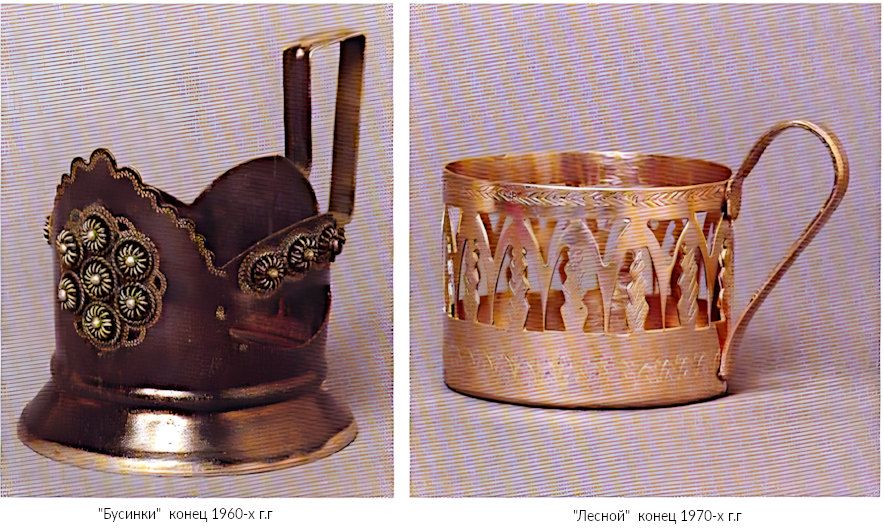
Nevertheless, it is worth remembering that, like any field of collecting, the podstakannik market also faces challenges. The appearance of counterfeits and unjustifiably inflated prices can lead to disappointment among collectors. Therefore, it is important to know what to look for when purchasing to verify the authenticity of the item and avoid falling victim to fraudsters. Proof of genuine interest in this aspect of culture is the unwavering interest of collectors who actively discuss their finds and share experiences on specialized forums and social media.
Modern trends in design also have a strong influence on podstakanniks. Masters and artists experiment with shapes, textures, and finishes, creating true works of art that become worthy gifts as well as interior elements. Some collectors strive to acquire not only historically valuable podstakanniks but also innovative models that reflect the skills of modern designers. Thus, an old object becomes relevant not only in the context of preservation but also as an element of contemporary design.
Ultimately, the glass holder is not just a simple piece of tableware, but also a bearer of historical memory that continues to shape its culture. Its significance in daily life transcends to the level of social and cultural identity. With each new glass holder that comes into the hands of collectors, there is a transmission of the spirit of the times and the possibilities that were characteristic of celebrations and treats that unite people over tea.
Today, the glass holder is increasingly perceived not only as a utilitarian object but also as a unique artifact capable of telling the story of its era. Despite the lack of scientific terminology to describe the collecting of glass holders and the clubs uniting enthusiasts of this unique item, the steadfast interest in it continues to grow. Glass holders, harboring the spirit of bygone eras, are once again becoming popular among broader segments of the population, including young people who are discovering the value of Soviet traditions.
The development of the modern antique market and social media provides enthusiasts with the opportunity to search for and find unique specimens, sharing their discoveries and experiences with like-minded individuals. Thanks to this, we can observe how glass holders are restoring their reputation and becoming an integral part of cultural heritage. They cease to be merely household items, transforming into stylish interior elements and unusual gifts.
Some artists and designers, inspired by the history of glass holders, are beginning to create unique works in which they use elements of traditional design, blending them with contemporary styles. These innovations help bring a fresh perspective to the antique object, giving it new functions and adding to its aesthetics. Thus, glass holders are once again finding their place in modern cafes and art spaces, where the spirit of nostalgia and love for history merges with current trends.
For collectors, a unique opportunity has emerged to gather historical objects reflecting one of the most important collecting directions. Each glass holder becomes a kind of "guiding star" through history, reflected in every curve, engraving, and shape. Nostalgia for the Soviet era, despite its contradictions, sparks keen interest among many, prompting them to turn their attention once again to such attributes of daily life as the glass holder.
Among collectors, one can hear many stories about how each of them came to be fascinated by glass holders, how they find their unique specimens, and what emotions and memories they evoke. Observing the growing interest in this field, it is anticipated that in the near future, a more structured interaction among collectors may emerge, allowing for the sharing of experience and resources.
It is no surprise that even among those who never planned to collect glass holders, a community of like-minded individuals is forming underground. As tea-drinking traditions continue to remain relevant in Russia, glass holders are remembered with warmth and cherished in memory. Each specimen can plunge the user into recollections of dear people, warm meetings, and family projects, which only enhances the emotional value of this simple yet significant item.
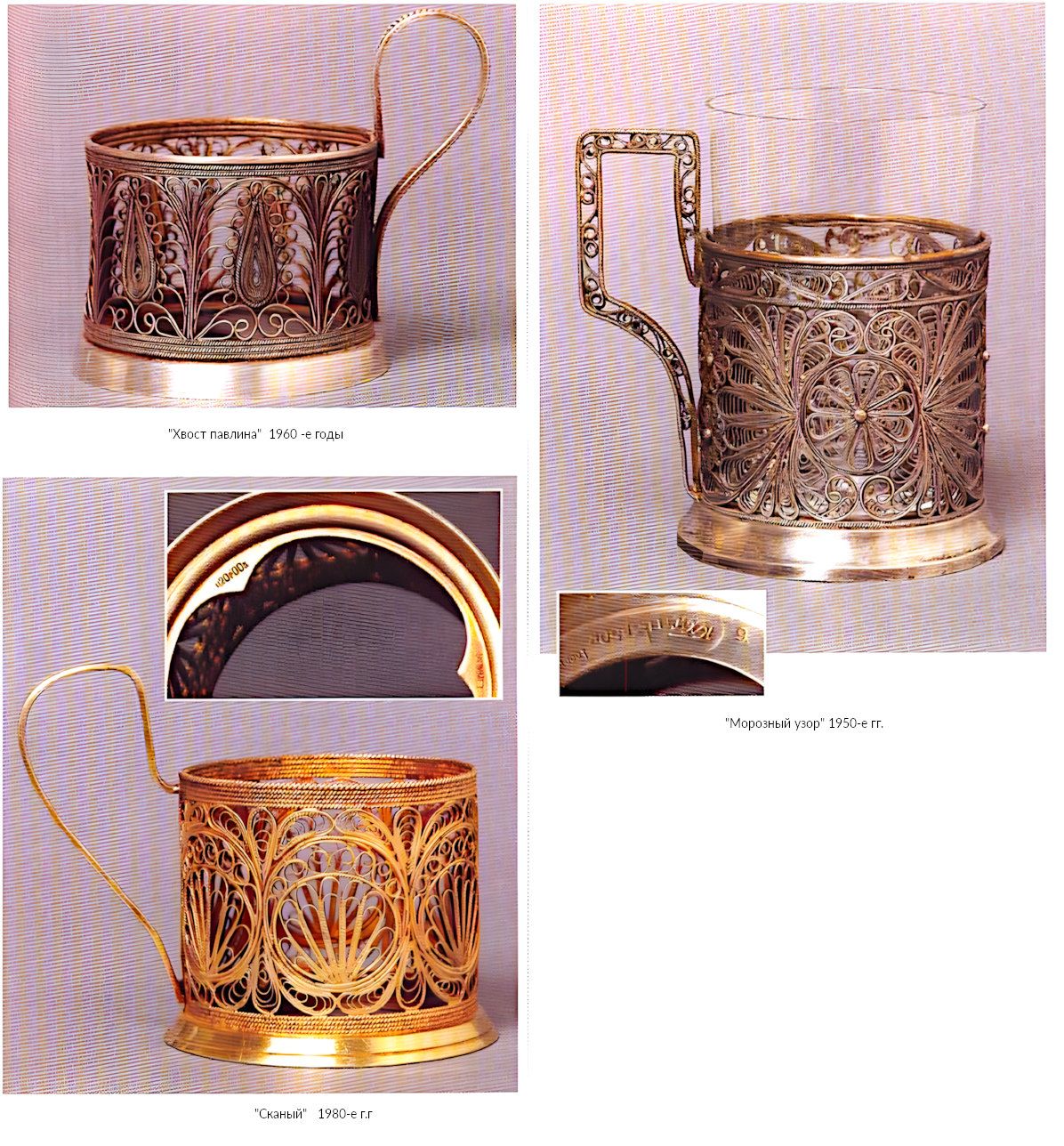
Today, glass holders, transcending the mundane, are becoming objects of art that can be found at exhibitions and fairs dedicated to antiques. Moreover, an exhibition of glass holders not only helps to understand their individual characteristics but also immerses viewers in the cultural context of the time when they were created. In this light, glass holders begin to serve not only a functional purpose but also become a source of inspiration for artists, designers, and cultural scholars.
As the glass holder continues to pique the interest of modern society and detaches it from the usual routine, it is increasingly appearing on the pages of glossy magazines and social media. As recent surveys show, many young people are eager to learn more about glass holders and the traditions associated with them, which can only strengthen this long-forgotten yet vibrant direction in the history of tableware.
The glass holder is not simply returning to everyday use but is gradually reaching new heights, forming a distinctive collecting culture designed to preserve and pass on each of its unique stories to future generations. With each unique glass holder, history returns to our home, allowing us to delve into multifaceted eras that we may yet have to uncover.