В нашем Telegram-канале — шедевры живописи, истории уникальных артефактов и эксклюзивные находки. Присоединяйтесь!
How a deck of playing cards became a mirror of history, a psychology of society, and a portal to mysticism
1.2КJune 30, 2025Разное
Imagine: you are holding a brand new deck of cards in your hands.
It smells of printing ink and the air of hope for luck. For some, a game of poker awaits; others will lay out a solitaire for fate; still others will liven up an evening with a game among friends.
But have you ever wondered: why is it that every time we shuffle the cards, we feel a mixed sense of excitement and awe, as if touching something ancient and mysterious?
Few know that the familiar hearts, spades, clubs, and diamonds are not just tools for entertainment, but an entire universe of meanings, a reflection of eras, class passions, and even the mystical aspirations of humanity.
After this article, cards will become for you not a faceless gambling pastime, but a window into history, a mirror of collecting passion, a mystical portal—and suddenly you might see a reflection of yourself in them.
Cards as a Theater of History: From the Rustle of Silk to the Whisper of Parchment
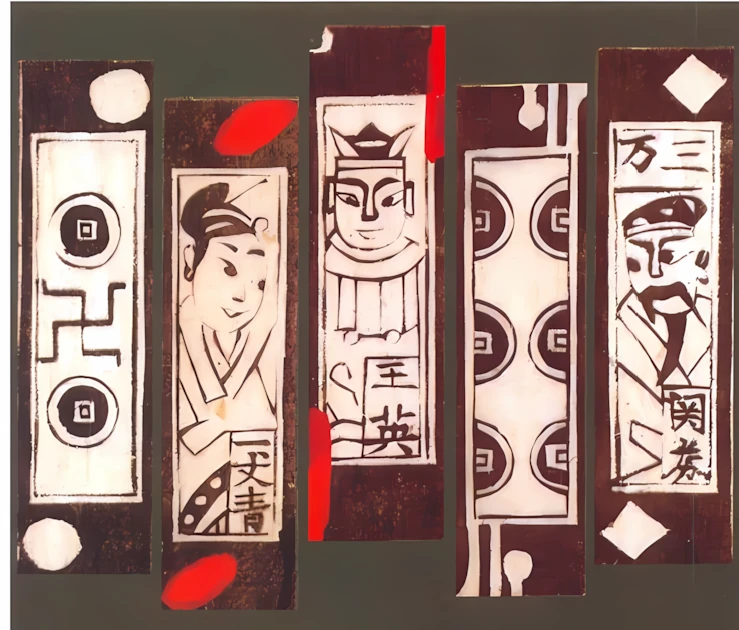
In the distant Middle Ages, under the hooves of Mongol horses, China sighed—and there, in the shady tea houses and luxurious palace chambers, the first cards appeared. They were thin as lotus petals, adorned with exotic patterns, and then—as if carried by an air current—they spread along the Silk Road, conquering India and Persia. Centuries later, cards—with a new face—entered Europe through Spain, likely in the bags of mysterious Arab merchants.
Europe's first acquaintance with cards was a prohibiting charter—the King of Castile in 1387 signed a decree: "Cards are outlawed!".
It would seem that to ban is to eradicate... But the history of cards is clear: the harsher the prohibitions, the more eagerly they were shuffled under the folds of a lady's cloak or in the mysterious back rooms of a tavern. Chess required open thought, a calculating mind—cards, however, were a game of chance, a whisper of fate, a union of skill and the whims of fortune.
It is no coincidence that in early card imagery, the suits resembled social classes: cups—the clergy, swords—the military, coins—merchants, clubs—peasants.
Only from the 15th century, when Italian masters tenderly painted each card by the hand of a great miniaturist or skilled craftsman, did cards become a luxury: for one deck, a duke could give 1500 gold pieces, and sometimes his soul for a couple of nights of inspiration.
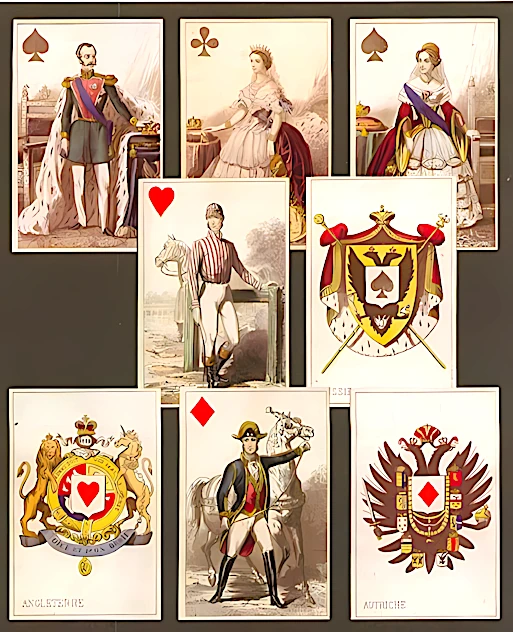
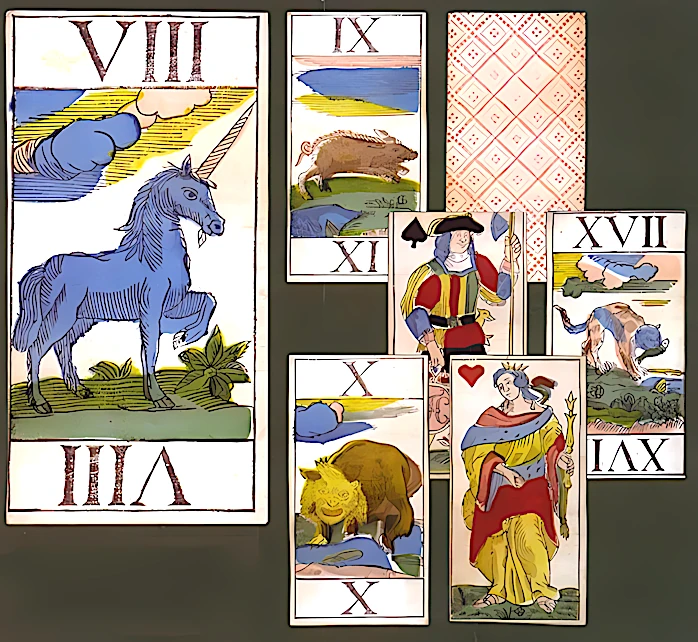
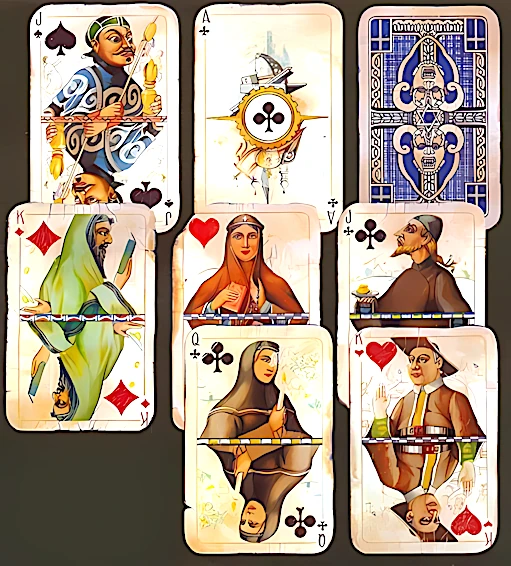
The invention of engraving, like a flash of lightning, transformed a handmade luxury into a mass phenomenon—cards filled taverns, were battled over in portside dives, and came into fashion in salons. France and Germany quickly flooded the market with their variations: now a card gained not only functionality but also character. The French redesigned the suits into hearts, diamonds, clubs, and spades. The symbolism grew even deeper: clubs—fodder for the army, spades—weapons, diamonds—provisions, hearts—the warrior's heart. But look closer: behind this intricate web of symbols lies a subtle psychology of power, military ambition, social fears, and aspirations. Cards, like a mirror, absorbed everything that society lived by.
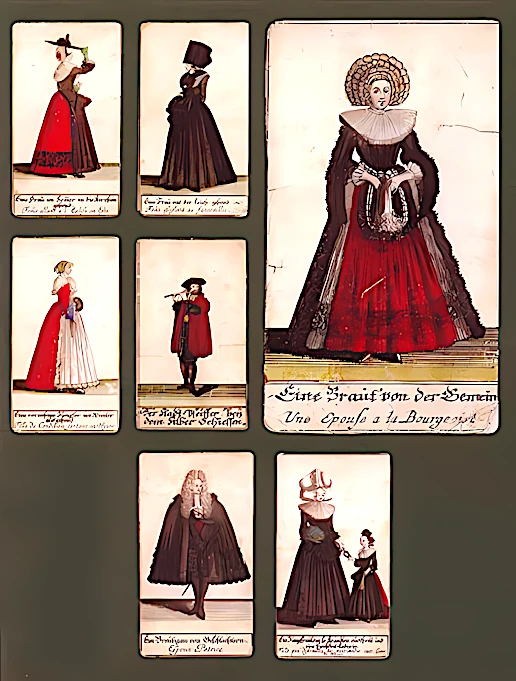
Cards—Chronicles of Eras, a Museum in the Palm of Your Hand
One can live a life without ever realizing they are holding a museum exhibit. Playing a casual game of fool, we don't recall that behind the image of a queen or jack lies the imprint of a grand political design or daring satire. The French, not without humor, replaced kings with sages and queens with Roman goddesses. The early 19th century greets us with cards by David featuring the faces of Charlemagne, Alexander the Great, and mythical Caesars.

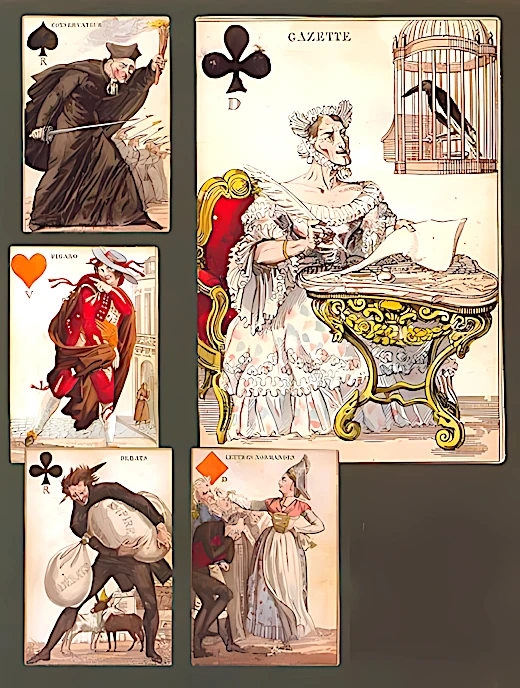
The Empire style made its grand appearance with decks where behind the majestic kings of hearts were Victoria and Albert, and behind the spades—Alexander II and Maria Alexandrovna. Each era changed the form but preserved the essence: a card is a miniature of the issues of the day, a portable newspaper cartoon, sometimes a propaganda leaflet, sometimes an echo of a theatrical production.
In Germany, decks became textbooks, educational aids. There, cards were hearts, bells, oak leaves, and acorns, local irony, and a vibrant national aesthetic.
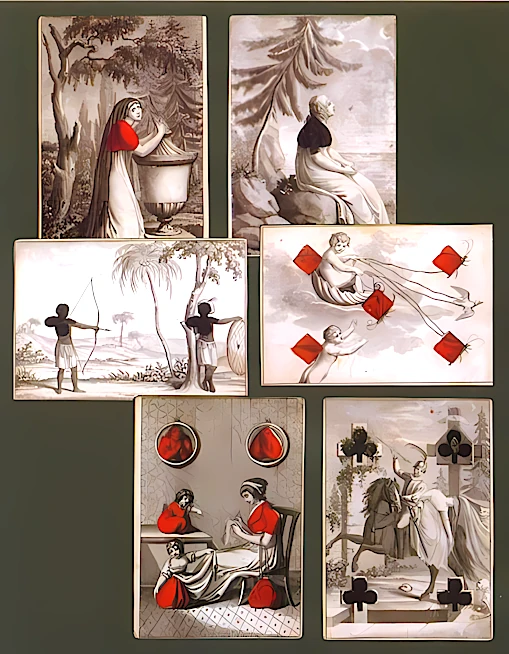
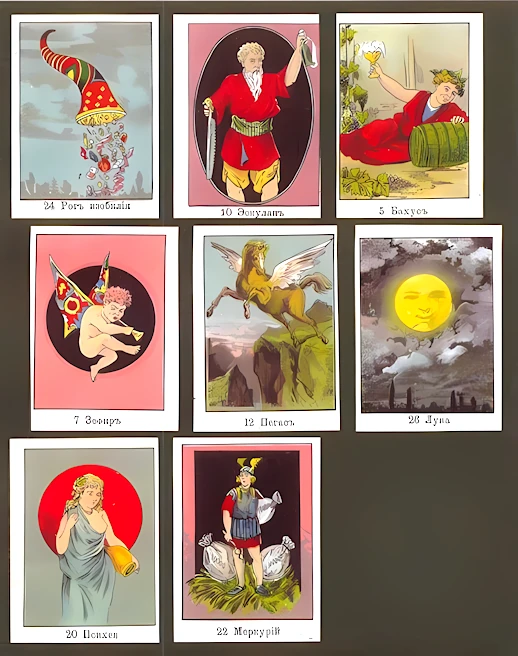
In Russia, cards underwent a long, contradictory journey: from a forbidden fruit, for possessing which one could pay with their life, to a secular attribute. Once, the Tsar painted amusing sets with gold and colored paints, and by the 19th century, Academician Charlemagne created a style still recognizable in every Russian deck to this day. Bilibin, Mikeshin, Levashov—their designs paved the way for a new, "living" face of the Russian card: here, fairy-tale characters come to life, the shadow of a court ball flickers, and the pastel patterns of the "Russian Style" still shimmer today.
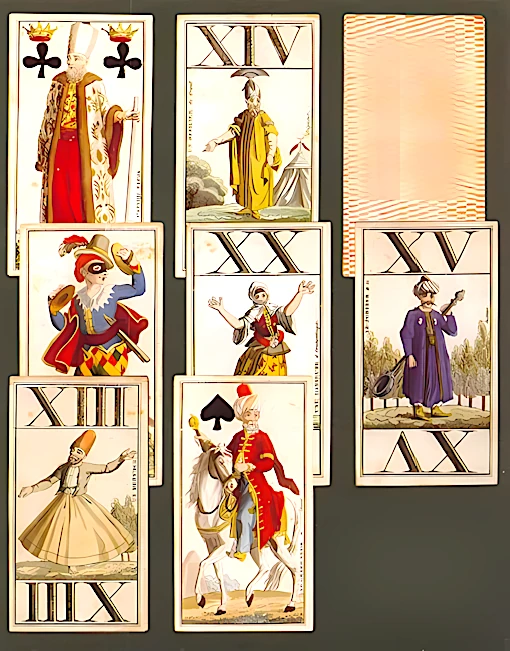
The world of cards is always a reflection of contemporary fears, expectations, and passions. Like the social networks of the 19th century, they quickly picked up on the trends of the time: gastronomic decks with steaks and pâtés, pedagogical ones for the king's children, satirical ones poking fun at politics, philosophical ones debating Descartes himself.
Today, collectors scrutinize the characters on the backs of cards from past centuries, while history enthusiasts, missing Instagram, still shuffle the "personal stories" of that era's paintings.
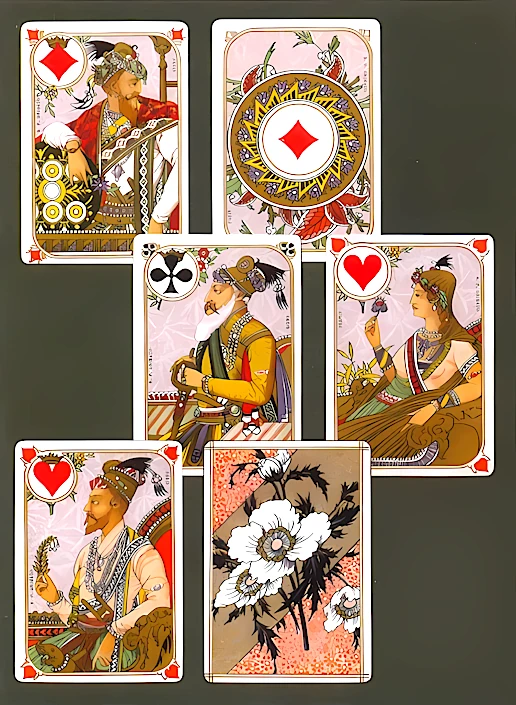
The Russian Soul and the Deck: Passion Above the Law
"The world to me is a deck of cards," uttered Lermontov's character through Kazarin. These words are the essence of the Russian philosophy of the game: somewhere between fatalistic doom and a daring attempt to outwit fate.
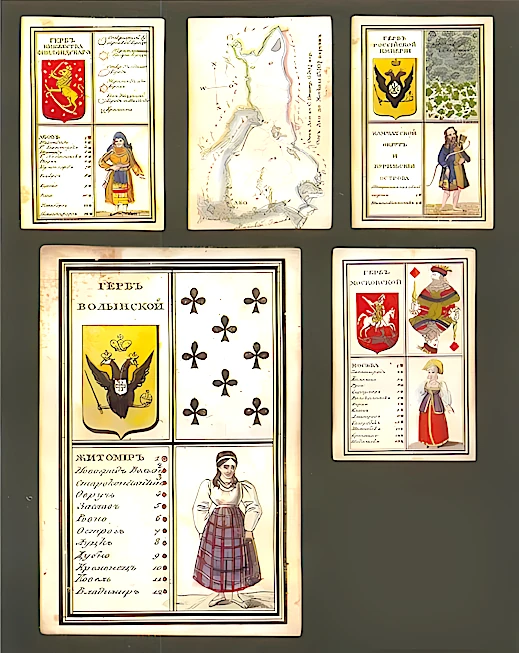
In Russia, cards were simultaneously an object of passion and a fear of the authorities: at times punished by the strictest law, at others occupying the leisure of royalty. Two waves of influence came through Germany and Poland, hence the double names for suits: spades and pikes, clubs and acorns. But everyone played in secret: merchants, ladies, poets, generals, aristocrats.
In the 19th century, the card became a sign of "social literacy"—almost on par with French and the ability to dance the mazurka. But most importantly, the card in Russia carried a philosophy of risk and defiance. The thrill of the game was not just a passion, but an act of defiance against predictability and the mundane. That's why among the best card players of their era, we see not only cheats but also poets, composers, and adventurers.

Did you know that the fabulist Krylov honed his schemes for winning moves not only in allegories but also on the green felt? Pushkin, Nekrasov, Dostoevsky left chalk marks on the green velvet of salons. The hussar Alyabyev played out his life in cards, in a duel, and in his famous exile. And P.V. Nashchokin—the very one to whom we owe the "Nashchokin's Little House"—exchanged luxurious mansions for poverty and back again depending on luck at the table.
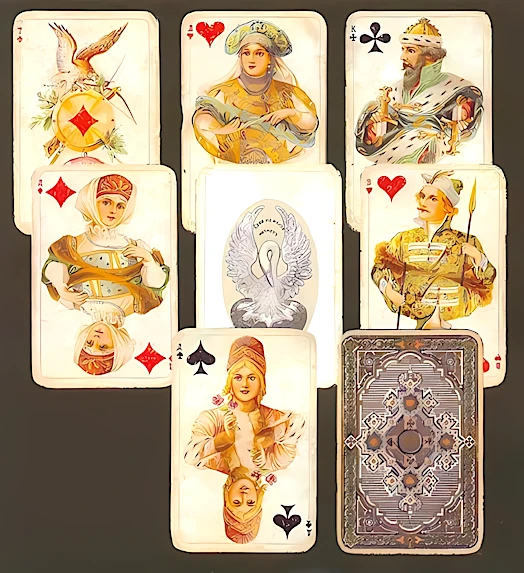
A card game is a drama in which a battle is played out not only with an opponent but also with one's own fate. In Pushkin's time, it was fashionable to tell fortunes with cards on the eve of a duel, and a win or loss served as a secret sign of fate. Card ethics were part of the concept of honor: a player's debt sometimes cost more than any sworn obligation.
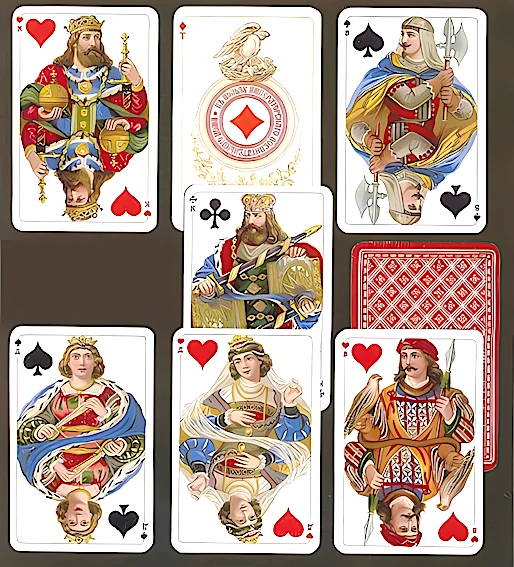
Fortune-Telling on the Edge of Mysticism and Psychology: Cards as Oracles of Fate
It is no wonder that cards proved to be a sturdy bridge between the rational and the mystical. Who hasn't touched the thin edges of fate at least once while laying out a game of solitaire?
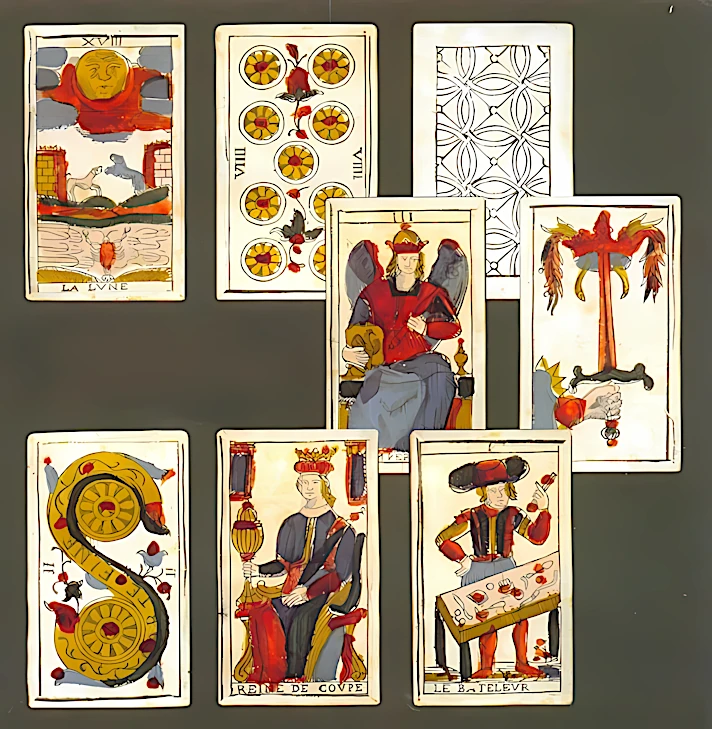
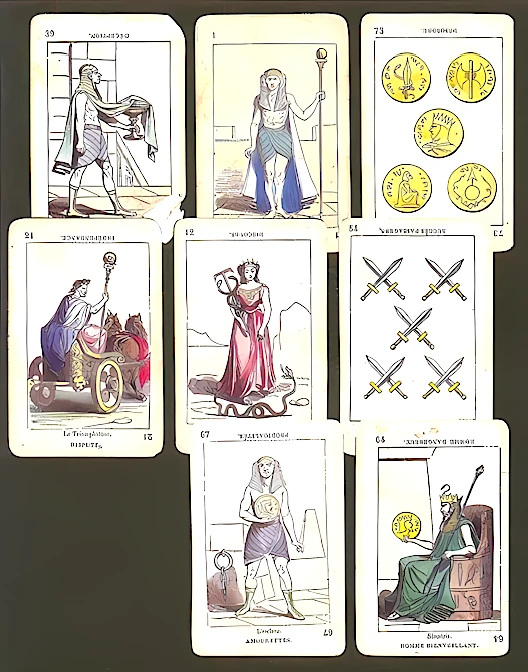
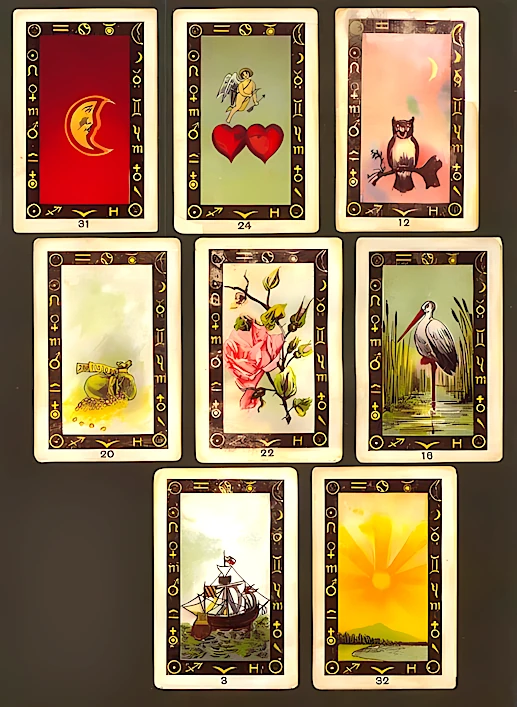
Tarot appeared in the Middle Ages. Each card carried an archetype: the Emperor—will, the Devil—illness, the Stars—hope. In 18th–19th century French society, fortune-telling with cards became a genuine craze—especially when, in the face of revolutions and military storms, people sought clues in the incomprehensible web of chance.
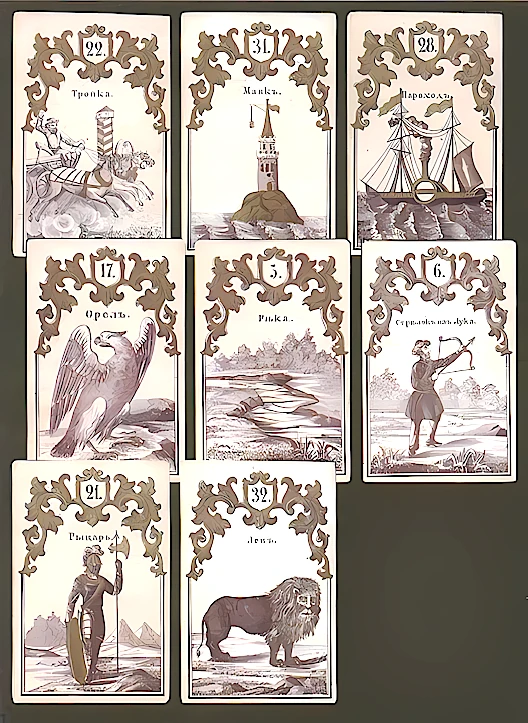
Symbolic knowledge was transmitted not only to esotericists—the fortune-telling decks of St. Petersburg played out the "white horse of fate" no worse than the French salons of Lenormand.
To whom else did Pushkin turn before his ill-fated duel, if not to the famous St. Petersburg sorceress Kirchhoff?
Oracles, mystical notes, gained the highest meaning when the future seemed unstable. Even absurd cases, like the landowner who did not sleep for fifty years due to an ominous prophecy, are part of this inexhaustible attraction of cards.
However, sometimes fortune-telling was simply an energy-intensive entertainment—or another reason to complain about fate. But one way or another, cards became a window not only into the collective unconscious but also into the real psychology of a person: after all, the most frightening unknown is the future. Card symbols vividly exploited archetypes embedded in our culture: clubs—enterprise, hearts—love, diamonds—wealth, spades—envy, fear, hatred.
A modern person, drawing a card from a deck, repeats an invisible ancient ritual of self-analysis, playfully trying on fate with a touch of jest, but with an underlying thought: "What if?.."
Catastrophes, Sparks, and Riddles
Cards are more than a tool for chance, misfortune, or luck. They are our desire to find a pattern in chaos, to experience a passion for battling the unknown, to build a world where skill and fate go hand in hand.
Consider this: why have cards never been replaced by a more serious or a more superficial symbol of fate?
What draws us to shuffle them again and again, to invoke or fear them, to mix the past with the present, to play on the edge of passion and mysticism?
And finally, which moment from your life—a win, a loss, or a secret divination—made you experience that trembling awe in the face of your own destiny?
What do cards mean to you—a mirror of the ages, a way to feel like a player, or a secret conversation with your own shadow?
Tell us—for perhaps it is in our stories that their magic will find a second life…