В нашем Telegram-канале — редкие картины, старинные предметы роскоши и увлекательные рассказы о мире коллекционирования. Подпишитесь и откройте для себя сокровища искусства!
Okhta Dolls: How a Gunpowder Factory Became the Birthplace of Soviet "Naked Dolls" and Dreamers
1.2КJune 30, 2025Разное
Why do dolls always look straight into your soul?
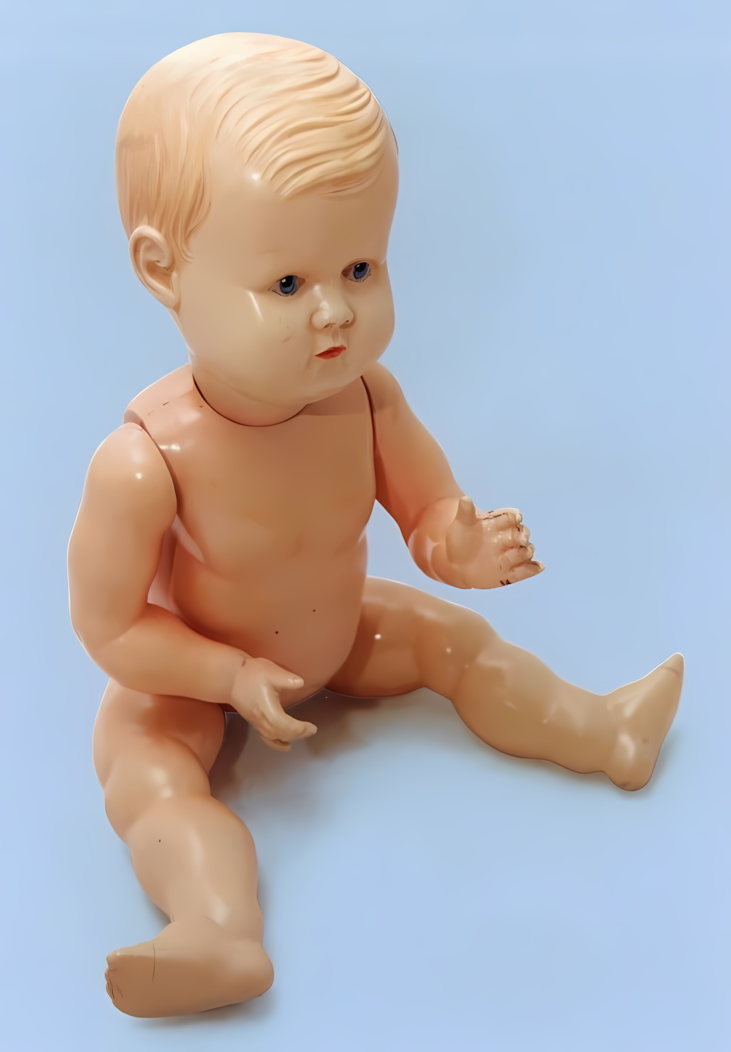
In children's hands, on the shelves of antique shops, or deep in our grandmothers' closets, dolls from the last century live and breathe quietly. They have seen more than we assume. Sometimes strange letters shine on the backs of their heads — OKH...
An eternal puzzle for collectors: why did a serious enterprise with a military history suddenly decide to brighten Soviet childhood with a doll's smile?
And how did these fragile "naked babies," born within the walls of a formidable chemical plant, become an invisible bridge between eras?
Perhaps, after this story, when you pass by an old display case with half-erased faces, you'll catch yourself thinking: "Could this little one have survived the revolution, war, and strikes along with me?"
Get ready: the dolls of the Okhta Chemical Plant are much more than a memory of Soviet childhood. They are a whisper of time, turned into a celluloid form.
SOLDIERS AND DOLLS: The History of an Explosive Transformation
Let's start with a paradox. The Okhta Chemical Plant is not your typical toy factory. For a long time, its walls were steeped not in a fairy-tale aura, but in the smell of gunpowder and the strictness of military routine. Peter the Great founded the Okhta Gunpowder Plant back in the young St. Petersburg of the 18th century — the heart of the young state's defense industry. Even the word "toy" itself would have sounded like a joke here... until a certain point.
Revolutions and wars repeatedly disrupted the plant's rhythm. After 1917, it fell silent, waiting for the historical storm to subside. But the twenties came — and the plant was reborn. Only now, to feed, warm, and even amuse a cold country. No fabrics, no paints, no familiar shipments from Germany. Everything — by themselves.
In 1925, for a mysterious and certainly not childlike reason, a... doll workshop appears within the walls of the former gunpowder wonder. Technologists, accustomed to formulas and reagents, become inventors of an almost magical plastic — celluloid. It started with combs, soap dishes, cases, but after a few anxious years, the first little animals, and then dolls, emerge from their hands. The magazine "Toy" in 1935 enthusiastically reports: "Here it is — the first domestic doll made of celluloid!".
Here, for the first time, that mysterious abbreviation — OKH — appears on the factory molds, like a password to a lost part of childhood. To this day, collectors argue about which period to consider "truly Okhta" — after all, there weren't enough molds yet, some were borrowed from colleagues, and some specimens have no markings at all. But the main thing happened: narrow-conveyor production for military needs gave way to warmth created for little ones.
PSYCHOLOGY OF FORM: Reading the Past Through Cheeks and Curls
What did those first dolls look like?
Imagine: a thin, unsmiling face with perfect proportions—as if from a formal reproduction of a French porcelain beauty. Every fold, every cute little tooth—sculptural precision in miniature. Only the hairstyle, two short ponytails, gives away the simplicity of the Soviet view of childhood. There were no artists at the OHK then—the masters simply poured French chic and shadows of German seriousness into Soviet celluloid.
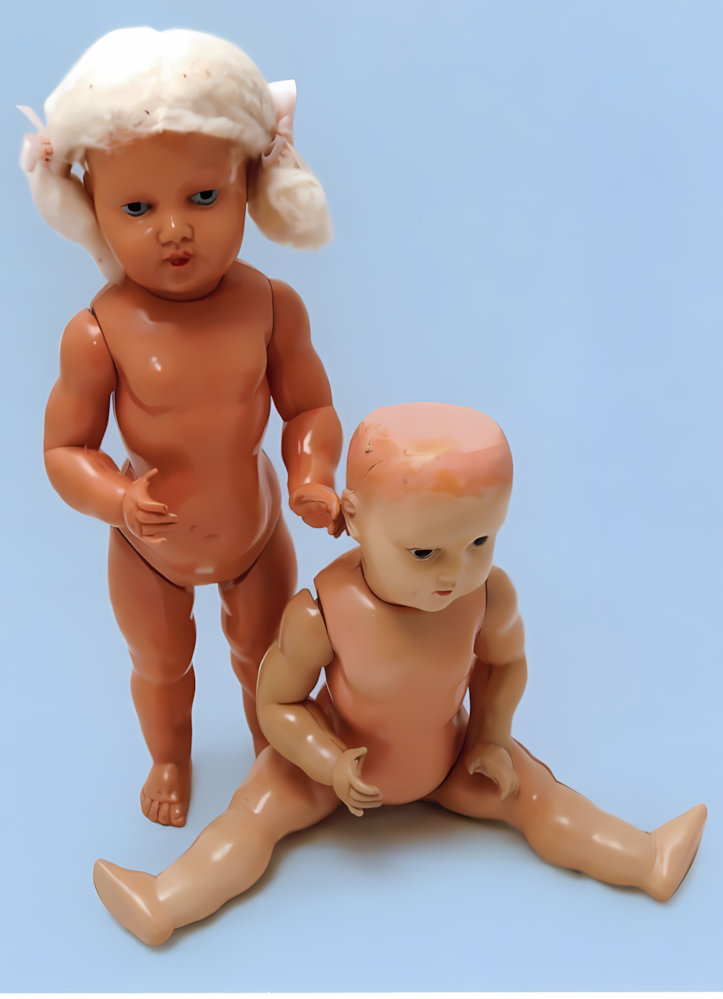
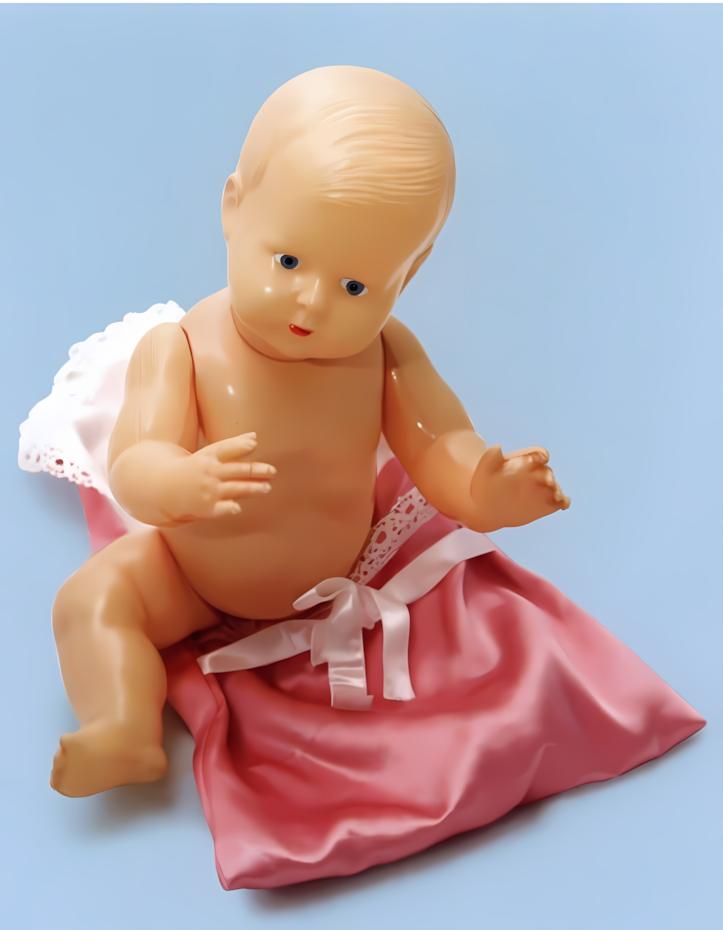
It's just that life quickly decided: idealism was not to be. The first complex doll with a "real" wig had to be left in the past—the technology did not allow creating everything as desired, and even the hole for the glass eyes had to be carefully sealed. The next wave of "Okhtintsy" already had curls molded into the plastic, modest smiles, and—surprise!—completely naked. Every single one of them.
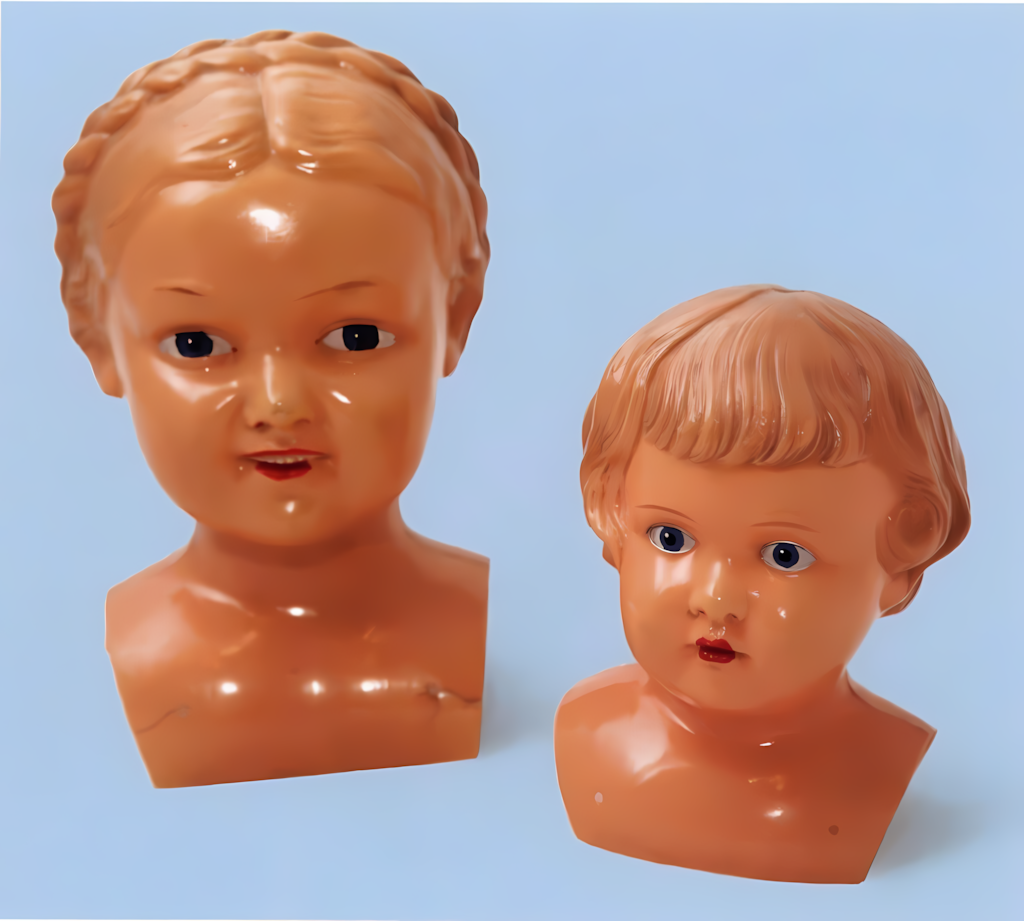
Why? It's simple: at the plant, there were no seamstresses, no workshops for dresses, and most importantly—faith in a child's imagination. A Soviet girl would sew a sundress herself, cut out bows, invent stories. This decision reflects the spirit of the time: self-reliance, a creative approach, equality. Even the "naked ones" were called just that in the documents—with humor and pride, as if they were ready for new, freshly drawn destinies.
AND WHO AM I? The Vovka doll, an African guest, and the game of identity
Interestingly, OHK dolls are also a mirror of social trends. How to recognize a real "Okhtinka"?
It's a face without excess, a smile, wide-open eyes—the type of a Soviet optimistic child. But fashion trends did not bypass the factory either. In the 1930s, a whole landing of multinational dolls appeared there: for example, a Negro boy with a snow-white smile and amazing, slightly squinting eyes.
Not all specimens were the same. The color of the celluloid varied from caramel to very light—such little Negro boys were mistakenly taken for Tajiks or Latin Americans years later, and the game "guess the doll's nationality" was quite popular among collectors.
Dolls based on German molds appeared, and their own, absolutely Soviet legend—the boy Vovka with closed eyes. He is not laughing—he is sleeping, and in this dreamy incompleteness, one can read a draft of the era: a country that is only learning to dream of the future.
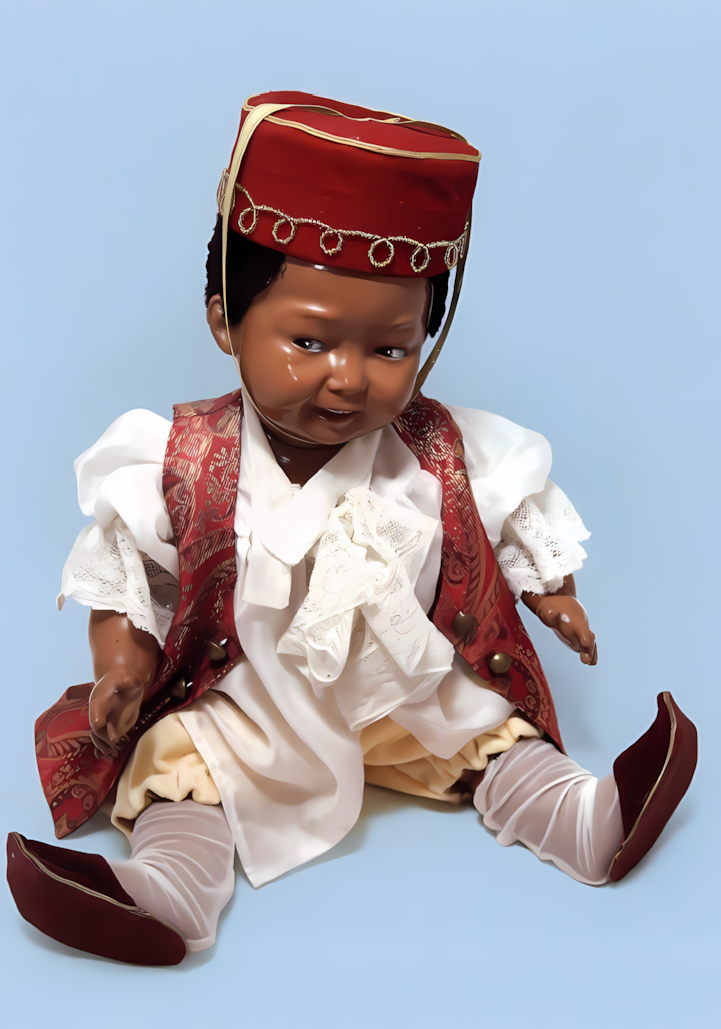
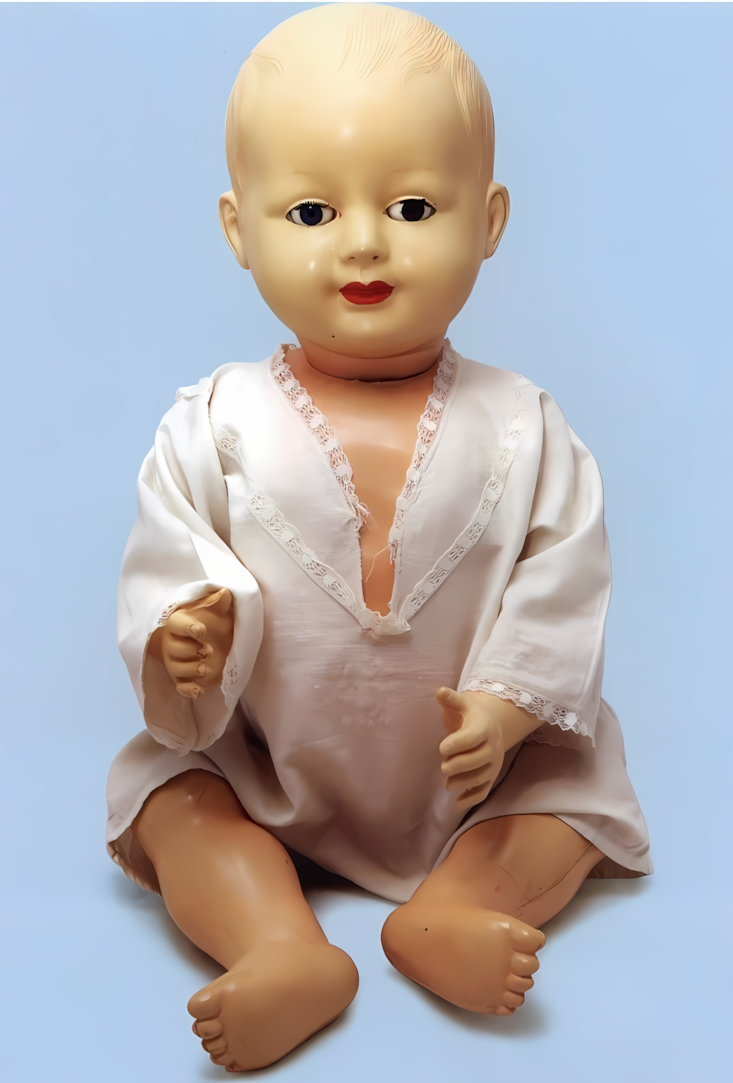
The transformation of form went hand in hand with technology. The arms became less mobile, the elegant features gradually disappeared, but each large doll was distinguished by a jewel-like, almost artistic painting of the face: with shadows, with every tooth drawn. As if by an artist who, in fact, never existed.
THE MAGIC OF HEAD-BUSTS: The continuity of "cottage industry" and the charm of incompleteness
And what Soviet creativity would be complete without the participation of ordinary people?
The OKH produced not only complete dolls, but also so-called "head-busts," hands, legs—parts that multiplied in artels and workshops across the country.
Buying a head and sewing a doll yourself—a fashionable life hack of the thirties!
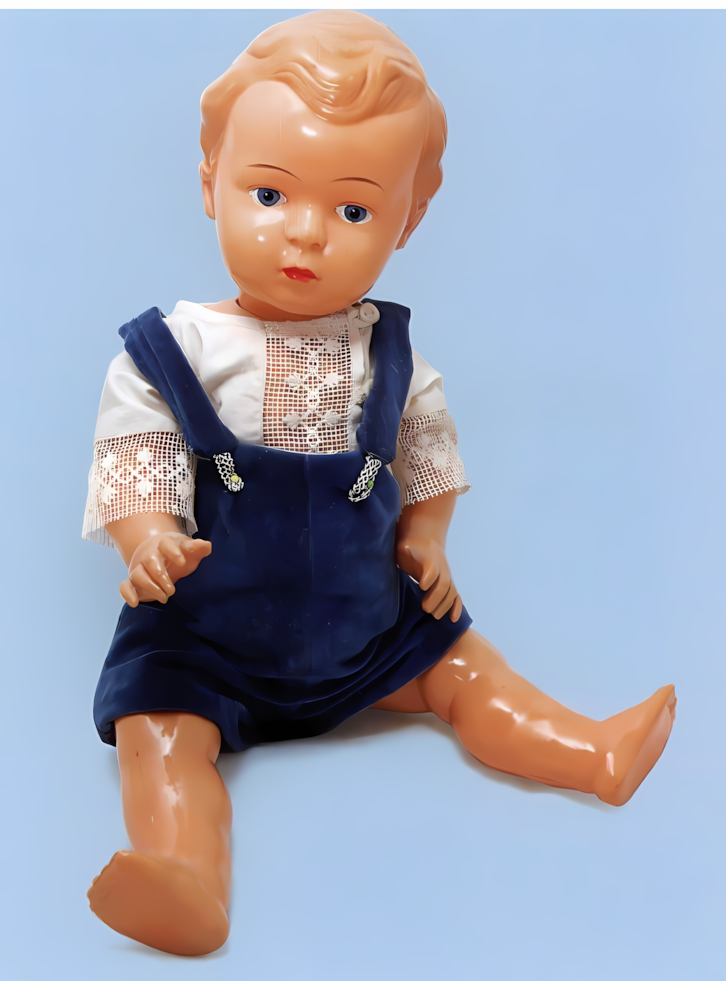
Chest parts were sewn in, sewn on, holes were pierced—every family had its own recipe for bringing the toy to life. Dressed in village style, in metropolitan fashion, or in fantastic guise, scattered across the universe of apartments and village houses, the Soviet doll continued its story even beyond the confines of the combine.
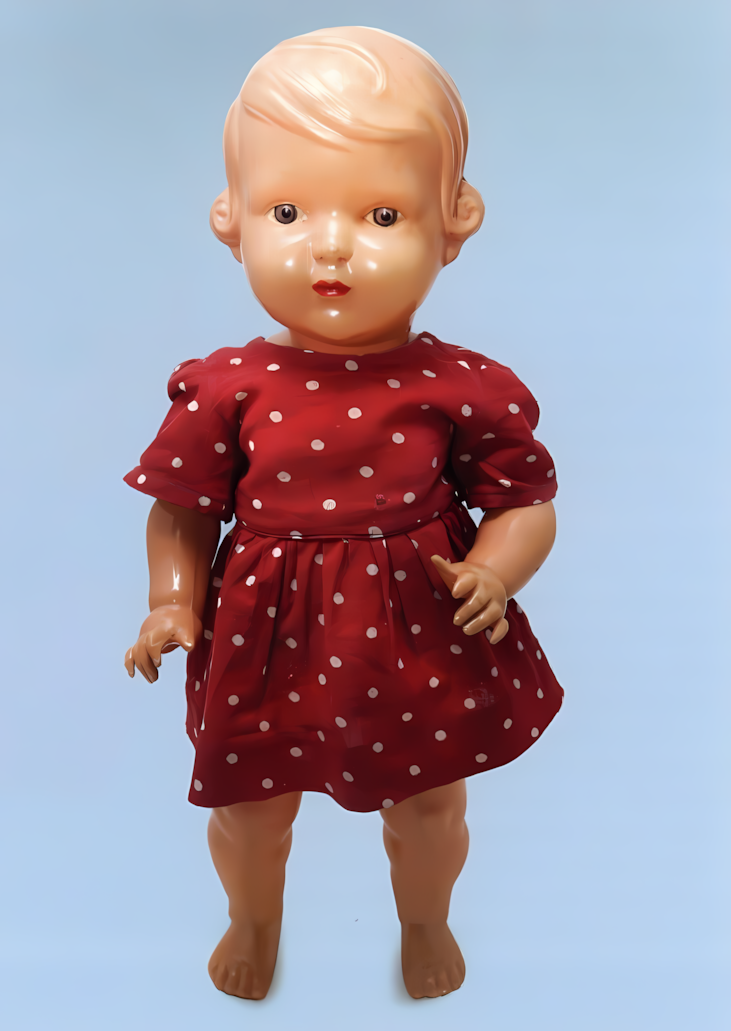
The war changed everything. Factories—for defense, the boys and girls of the OKH ended up in boxes in attics, or were dispatched to the front lines. But every doll that remained at home—a piece of surviving hope. Today, when we take a worn-out naked doll into our palms, we are holding not just a toy, but a silent witness to an era.
A different childhood, a different country, a different me
So what do these simple, sly, and slightly tired toys conceal?
Their story is about how an island of warmth could sprout from the most unsmiling, formidable production. How cheeks for dreamers and fantasists were cast from molds for explosives. And, finally, about how a bit of the Okhta naked doll lives in each of us—imperfect but real, capable of making history with its own hands.
Can one now indifferently walk past a faceless doll in a shop window?
And if you look closely—what past does its smile hold?
What do you feel when plastic that has survived the change of eras and ideas comes alive in your hands?
Perhaps it's time to ask yourself: what part of your childhood is waiting to be invited to play again?