Mysterious "Birds" on Rubles
1.3КJan. 11, 2025Монеты
Information about the mysterious "little birds" on the 1897 silver rubles sparks interest and discussion among collectors and numismatists. First and foremost, it should be noted that such differences on coins are not accidental. The marks on the edge of the rubles under investigation are various signs implying a specific minting history and, possibly, important indicators of the production process. Upon closer examination, one can notice that the use of different marks speaks to certain changes or specific circumstances that could shed light on coin production practices of that period.
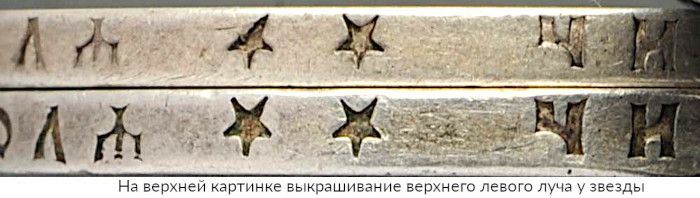
It is also important to remember that the historical context in which these coins were produced undoubtedly affects their significance for collectors. A simple replacement of marks between different mintages could be a consequence of the technological process or even political decisions, the adoption of which would reflect larger events in the country. In this sense, each individual ruble specimen becomes not just a monetary token, but a kind of witness to the history of the era to which it belongs.
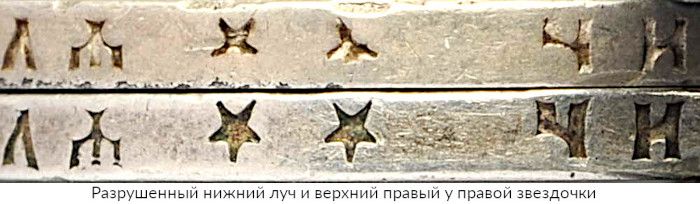
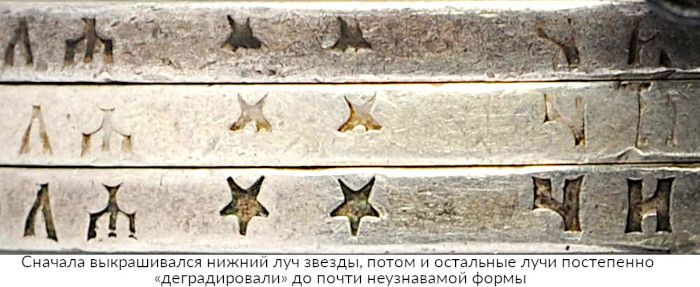
Comparing the "little birds" with traditional stars is another aspect of the issue. It is important to consider that during the era of mass coin production, minor differences could often arise both due to human factors and as a result of mechanical imperfections. Different variants may indicate experiments at the mint. This fact adds an additional layer of complexity to understanding the true nature of the "little birds." Could they have appeared accidentally, or were they deliberate steps aimed at changing the tradition of marking? These questions require serious scientific analysis.
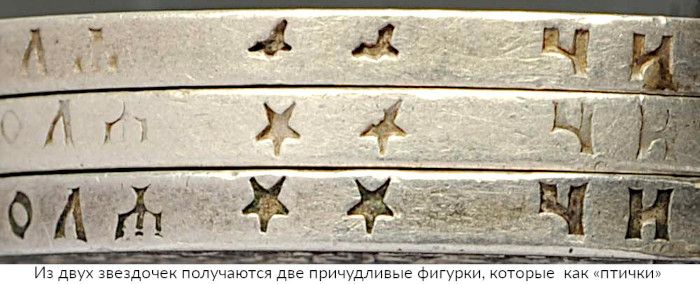
Trial or unapproved marks recorded on some rubles highlight the multitude of factors influencing their creation. Technical features and the lack of an approved regulatory framework for marks at different times could have led to such ambiguities. This approach requires a deeper dive into the issue. For example, it is worth considering how other European mints reacted to similar changes and adapted their methods. Comparison with the approaches of other countries could yield additional important insights.
The viewpoint of V.V. Kazakov regarding the partial destruction of the edge lettering rings, on which asterisks were depicted, also opens space for discussion. The assumption about damage during the edging process can be considered logical, given that the production process requires constant quality control. It is possible that such damage could have occurred in other places, leaving its mark on other specimens. However, one should also consider how such instances could have led to the omission of marks in the future, especially considering the importance of clear symbols for coin identification.
Furthermore, the presence of "birdies" on the edge raises questions about the form and functionality of the tools used to create these coins. How exactly was production organized in Brussels? Do archival records exist that could clarify the use of these marks? The questions remain open, creating a certain aura of mystery around these unique specimens.
It is known that starting from 1807 in Russia, edge lettering rings with raised lettering and detailed edge design elements were used to apply incuse edge inscriptions to coins. These rings were created based on master dies, on which letters, numbers, and other elements were sunk using individual punches. This process not only confirms the high level of technological preparedness in production but also indicates the significance of quality control at all stages of minting.
When analyzing V.V. Kazakov's version about the emergence of "birdies" as a result of damage to the edge tool, attention should be paid to two key points to confirm or refute this hypothesis.
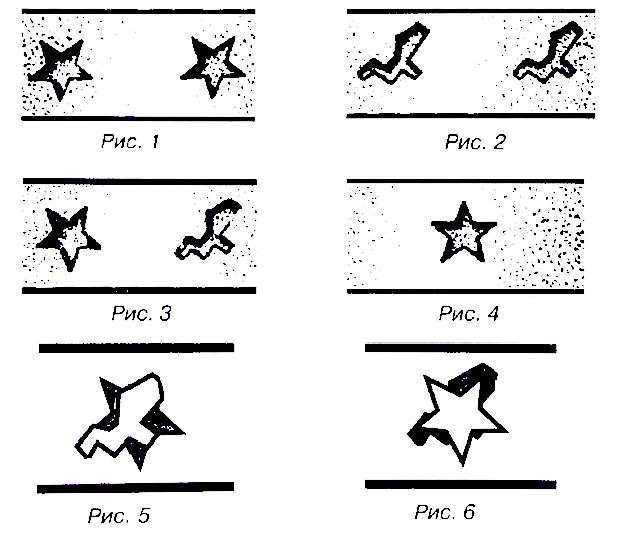
Firstly, on all known specimens of coins with various marks (Figs. 2 and 3), the configuration of the "birdies" remains unchanged, except in cases where damage to the edge surface is observed. This suggests that the probability of damage to the edge lettering rings is very low, as it would be extremely difficult for all three asterisks on two different rings to show similar signs of damage. In this case, it would be more appropriate to consider that we are dealing with a defective punch used twice: to create the master die for one ring (Fig. 2) and simultaneously with a proper punch for another ring (Fig. 3).
Secondly, damage to a hardened steel punch (as well as to the ring itself) has only one form—the loss (chipping) of part of the raised asterisk image—which also must be taken into account when researching this issue.
Based on the presented data, a number of conclusions can be drawn regarding quality control processes and risks associated with tool defects. The defect of the punch depicting a star could not have gone unnoticed by the control services conducting inspections at all stages—from the production of hubs to the striking of the coins themselves. This is especially true for the process of creating the second hub (Fig. 3), when both the defective and the corrected punches were used in parallel. Considering that the order came from a foreign state, allowing the use of a faulty tool would have been extremely inadvisable. Violation of standards could have led not only to sanctions from the customer but also to a serious loss of international prestige for the Brussels Mint.
These circumstances emphasize that any defect in the production process at such a responsible enterprise as a mint, various control and quality measures at each stage could have prevented the occurrence of such incidents. New horizons are opening for researching and understanding not only the specific moments of minting these coins but also the general context in which their production and distribution took place. An in-depth study of such aspects can significantly enrich existing knowledge about the material culture of that era and provide a more complete understanding of the processes occurring in the fields of numismatics and finance as a whole.
Regarding traces of partial destruction of the punch, it is important to note that the areas where chipping of the corresponding parts of the convex star could have occurred would inevitably have led to the formation of irregularities on the surface of the coin's edge around the "birdies." These irregularities would have been characterized by significant depth, and their elimination would likely have been impossible, even when striking the coin in a smooth collar. In practice, the edge of coins with the "birdies" image demonstrates a uniform and smooth surface along its entire length. But that is not all. If the contours of the star and the "birdie" are superimposed (Figs. 5 and 6), it becomes obvious that in the case of the alleged damage to the punch, as a result of which the star turned into a "birdie," some parts of the convex star would have disappeared, while new details unrelated to the original image would have unexpectedly appeared on the punch (such details are darkened in the drawings). It is clear that no mechanical impact on a hardened steel punch could lead to such an anomalous result.
Based on the analysis of the provided data, it is strongly advisable to conclude that the Brussels Mint indeed produced a special punch intended for creating the "bird" images, which allowed for placing the conditional designation of this mint on the edge of Nicholas II rubles. The proposed variants of the designation were presumably submitted to the client for evaluation, and for the purpose of more objective analysis, small batches of coins with each variant could have been produced. The presence in monetary circulation of a small number of Nicholas II rubles minted in Brussels with unapproved variants of the mark (Fig. 2 and 3) also confirms this hypothesis.
It has been established that the first variant of the mark, presented in Figure 1, was approved at the very beginning of the mass production of these coins, as the unapproved variants (Fig. 2 and 3) are found exclusively on coins produced in 1897. Another important aspect should be noted: the approved mark of the Brussels Mint on Nicholas II rubles (Fig. 1) actually shares common features with the mark used at the Paris Mint (Fig. 4) for Nicholas II rubles and 50-kopeck coins, which were minted around the same time.