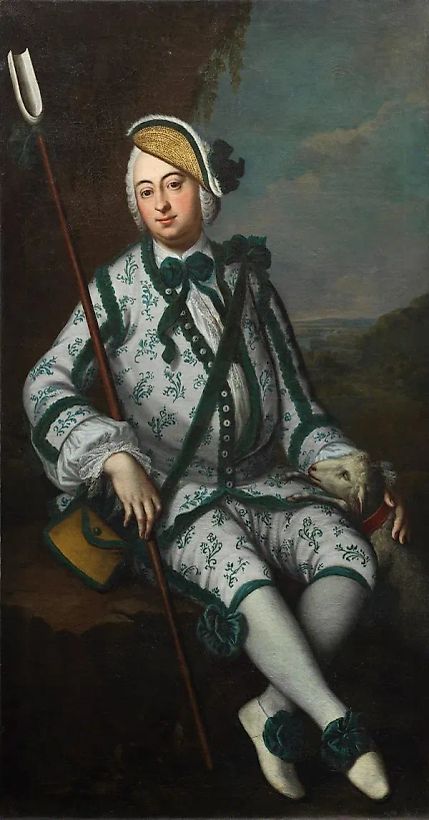
Rococo portrait of a nobleman in a shepherd's costume
Description
(1720 Heina – 1784 Hamburg) attributed; Rococo portrait of a nobleman in a shepherd’s costume. This full-length, almost life-size, exquisitely painted portrait depicts an aristocrat in a fantastical, fashionably playful outfit with the attributes of a shepherd: a staff, straw hat, small bag, and a cute little lamb. This is a nobly elegant, skillfully interpreted shepherd figure. He sits comfortably, legs crossed, on a stone before a broad, arcadian landscape traversed by a river. The vertical format, the motif, and the foreshortened legs indicate that this painting was once hung high on a wall in a country estate or castle. Thus, the patron portrayed himself with a touch of self-irony and in accordance with the fashionable pastoral style of the time. The artist paid less attention to the personality than to the costume, which would have been completely unsuitable for actual shepherd work in the countryside. The painting reflects the European idealization of pastoral life in the Rococo as a cultural phenomenon in literature, art, theater, and even in Meissen porcelain figurines, pastoral plays, and fashion. Some stylistic details point to a painter of the first generation of the Tischbein painting dynasty, most likely Johann Anton Tischbein, brother of the famous portraitist Johann Heinrich Tischbein. Oil on canvas, relined; 169.5 cm x 90.5 cm. In a frame. Accompanied by an expert opinion from Professor Dr. Helmut Börsch-Supan, Berlin, 20.01.2016. Attributed to Johann Anton Tischbein (1720-1784), oil on canvas. Accompanied by an expert opinion from Professor Dr. Helmut Börsch-Supan, Berlin, 2016.
Similar lots
Lot No. 12729 The chef who spilled the spaghetti
Capodimonte
Lot No. 14789 Portrait of Prince August Ludwig von Anhalt-Köt…
Joachim Martin Falbe
Lot No. 14792 Agnieszka Emerchanna: Portrait of the Great Het…
Adam Manioki
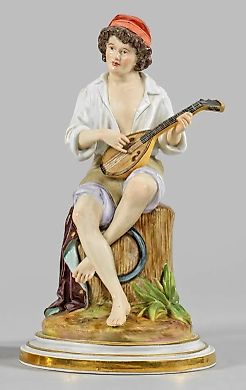
Lot No. 13502 Porcelain figurine of a Neapolitan boy
Meissen (Meissen)
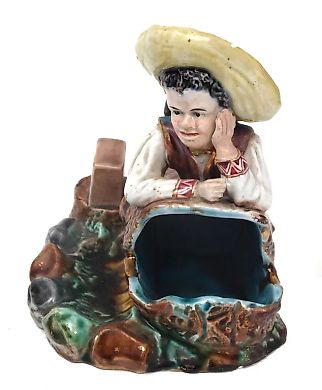
Lot No. 15531 Porcelain ashtray with painting from the Kuznet…
Kuznetsova M.S. society
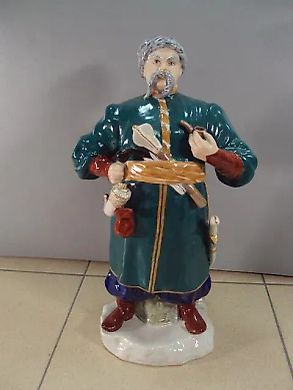
Lot No. 12817 Cossack Taras Bulba
Baranovsky Porcelain Factory
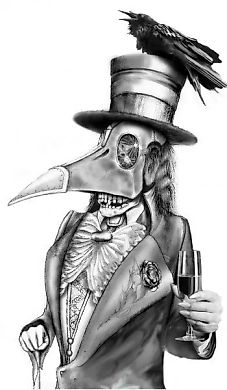
Lot No. 11948 Gentleman graphite pencil
Misha Sergeevsky