Porcelain, earthenware, ceramics
Dmitrov Porcelain Factory

Dmitrov Porcelain Factory (Verbilki) is not just an industrial enterprise.
Above all, it is a repository of traditions in porcelain production, passed down from generation to generation, allowing true masterpieces of decorative and applied art to be born. The Verbilki Factory is well known far beyond Russia, and the quality of its products is confirmed by numerous prizes and awards.
Factory Names
- Gardner Porcelain Factory (1766 - 1891)
- M.S. Kuznetsov Partnership (1891 - 1917)
- Dmitrov Factory, formerly Kuznetsov, and Dmitrov State Factory in Verbilki. B. Gardner - 1918-1921
- Dmitrov State Factory in Verbilki - 1921-1923
- Dmitrov Factory in Verbilki - second half of the 1920s
- State Dmitrov Porcelain Factory - 1930s
- Dmitrov Porcelain Factory - since 1950
- ZAO Farfor Verbilok (1991 - )
- Subsidiary "Promysly Verbilok" (1995 - )
Factory History
The Dmitrov Porcelain Factory was founded in 1766 by Franz Gardner, a merchant and entrepreneur from England who had lived in Russia since 1746 and, using his connections at the royal court, implemented various business projects.
The opening of the factory was preceded by Gardner’s long travels across Russia—he was searching for blue clay suitable for porcelain production. He found the best option for this in Chernigov region.
When planning the factory, the merchant took the Meissen German porcelain production as his model.
It should be noted that Gardner’s first petition for permission to build the factory was denied. In Tsarist Russia, environmental protection issues were treated much more scrupulously than now. Therefore, cutting down forests within a 100-verst radius of Moscow was strictly prohibited. However, the merchant found a way out: he bought a large plot of land from Prince Nikolai Urusov. For this, Urusov’s brother, who at that time was the governor of Moscow, obtained for him the permit to build the factory. The Verbilki Factory is located 90 km from Moscow, i.e., it was still within the protected zone, but right at its edge.
The factory owner invited the famous artist Kestner from Germany, who trained Russian craftsmen. The maestro himself personally created for Catherine II a magnificent service decorated with sketches dedicated to the victory in the Russo-Turkish War. The Empress was so delighted with the gift that she entrusted the factory with the production of four order services—in honor of St. George the Victorious, Andrew the First-Called, Alexander Nevsky, and Prince Vladimir. Incidentally, the last one cost 15,000 rubles—a fabulous sum for those times. For almost a century and a half, the order services adorned festive banquets at the court. As a result of his first success, Gardner received the right to mark his products with the image of the Moscow coat of arms.
Gardner was indeed a talented businessman. He quickly realized that launching mass production of tableware promised him solid profits. Domestic porcelain was favorably priced compared to foreign, and in terms of quality was in no way inferior, so it soon became clear that production needed to be expanded. Within a decade, the factory staff doubled.
After the founder’s death, his heirs continued his work with varying success. At first, the factory was managed by Gardner’s son, Franz Frantsevich. Then the reins passed to Sarra Alexandrovna, the entrepreneur’s wife. However, she did not prove to be a talented manager. At the beginning of the 19th century, her younger sons took over the management and managed to revive its best traditions.
The factory owners strove to keep up with the times and mastered new technologies. Thus, in 1833, the factory launched the production of faience tableware, and in the 1840s—of opaque porcelain.
For its numerous merits, Verbilki was repeatedly awarded various honors. In 1829, the factory won a gold medal at the First Industrial Exhibition. In 1855, along with special gratitude from the Emperor, the factory was granted the right to mark its products with the state double-headed eagle. There was no higher quality mark in Russia at that time. And finally, in 1856, the Gardner Factory received the title of Supplier to His Imperial Majesty’s Court.
The second half of the 19th century was not the happiest page in the factory’s history. Becoming too involved in the commercial race, its new owners forgot about art and began producing stenciled and mass-market products. The Crimean War also played a negative role, resulting in the confiscation of property belonging to British subjects.
Nevertheless, at the very end of the 19th century, a new era began in the life of Gardner’s manufactory. In 1882, it was purchased by Matvey Kuznetsov, a major Russian industrialist and entrepreneur. He quickly negotiated with the then-owner of the factory and for a very moderate sum managed to acquire not only a successful manufacturing enterprise but also what could be called a well-promoted brand in today’s terms. For just 238,500 rubles, he received production lines, technologies, samples, designs, and experienced specialists as a bonus.
Kuznetsov’s commercial acumen was hard to deny. He managed to significantly increase production and retain the old customers of Gardner porcelain. At the same time, he hardly changed the factory’s product range. Kuznetsov focused on tea and dinner services, as well as individual items that had already become the hallmark of the Gardner factory. The factory also produced items for churches—lamps, chandeliers, chalices, etc. Kuznetsov also fulfilled special orders for particular occasions—such as the 100th anniversary of the Battle of Borodino and the 300th anniversary of the Romanov dynasty.
The Soviet period marked a new stage in the factory’s history. The enterprise was nationalized and renamed the Dmitrov Porcelain Factory. The product range was limited to small vases, toilet sets, and decorative plates. Over time, various propaganda sketches were included—for example, mugs with Kalinin’s portrait. In the early Soviet period and the NEP years, the production was based on samples from the former owner, but over time the factory began to mass-produce rather mediocre quality items.
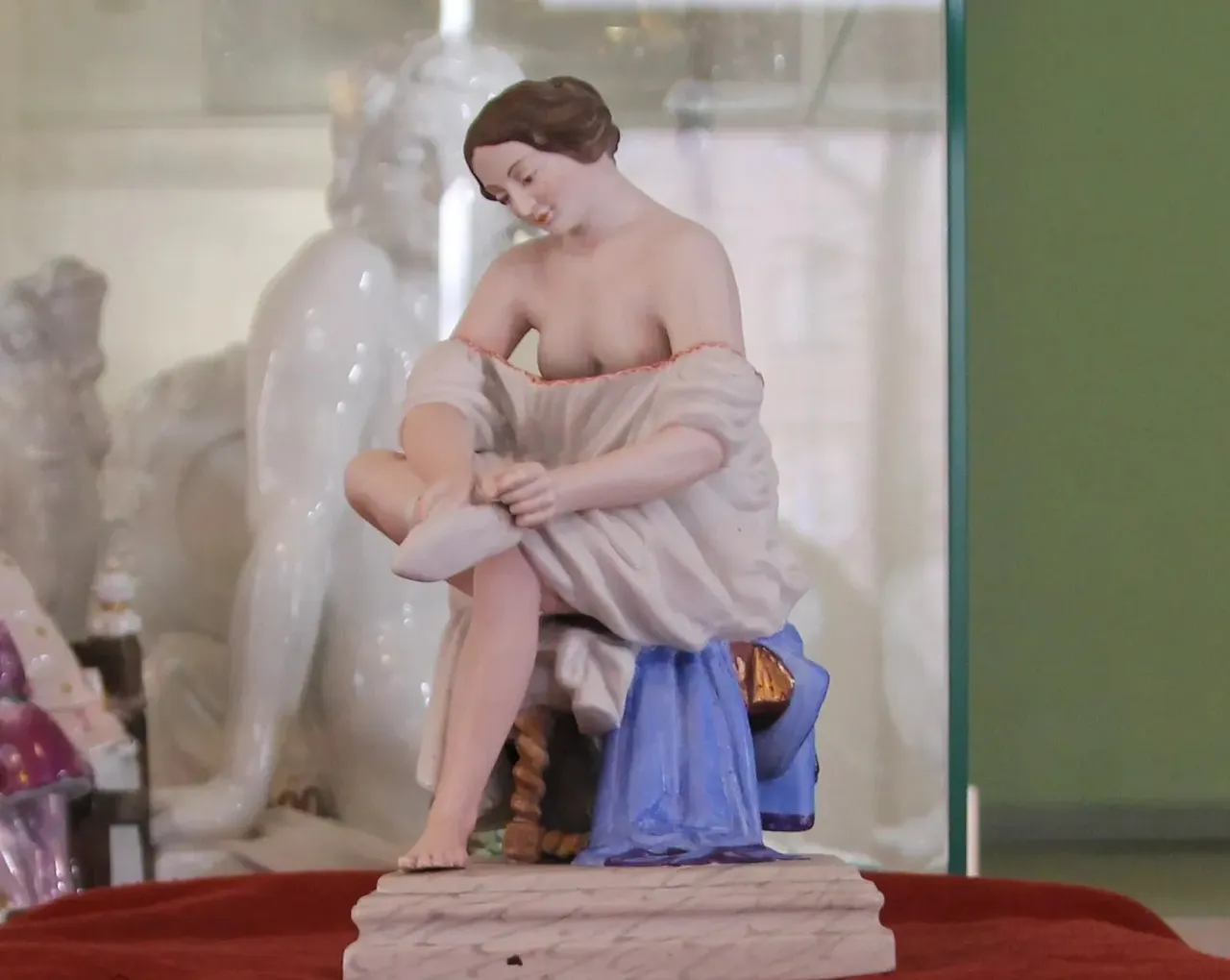
In the 1930s, positive changes occurred in the factory’s life. They were linked with the names of two masters—K. G. Tikhonov, a student of the Fabergé school, and E. P. Smirnov. They became famous primarily for the tea sets “Art of the Peoples of the USSR.” At the same time, the sculptor S. M. Orlov began working at the factory, drawing inspiration from folk tales. Thus, his well-known works such as “The Little Humpbacked Horse,” “The Golden Fish,” and others were created.
It was in the 1930s that the Dmitrov Porcelain Factory finally gained worldwide recognition, as evidenced by numerous invitations to exhibitions—in Cairo, Baghdad, New York, Oslo, Paris, Brussels, and so on. At many of them, the factory’s products were awarded high honors.
During the Great Patriotic War, the production of artistic porcelain had to be stopped. However, some themed works were still produced. For example, the “Battle for the Motherland” service by A. Chechulina, and order services by T. M. Demorey. And throughout the war, the factory’s whistle served as the signal for the start of an air raid alert.
The revival of pre-revolutionary porcelain production traditions began in 1995 within the framework of the subsidiary “Promysly Verbilok.” The task was successfully accomplished, as evidenced by the awards received by the factory at international business exhibitions in America and Europe in Birmingham and Mexico City in 1996.
In 2006, the factory received the status of Honorary Member of the Kremlin Suppliers’ Guild with the right to mark its products with the corresponding sign.
In 2009, the Minister of Culture of the Russian Federation and the Academy of Arts expressed gratitude to the factory for its contribution to the preservation and development of porcelain production traditions.
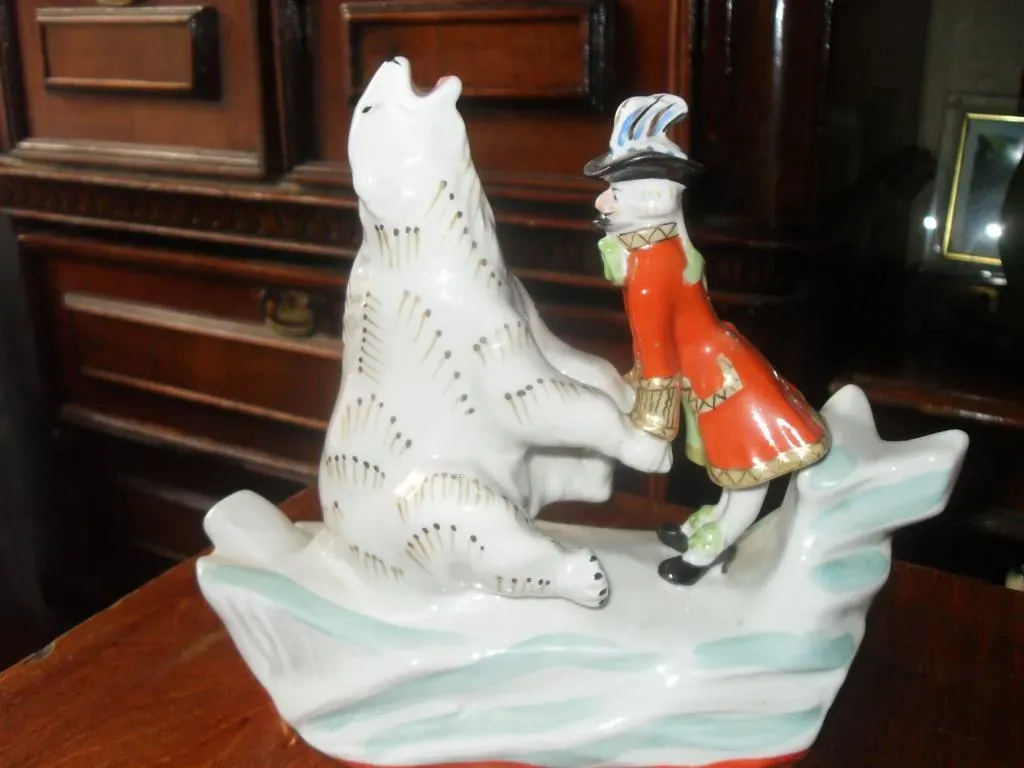
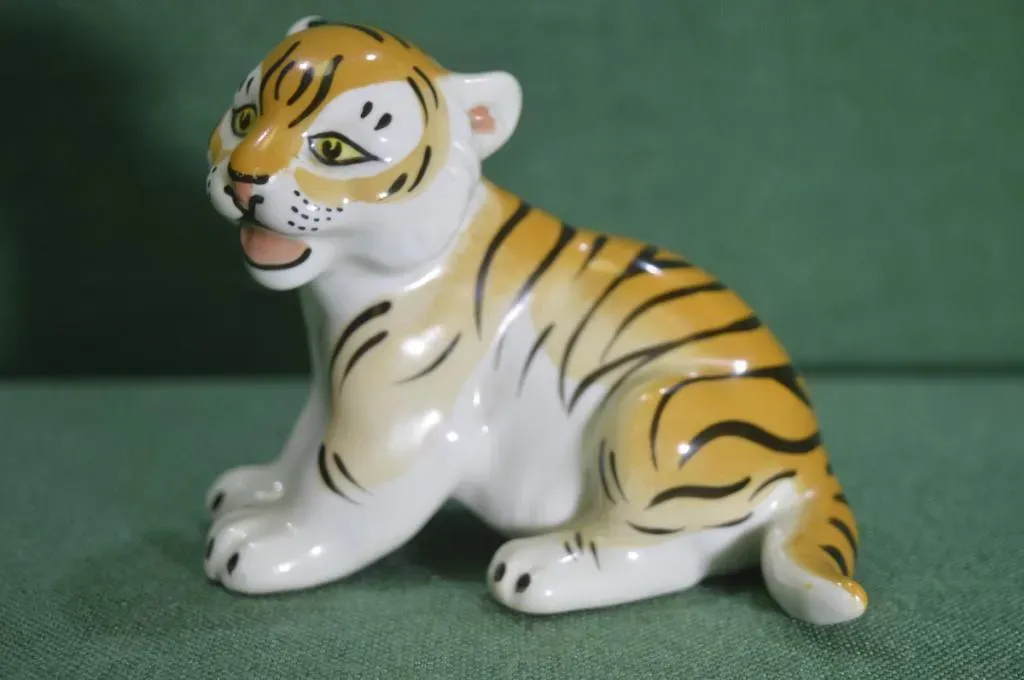
Today, the enterprise produces several product lines that, as before, serve as a benchmark of the highest quality.
Factory Location
The Dmitrov Porcelain Factory is located in the Taldom District of the Moscow Region (Kimry District in the 1930s), in the urban-type settlement of Verbilki (1 Zabyryna St.).
The settlement is located 90 km north of the capital on the Dubna River.