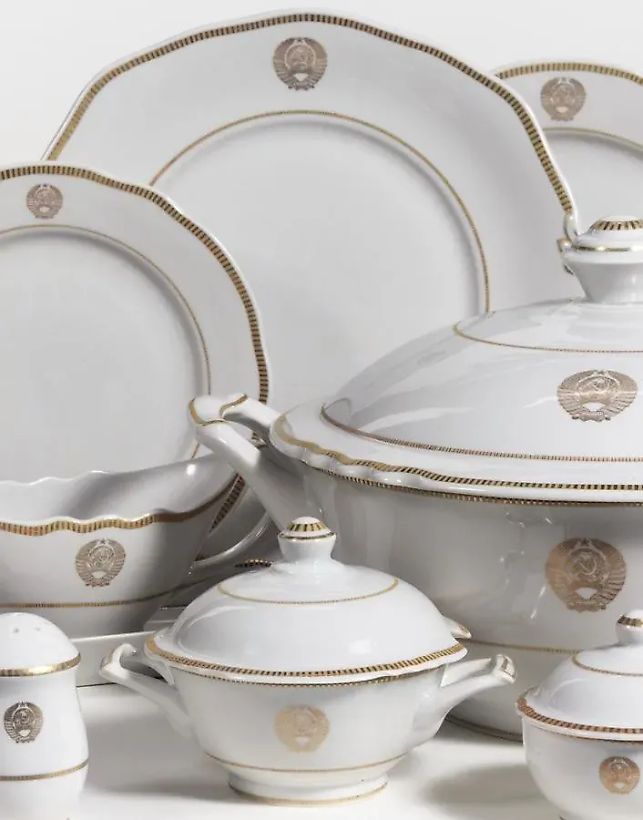
CERAMIC TABLEWARE SET, DULEVO, 1952-1962
Description
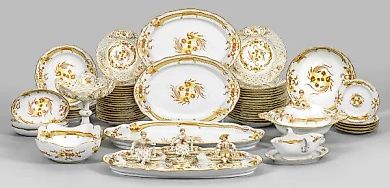
Two large soup tureens, lids and stands, two attachments, a salad bowl, twelve dinner plates, eleven soup bowls, twelve fruit plates, twelve side dishes, two sauce boats, two sugar bowls, one with a lid, two sauce dishes with lids, and a pair of spice containers, each depicting a sickle and hammer surrounded by a sheaf of corn, with the gold marking of the manufactory. Quantity: 69
Embassy of the USSR in Helsinki, circa 1952.
Note: This dinner set was produced at a decisive moment in the postwar development of Russian-Finnish diplomatic and economic relations. The countries were ideologically diverse, and yet Finland’s consistently friendly foreign policy contributed to the signing of the Agreement of Friendship, Cooperation, and Mutual Assistance between Finland and the USSR in 1948.
This agreement was extended in 1955, 1970, and 1983. Trade between the two countries was and continues to be extremely important, especially after the cessation of reparations payments in 1950. However, diplomatic relations were not without complications. After the 1958 elections, a Finnish government was formed under the leadership of Social Democrat Karl-August Fagerholm, which included members considered anti-Soviet. In response, the Soviet Union recalled its ambassador and, presumably, this Soviet dinner set until the Finnish government was restored and relations stabilized.
Dulevo Porcelain Factory
Additional lots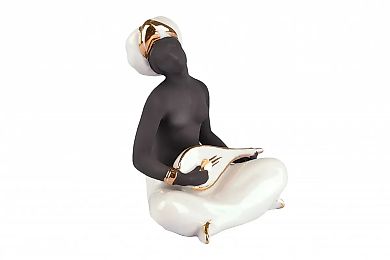
Lot No. 12970 Scheherazade
Dulevo Porcelain Factory
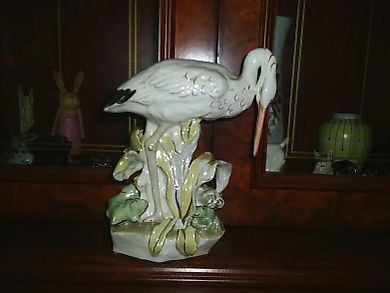
Lot No. 13817 The Heron and the Frog
Dulevo Porcelain Factory
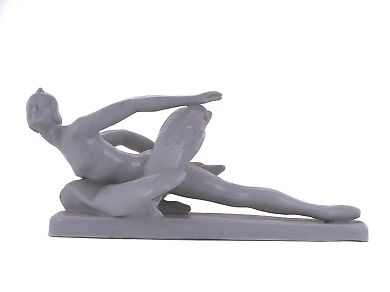
Lot No. 15084 A figurine of Maya Plisetskaya as the Swan Prin…
Dulevo Porcelain Factory
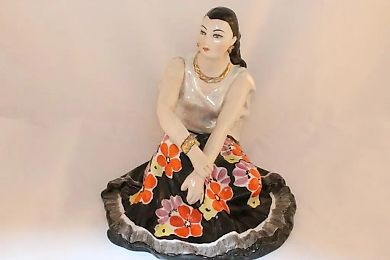
Lot No. 13761 Zemfira sitting
Dulevo Porcelain Factory
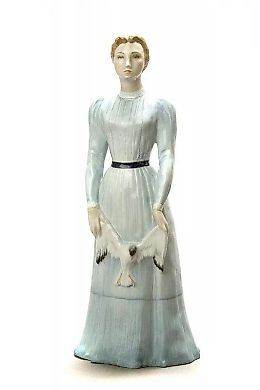
Lot No. 12985 Seagull
Dulevo Porcelain Factory
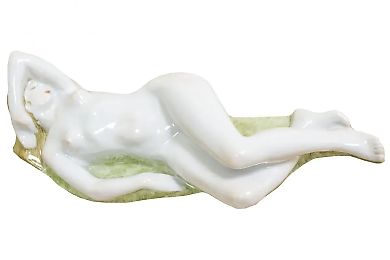
Lot No. 12953 Smuglyanka
Dulevo Porcelain Factory
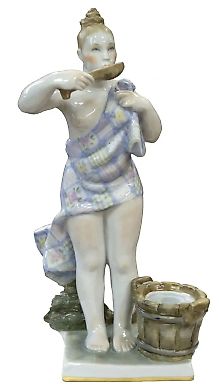
Lot No. 12956 Hot
Dulevo Porcelain Factory
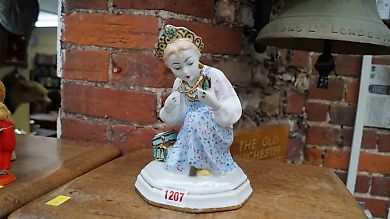
Lot No. 15019 Alyonushka figurine from Dulevo, 1960s, 23 cm.
Dulevo Porcelain Factory
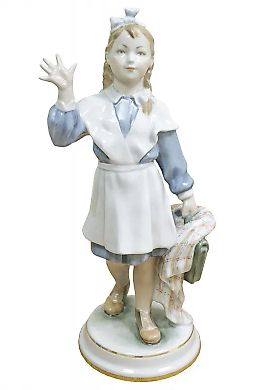
Lot No. 12957 Five
Dulevo Porcelain Factory
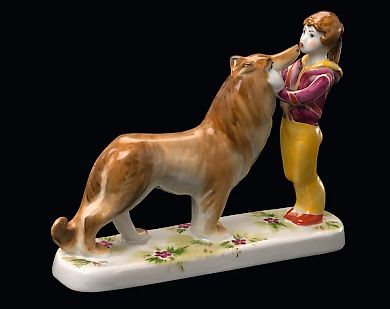
Lot No. 14970 SOVIET PORCELAIN FIGURINE OF FRIENDSHIP, LITTLE…
Dulevo Porcelain Factory
Similar lots
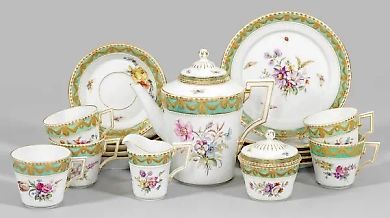
Lot No. 14205 Tea set "Kurland" with a summer floral ornament.
KPM (Knallegårdens E.B. Design)
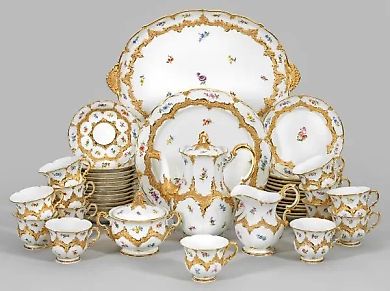
Lot No. 14236 Porcelain coffee set
Meissen (Meissen)
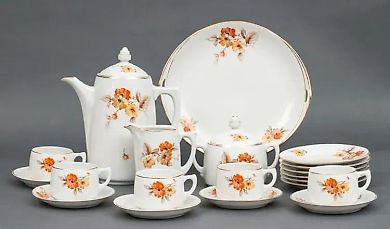
Lot No. 15535 A porcelain service for 5 persons with a teapot…
Kuznetsova M.S. society
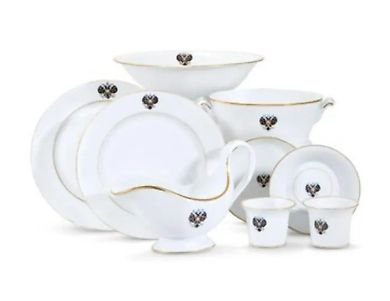
Lot No. 15343 Porcelain tableware from the Imperial Porcelain…
Kuznetsova M.S. society
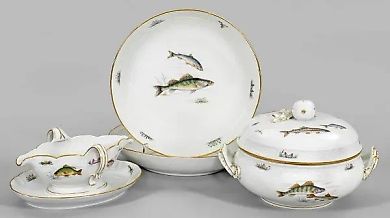
Lot No. 14225 A set of 4 porcelain items with realistically p…
Nymphenburg
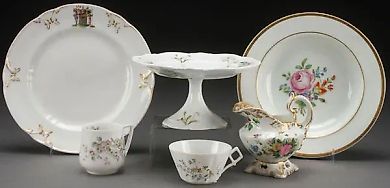
Lot No. 15471 A porcelain group of six pieces from the Imperi…
Kuznetsova M.S. society
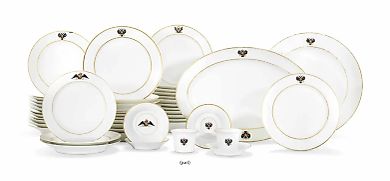
Lot No. 15151 Porcelain group from the service of the Gatchin…
Kuznetsova M.S. society
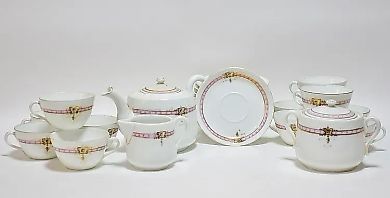
Lot No. 15496 Porcelain tea set "M.S. Kuznetsov" with a gold …
Kuznetsova M.S. society
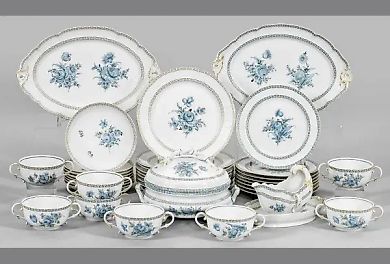
Lot No. 14224 28-piece porcelain dinner set
Nymphenburg
Lot No. 14244 Meissen dinner set with "Rich Dragon" decor.
Meissen (Meissen)