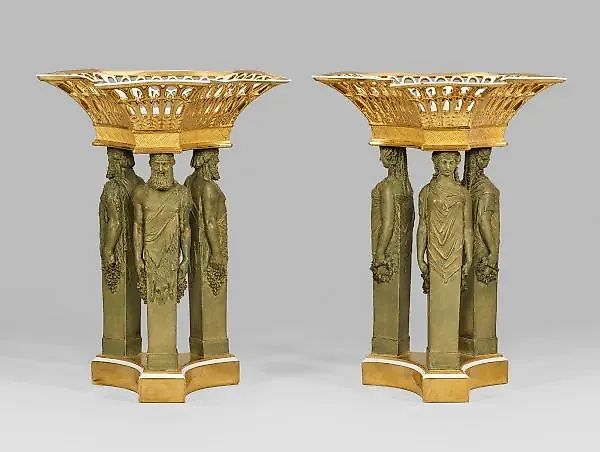
Several baskets, one similar to "Plat de Menage".
KPM (Knallegårdens E.B. Design)
Description
Decorative centerpiece of KPM-Berlin biscuit porcelain, partially glazed. On a three-tiered plinth with a rounded profile, three caryatids in the form of men or women serve as bearers for a three-tiered bowl. Above a profiled base with a relief pattern resembling a checkered braid, an elegantly carved arcaded openwork wall adorns the structure. The bottom of the bowl features a winged relief, painted in royal blue with a rosette. The caryatids are executed in the Greco-Roman style and represent Flora (Chloris) or Bacchus (Dionysus) with floral wreaths and vine leaves, symbolizing spring and autumn. Possibly produced by Johann Carl Friedrich Riese (active 1789-1834) as a model maker. Rich gold and green-bronze decoration. Height 33 cm. With the onset of Classicism, there is an increasing deviation from painting on porcelain and glazing in favor of biscuit. Johann Carl Friedrich Riese designed several centerpieces for tableware with fruit bowls in the late 18th and early 19th centuries, held by figures from Greco-Roman mythology and created based on ancient prototypes. Riese worked according to his own designs and to the requirements of architect Hans Christian Genelli. See Kollmann, Berlin Porcelain, Volume I, pp. 138 ff., 185, 319; Volume II, Plate 175a. A pair of imperial partially glazed gilt and green-bronze biscuit porcelain citrus baskets with caryatids as a tabletop. The bottom bears an inventory number; scepter mark. KPM-Berlin. Circa 1790.
KPM (Knallegårdens E.B. Design)
Additional lots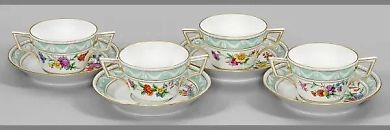
Lot No. 14200 Four soup bowls "Courland" with summer floral d…
KPM (Knallegårdens E.B. Design)
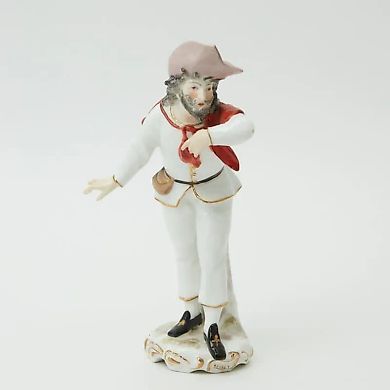
Lot No. 13643 Statuette Tyurlyupen
KPM (Knallegårdens E.B. Design)
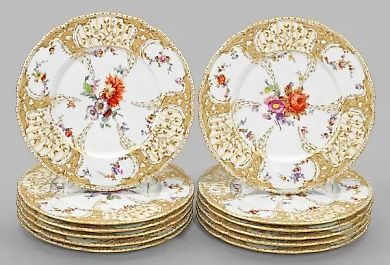
Lot No. 14207 Twelve dinner plates with "First Potsdam Servic…
KPM (Knallegårdens E.B. Design)
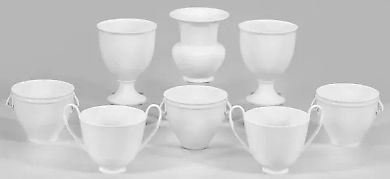
Lot No. 14192 Collection of white porcelain
KPM (Knallegårdens E.B. Design)
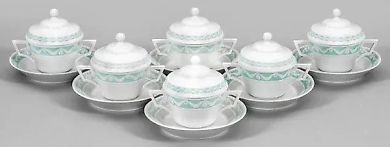
Lot No. 14201 Six soup cups "Kurlandiya"
KPM (Knallegårdens E.B. Design)
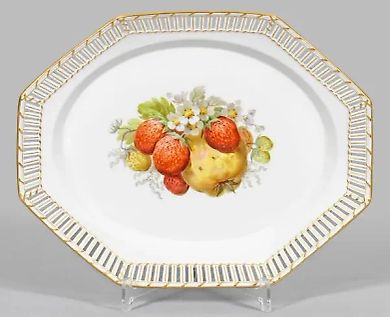
Lot No. 14209 A tray with fruit decoration.
KPM (Knallegårdens E.B. Design)
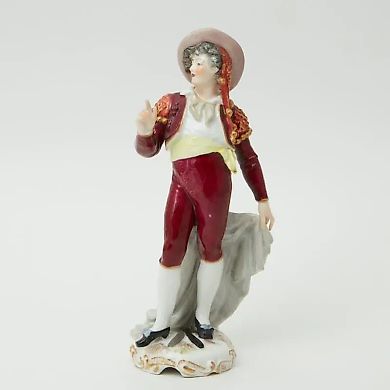
Lot No. 13523 Figaro
KPM (Knallegårdens E.B. Design)
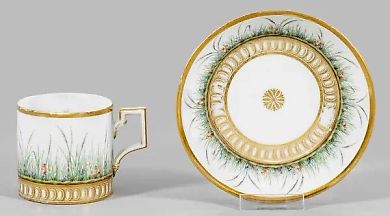
Lot No. 14328 Decorative bowl with the "flowers on the terrac…
KPM (Knallegårdens E.B. Design)
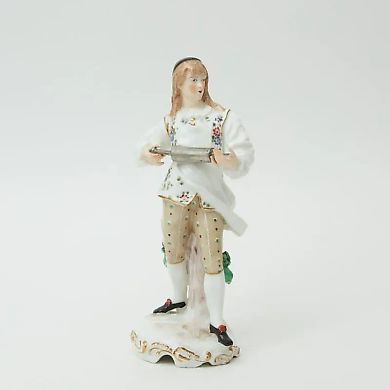
Lot No. 13524 Apollbiker
KPM (Knallegårdens E.B. Design)
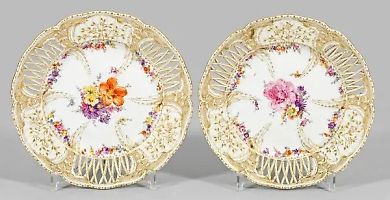
Lot No. 14208 A pair of dinner plates with the "1st Potsdam S…
KPM (Knallegårdens E.B. Design)
Similar lots
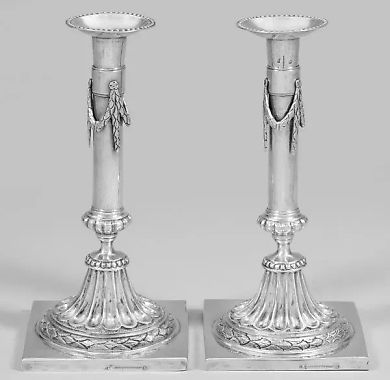
Lot No. 13175 Candle holders
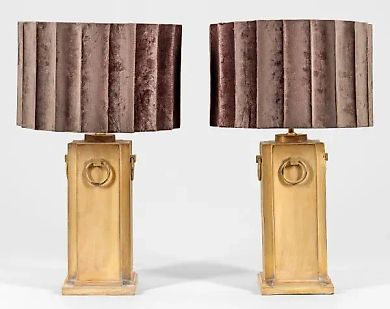
Lot No. 13103 A pair of French gilt wood table lamps.
Lighting fixtures
★★
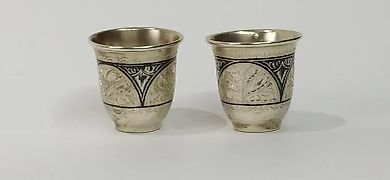
Lot No. 12675 Shot glass 2 pcs Silver
Kubachi
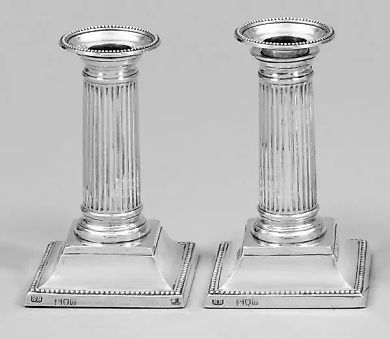
Lot No. 14497 A few tabletop candle holders.
Samuel Smith (Samuel Smith)
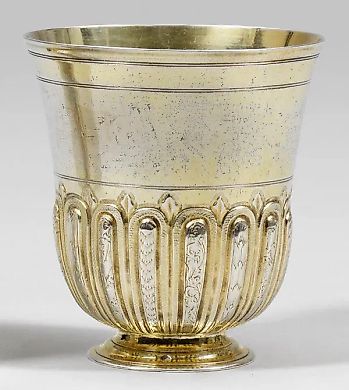
Lot No. 13147 Silver Cup

Lot No. 12832 Beautiful Glassware, 2 pcs, Kubachi
Kubachi
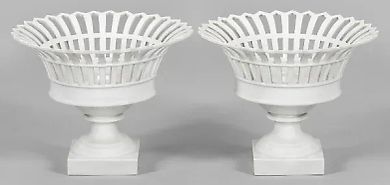
Lot No. 14196 A pair of baskets
KPM (Knallegårdens E.B. Design)
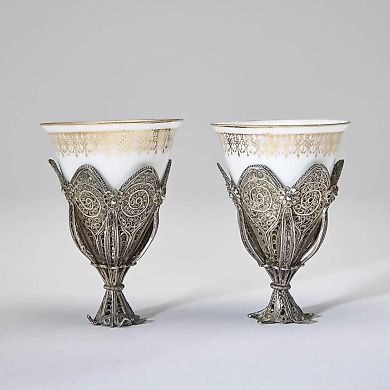
Lot No. 16023 Kuznetsov Factory in Dulevo: two sorbets for th…
Kuznetsova M.S. society
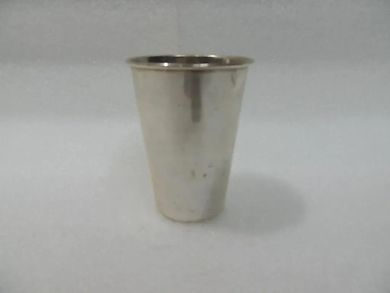
Lot No. 12835 Glass