
Kuznetsov porcelain
The topic we are discussing today concerns many art enthusiasts—how to satisfy one's desire to acquire antiques when the wallet doesn't allow it. Dreams of rare and beautiful old trinkets often clash

The topic we are discussing today concerns many art enthusiasts—how to satisfy one's desire to acquire antiques when the wallet doesn't allow it. Dreams of rare and beautiful old trinkets often clash with the reality of high prices, which cast doubt on the possibility of acquiring them. We've all heard about amazing finds at flea markets or vernissages, but many of us have already realized that such myths are nothing more than fairy tales. So how can one reconcile these conflicting desires?
Введите подпись
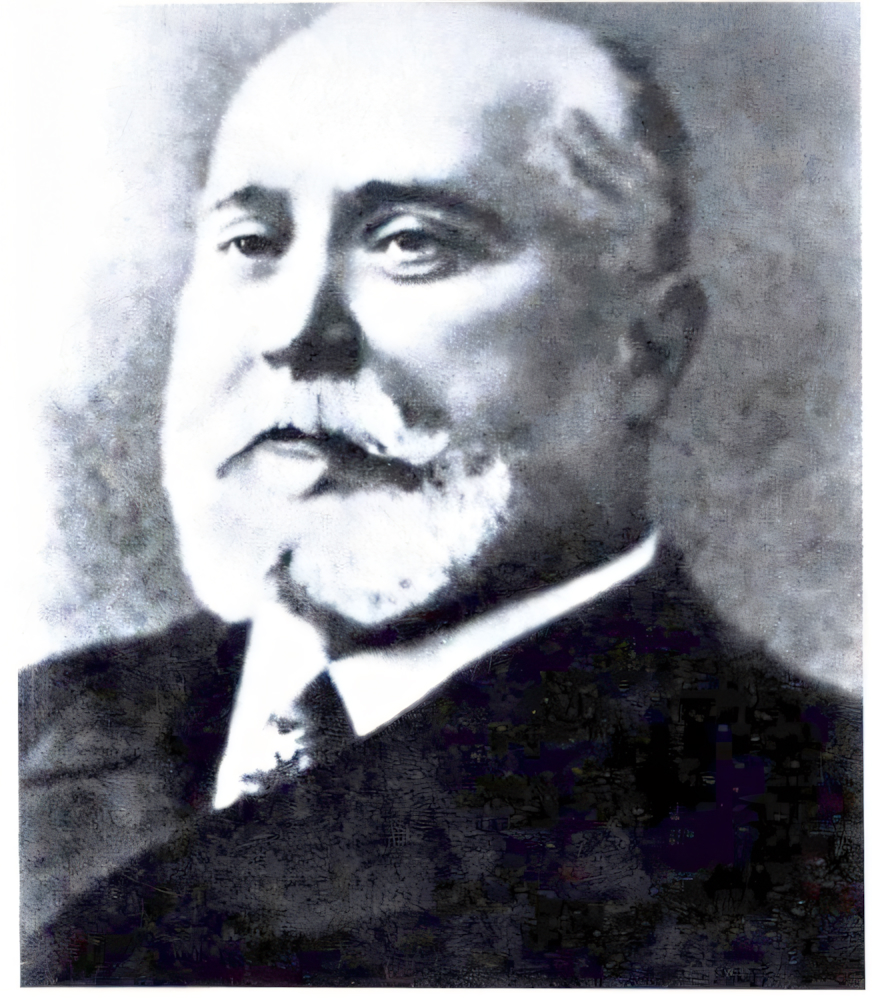
Matvei Sidorovich Kuznetsov (1846 - 1911)
I have one practical solution for those who live in search of antique porcelain and faience. It's a simple and accessible method that can help many collectors without dealing too heavy a blow to their budgets. I recommend paying attention to the products of the M.S. Kuznetsov factory.
First, it's worth noting that there are still very many such items on the antique market, and their price remains quite affordable. For example, antique porcelain and faience dinner sets can still be found at reasonable prices, offering an opportunity not only to expand one's collection but also to enjoy the search process.
Interestingly, many of my friends, especially those living in Moscow, have such antique items in their homes. When I asked them what antique items they had inherited, most could only name products from the Kuznetsov factory. And notably, many had no special feelings for these items and used them in daily life without considering their value. More than once, I have witnessed cups and plates being broken easily, which is because such things have always been part of their home and life.
Введите подпись
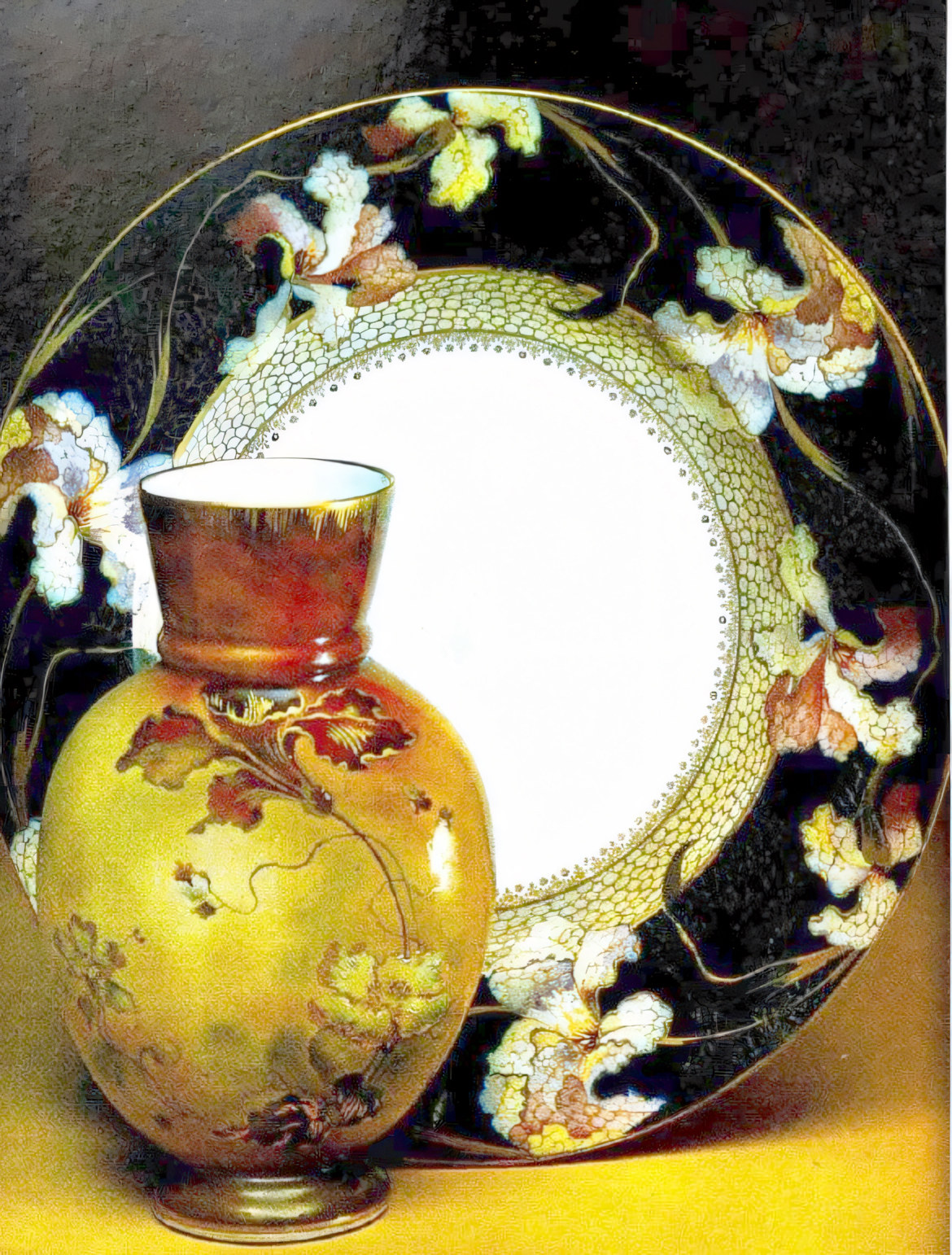
Vase and dish, early 20th century. "M.S. Kuznetsov Partnership"
Although many Kuznetsov items have been damaged, they should be viewed not merely as simple antiques but as objects holding historical value. Over the last three to four decades, these items have ceased to be perceived as something mundane and have even been rejected. Nevertheless, it's worth remembering that it is precisely due to the quality and variety of Kuznetsov's works that one can see true magnificence. Here, one can find not only exquisite cups but also interesting teapots, as well as butter dishes shaped like fruits and vegetables.
Let's turn our attention to the remarkable story of Matvey Sidorovich Kuznetsov, one of the outstanding figures in Russian porcelain production. This man was born in 1846 into an Old Believer merchant family living in the small village of Novokharitonovo, located near the famous Gzhel. Interestingly, his ancestors were also connected to industry, specifically porcelain production.
The founder of the dynasty was Yakov Vasilyevich Kuznetsov, who established an enterprise for the production of porcelain items at the beginning of the 19th century. Many researchers believe this happened in 1810 or 1812. Over time, the business was passed down from generation to generation, and by 1864, after his father's death, the eighteen-year-old Matvey inherited three factories. It is interesting to note that Kuznetsov managed to run them independently, demonstrating his abilities as a talented entrepreneur.
His affairs grew better and better each year. By 1889, Matvey had created a formidable monopoly of immense scale—the "M.S. Kuznetsov Partnership for the Production of Porcelain and Faience Ware," which had its board in Moscow. This partnership included factories from various cities: the Dulevo, Riga, Tver, Budyansky, and many others. The uniqueness of their activity lay in the fact that they ensured production with high-quality materials.
The Dulevo factory became the largest of them all. By the beginning of the 20th century, over 2,300 people worked there, and the factory's products received high praise not only in Russia but also abroad. Such success was linked to the use of top-quality raw materials and modernized production processes, including the prolonged storage of clay to enhance its plasticity.
Введите подпись
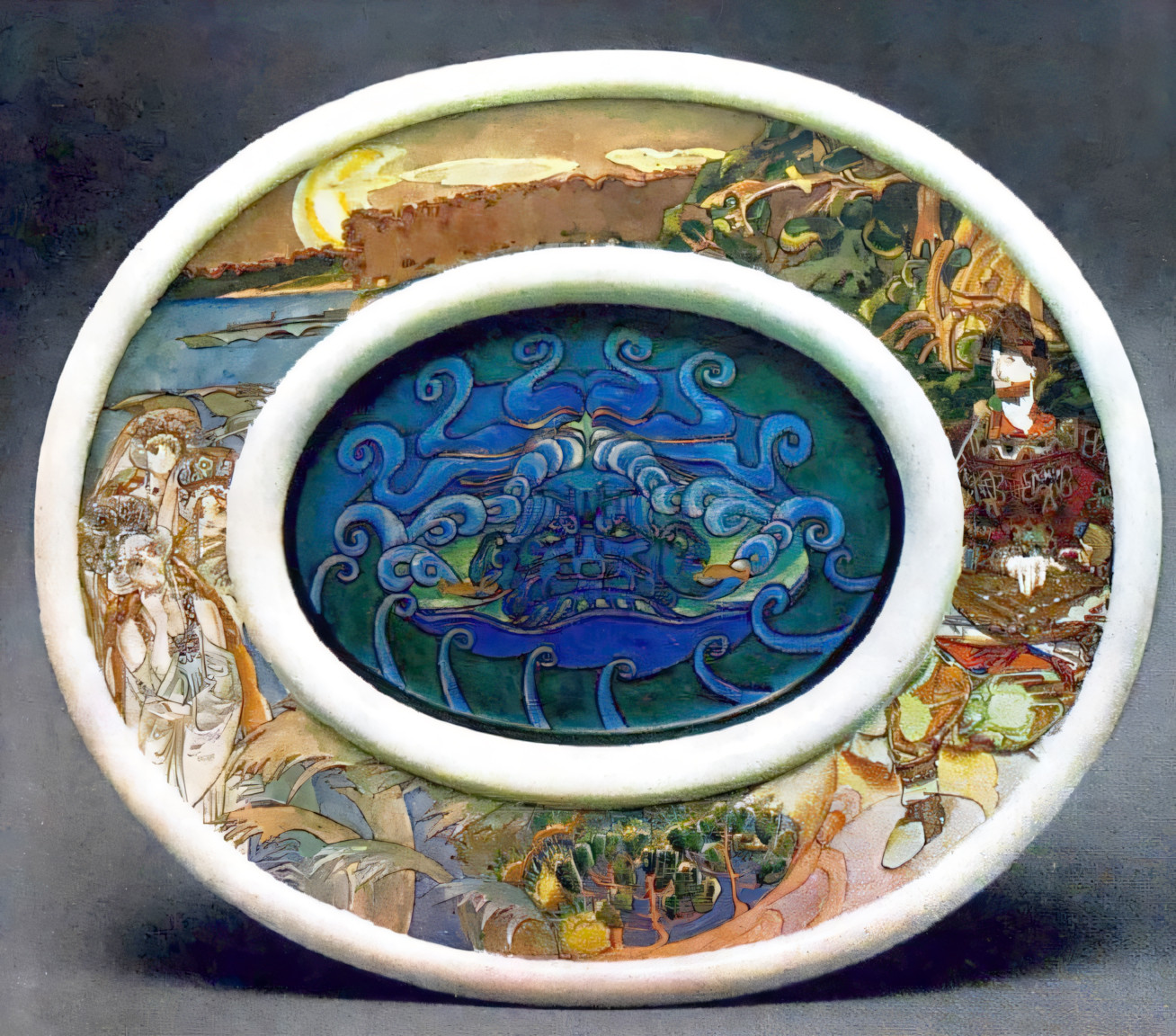
Dish "Sadko", early 20th century, painting by M. Vrubel, "M.S. Kuznetsov Partnership"
The Gardner factory, which Kuznetsov acquired in 1892, enjoyed no less success. This enterprise had an impeccable reputation and was among the best on the porcelain market. Kuznetsov managed to secure the rights to the factory models and designs, and thus new items began to enter the market utilizing innovative developments.
Furthermore, the "Partnership" actively expanded its boundaries, opening new factories and acquiring already well-known ones, such as the Auerbach factory in the Tver province. This allowed them to significantly strengthen their position, as the new factories were located close to clay quarries, solving the problem of access to necessary materials.
Production technologies also did not stand still. At the end of the 19th century, at the St. Petersburg Electrical Exhibition, Kuznetsov received recognition for introducing new methods in purifying porcelain paste from impurities. He implemented mechanical decoration, which replaced labor-intensive manual production, which, of course, increased speed and reduced costs. At the same time, ancient decorating traditions were still preserved: sometimes mechanical decoration was supplemented with hand-painting, making the products unique and diverse.
It is no wonder that renowned artists worked at Kuznetsov's factories. Their work on Kuznetsov's products became true works of art, which undoubtedly drew a parallel between artistic art and industrial production. Moreover, Kuznetsov invested in training young artists in art schools, thereby contributing to the development of art.
Kuznetsov not only built factories but also created an extensive trade network. The trading houses of his Partnership operated in the largest cities of Russia, and, importantly, his products became known beyond the country's borders. Kuznetsov's products were present at major Russian fairs and even reached the markets of Central Asia and Turkey.
By taking his business to an international level, Kuznetsov managed to create an example of successful management and commerce that could inspire modern entrepreneurs. How would events have unfolded if Kuznetsov had not taken risks and had not perceived his opportunities as conditions for growth? His story inspires and shows how a passion for art and entrepreneurial acumen can lead to greatness.
Confronted with such a history as the creation of a huge porcelain and faience production in Russia, many questions arise. How did it happen that this "empire" was able to produce up to two-thirds of all porcelain products in our country? Why do such works of art as Kuznetsov's products continue to remain in the spotlight?
Kuznetsov's porcelain tableware and porcelain figurines have become a true legacy, reflecting significant historical aspects of Russian culture. These items find their place in museums and become part of exhibitions on the history of Russian porcelain, confirming their importance and relevance. Discover the world of "Kuznetsovshchina"—perhaps this old tableware can tell you much more than you expected.
The political strategy aimed at meeting the needs of various social groups proved to be highly successful. Urban residents sought diverse and stylish porcelain and faience products, while the peasant market demanded more traditional and vibrant forms. M.S. Kuznetsov, a well-known entrepreneur, easily satisfied the demand of all segments of the population: from simple peasants to the nobility. This is emphasized in his famous late 19th-century catalog "Porcelain and Faience Products of the M.S. Kuznetsov Partnership," which contained over 1700 items of various dinnerware sets and objects. If one pays attention to the section dedicated to porcelain cups, their nomenclature alone would be enough to fill several pages. For example, the list included names such as: "French," "gubernatorial," "cuff-style," and many others. This is not only impressive but also makes one wonder: how many different approaches were there to creating seemingly uniform items.
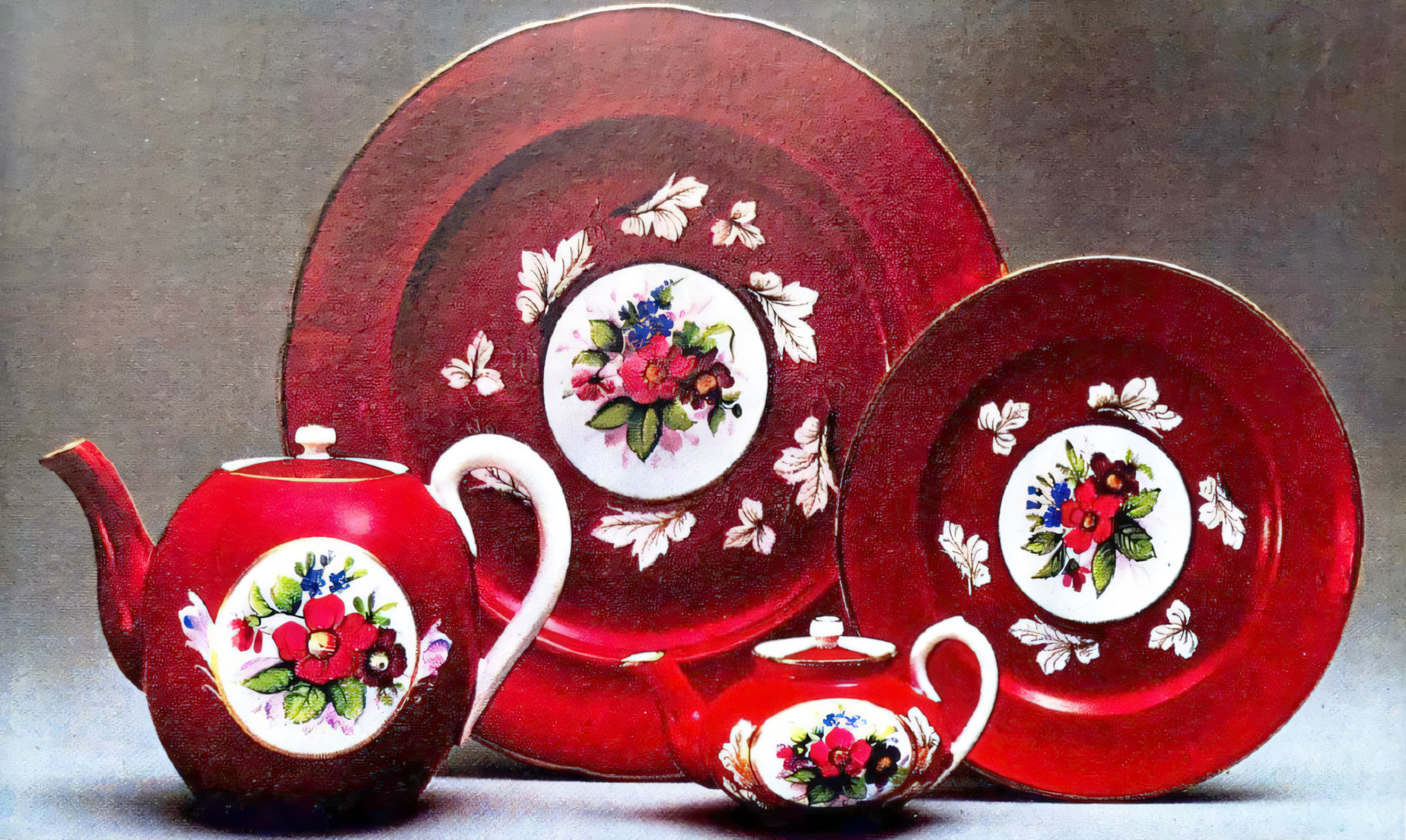
One of the main product groups was tavern ware. This type of product provided a decent income and was present in the assortment of most Russian porcelain factories, including the largest ones, such as Popov and Gardner. The forms of tavern ware remained quite stable, influenced by the traditions of Russian tea drinking, which did not introduce drastic changes to the standard set of tea utensils. However, the variety of its forms and the uniqueness of its decoration were astonishing. This applies, in particular, to "mushel" — medallions with floral ornaments that attracted attention with their bright design, all without a significant increase in the cost of the items.
With the development of mechanical decoration methods, tavern porcelain became even more accessible. This transition went unnoticed in this segment, as many hand-painting technologies had long since become part of the familiar automated process. Thanks to new methods using decals and stencils, factories achieved a previously unseen level of combining brightness and affordability in their products.
Введите подпись
Tavern Ware, Early 20th Century, "M.S. Kuznetsov Partnership"
In addition to the traditional assortment, the factories of the "Partnership" began actively mastering the so-called "Eastern goods." This process occurred against the backdrop of growing demand and the importance of Eastern trade in Russian foreign policy. By this time, the products of the Gardner, Popov, and Kornilov factories had already gained popularity among Eastern buyers. However, Kuznetsov was able to significantly increase supply volumes, offering a wide range of tableware, including traditional elements of Eastern culture — pialas, plov dishes, and even hookahs, as well as familiar Russian tableware: plates, cups, and teapots.
The decoration of Eastern tableware was quite diverse and took into account the colorful taste of buyers. They valued brightness and ornamentation, which often covered the entire surface of the items. For example, tableware for the Muslim East was distinguished by luxurious decoration, reminiscent of Eastern fabrics.
The Chinese style also brought success to Kuznetsov: many products sent to the homeland of porcelain had mechanical painting, as manual imitation of Chinese decoration was a difficult task. An interesting solution was the creation of the "Kashgar print," which combined mechanical and hand-drawing methods and gained great popularity in Asia.
As for tavern tableware, in demand on the Eastern market, it also featured decorations such as "mushel," "grape," and "poppy." The Muslim population of Russia, as well as buyers from Bukhara, Persia, and Afghanistan, preferred precisely such items. They often bore the coats of arms of the exporting country, adding cultural context to each plate and cup.
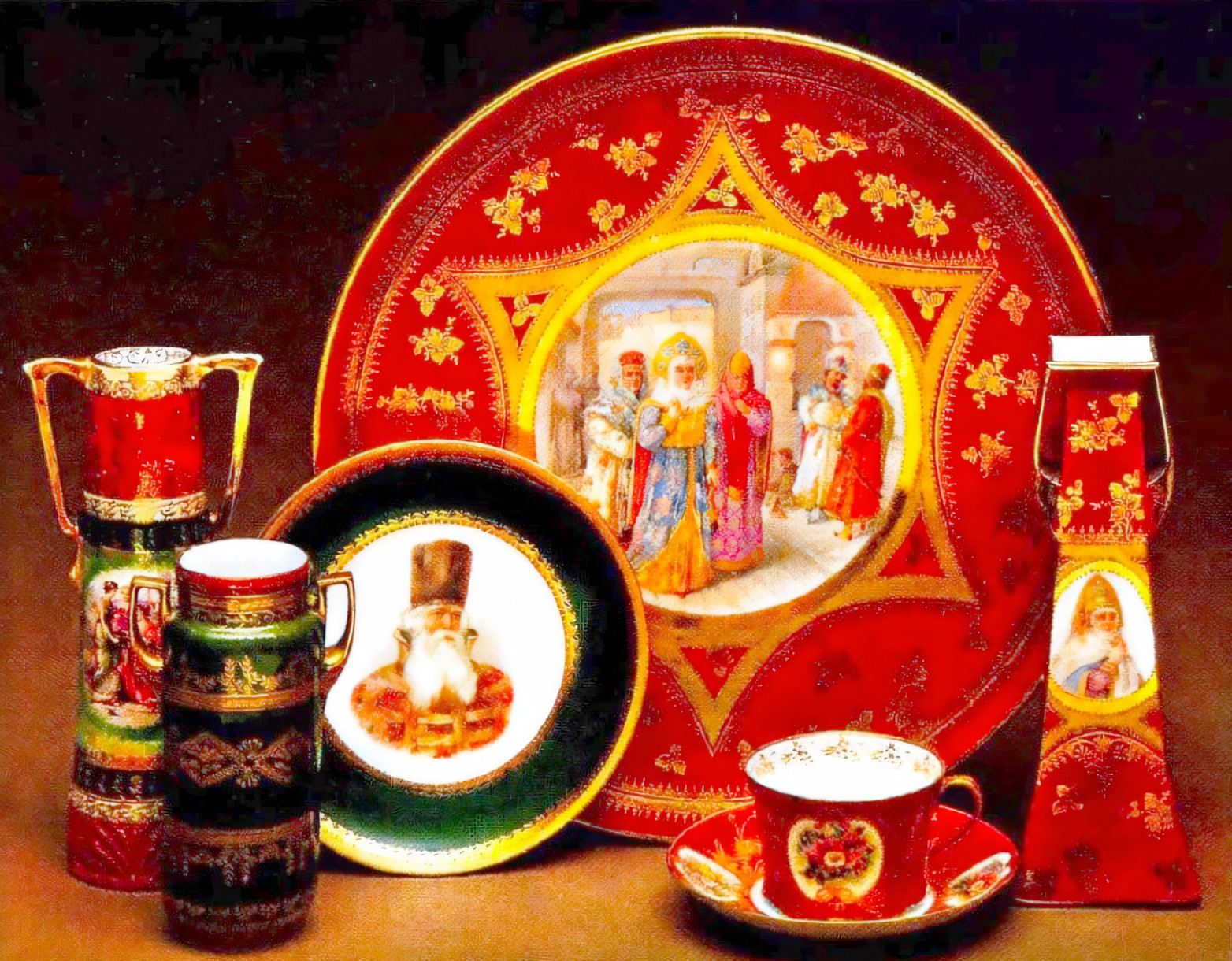
Введите подпись
"Boyar Series" 1913, "M.S. Kuznetsov Partnership"
An equally important point concerns the anniversary series produced by the factories of the "M.S. Kuznetsov Partnership." For example, in honor of the centenary of the victory in the Patriotic War of 1812, they prepared a special series depicting battle scenes. In 1913, during the 300th anniversary of the Romanov dynasty, the artists again turned to national history, creating a collection focusing on ancient Russian imagery. However, for the decoration, decals ordered from Germany were used, despite criticism regarding their quality.
Porcelain items have always attracted the attention of collectors, and among them, models made from green paste are especially popular. Bottles, vases, caskets, and trays decorated with elegant ornaments or figures of nymphs and naiads in white bisque hold an honorable place in the collections of many people.
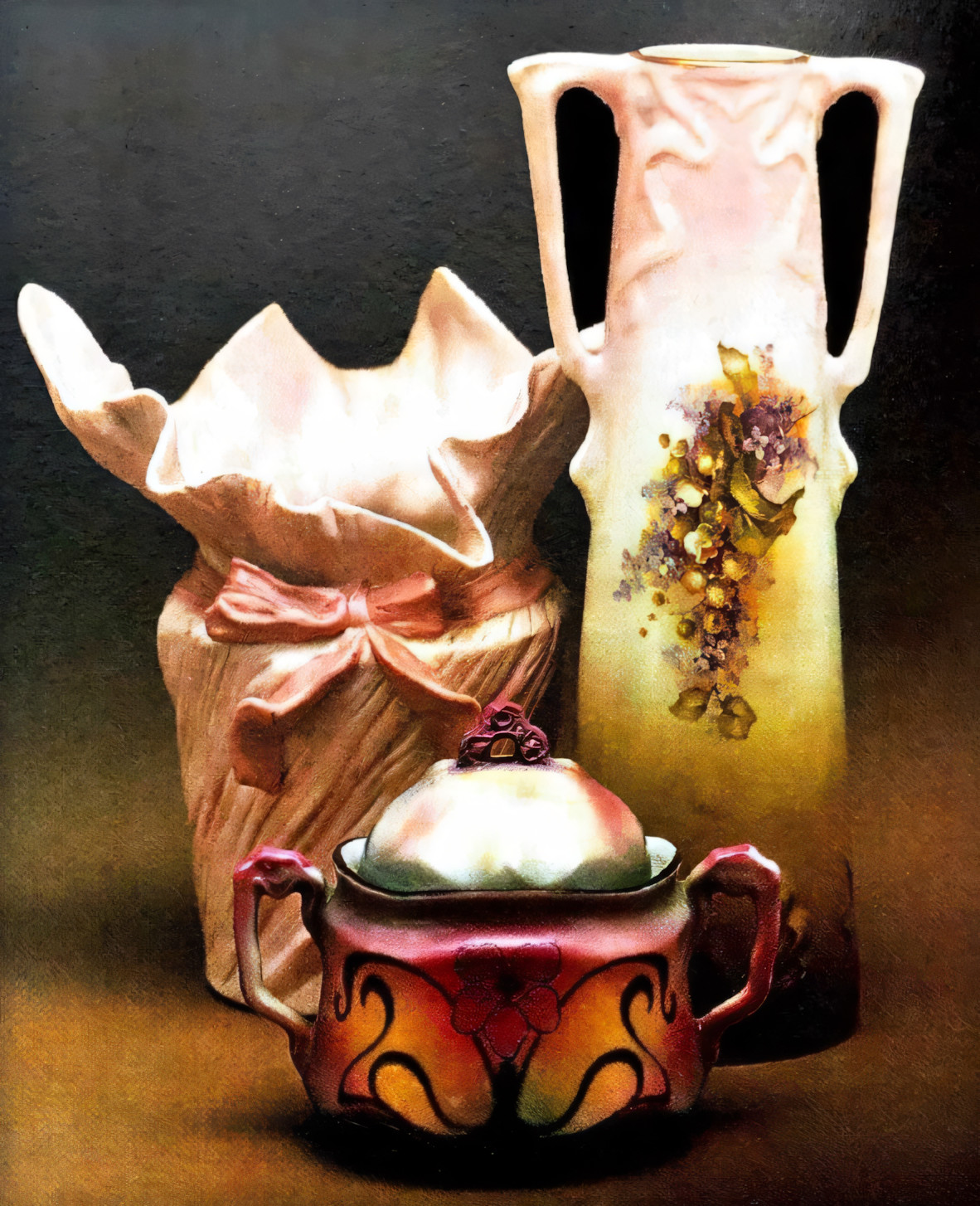
Введите подпись
Vases, "M.S. Kuznetsov Partnership," early 20th century
However, one of the most attractive objects for collectors are the figurines created at the Kuznetsov factory in the late 19th and early 20th centuries. These creations amaze with their diversity: from genre scenes to depictions of representatives of various peoples of Russia. The main material used for their production was bisque, perfectly suited for painting and creating expressive details.
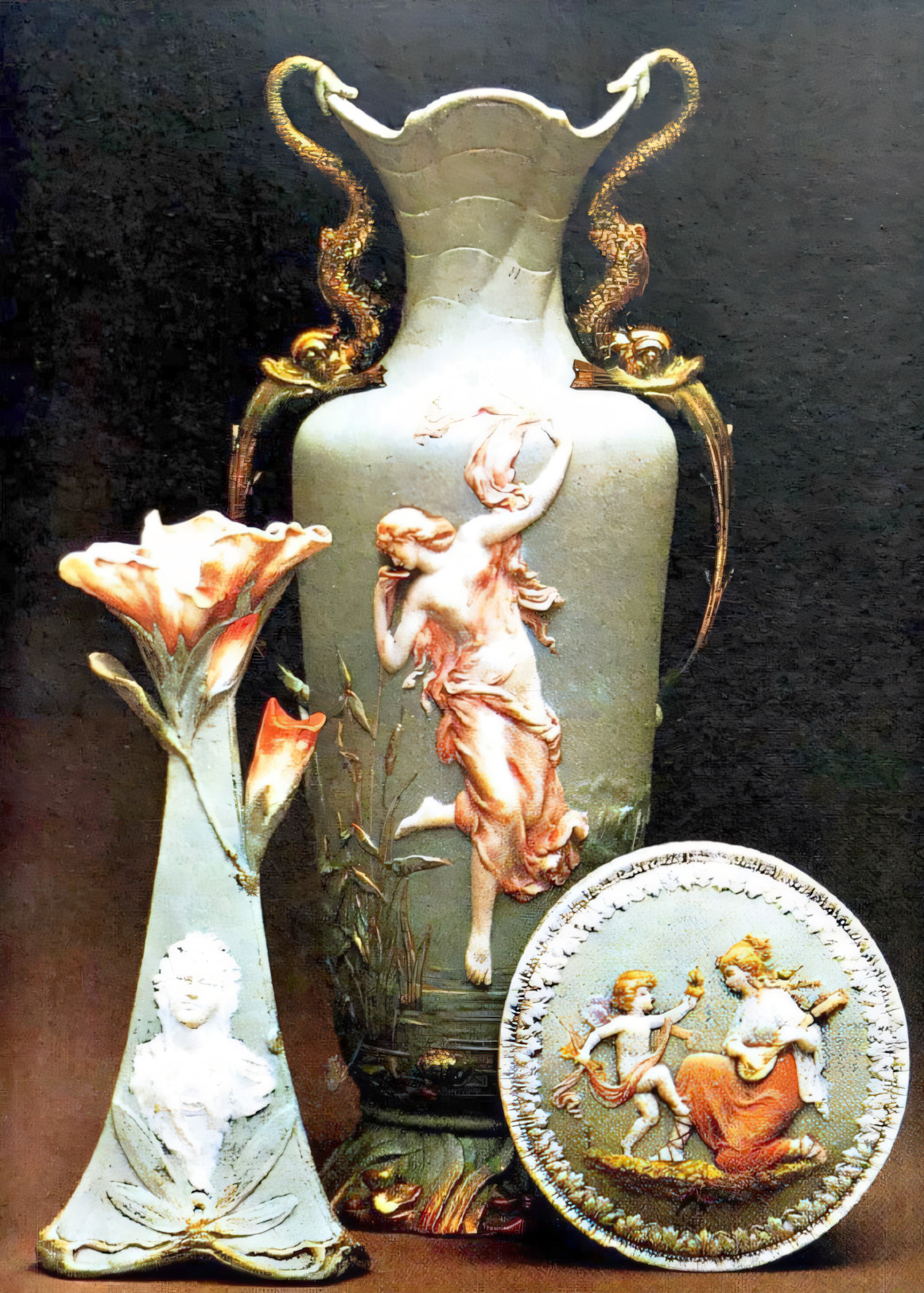
Введите подпись
Vases, "M.S. Kuznetsov Partnership," early 20th century
Characteristic products of the Kuznetsov factory, such as oil dishes, inkwells, and boxes, were often made in the shape of baked goods—buns, kalaches—as well as various fruits and vegetables, including exotic ones like pineapple and asparagus. This is connected to the trends of that time, when interest in natural forms grew. One can also find original imitations of metal and wood, materials traditionally used—for example, cast-iron pots, small samovars, and woven baskets. Particularly popular are caviar dishes made in the form of sea creatures—crayfish, crabs, and fish—which to this day evoke admiration from collectors.
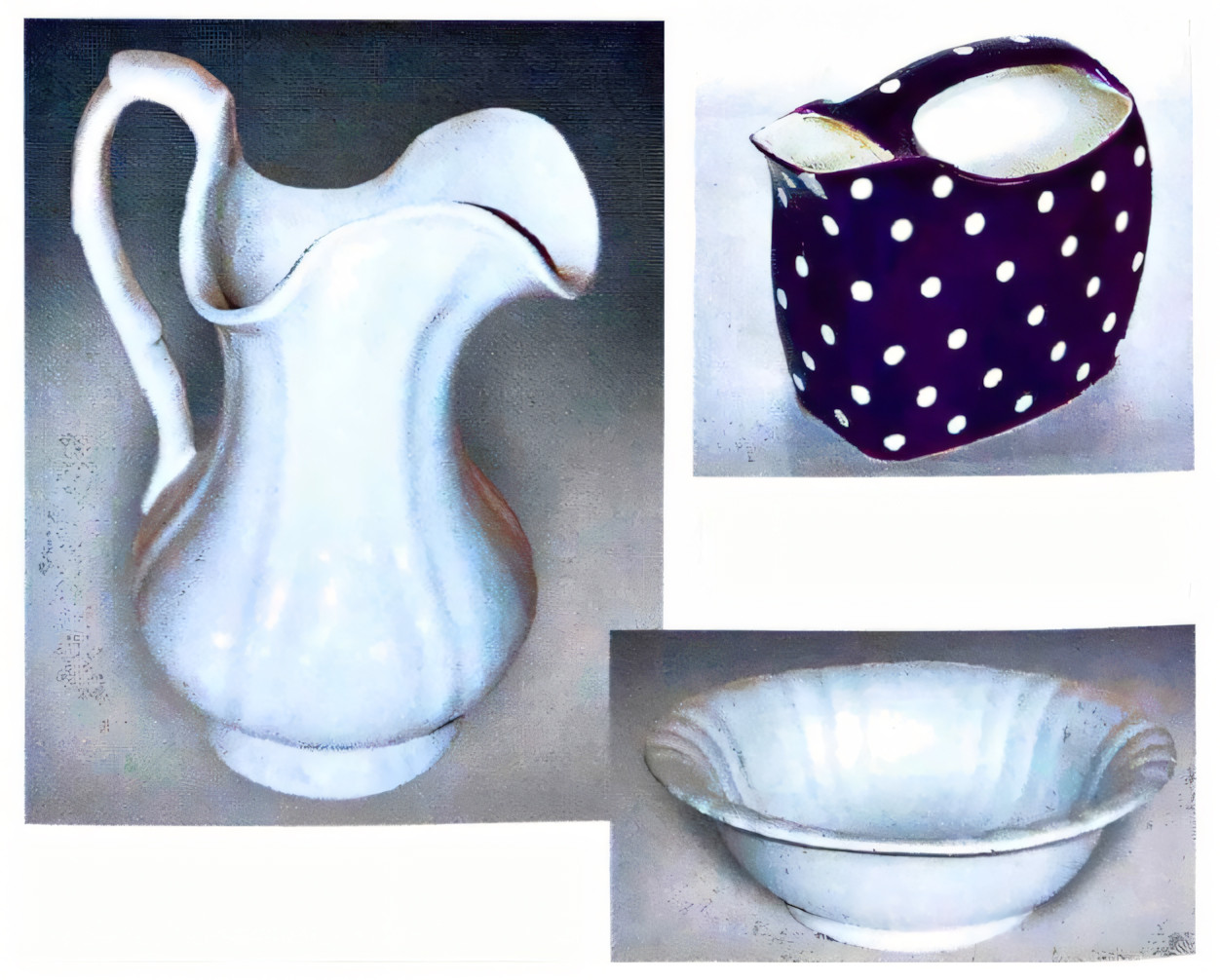
Введите подпись
Jugs and wash basin, "M.S. Kuznetsov Partnership"
Each of these groups of items represents an interesting object from both an artistic and a historical point of view. For collecting them, it is important to consider not only aesthetic but also historical and cultural aspects. In particular, evaluating mass-produced artistic porcelain from the late 19th and early 20th centuries requires a special approach, especially when it comes to the products of the "M.S. Kuznetsov Partnership".
Their products became iconic not only due to their quality and variety but also thanks to successfully overcoming fierce market competition. Interestingly, this partnership managed to create a bank of unique products capable of satisfying the tastes of the most diverse strata of Russian society.
Введите подпись
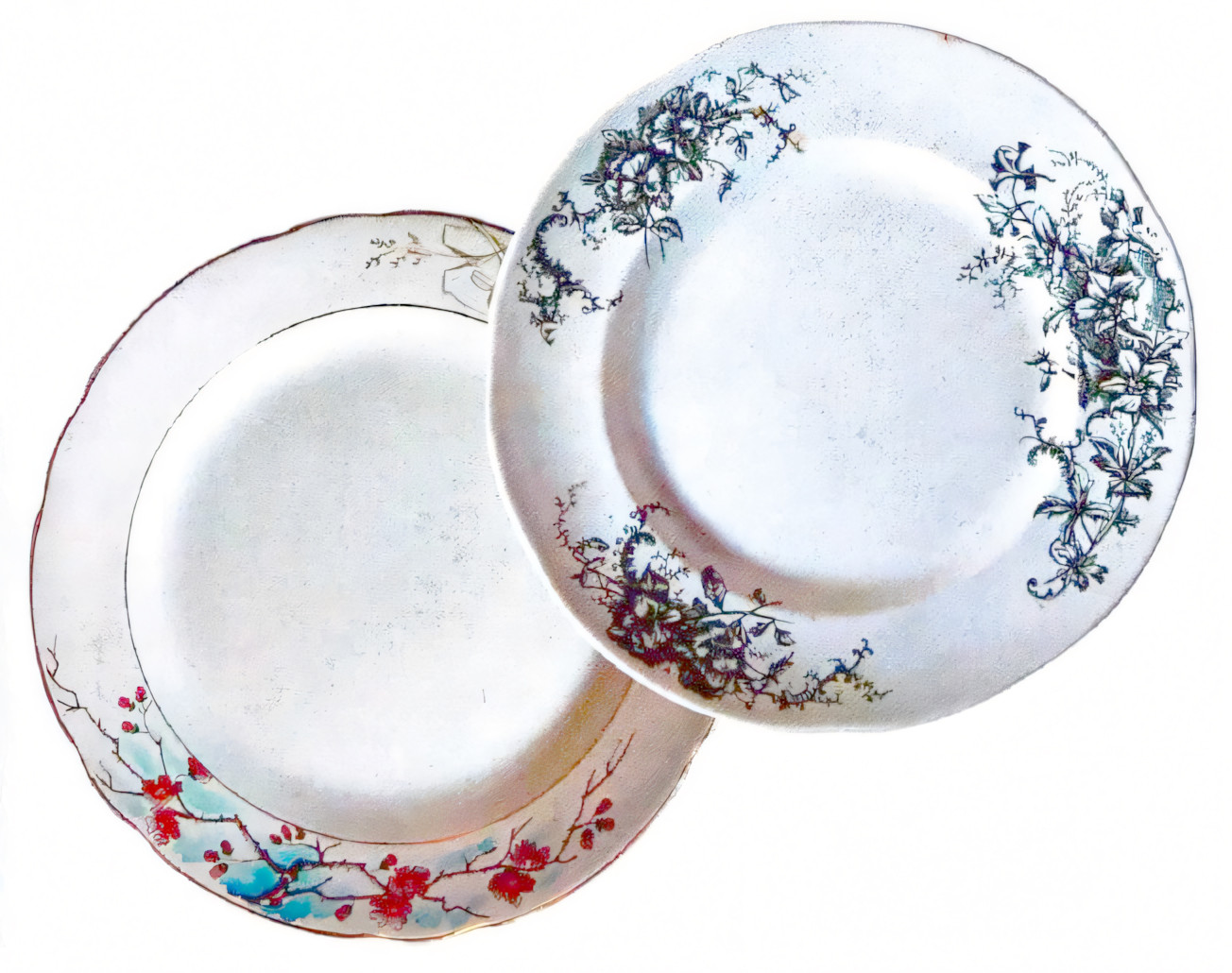
Plates "M.S. Kuznetsov Partnership"
The process of attributing these items fills collecting with fascinating content. Kuznetsov porcelain marks occupy an important place in catalogs, such as "Porcelain and Faience of the Russian Empire" by A. V. Selivanov or "Marks of Russian Porcelain 1744—1917" by R. R. Musina. These publications become real guides to the world of artistic porcelain, allowing one to delve into the history and value of each individual item.
What do you think makes Kuznetsov porcelain so attractive to collectors? Is it merely the external facade, or is it deeper, in the history and art contained within each item?
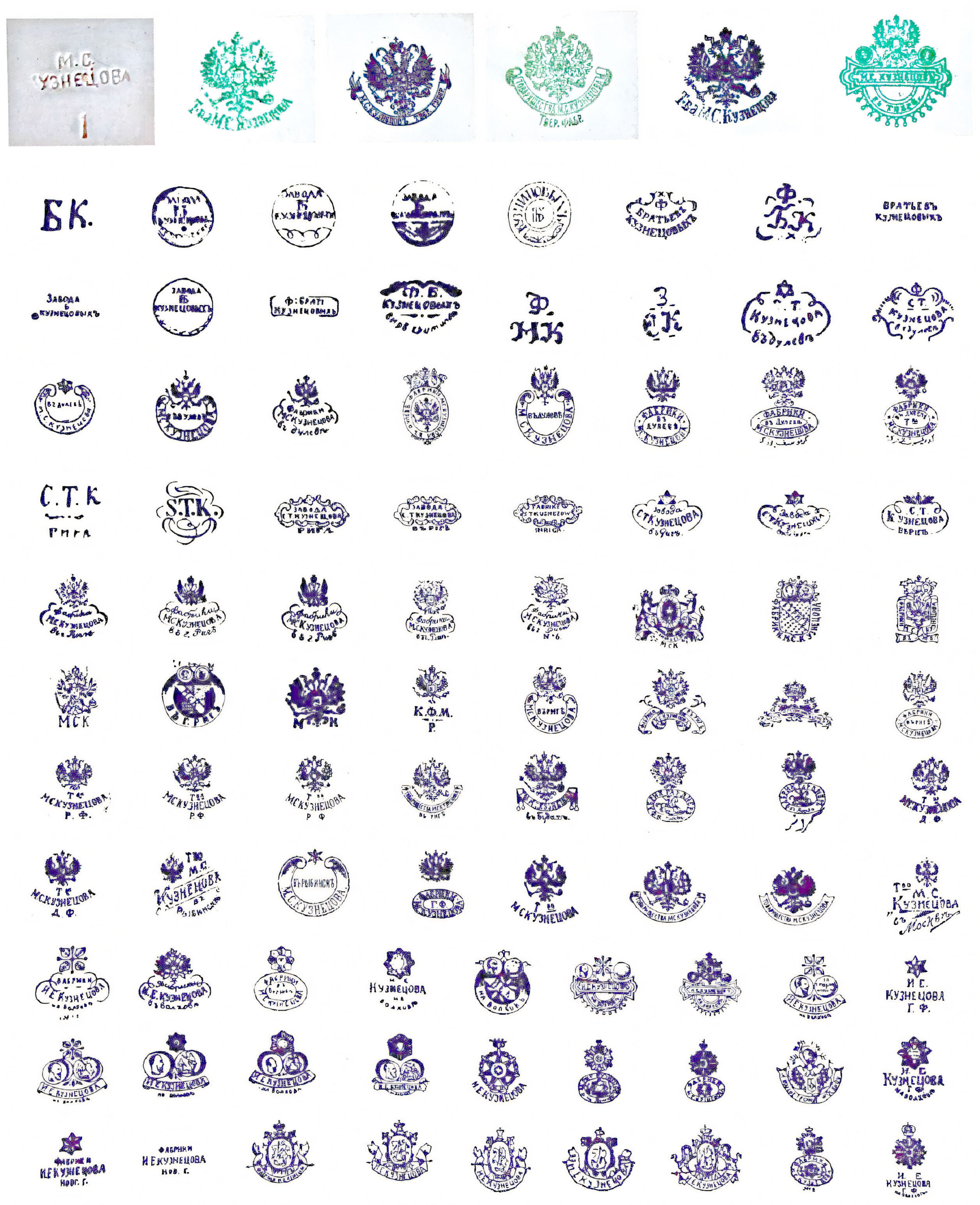
In the world of Russian art, there are many unique and fascinating objects, among which the products of the famous master M.S. Kuznetsov hold a special place. However, when buying porcelain or ceramics of this brand, collectors may encounter certain difficulties. An important point is the marking of the products. In the history of the Kuznetsov factory in Dmitrov, for example, the use of the Gardner mark is found, which was on most of the works. At the same time, there was also a Kuznetsov mark with the letters "D F," which meant "Dmitrov Factory."
Введите подпись
Marks on Products from the Factories of M.S. Kuznetsov
However, they often went on sale without a mark, which was related to commercial practice. This lack of marking particularly concerned what was referred to as "Eastern goods." Porcelain items made to order could also be without a mark or bear the mark of the "Partnership." In some cases, the marking was limited only to the language of the exporting country, which created additional difficulties for researchers.
Let us give a vivid example: Eastern goods were often marked with the Gardner mark, despite being produced in Dulevo, not at the actual Dmitrov factory. Moreover, there were cases when a batch of porcelain for the Eastern market was marked with Persian signs and the inscription "London." What, then, is the position of the modern collector if even items bearing his mark could be forgeries? Should one fear making mistakes when purchasing? But there is no need to worry: most likely, Kuznetsov himself did not allow his products to be counterfeited, so one can feel confident with the marks of the factories of the "Partnership."
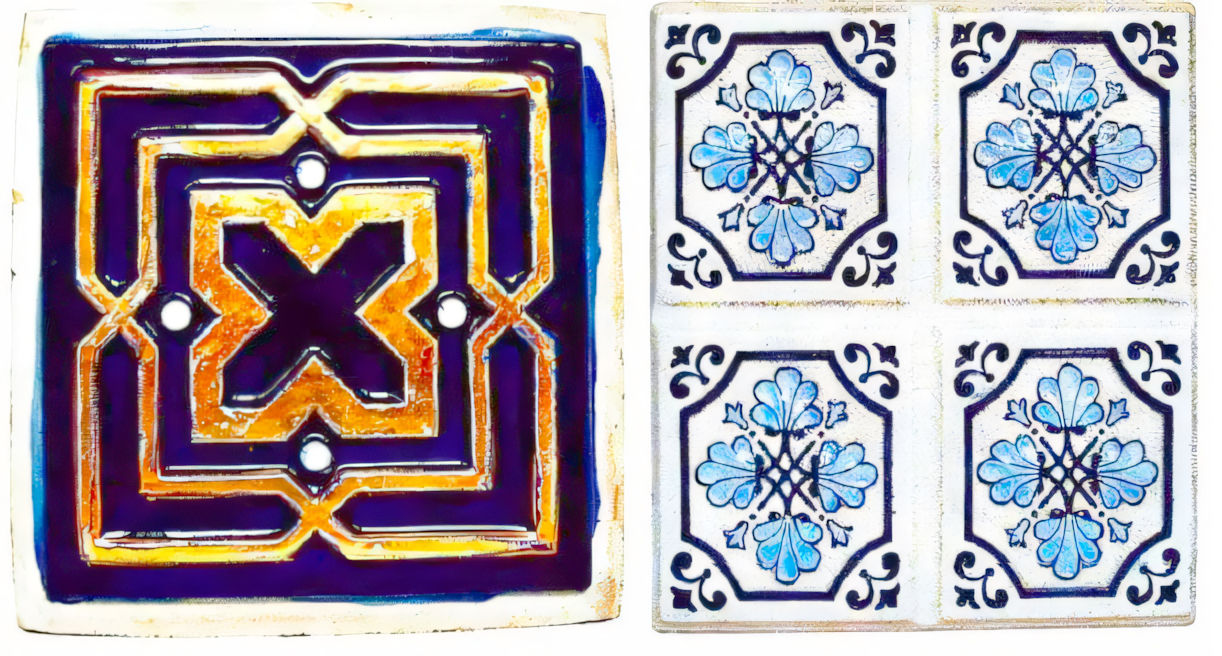
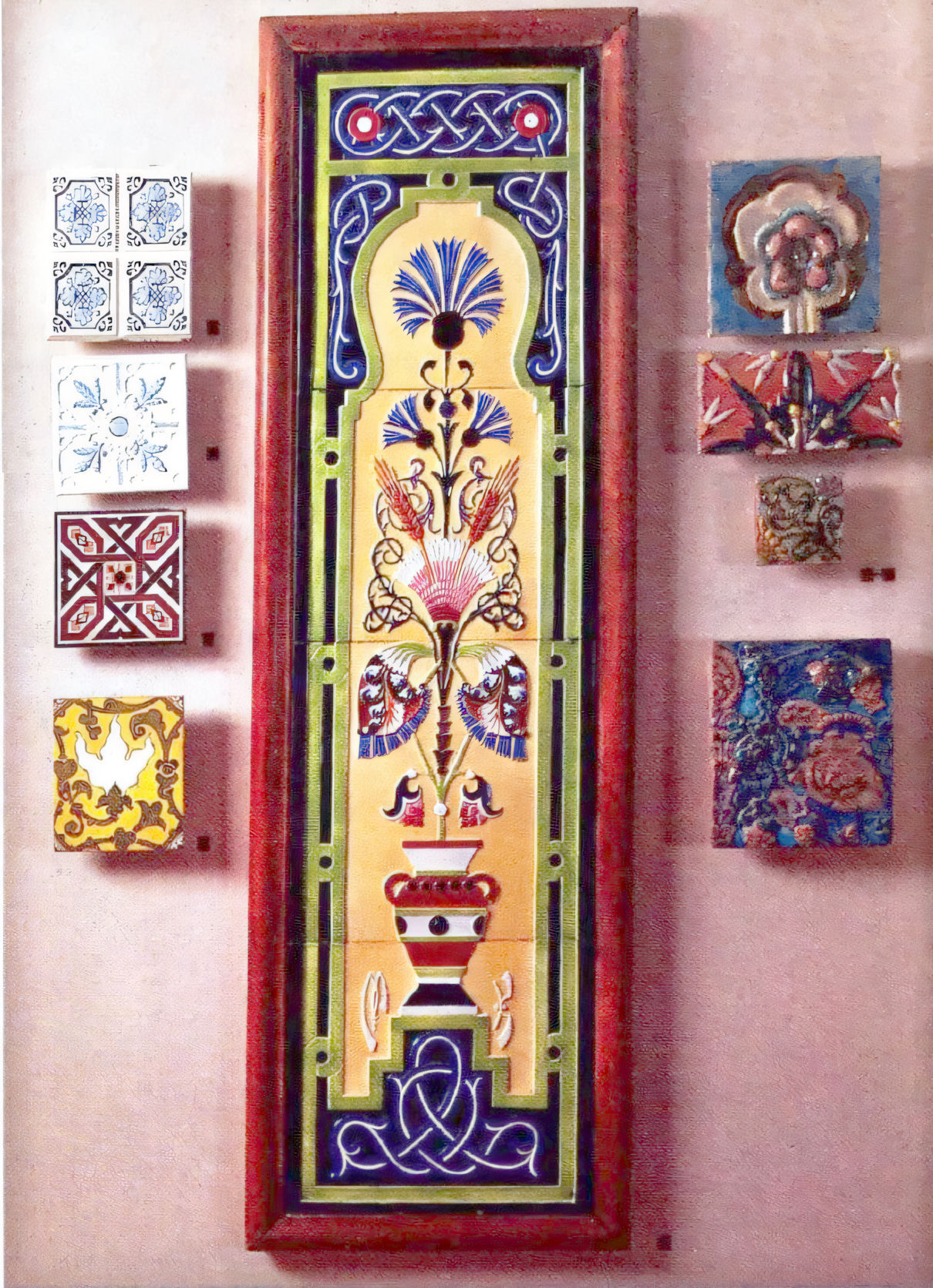
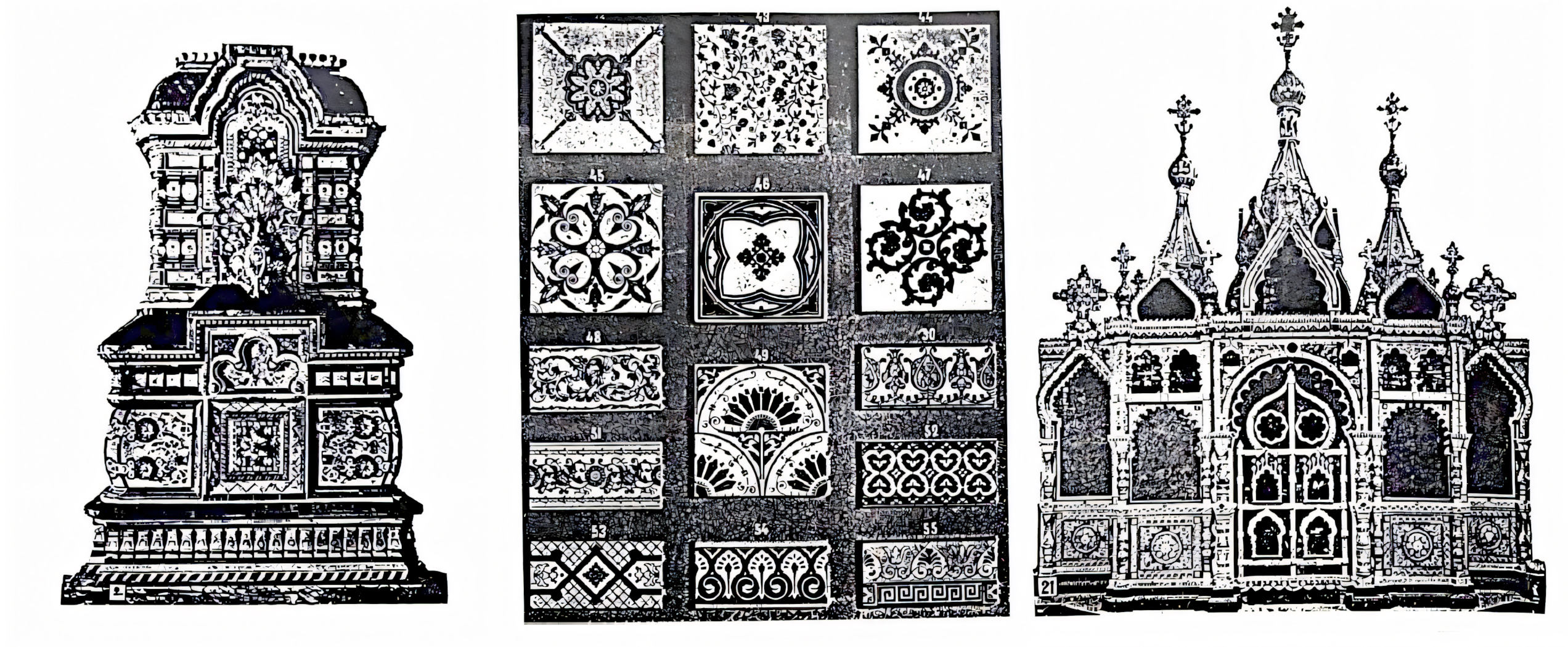
In addition to traditional tableware, Kuznetsov also offered another product line that is beginning to attract collectors' interest – tiles. Although the production of architectural ceramics was significantly smaller in scale than porcelain and faience production, the assortment was quite diverse. In 1899, the "Catalogue of Maiolica Fireplaces, Stoves, Stove Tiles, Wall Cladding Tiles, Iconostases, and Kiotas" of the "Partnership" presented 18 stoves and fireplaces, as well as individual tiles and slabs. Today, museum workers eagerly collect these items. For example, in the "Kolomenskoye" museum, one can see two panels from the house of M.S. Kuznetsov himself, as well as several stove sets and tiles that impress with their high quality. Each item bears the mark "M.S. Kuznetsov" and serves as proof of craftsmanship.
Введите подпись
Stove Tiles "Partnership of M.S. Kuznetsov"
At the turn of the 19th and 20th centuries, tiles from the "Partnership" were sold en masse throughout Russia. They could be purchased in major cities such as St. Petersburg and Moscow. In the capital, the wholesale warehouse was located on Solyanka, and retail outlets were on Petrovka and Sofiyka. It is especially noteworthy that the historical building that once housed the "Partnership" store on Myasnitskaya Street still delights Muscovites today, offering porcelain and faience. Mentions of a major renovation of this unique building, designed by the famous architect F.O. Shekhtel, remain in old newspapers.
But let's return to the most interesting part: the ceramic iconostases produced by the "Partnership." The use of ceramics for creating iconostases was a rather rare phenomenon. Russian art remembers only a few unique examples — for instance, the 17th-century iconostases in the Resurrection Cathedral of the New Jerusalem Monastery.
In the 19th century, attempts were made to create porcelain iconostases at other factories, but they never managed to achieve the desired success. The reasons were obvious: the need for modern technologies ensuring high quality at all stages of production, as well as the cost of the product, which required proper market promotion.
The factory of M.S. Kuznetsov in the village of Kuznetsovo (Konakovo) in Tver Province turned out to be the only one capable of realizing the idea of creating ceramic iconostases on the necessary scale. This hereditary manufacturer, possessing modern equipment and qualified personnel, carried out successful attempts at producing these complex items.
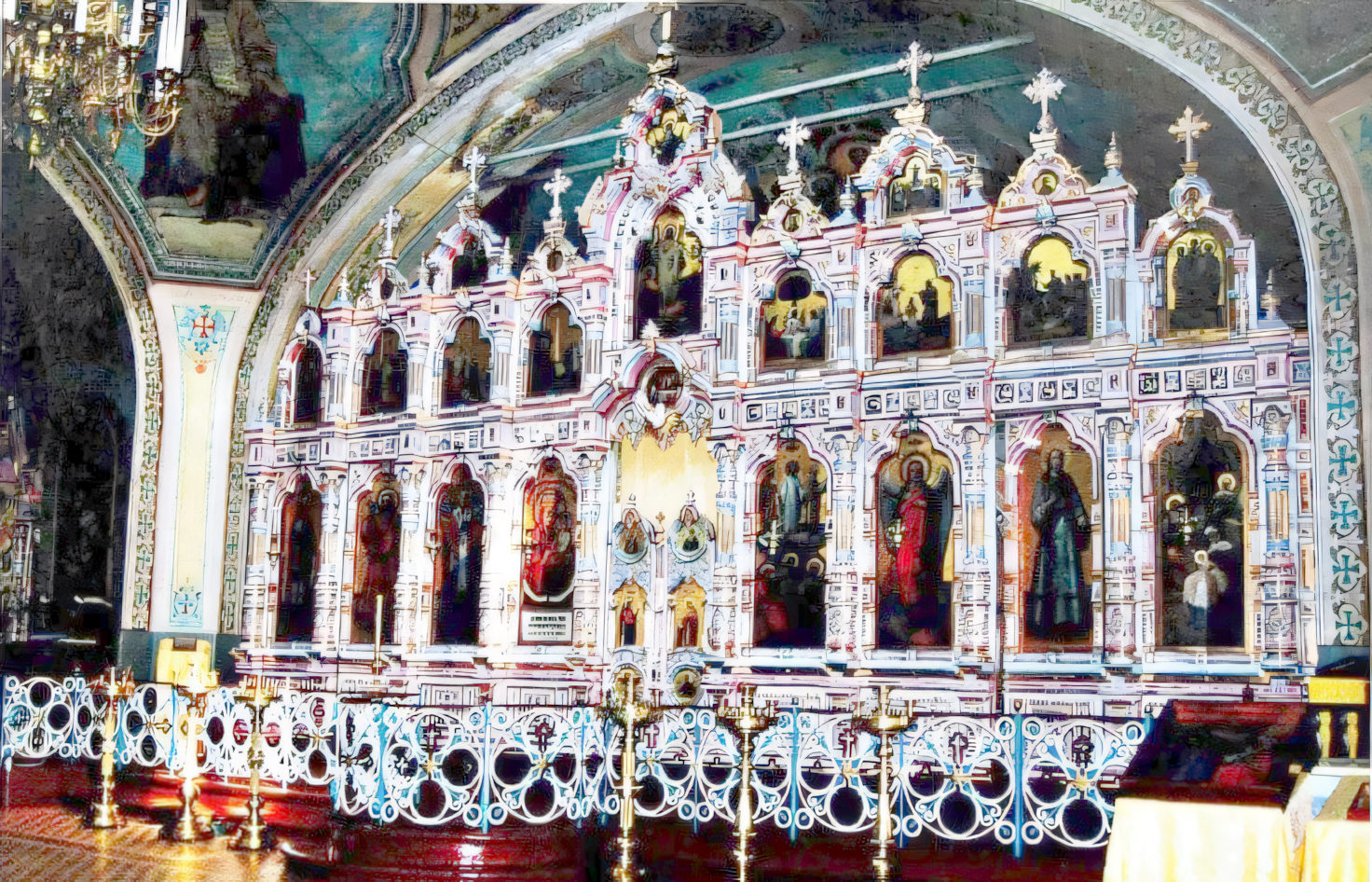
The ceramic iconostases that have survived to our time confirm their high quality and artistic value. For example, three iconostases and a kiot are located in the Church of Archangel Michael in the settlement of Mordovo, Tambov Oblast, and three in the Church of the Resurrection of Christ in Zimovenki, Belgorod Oblast. Other churches are also not left out, preserving these unique works of art in their architectural appearance.
Введите подпись
Ceramic pano with the initials "M.K."
As you can see, the work of M.S. Kuznetsov continues to attract collectors and researchers, drawing them deeper into the world of Russian porcelain. Who knows what other secrets are hidden behind his creations? It is only important to remain attentive and unbiased to discover for oneself the amazing world of art.
Ceramic iconostases represent an important element of Russia's architectural heritage, and their number was once significantly greater than commonly believed. They could adorn churches in almost every corner of the country. Research shows that today about seventy churches are known where such iconostases were located. This tradition was quite widespread, and often not single specimens were ordered, but entire sets corresponding to the number of side chapels in churches. Semi-faience kiots and candlesticks were also part of these orders. The first experience in creating ceramic iconostases dates back to 1895, when the first such orders were completed for the Church of the Intercession of the Theotokos in St. Petersburg and the New Athos Monastery in Abkhazia. In the following two years, churches such as St. Panteleimon in Yessentuki and the Epiphany Church on Gutuevsky Island were added to this process.
Введите подпись
Stove, tiles, kiots, iconostasis
It is important to note that the "Partnership" responsible for the manufacture also undertook full obligations for delivery, installation, and rectification of possible defects. A warranty on their products was guaranteed, which underscored the trust and high level of production.
Interestingly, the height of the iconostasis could range from one to five tiers, and the time required for their production varied from 12 to 15 months. Assembling a single-tier ceramic iconostasis required nearly five hundred parts, while a two-tier one required from one thousand to one thousand two hundred. For larger specimens, the number of parts could reach two thousand! All this demands incredible precision and skill, and it was the well-thought-out assembly mechanism that played a key role. The structure consisted of three parts, starting with ceramic masonry on mortar, then with fittings on a metal frame for strength, and concluding with wooden cladding that provided overall rigidity. The traditional color palette included blue or turquoise, pink, gold, and white.
Currently, three faience iconostases have been restored in the Urals at the Exaltation of the Cross Cathedral of the Verkhoturye St. Nicholas Monastery. This project resulted from the work of architects V.I. Siminenkov and M.V. Vinnitsky, who in 2000 received the Governor of Sverdlovsk Oblast award for their achievements. The advantages of faience iconostases are obvious: they are easy to clean, retain their gilding for a long time, and damaged elements are easily replaced. Modern technology significantly improves the production process, from design and computer modeling to the installation of finished products.
Not far from our time are the achievements of Kuznetsov, presented at the 1900 World's Fair in Paris. The iconostasis decorated by his workshop was awarded a prize, reaffirming its recognition. By that time, Kuznetsov's name was already known at several exhibitions where he received gold medals, including such important events as the St. Petersburg Manufacture Exhibition and the Moscow Polytechnic Exhibition. International awards attested to the high quality of his products, highlighted by the Grand Prix at exhibitions in Reims in 1903 and Liège in 1905. Particularly significant were the awards he received for participation in the Paris exhibition—including the Knight's Cross of the Legion of Honour for outstanding contributions to art.
Введите подпись
Iconostasis in the Church of the Transfiguration of the Lord in Zheleznodorozhny
Kuznetsov was known not only as an industrialist but also as a man actively involved in charitable work. His outstanding merits included aid to wounded and sick soldiers and support for children's shelters. In 1893, he received gratitude from the Committee of the Society for Diligence for his care of the poorest residents, and the Ministry of Public Education awarded him for his generous donations to the development of education. Matvei Sidorovich Kuznetsov died in 1911 and was buried in the Rogozhskoye Cemetery in the family tomb, which, unfortunately, has not survived. His descendants scattered to various corners of the world, but some time ago, researchers I.I. Sergeenko and U.V. Tuman dedicated their work to studying his unique life and labors.
It is important to note that Kuznetsov's legacy continues to live on. The factories, once part of his "Partnership," still operate today, producing goods that are firmly rooted in folk culture. Kuznetsov's porcelain and faience have become symbols of national style and luxurious aesthetics, preserving many traditions of handcraft that were relevant in the 19th and early 20th centuries. Elements of this style merge with modern production methods, becoming an integral part of the historical fabric of our art.
It should be noted that the task of recreating a complete picture of the development of the porcelain industry in Russia is impossible without considering Kuznetsov's legacy. This understanding will likely help collectors and researchers to more deeply appreciate the significance of his contribution. The antique market already demonstrates a growing interest in Kuznetsov's pieces, confirming their value and importance in our cultural history.