Frank Auerbach (1931–2024)
144Nov. 14, 2024
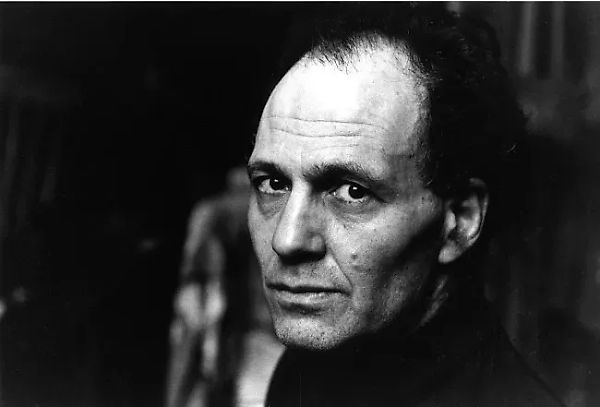
German British painterFrank Auerbach, known for thickly impastoed heads, figures, and landscapes that are as blazingly revelatory as they are darkly impenetrable, died in London on November 11. He was ninety-three. Consumed from a youthful age with a desire to paint, Auerbach limned a tiny world—that just outside the doors of his Camden Town studio—with a fierce repetitiveness. He hewed to a fearsome work ethic, painting seven days and five nights a week, famously vacationing just one day a year, frequently to the coastal town of Brighton. A member, alongside Leon Kossoff, Lucian Freud, and Francis Bacon, of the London School, he influenced contemporary painters including Cecily Brown, Tom Philips, and Jenny Saville. “Everything I finish has been a surprise, not what I intended or hoped for,” he toldtheFinancial Timesearlier this year. “It’s when you’ve run out of conscious things, something takes it over, and one has done something that can stand up for itself.”
Frank Auerbach was born to Jewish parents on April 29, 1931, in Berlin, as the Nazi regime was tightening its grip on Germany. In 1939, his father, a patent lawyer, and mother, a former art student, sent him to England while they remained behind, dying in Auschwitz in 1942. By the time he learned they had died, “I had more or less forgotten them,” the painter toldThe Guardianin 2001. Auerbach attended the private Bunce Court School in Kent, where he displayed an aptitude for art and drama. At seventeen, he won a small part in the Peter Ustinov playHouse of Regretsat the Unity Theatre in London, but he soon turned the entirety of his gaze to art, studying at St. Martin’s School of Art from 1948 to 1952 and at the Royal College of Art (RCA) from 1952 to 1955. Crucial to his development were his studies, undertaken alongside Kossoff, with Vorticist painter David Bomberg, whose classes at London’s Borough Polytechnic he attended from 1947 until 1953.
Following his graduation from the RCA, Auerbach supported himself first by teaching at secondary schools and then at colleges, eventually landing at the Camberwell School of Art, where he taught one day a week through the mid-’60s. He had his first solo show in 1956 at London’s Beaux Arts Gallery, where he would show regularly until 1965, when he switched to Marlborough Gallery, exhibiting at its London and New York outposts into the next millennium. His early works and those made recently depicted the same people and places that fascinated him for sixty-plus years: a small circle of lovers and friends, and the vistas they might encounter between the Mornington Crescent tube station and his studio.
Chief among Auerbach’s lasting subjects were his much older cousin Gerda Boehm, who supported him during his early post–Bunce Court days; his wife, Julia Wolstenholme, a fellow student at the RCA; the couple’s son, Jacob; professional model Julia Yardley Mills; Estella Olive West, a widowed actress nearly twice his age, with whom he had more than one affair; and his good friend Kosloff. Many of his canvases of the 1950s and early ’60s were stormily dark, leaden with puckered strata of paint, so heavy they were challenging to hang. Critics were divided. “These paintings reveal the qualities that make for greatness in a painter—fearlessness; a profound originality; a total absorption in what obsesses him; and, above all, a certain authority and gravity in his forms and colors,” trumpeted David Sylvester in a review of Auerbach’s first solo show. “The technique is so fantastically obtrusive,” wrote a critic for the ManchesterGuardian, responding to the same exhibition, “that it is some time before one penetrates to the intentions that should justify this grotesque method.”
Auerbach’s method was in fact somewhat unusual and intensely personal. Because he was so close with his sitters—whose forms in his finished works might not even be recognizably human—he was driven by an urge to get their portraits “right,” frequently circling his subjects, muttering exclamations. If he was displeased with a day’s work, he would scrape whatever substrate he was working on—board was a favorite—clean at evening’s arrival, only to trowel on thick globs of paint anew the next morning. The volatile process is reflected in the works’ tortured surfaces, for example that of the astoundingly tactileHead of E.O.W., 1955, which is reputed to have taken more than three hundred sittings to make.
The murky depths of early works such asE.O.W. Nude, 1953–54, andBuilding Site Near St. Pauls, Winter, 1955, were not only expressions of psychological angst and the ravages of war but the result of a more practical problem: Muted shades of paint were less expensive than their more vivid cadmium and chromium counterparts. Auerbach struggled to get away from the meaning others imparted to his color choices and style almost immediately following his inaugural solo show. “I somehow felt that what had been private had become public,” he toldThe Guardian. “I had put myself into a uniform: there I was, this chap who had done these thick paintings in earth colors.” As his renown grew and his bank ledger moved out of the red and into the black, his palette shifted the other way, expanding to include yellows, reds, greens, and blues, as evinced in works such asE.O.W., S.A.W. and J.J.W. in the Garden IandII, of 1963 and 1964, respectively, andHead of Gerda Boehm, 1965. His later works are marked by vibrant tones and a more minimal approach to paint application; gone are the turbulent built-up whorls and crevices, replaced by thinner layers of pigment applied in energetic, slashing strokes, as exemplified by works such asHead of J.Y.M., 1978;Ruth Bromberg Seated, 2004; andSelf-portrait, 2023.
Auerbach received his first retrospective in 1978, at London’s Hayward Gallery; in 1986, he represented England at the Venice Biennale, sharing the event’s top prize, the Golden Lion, with Sigmar Polke. Other major institutional exhibitions include a touring show that began at the Kunstverein Hamburg in 1986 and exhibitions at the Van Gogh Museum, Amsterdam, in 1989; the Yale Center for British Art, New Haven, in 1991; and London’s National Gallery in 1995. Tate Britain hosted a major retrospective of his work in 2016. “What is clear above all is a sense of resolve: Auerbach is battling toward a determinate goal, even though it is one that he can’t evoke verbally,” wrote Barry Schwabsky, reviewing the exhibition for Artforum. “When the paintings are relatively unsuccessful, the evident ferocity of his struggle is still remarkable; but at their best, the works convey with astonishing clarity the feeling of something fleetingly glimpsed yet poignant in its impact.”
The artist was the subject of several exhibitions this past year, including a show of his early large-scale charcoal drawings at London’s Courtauld Institute, and a presentation of his paintings of London, on view at that city’s Offer Waterman through December 7. Though he was frequently described in hyperbolic terms—the Times in 2015 called him “our greatest living artist”—Auerbach, in sharp contrast to his oeuvre, remained modest.
“One has to have pretensions when one is young in order to live up to them,” he told The Guardian. “As one gets older, ghastly humility begins to creep up and one realizes that one has less time. My only ambition is to make one memorable image. And then from there I hope to make another memorable image. And pray to God to make another. That’s all,” he concluded. “Nothing else.”