Paul Morrissey (1938–2024)
156Oct. 31, 2024
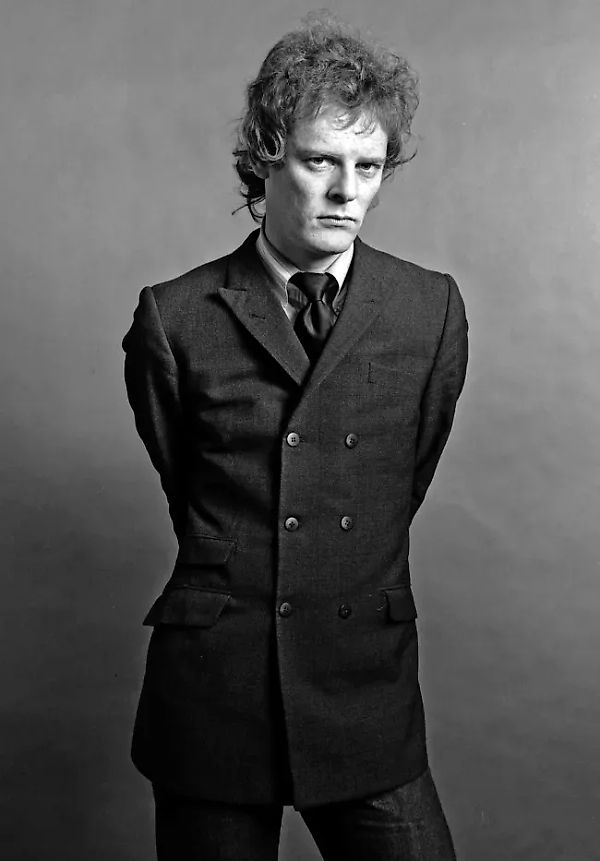
Filmmaker Paul Morrissey, known for his transgressive cult films and for bringing narrative structure to the cinematic works of Andy Warhol, died on October 28 in New York. He was eighty-six. His death, in a Manhattan hospital where he was being treated for pneumonia, capped a freewheeling career in which Morrissey brought his Catholic upbringing and catholic tastes to bear in such gratifyingly sleazy titles as the Factory-producedFlesh(1968),Trash(1970), andHeat(1972), films in which hustlers and junkies took center stage, with Morrissey’s camera lingering lovingly on scenes of intravenous drug use, and on the angular planes of real-life hustler and gay icon Joe Dallesandro’s nude form. “Every movie I’ve ever made says the same thing,” he told theNew York Timesin 2000. “They all find comedy in people trying to live their lives without any rules.”
Paul Morrissey was born the fourth of five children in New York on February 23, 1938, to Irish Catholic parents. Following his graduation from Fordham University and a stint in the army, he opened the Exit Gallery in the East Village, a tiny cinematheque that doubled as his home, and in which he showed his own early films—silent 16-mm comedy shorts such asMary Martin Does It(1962) andTaylor Mead Dances(1963)—as well as those of other underground auteurs, including Brian De Palma, whose debut 1960 shortIcarusappeared there.
In 1965, through poet and filmmaker Gerard Malanga, Morrissey met Warhol at the Astor Place Playhouse, where his own films were being screened. Impressed with Morrissey’s work, Warhol invited him to his Factory, and the two collaborated on now-classic films includingMy Hustler(1965),Chelsea Girls(1966), and the gender-swappedRomeo and JulietremakeLonesome Cowboys(1968), starring a cavalcade of Factory regulars, among them Paul America, Viva, and Mary Woronov. With each new production, Morrissey progressively drew Warhol away from the static shots and plotless arcs that had until then characterized the artist’s films, embodied most famously inEmpire(1965), a shatteringly long slow-motion film of the Empire State Building shot from a single unchanging vantage point. Much of the dialogue was ad-libbed on the spot.
“Paul’s work has always been in a category of its own,” experimental filmmaker Jonas Mekas told theTimes. “Those in the avant-garde didn’t really get them. And those who were in Hollywood thought them a little too loose and amateurish. Like Norman Mailer did in his early films, Paul used nonactors who improvised. Until then, there were really only traditionally scripted narratives or documentary-style cinema verité, which filmed people in real situations, avoiding any artificial dramatization.”
“If a person is in front of a camera, they’re acting,” Morrissey toldThe Independentin 1996. “It’s not possible to live in front of a camera. What I always believed in was the truthfulness of artificiality. You can’t have the real thing on camera—that’s the nature of cinema. When you see people like Daniel Day-Lewis and Ralph Fiennes screaming and hyperventilating, you’re seeing the phoniest kind of bad acting. You may as well have a ‘men at work’ sign. It’s not acting if you can see it.”
In 1966, Morrissey expanded his remit beyond film, managing Nico and the Velvet Underground. He later recalled the experience with disdain. “I discovered them, I managed them, I put Nico in them, I had to deal with them. I had to produce their first record,” he toldBright Lights Film Journalin 2020. “It wasn’t easy. They were stupid and didn’t know what they were doing.” Around this same time, he co-conceived with Warhol the Exploding Plastic Inevitable, a traveling Happening that ran through 1967 and incorporated live music, mime, dance, performance art, and light art, this last element presaging the psychedelic light shows that often accompanied the rock concerts of the late 1960s and early 1970s.
In 1968, with Warhol laid up following Valerie Solanas’s attempt on his life, Morrissey directed his first feature film, Flesh, starring Dallesandro—whom he’d met in 1967 after Dallesandro accidentally wandered into an apartment where he and Warhol were shooting—as a hustler trying to earn money for a friend’s abortion. Intended to undercut John Schlesinger’s Midnight Cowboy, in which Schlesinger had cast several members of Warhol’s entourage, the film debuted nearly seven months ahead of its perceived competitor, though to somewhat less acclaim. Morrissey next made Trash, casting Dalleasandro as a heroin addict and transgender actress Holly Woodlawn, who would become the subject of Lou Reed’s 1972 “Walk on the Wild Side,” as his garbage-collecting girlfriend. Heat, a satire of Sunset Boulevard featuring Dallesandro and Sylvia Miles, completed the trilogy. Morrissey followed these up with Women in Revolt, a raucous satire of the Women’s Liberation Movement featuring the trans superstars Jackie Curtis, Candy Darling, and Woodlawn, after which he and Warhol partnered with Italian producer Carlo Ponti on a pair of ill-fated X-rated horror films, Flesh for Frankenstein (1973) and Blood for Dracula (1974).
By now, Morrissey was disillusioned with Warhol, whom he would later characterize as has having offered little more than his name to their collaborative productions. “How many films written, directed and photographed by one person are given co-authorship with their presenter?” he railed to the Times. “I don’t know any. But because Andy is a celebrity, people have to think of him before they think of the movies, which is grotesque.”
Morrissey struck out on his own, with a comedic remake of The Hound of the Baskervilles, starring Peter Cook and Dudley Moore. The 1978 film flopped spectacularly (described by one critic as a “chore” and another as a “ponderous shambles,” it continues to hold a 0 percent rating on Rotten Tomatoes), and, following a brief dalliance with LA punk in 1981’s Madame Wang’s, Morrissey began collaborating with playwright and screenwriter Alan Bowne. His 1982 film version of Bowne’s play Forty Deuce, advertised as “A Sick Movie with a Clean Bill of Health,” starred a then-unknown Kevin Bacon as a young hustler attempting to earn money for his drug habit by peddling the sexual services of a twelve-year-old. Morrissey and Bowne teamed up again for 1985’s Mixed Blood, a Cimmerian look at New York street life in which John Leguizamo made his film debut; and 1988’s Spike of Bensonhurst, a comedy about an amateur boxer that relied heavily on Italian and Irish American stereotypes. His last film was News from Nowhere (2010), which debuted at New York’s Film at Lincoln Center in 2011.
Though his films were splendidly unsavory and almost always redolent of sex, drugs, and other forms of debauchery, Morrissey himself was conservative, a straight white Republican who publicly eschewed rock music, recreational drug use, sexual liberation, and communism. The schism did not bother him.
“A human being is a sympathetic entity,” he told Oui magazine’s Jonathan Rosenbaum in 1975. “No matter how terrible a person might be, someone with an artist’s point of view will try to render his individuality without condescension or contempt. That’s the natural function of a dramatist. The movies I’ve made have no connection with what I’m talking about now. They don’t say, ‘Do this,’ or ‘Don’t do that.’ They portray a kind of emptiness in people who are living through a transitional cultural period when they don’t know who they are or what to do.”