Eikoh Hosoe (1933–2024)
227Oct. 4, 2024
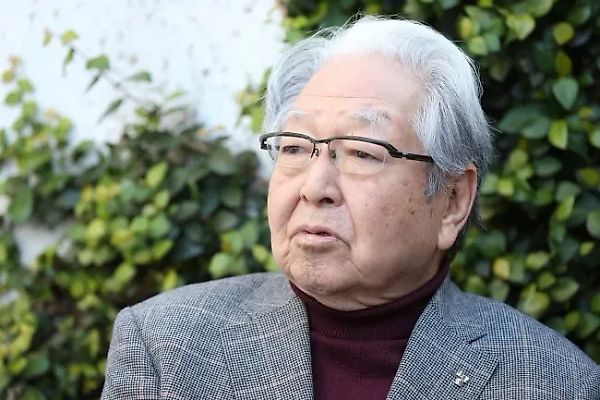
Iconic Japanese postwar photographerEikoh Hosoe, who gained wide acclaim for his boundary-pushing photographs of novelist Yukio Mishima, died in Tokyo on September 16 of complications related to an adrenal gland tumor. He was ninety-one. A cofounder—alongside Akira Sato, Akira Tano, Ikko Narahara, Kikuji Kawada, and Shomei Tomatsu—of the short-lived but influential documentary photography collective Vivo, he was known for noirish, high-contrast black-and-white photos of nude human figures. Through these sensual, intimate, often haunting images, he explored universal issues such as death, religion, philosophy, and the supernatural.“To me photography can be simultaneously both a record and a mirror or window of self-expression,” he explained. “The camera is generally assumed to be unable to depict that which is not visible to the eye. And yet the photographer who wields it well can depict what lies unseen in his memory.”
Born Toshihiro Hosoe on March 18, 1933, in Yonezawa, Yamagata, the son of a Buddhist priest, he spent the first decade of his life in Tokyo. At the age of eleven, having witnessed the World War II firebombing of the city by US troops, he was forced to flee to the countryside with his family. While living in Tohoku, the tiny village in which his mother had been raised, the adolescent Hosoe developed a fascination with mythology and the spiritual world that would inform his later work. On moving back to Tokyo, he joined his high school’s photography club, and in 1951 he won the top prize in the Fuji Photo Contest with an image of a young girl on a military base. He enrolled in the Tokyo College of Photography, and while studying there joined the experimental artist group Demokrato. The work of its leader, avant-garde artist and engraver Ei-Q, would prove influential to the young photographer. Following his 1954 graduation, Hosoe renamed himself Eikoh and embarked on a career as a photojournalist.
In 1959, Hosoe cofounded the collective Vivo—its name drawn from the Latin word for “life”—whose goal was to portray the modern Japanese experience through unconventional techniques. Though its existence was fleeting, the group is credited with expanding documentary photography to embrace subjectivity as well as objectivity. The following year, he helped cofound the Jazz Film Laboratory, which sought to reject typical artistic strictures, and under the aegis of which he made the short black-and-white filmNavel and A-Bomb.
Also in 1960, Hosoe collaborated with choreographer Tatsumi Hijikata, originator of the Japanese dance theater form Butoh, to make his first major series, “Man and Woman,” a group of highly stylized photographs of nude forms that appeared at once abstract and erotic. His relationship with Hijikata would prove transformative, with Hosoe “view[ing] himself as involved in the creation of a distinct space and time,” as curator Yasufumi Nakamori has characterized the shift in the photographer’s practice.
In 1961, Japanese publisher Kodansha commissioned Hosoe to take publicity photos of novelist Yukio Mishima, whom Hosoe knew by name, having seen a performance by Hijikata’s company of the author’sKinjiki(Forbidden Colors), but whom he had never met. Mishima, who had requested Hosoe to take the photos after seeing those featuring Hijikata, told him, “I am your subject matter. Photograph me however you please.” Speaking to photography platformAmerican Suburb Xin 2010, Hosoe recalled, “Mishima’s father happened to be watering the garden, so I grabbed his hose, and I wrapped Mishima’s entire body in the hose and kept him standing in the center of the zodiac, where he was planning to erect a statue of Apollo.” Mishima was thrilled with the resulting portraits and agreed to become the subject of a series of photos by Hosoe. Titled “Ordeal by Roses,” 1961–62, the series earned Hosoe the 1963 Lifetime Achievement Award from the Photographic Society of Japan and remains his best-known work today.
Other landmark works by Hosoe include “Kamaitachi,” 1965–68, another collaboration with Hijikata, which would later be assembled into a book; and the 1971 bookEmbrace, which places nude forms in tense relationships and arrived the year after Mishima’s ritual suicide. Later works, such as the “Ukiyo-e Projection” series of 2003, depicting Butoh dancers onstage, incorporated color but remained as dramatic and as interested in movement and bodily forms as their predecessors.
Apart from his career as a photographer, Hosoe served as director of the Kiyosato Museum of Photographic Arts beginning in 1995 and was the vice president of the Japanese Photographers Association for more than forty years. Among the many awards he received during his lifetime are Japan’s Medal with Purple Ribbon (1998); the British Royal Photographic Society’s 150th-anniversary special medal (2003); Japan’s Order of the Rising Sun (2007); the Mainichi Art Award (2008); and the Japanese Ministry of Education’s Person of Cultural Merit award (2010). His work is held in the collections of major institutions including the J. Paul Getty Museum, Los Angeles; the San Francisco Museum of Modern Art; the Metropolitan Museum of Art, New York; and the British Museum, London.