Prehistoric Carvings in Southern Turkey Thought to Record Dawn of Civilization
181Aug. 9, 2024
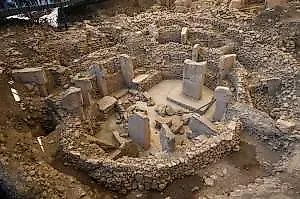
Markings on a stone pillar found at the 12,000-year-old archaeological site ofGöbekli Tepein southern Turkey have been newly decoded by researchers, who believe they may document a tremendous comet strike that led to a major shift in human civilization. The site, a temple-like complex some seven thousand years older than the Great Pyramid of Giza, contains intricate carvings that archaeologists think may collectively form the world’s oldest calendar, as well as those that record the Taurid meteor stream that gave rise to a twenty-seven-day-long rain of comet fragments that plunged the Earth into a roughly 1,200-year-long ice age in 10850 BCE. The comet strike is believed to have wiped out many species of large animals, and to have spurred the lifestyle change from hunting and gathering to farming that led to the birth of civilization in the Fertile Crescent of West Asia.
In a paper published July 24 inTime and Mind, Martin Sweatman, lead author for the University of Edinburgh team that conducted the research, posited that each of a series of V-shaped carvings on a pillar at the site represented a single day, with the 365 V’s together representing a solar calendar consisting of twelve lunar months plus eleven days. According to Sweatman, a birdlike creature with a V at its throat represents the summer solstice, the bird at that time thought to have represented the summer solstice constellation. Near the column were found statues of other creatures, possibly deities, each of which also had a V mark on its neck. Depicting both solar and lunar cycles, the engravings may form the world’s oldest lunisolar calendar, predating others of its kind by thousands of years. The Taurid meteor stream appears to be engraved on a separate pillar.
Sweatman additionally suggested that the carvings presaged written communication. “It appears the inhabitants of Göbekli Tepe were keen observers of the sky, which is to be expected given their world had been devastated by a comet strike,” he said in a statement. “This event might have triggered civilization by initiating a new religion and by motivating developments in agriculture to cope with the cold climate. Possibly, their attempts to record what they saw are the first steps towards the development of writing millennia later.”