Farhad Moshiri (1963–2024)
218July 25, 2024The names
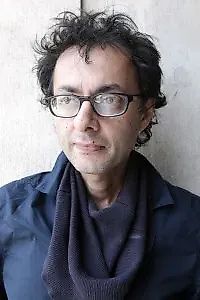
Influential Iranian artist Farhad Moshiri, whose humorous works commented on Western and Middle Eastern consumer cultures, died in Tehran on July 17 after suffering cardiac arrest. He was sixty-one. Dubai-based gallery the Third Line, which represented him, confirmed his death. Moshiri frequently fused traditional Iranian forms with contemporary Western tropes and genres such as Pop and Conceptualism to skewer the globalization rampant not only throughout the world but in his home country.
“Farhad Moshiri is undoubtedly the most important contemporary artist from Iran in the years that followed the revolution—and one of the most important from the region as a whole,” Sotheby’s director for Middle Eastern and contemporary art Ashkan Baghestani toldThe National. “He not only established the first wave of contemporary art post-1979 but also became one of the rare artists who radically, and successfully, brought all of the great craftsmanship, iconography and storytelling inherent in Persian culture and history into his contemporary practice. The breadth, diversity and scope of his output in this sense was unparalleled.”
Farhad Moshiri was born in 1963 in Shiraz, the capital of Iran’s southwestern Fars Province, where his family owned cinemas. In 1979, at the start of the Iranian Revolution, he moved with his family to Los Angeles at the age of fifteen. A few years later, he enrolled in the California Institute of the Arts, where he gained an interest in video, painting, and installation. Graduating in 1984, he began working in pizza parlors. Having sold just a single work at his debut solo show, in 1989, he returned to Tehran in 1991. “I was fed up with Los Angeles, fed up with the one-sidedness of everything,” he told theSouth China Morning Postin 2013. “A few artists were jumping on the bandwagon, conveying [Iran as] a dark, chador-covered country where everything was forbidden. . . . I didn’t feel that I deserved to criticize a country I had fled.”
Back in his home country, he built a practice that combined the high-minded and the lowbrow and prodded at Iran’s cultural fabric, a mesh of ancient and hypermodern culture. Among the diverse materials he turned to were glitter, beads, and gold leaf. “At some point in my life I was seeing so much ugliness around me that it all started to look kind of pretty after a while,” he toldThe Standardin 2014. “So I started to mimic that by borrowing the same materials I was seeing, like fake crystals, glitter, all sorts of decorative stuff.”
In the early 2000s, he began creating some of his best-known works: monumental paintings of jars, some containing recognizable modern foodstuffs and bearing on their exteriors ancient Iranian verse rendered in Persian calligraphy, others recalling voluptuous female forms and serving as repositories for desire or memory. Evoking a similar sense of uneasy contrast between antiquity and modernity is his 2012 workGod in Color, a massive canvas embroidered with forty-two different-colored rectangles, each containing the wordGodin block caps.Comfort, 2013, comprised the titular word spelled out by 294 knives sunk deep in a wall. A 2017 series of large, monochromatic works featured images ofsnowy foreststhat he had shot outside Tehran and transferred onto canvas before having them rendered in thousands of tiny beads by a group of Iranian women with whom he regularly collaborated.
Moshiri enjoyed solo exhibitions at international galleries including Galerie Rodolphe Janssen, Perrotin, Thaddaeus Ropac, and the Third Line and participated in group shows at museums including Martin Gropius-Bau and Haus der Kulturen der Welt, both in Berlin; Kunstverein Munich; Palazzo Grassi, Venice; and Tallinn Kunsthalle, Estonia. In 2008, at a sale held by Bonhams in Dubai, he became the first Middle Eastern artist to see his work sell for more than $1 million at auction. He participated in the Tehran Biennial in 1993 and the Venice Biennale in 2013. His first solo US institutional show took place in 2017, at the Andy Warhol Museum in Pittsburgh. Mohshiri’s work is held in the collections of institutions including the Virginia Museum of Fine Arts, Richmond; the British Museum, London; and Mathaf: Arab Museum of Modern Art, Doha, Qatar.
“I don’t go into the symbolism behind my works,” he told the SCMP. “On some middle ground, something clicks. I weigh up the theory and my past history quite quickly, I don’t dwell on things. It’s the samurai effect, a one-stroke thing, you’ve killed,” he concluded, “you move on.”