Axel Wieder Named Director of Berlin Biennale
189May 29, 2024
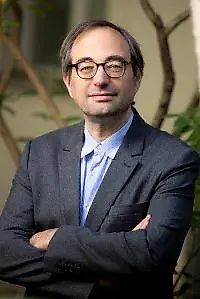
Art historian Axel Wieder has been announced as the next director of theBerlin Biennale for Contemporary Art, effective August 1. He arrives to the organization from Norway’s Bergen Kunsthall, where he has served asdirectorsince 2018. In his new role, he will shepherd the thirteenth edition of the Berlin Biennale, curated by Zasha Colah and set to take place in summer 2025. Wieder, who was unanimously chosen for the role by a selection committee chaired by Katharina Grosse, succeeds Gabriele Horn, who has led the Biennale since 2002. Horn will retire at the end of July, having overseen ten iterations of the event.
“We are very pleased to have been able to win over Axel Wieder as future director of the Berlin Biennale,” said Grosse in a statement. Grosse praised Weider for hs “broad professional network,” his knowledge of current discourses, and his familiarity with the process of staging large, international art events. “His committed approach to strategic opening processes of cultural institutions to new groups of visitors and partners convinced us,” she continued, “as has his considerate, team-driven, and future-oriented leadership style. We look forward to working together in the future.”
Wieder is known for his focus on the history and theory of exhibitions, architecture, and the social space as well as on questions of political representation. Before beginning his tenure at Bergen Kunsthall, Wieder from 2014 to 2018 led Index – The Swedish Contemporary Art Foundation in Stockholm. Earlier roles include those of curator of exhibitions and head of programs at the Bristol, England, contemporary art institution Arnolfini and artistic director of Künstlerhaus Stuttgart. Wieder in 1999 cofounded the specialized bookshop and presentation platform Pro qm in Berlin.
“The Berlin Biennale is one of the most outstanding experimental platforms for contemporary art in the world—it makes new curatorial approaches and artistic positions accessible to a broad public while consistently maintaining its critical vantage point,” said Wieder in a statement. “I am very much looking forward to continuing these traditions as well as Gabriele Horn’s visionary work, including her astuteness regarding cultural policy, together with a fantastic team. It is important to me to continue to open the Berlin Biennale up to urban society, develop collaborations, and redefine its relationship to Berlin as an art hub. In doing so, I view the long-term project process of the biennale model as an important quality, one that facilitates investing into substantive debates and dialogue.”