National Museum of Brazil Receives Major Fossil Donation
207May 10, 2024
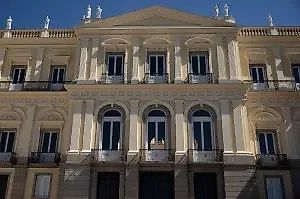
Six years after being largely destroyed in a massive electrical fire that incinerated some 18,000 artifacts, or 85 percent of its collection, theNational Museum of Brazilin Rio de Janeiro has moved one step closer to rebuilding, with the gift of more than 1,100 fossils from Burkhard Pohl, president of the Swiss research and mining company Interprospekt Group. According to theArt Newspaper, the specimens were found in the Araripe Basin in northeastern Brazil, and include dinosaur fossils, pterosaur skulls, and a tetrapodophis skeleton, which features four rudimentary legs and shows the evolutionary transition between lizards and snakes. Also among the trove are fossils of turtles, insects, crocodylomorphs, and plants,Artnet Newsreports.
“We felt it was the right thing to do to help rebuild a comprehensive collection of Brazilian fossils,” Pohl told theArt Newspaper. “We hope that this initiative will inspire other collectors to follow suit and join this important effort. I strongly believe that a collection is a living organism that must constantly evolve—a collection locked away in a basement is a dead collection.” Museum director Alexander W. A. Kellner said that the institution has received about 8,500 objects since the conflagration, roughly a quarter of which will go on display, with the rest being used for research.
Considered to be Brazil’s equivalent of the American Museum of Natural History in New York and home to the country’s national identity, the National Museum had hoped to reopen September 7, 2022, concurrent with Brazil’s bicentennial of independence, but by that point had completed reconstruction of the façade only. Total restoration costs are expected to land anywhere between $75 million and $98 million; work done thus far has been realized thanks to both private and government funding. The museum is now projected to reopen in 2026, with some 10,000 artifacts.