13 Works By Finnish Architects Alvar, Aino, and Elissa Aalto Added to UNESCO’s World Heritage List
3July 28, 2026
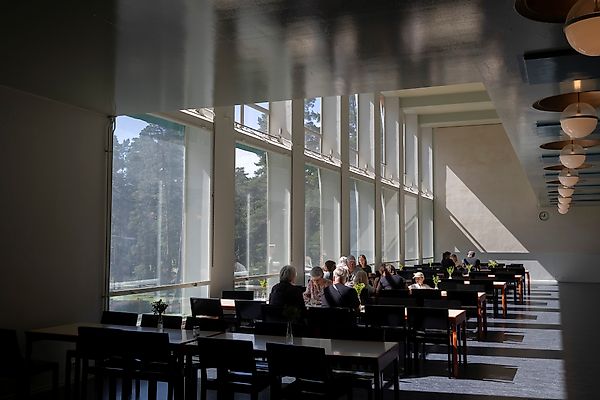
At the48th sessionofUNESCO’s World Heritage Committee in Busan, South Korea,13 worksby Finnish modernist architects Aino, Elissa, and Alvar Aalto were added to the organization’s World Heritage List. The projects, which are collectively known as the “Aalto Works,” are the first collection of Finnish modernistarchitectureto achieve such a designation.
The Aalto Works comprise buildings, developments, and campuses associated with Alvar Aalto completed between 1928-1988. They include residential, civic, community, and cultural buildings which, as per the inscription, display the “human‑centred, site‑specific, and empathetic vision that distinguishes Finland’s contribution to modern architecture.”
The projects included range from Aalto’s modest early works to later, more monumental experiments that still retained a sensitivity for materials, context, and humanist values. Mari-Leena Talvitie, Finland’s minister of science and culture, told Reuters that this designation represents “a significant international recognition of Finnish modern architecture.”
Among the earliest projects included in the list is the famous Aalto House (1936) in Helsinki, designed by husband-and-wife pair Alvar and Aino Aalto as their personal home. Out of the 13, five projects are located in the Finnish capital, Helsinki, including the House of Culture (1958) event hall and the famed Finlandia Hall (1971) congress and concert venue.
A seminal project on the list is the Säynätsalo Town Hall, completed in 1952 by Alvar and Elissa Aalto (who married Alvar after Aino’s passing in 1949). The couple also built their own private residence, the Muuratsalo Experimental House (1954) near Lake Päijänne. Elissa went on to head the studio following Alvar’s own death in 1976, completing several projects that were still under construction at the time.
The Finnish Heritage Agency, the Alvar Aalto Foundation, and ICOMOS Finland prepared the nomination for the Aalto Works, under selection criteria (ii) for World Heritage designation, which covers works that exhibit an “important interchange of human values, over a span of time or within a cultural area of the world, on developments in architecture or technology, monumental arts, town-planning or landscape design.” The Aalto Works are among a host of projects added to the World Heritage List this year, including the modernist architecture of Tashkent, Uzbekistan, and the ancient Buddhist site of Sarnath in India.