Joyce Kozloff, Key Figure in Pattern & Decoration Movement, Comes Out as a Guerrilla Girl
3July 24, 2026
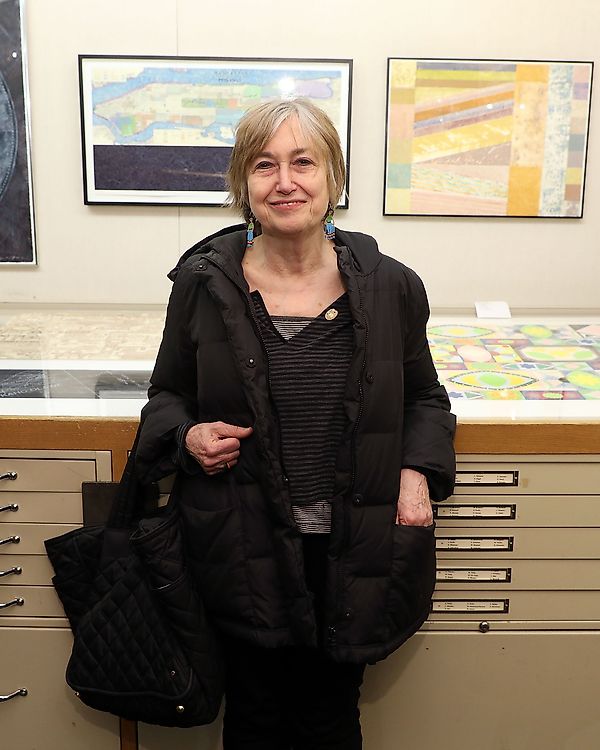
Pathbreaking Pattern & Decoration artistJoyce Kozloff, well known as a founding member of the Heresies feminist publishing collective, today revealed herself to have also been a founding member of the anonymous feminist activist collectiveGuerrilla Girls. Kozloff made the disclosure in an interview conducted by curators and writers Maura Reilly and Helena Reckitt for the Feminist Interview Project, organized by the College Art Association’s Committee for Women in the Arts, and published inArt Journal.
Formed in 1985 in response to rampant sexism in the art world, the Guerrilla Girls sought to revitalize feminism through the use of humor, protest, street art, and visually engaging graphics.
“We decided to call ourselves the Guerrilla Girls, wear fishnet hose and short skirts, call out the worst misogynists in the art world, appear publicly in masks, like avengers,” Kozloff told Art Journal, explaining how the group arrived at its arresting costumes. “A new member had misunderstood our name, brought a gorilla mask to a meeting, and voila! We all had aliases, the names of dead women artists: I was Liubov Popova.
“Remaining anonymous was an important Guerrilla Girls decision,” continued Kozloff. “People thought this was to avoid art world reprisals. For me, that was never the reason. I argued for anonymity because I didn’t want attention to be on us as individuals, I wanted it to remain on the issues.”
Among Kozloff’s contributions to the group’s efforts were the rough draft for what would become one of their best-known posters, The Advantages of Being a Woman Artist, 1988. The idea occurred to Kozloff while she was participating in the Kohler Art/Industry Residency in Wisconsin and sharing a house with three male artists who were also taking part in the program.
They were married, college ceramics professors,” recalled Kozloff. “Each had brought an undergrad woman student along, their girlfriends, who also did their housework, cooking and were unpaid studio assistants at the factory. When I got back, I wrote a rough draft, ‘The Disadvantages of Being a Woman Artist.’ Until then, our posters always had verifiable statistics, so this was a stretch. But then, our clever members turned it around to ‘Advantages,’ and it worked!”
Kozloff remained with the collective until 1991. The Guerrilla Girls continued their activities over the ensuing decades, targeting artists, critics, and publications—including Artforum—that they saw as embodying or elevating misogynistic values. The group made headlines in 2021 when it pulled out of a contract with Phaidon over the ties of the publisher’s owner, Leon Black, to convicted pedophile Jeffrey Epstein. Late last year, the forty-year-old collective became the subject of an exhibition at the Getty Center in Los Angeles. The institutional embrace of the group’s once-radical work compelled the Art Newspaper to ask, “Is it finally time for the Guerrilla Girls to remove their masks?”