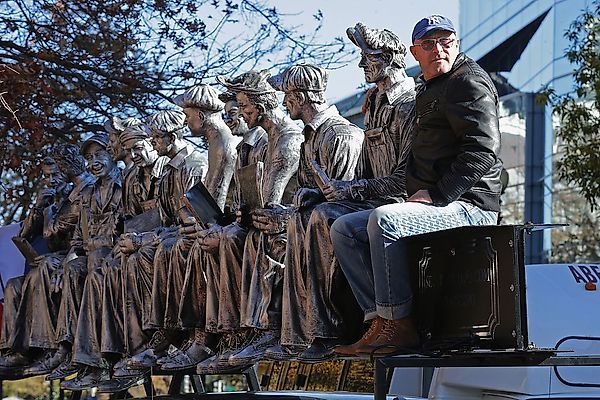
A New York sculptor thought he had found an unlikely market for a new artwork. Instead, he found himself stuck with a six-foot-four-inch bronze-colored monument sitting in his studio, a broken foot, a six-figure bill, and almost no interest from collectors. Artist Sergio Furnari says he spent roughly $100,000 building a life-size sculpture of the late conservative activist Charlie Kirk, believing wealthy donors would help finance the project and eventually turn it into a traveling monument. Instead, according to the Guardian, the sculpture has become more like an expensive lesson in the risks of speculative artmaking and less a fundraising success. Related Articles Art History Teacher Removed for Charlie Kirk Posts Cleared By Investigation--But School Refuses to Reinstate Her Florida Atlantic University Art History Professor Suspended Due to Charlie Kirk Comments Furnari, an Italian-born sculptor based in New York, said no one commissioned the work. Rather, he viewed it as a monument to free speech and a memorial to Kirk, who was shot and killed last year. “Why am I making the statue?” he told the Guardian. “The same reason why Michelangelo did the Pietà, or Michelangelo did the David, or Leonardo da Vinci painted the Mona Lisa. Why? Just to commemorate a moment, you know, a person.” The Kirk sculpture is far from Furnari’s first ambitious public work. He has previously created monumental sculptures of footballer Cristiano Ronaldo and a life-size installation based on the iconic 1932 photograph Lunch Atop a Skyscraper, showing ironworkers perched high above Manhattan. The economics have proven especially unforgiving. Furnari said he spent about $100,000 on steel, resin, labor, and fabrication before launching an online fundraising campaign that sought an initial $150,000—and eventually millions more to finance a national tour. As of last week, the campaign had raised roughly $1,400. His plans now call for installing the sculpture in Times Square on September 10, the one-year anniversary of Kirk’s death, in hopes that public attention might translate into financial support. Political monuments have for years occupied an uneasy place in the art world, where questions of patronage often matter as much as aesthetics. Traditionally, public sculpture arrives with institutional backing, civic approval, or a private commission. Furnari reversed that model, betting that demand would emerge only after the work was completed. Instead of attracting patrons, Furnari told the Guardian he’s received messages from people threatening to vandalize the sculpture, while the work itself has become a kind of performance about the uncertain value of politically charged art in an increasingly polarized America.