Detroit Institute of Arts Director Attributes 17th-Century Portrait To Diego Velázquez
46July 8, 2026
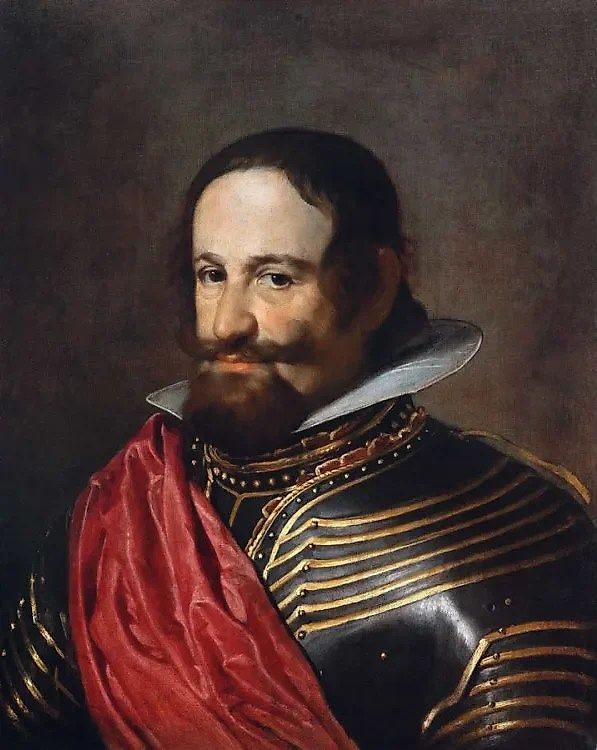
Spanish-American art historian Salvador Salort-Pons has announced the discovery of a previously unattributed portrait by Spanish Baroque painter DiegoVelázquez. In an article forARS Magazine, published by the Museo del Prado in Madrid, Salort-Pons, who is the director of the Detroit Institute of Arts revealed a methodology combining archival research and X-ray imaging to attribute the portrait to Velázquez.
The portrait, which is titled “The Count-Duke of Olivares in Armor” (1626), features Gaspar de Guzmán y Pimental, known as the Count-Duke of Olivares, a royal who served as Spain’s prime minister and was a favorite of King Philip IV. The painting is currently part of a private collection, and Salort-Pons has not offered recent provenance of the work. Velázquez has also painted other portraits of the Count-Duke of Olivares between 1623 to 1626, including two that are part of the collections of theMuseo del Prado, and theHispanic Society Museum and Library.
In the article, which is written in Spanish, Salort-Pons traced the work’s history to Velázquez’s arrival in the court of Philip IV. Around that time, the Count-Duke is believed to have commissioned the artist to paint both him and Italian cardinal Francesco Barberini—a nephew of Pope Urban VIII— to commemorate the latter’s diplomatic mission to the Spanish court. “Contemporary sources reveal that neither portrait met with the Italian’s approval,” wrote Salort-Pons, as per ARTnews. “While the portrait of Barberini remains lost, the one believed to be of Olivares is presented here.”
Citing research from the 1970s by art historian Enriqueta Harris, Salort-Pons noted that Velázquez’s activity during his early years as a court painter, was documented in diaries written by Cassiano dal Pozzo, who was Barberini’s secretary and traveled alongside the cardinal on his mission. He also backed up his claims through inventory records from 1631 of Barberini’s art collection, which listed a portrait of the Count-Duke with similar dimensions as the work in question, adding a footnote that a later inventory of Barberini’s holdings after his death corroborated the information.
Salort-Pons’ article has been adapted from the catalog for an upcoming exhibition at the Detroit Institute of Arts titled, “Velázquez & Olivares: Early Years at Court,” which focuses on the painter’s initial work in service of Philip IV.