Restoration of Early Rembrandt Painting Reveals Hidden Turbaned Figure
49July 2, 2026
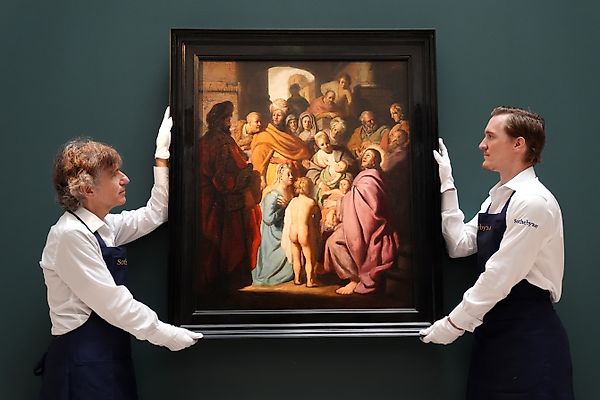
Therestorationof an early painting by the Dutch masterRembrandt, titledLet the Little Children Come Unto Me, has uncovered a previously hidden context of the work. Following the removal of layers of overpaint in preparation for a Sotheby’s auction, a bearded man in the frame was discovered to be wearing a turban instead of a traditional Dutch soft cap. Rembrandt likelybeganpainting it in 1627 but left it unfinished. An unidentified artist subsequently completed it years later.
Depicting a biblical scene featuring Jesus blessing children, the painting is a particularly personal work within Rembrandt’s oeuvre, as it features portraits of his parents, other family members, and even the artist himself. British art historian Andrew Graham-Dixon told theGuardianthat the significance of the turbaned figure ties into the political climate in Rembrandt’s hometown of Leiden in the Netherlands at the time.
During the Thirty Years’ War, refugees flooded the city, which sparked religious tensions between them and the locals. “It’s estimated that Leiden took something like 10,000 refugees in that one year,” said Graham-Dixon. He added that the religious diversity on view in the painting signifies a message of tolerance, adding that “this is more than just a painting, I think it’s a statement of Rembrandt’s moral position.”
The restoration also revealed other details, including a naked child in the center of the frame that the later artist decided to clothe. “It was made into a more traditional, conventional treatment of the subject by the later over-painting, the original having a more diverse cast of characters, including the prominent, turbaned figure in the middle,” said Alex Bell, the chair emeritus of Sotheby’s UK, to the Guardian. While it originally sold for €1.5 million in 2014 at a German auction before being attributed to Rembrandt, the restored painting is currently expected to fetch between£8 million – £12 million at the Sotheby’s Old Masters Sale in London on July 1.