Mysterious Stonehenge Altar Could Have Traveled Via Glacier, New Study Finds
57June 6, 2026
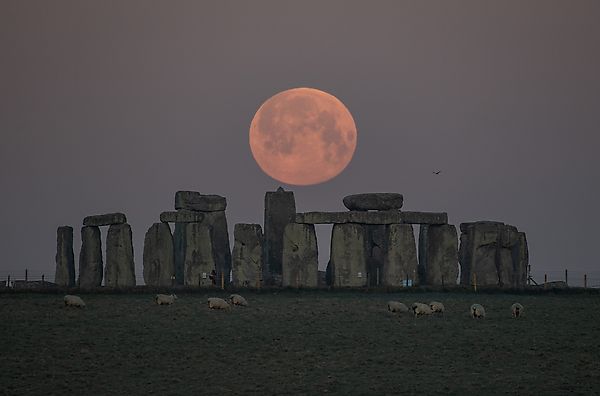
The mystery of the centralStonehengealtar stone—a 6 ton, approximately 16-foot-long micaceous sandstone megalith—has posed a tantalizing question to researchers and amateur history buffs for decades: how did such a colossal rock come to rest at the center of the most famous prehistoric monument in England? Anew studypublished on Thursday in theJournal of Quaternary Scienceproposes that it’s possible that the altar stone could have been carried part of the way on its journey by a glacier.
Previousresearchpublished in 2024 established that the altar stone most likely came from the Orcadian Basin in northeast Scotland, but didn’t determine how the slab made the nearly 435 mile journey from Scotland to Salisbury Plain in Wiltshire, England.
The new study was authored by scientists from the U.K.’s Sheffield Hallam University, the University of Sheffield, the University of Bristol, the Wessex Archaeology firm, and Australia’s Curtin University. These researchers used ice sheet reconstructions to determine that a possible pathway from the Orcadian Basin could have deposited the altar stone at Dogger Bank, a topographic high point in the North Sea that sat approximately 250 miles away from the location of Stonehenge.
However, “glacial transport…alone cannot account for the final emplacement on Salisbury Plain,” the study’s abstract reads. “Even under a glacially assisted scenario, substantial anthropogenic transport would have remained necessary.” In other words, ancient Britons would have needed to haul the rock the rest of the way. How human beings pulled off the task without the use of modern tools remains anyone’s guess.
Additionally, the plausibility of the stone’s proposed pathway hinges on, per the study, “multiple-phase activity across an exceptionally large temporal gap,” because “human transport of rocks from Dogger Bank must have occurred prior to inundation by rising relative sea level.”