Lost Leonora Carrington Work to Make Public Debut
105May 30, 2026
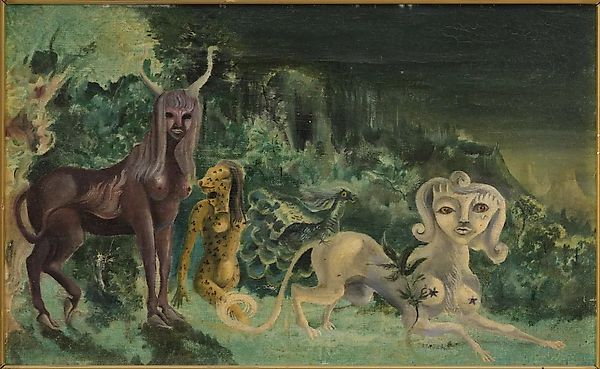
A painting by renowned British Mexican SurrealistLeonora Carringtonthat had been missing for decades is set to go on view at London’sFreud Museumthis summer, marking the first time the work will be seen by the public.Villa Pilar, 1940, will appear in the exhibition “Leonora Carrington: The Symptomatic Surreal.” The show collects the work Carrington made while undergoing excruciating treatments at a psychiatric hospital in Santander, Spain. Its closing date has been extended from June 28 to August 10 to allow as many people as possible to see the canvas, beginning on July 1.
Carrington arrived at the hospital after suffering a mental breakdown in Madrid, to which she had fled after her partner, painter Max Ernst, was arrested in Nazi-occupied France, where the couple lived. Her experience there was so traumatic that she likened it in her memoir Down Below to “being dead.” Nevertheless, she formed a bond with her psychiatrist, Dr. Luis Morales, who encouraged her to continue her artistic practice. Carrington produced daily sketches and created two paintings, the other one titled Down Below, 1940. In the course of gathering all these works together, the exhibition’s organizers tracked down the long-lost Villa Pilar and discovered it with an heir of Morales, for whom Carrington had created the canvas as a gift. Related Plan to Open Leonora Carrington’s Home as a Museum Is Scrapped Getty Center Reveals Renovation Plan: New Trams, New Entrance, New Green Spaces
Both Down Below and Villa Pilar depict the hospital as a shadowy underworld canopied by a green sky and populated by breasted human-animal hybrid figures; those in Villa Pilar suggest the occupants of a zoo or the beasts one might encounter on safari, variously referencing a lion, a leopard, a peacock, and a buffalo.
Following the close of the exhibition at the Freud Museum, it will will travel to the arts center Faro Santander in September. Daniel Vega Pérez de Arlucea, the Spanish institution’s director, told The Guardian, “This is not simply a matter of showcasing the work of one of the most important surrealist artists, but of recognizng and revisiting a chapter of her life deeply rooted in this city.”