Robert Irwin (1928–2023)
244Oct. 28, 2023The names
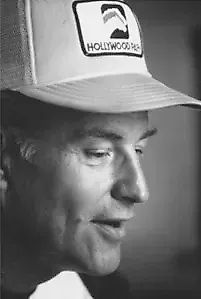
Robert Irwin, a towering figure in the West Coast Light and Space movement, died on October 25 at the age of ninety-five of heart failure.Newsof his death was announced by Pace Gallery. Beginning his career as a painter in the 1950s, Irwin in the following decade abandoned his studio to work in nature, creating what he cast as “site-conditioned” works that responded to their surrounds, taking light, volume, and space as his materials and making the viewer’s experience of sensory phenomena his mission. His radical work profoundly influenced peers such as fellow Light and Space artists Larry Bell, Mary Corse, Keith Sonnier, and James Turrell, and artists of later generations, among them Chris Burden, Vija Celmins, and Olafur Eliasson. Many of his works, ranging from 1997’s1° 2° 3° 4°, at the Museum of Contemporary Art San Diego, tountitled (dawn to dusk), 2016, at the Chinati Foundation in Marfa, Texas, instill in the viewer a sense of peace and awe. “Part of my shtick is to make you aware of how fucking beautiful the world is,” he toldArtforumin 2018.” If there’s a role for art, then it’s somewhere in that realm, because we have no other real reason for it.”RelatedHELEN FRANKENTHALER FOUNDATION SUED FOR “DESTROYING” PAINTER’S LEGACYBMA CREATES PAID INTERNSHIPS HONORING VALERIE MAYNARD Robert Irwin was born in Long Beach, California, on September 12, 1928. Following a stint in the army, and after bouncing around various art schools, he began making Abstract Expressionist paintings, which were in vogue at the time.
His interest in the mode waned as he found himself drawn to the idea of liberating work from the frame, and fascinated with the idea of perception, which came to be the fulcrum around which his oeuvre developed. Intent on drawing the viewer into the work, he began experimenting first with line and dot paintings, creating the latter on barely curved surfaces which lifted away from the wall. Shortly thereafter, he moved on to creating disc paintings—flat metal discs painted in matte colors, held forward from the wall by means of a concealed arm, and illuminated by incandescent light. With these works, he hoped to eliminate the concept of the edge as a physical limit, instead forcing viewers to question the paintings’ boundaries and thus what they were perceiving. “I first questioned the mark as meaning and then even as focus; I then questioned the frame as containment, the edge as the beginning and end of what I see,” he would write in 1977. “I tried to respond directly to the quality of each situation I was in, not to change it wholesale into a new or ideal environment, but to attend directly to the nature of how it already was.” In 1969, Irwin put the studio behind him, choosing instead to perform interventions in architectures and landscapes that were often so subtle as to be imperceptible at first, as, for example was an early venture at New York’s Museum of Modern Art, where his incursion took the form of rearranged light fixtures and a scrim hung from the ceiling.
The scrim came to figure highly in his work, as a way of reshaping a space or of encouraging the eye to look in a specific direction or land upon a particular site. Around 1970, he began incorporating fluorescent light tubes in his work; arrayed wrapped in colored gels or glowing from behind gauzy layers of fabric, they reshaped the environments in which they were placed, altering not just viewers’ experience of space but their emotional relationship to it as well. Perhaps to preserve the ephemeral qualities of these installations, Irwin did not allow his work to be photographed until the late 1970s. Irwin in 1984 received a MacArthur “genius” grant for his work in three dimensions. He won his first site-specific commission in 1997, from the Museum of Contemporary Art San Diego. His1° 2° 3° 4°consists of three rectangular apertures incised into tinted windows, the shapes framing the view outside, of palm trees and sky, and inviting the wind inside.
That same year, he completed the design for the Central Garden of the J. Paul Getty Center in Los Angeles, which features tree-lined paths encouraging exploration and allowing for easy wayfinding at the same time. Among his other permanent installations areLight and Space III, installed in 2008 at the Indianapolis Museum of Art, and the Los Angeles County Museum of Art’sPrimal Palm Garden, 2010, illuminated twenty-four hours a day by his thirty-six-foot-long fluorescent light installationMiracle Mile, 2013. Architectural interventions include his 2003 so-called master plan of Dia:Beacon, some seventy miles north of New York City, and the aforementioneduntitled (dawn to dusk)in Marfa, Texas, for which he transformed the site of a former army hospital into a C-shaped structure that is half plunged into darkness, half bathed in light, with a long row of high windows framing the sky and a sliver of the surrounding desert. In the last decade of his life Irwin returned to the studio, where he continued to experiment with light and the lack of it, as recently embodied in his 2020 exhibition “Unlights,” at Pace Gallery in New York. Characterizing the show as his “swan song,” he displayed tight arrangements of fluorescent tubes, swaddled in colored gels, which remained unlit.
These were interspersed with sections of the wall that had been painted in various shades of gray. “From afar, the eight gray rectangles . . .also appear to be opaque tubes,” wrote Andy Martinelli Clark inArtforum.“However, as one approaches them, the eye registers the erect shapes as belonging to the painted wall in an acute moment of revelation. Such optical sleight of hand is quintessential Irwin, a storied Minimalist able to cultivate a deeper awareness of our own embodied perception while maintaining an unwavering devotion to philosophical inquiry and artistic invention.” Irwin’s work is held in the collections of major institutions around the world, including the J. Paul Getty Museum and the Los Angeles County Museum of Art, both in Los Angeles; the Walker Art Center, Minneapolis; the Art Institute of Chicago; the Dallas Museum of Art; the Chinati Foundation, Marfa; Dia Art Foundation, the Metropolitan Museum of Art, the Museum of Modern Art, and the Solomon R.
Guggenheim Museum, all in New York; the Hirshhorn Museum and Sculpture Garden, Washington, DC; the Louisiana Museum of Modern Art, Humlebaek, Denmark; and the Museo Nacional Centro de Arte Reina Sofia, Madrid. “All feelings count,” Irwin toldArtforum.“Instead of being an artist playing to the concept of art being in a bubble, I left the studio, and I said I’d go anywhere for anyone. That’s essentially what a conditional art is. You don’t make anything until there’s some place or some situation or some thing that you’re going to examine. You start out where you don’t have a plan or an activity, then you go from there. You find that emotional tension.
That’s a whole process of actually exercising the other side of what human beings are. We’re an incredible machine.”.