Italy’s Uffizi Hit by Cyberattack, Says Security Wasn’t Compromised
10April 4, 2026
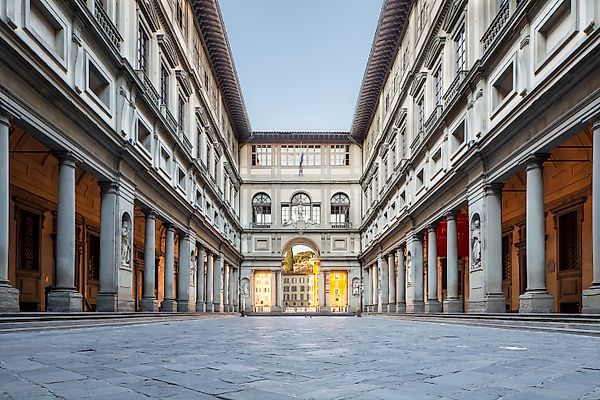
Florence’s famedUffizi Gallerieshave revealed that they were the victim of a February cyberattack but have denied that the security systems protecting their collection were compromised.Corriere della Serrareported that hackers allegedly stole access codes, internal maps, and information regarding placement of CCTV cameras and alarms, subsequently issuing a ransom demand via phone to director Simone Verde.
According to the Italian daily, the IT intrusion left the servers “completely drained” and affected the affiliated Palazzo Pitti and Boboli Gardens. In response,the Uffiziquickly moved its valuable jewels to the Bank of Italy, closed off a section of Palazzo Pitti entirely, and hastily sealed off emergency exits at the palace with bricks and mortar.
The BBC reports that the Uffizi confirmed it had been hacked on February 1, but said there was “no evidence whatsoever that the hackers possessed any maps of the security systems.” Pointing out that anyone could discover cameras’ whereabouts simply by visiting the institution, the Uffizi noted that it had switched from analogue to digital cameras in 2024 and said that those systems were wholly internal and closed-circuit. According to its statement, no passwords were stolen and employee phones were not compromised.
The Uffizi additionally acknowledged that it had transferred jewels to the Bank of Italy but characterized the move as part of a planned renovation. It also affirmed that it had sealed off emergency exits at the palace, chalking this action up to fire-safety compliance measures undertaken after decades of being without fire-safety certification.
Among the information reported to have been stolen in the hack is the institution’s entire photographic archive, comprising digitized images of paintings and documents. The Uffizi in its statement said that the archive was completely backed up and remains intact.
The Uffizi is the second-most visited museum in Italy, after the Vatican, and home to some of the nation’s most vaunted artworks, including Botticelli’s Birth of Venus and Primavera, as well as masterworks by Botticelli, Caravaggio, Gentileschi, Raphael, Leonardo, and Titian.