Melvin Edwards, Sculptor of Searing “Lynch Fragments,” Dies at 88
4April 2, 2026
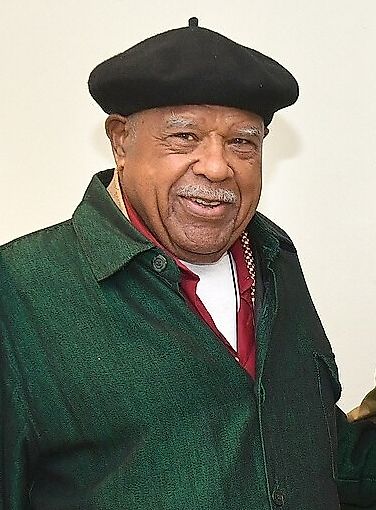
SculptorMelvin Edwards, known for powerful works exploring the history of racial violence and the experiences of Black people in America, as well as themes of beauty and joy, died at his home in Baltimore on March 30. He was eighty-eight. His death was confirmed by New York gallery Alexander Gray and Associates, which represents him. Frequently working with found metal at the confined space of a dining or kitchen table, he produced sculptures whose compact size belied their taut physicality and forceful presence, before turning to larger stainless steel works as his career progressed. His “Lynch Fragments,” small welded assemblages of chains, tools, railroad spikes, and other metal objects, which he began making in 1963, evolved over the decades as he variously drew inspiration from personal experience, the Vietnam War, African artifacts, and the lives of his friends and of African diasporic figures. “I have no illusions that what I do will change things much,” he toldBombmagazine’s Michael Brenson in 2014. “I just wanted to be sure I didn’t get caught not expressing what I thought was important to me.”
Melvin Edwards was born on May 4, 1937, in Houston, the oldest of four children. Houston at the time was so segregated, Edwards later told Brenson, “I didn’t know there was a white community.” On getting a job with the Boy Scouts of America, his father moved the family to Dayton, Ohio, where young Melvin studied at an integrated school, took life drawing classes, and visited museums. While Edwards was still a boy, the family was forced to move back to Houston, where he painted, using an easel his father bought him, and began playing football to burn off energy. The sport’s dynamics and rigorous plotting of plays would profoundly influence his work, as he sought new ways of presenting abstract physical poses.
Edwards won a football scholarship to the University of Southern California in Los Angeles, where he studied painting and learned to weld, creating his first “Lynch Fragment,” Some Bright Morning (Lynch Fragment), in 1963, a circular mass of steel from which protruded a lethal-looking blade, along whose razorlike edge hung a length of chain. In 1965, the year he graduated, he received his first solo exhibition, at the Santa Barbara Museum of Art. Two years later, with his first wife, Karen Hamre and their three children, he moved to New York and took a job teaching at Orange County Community College. He continued to produce his dense, diminutive metal abstractions.
“I tend to work in an area that’s about the size of this [dining] table,” he told the Nasher Sculpture Center’s Catherine Craft in a 2013 interview. “My notion was, you work smaller, you can do more works, go through more of your ideas. I mean, you’re working eight hours a day with a job, you’ve got a family, you gotta work at a scale that is going to allow you to really do something significant, but at the same time, that you can get your ideas out of yourself.”
In 1970, by then teaching at the University of Connecticut and in a relationship with the poet Jayne Cortez, to whom he would remain married until her death in 2012, he became the first Black sculptor to receive a solo exhibition at the Whitney Museum of American Art in New York. There, in a departure from the “Lynch Fragments,” he showed large works of hanging chain and barbed wire that bristled with inhospitality.
“That was the first abstract piece of art that I saw that had cultural value in it for Black people,” David Hammons told the New York Times. “I couldn’t believe that piece when I saw it because I didn’t think you could make abstract art with a message.”
A few months later, in the museum’s sculpture annual, Edwards showed Homage to Coco, 1970, the first of his “Rocker” series. Named for his paternal grandmother, the bright, painted steel kinetic sculpture featured two flat, C-shaped pieces of metal with chains draped between them, which could be pushed like a rocker, its activation recalling that of his grandmother’s foot-pedal sewing machine. The following year, the Whitney asked him to participate in its “Survey of Black Art,” and he penned an article for the accompanying catalogue about the institution’s history of ignoring Black artists. The museum rejected the catalogue, and Edwards and several fellow artists boycotted the exhibition, instead publishing an incendiary piece in the pages of Artforum.
Edwards’s fortunes rose and fell over the next few decades, during which he taught at Rutgers University and made multiple trips to Africa, where he studied and taught metalwork. Though he didn’t gain a solo exhibition at a commercial gallery until 1990, he continued to make art. “The word ‘career’ I didn’t hear till I was forty,” he told T magazine’s Adam Bradley in 2022. “And that was by some students of mine. You don’t know you’re making art when you’re growing up. You’re not thinking about whether it’s a career or not. You’re not thinking about what somebody else thinks.”
Beginning in 1993, with a retrospective at the Neuberger Museum at the State University of New York in Stony Brook, Edwards finally began to gain the recognition he was due. He received a retrospective at the Nasher Center in Dallas in 2015 and that same year was featured in the Venice Biennale. In 2021, a major survey of his work was presented by the Public Art Fund at New York’s City Hall Park; the following year, he had a solo show at Dia Beacon in New York. In 2024 he was given his first comprehensive institutional solo exhibition in Europe, which kicked off at the Fridericianum in Kassel before traveling to Kunsthalle Bern in 2025 and Palais de Tokyo in 2026.
Edwards retired from Rutgers in 2002. His work is held in the collections of major institutions including the Los Angeles County Museum of Art; the Walker Art Center, Minneapolis; the Brooklyn Museum of Art, the Metropolitan Museum of Art and the Museum of Modern Art, all in New York; and the Smithsonian American Art Museum, Washington, DC. He is survived by his wife, Diala Touré, three daughters, and a stepson.