Reina Sofía’s Refusal to Loan Picasso’sGuernicaOpens Old Political Wounds in Spain
1April 2, 2026
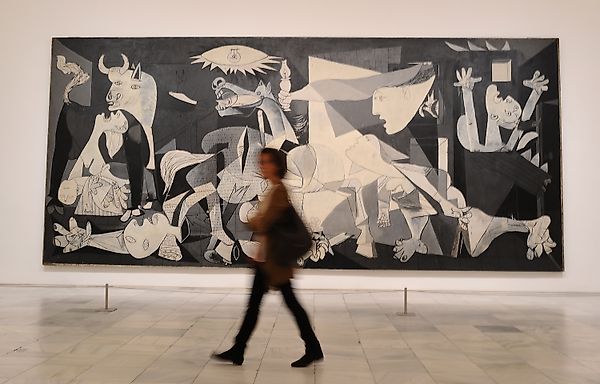
The Museo Nacional Centro de Arte Reina Sofía in Madrid has refused the Guggenheim Bilbao’s request to borrow Pablo Picasso’s Guernica, evoking reminders of a painful political history in Spain, according to Italy’s Il Giornale dell’Arte. The Guggenheim, which is located in Basque Country, had hoped to borrow the 1937 masterpiece for nine months beginning this fall to mark the ninetieth anniversary of the founding of the first Basque government and the bombing of Guernica by Franco-allied Nazi forces, both of which took place in 1937. Picasso created the work, which depicts the assault on Guernica, in 1937 for the Spanish Pavilion at the Paris Universal Exposition. He refused to allow it to be exhibited in Spain during Franco’s dictatorship. Beginning in 1939, the painting was housed at the Museum of Modern Art in New York; it was returned to Spain in 1981, following the country’s exit from fascist rule. Initially housed at the Casón del Buen Retiro and later at the Museo del Prado, it landed in 1992 at the Reina Sofía, where it has remained despite numerous loan requests. Despite the Reina Sofía’s many refusals to lend the work to various institutions around the world, its rebuff of the Guggenheim’s request carries a particular sting because the Basque Country has long held that the painting belongs in the place where the depicted tragedy occurred. Too, though the Basque Country is today is fully integrated into Spain, while retaining a great deal of autonomy, as well as its unique language and culture, the region’s relationship with the Iberian nation is shadowed by its history as the home of terrorist organization ETA. The separatist group emerged in 1958 in resistance to Franco but gained notoriety for assassinations, bombings, and kidnappings before announcing an end to its armed activity in 2011 and its dissolution in 2018. The Reina Sofía in a statement cited fears of damage to the painting as behind its refusal to loan it. “The work is currently maintained in stable conditions thanks to rigorous environmental controls,” said the institution. “However, in the event of a potential relocation, its dimensions, the nature of its constituent elements, and its state of preservation—combined with the extensive damage it has sustained over time—render it particularly susceptible to any form of vibration, which is inevitable during the transport of artworks. Such vibrations could result in new cracks, lifting and detachment of the paint layer, as well as tears in the support; for this reason, moving the work is strongly advised against.” Basque officials are pushing back against the refusal, in recent days stepping up meetings with Spain’s culture minister, Ernest Urtasun, to determine under what conditions a loan might be possible. Authorities on both sides have agreed to defer discussion of the matter until after Easter. Related Trump’s $400 Million East Wing Ballroom Plans Temporarily Nixed By Judge Participating Artists and Curators Push Back on Venice Biennale’s Relocation of Israeli Pavilion, Call for Exclusion of Russia, Israel, and US