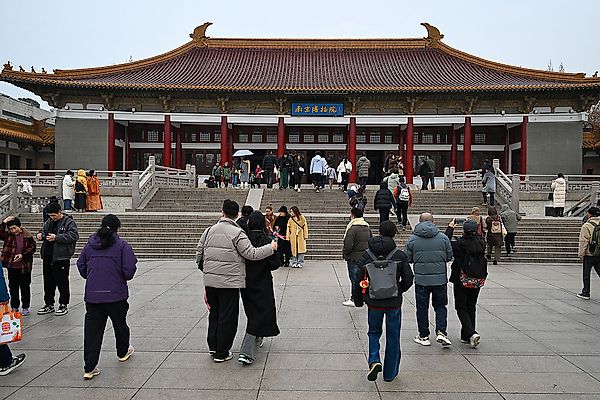
China has ordered a sweeping, nationwide audit of its state-run museums after a scandal at one of its top institutions revealed that national treasures had quietly slipped into the private market, according to Hong Kong newspaper South Morning China Post. The directive, issued this week by the National Cultural Heritage Administration, requires every state-owned museum to conduct a physical, item-by-item inventory of its collections, checking each object against official records. The goal is simple: make sure what’s on paper actually exists in storage. Related Articles Wisconsin Museum Treasurer Admits to Stealing $70,000 from Institution Investigators Find Decades-Long Mismanagement, Corruption at China's Nanjing Museum The move follows months of fallout from the Nanjing Museum, where investigators uncovered decades of mismanagement and alleged corruption involving donated artworks that were never meant to leave public hands. That work is one of a group of paintings donated in 1959 by the family of collector Pang Laichen. Intended for permanent institutional care, several of those works were instead transferred, sold, or simply lost over time. One of them, a Ming dynasty painting attributed to Qiu Ying, resurfaced at auction last year with an estimated value in the tens of millions, triggering outrage and a formal investigation. What followed was less a one-off scandal than a slow unspooling of how things actually worked. Authorities say museum officials approved improper transfers in the 1990s, while intermediaries manipulated prices and resold works into private hands. By the time the case came to light, at least one painting was still missing, others had changed hands multiple times, and more than two dozen officials faced punishment or investigation. The museum has since issued a public apology, admitting to “systemic problems” and a breach of trust with donors. Officials have since called for tighter controls, stricter oversight, and what they describe as a stronger “security defense line” around museum collections. The fallout could ripple beyond China’s institutions and into the market itself. Works with gaps in their ownership history, especially those that passed through state collections in the 1980s and ’90s, might face closer scrutiny from auction houses and collectors. What once read like a routine provenance report could start to look like a liability, particularly if more cases emerge of objects leaving museums through informal or outright illegal channels. But the scale of the review hints at a deeper concern. This is not just about one museum in Nanjing. It is an acknowledgment that the system itself may be more fragile than advertised, with gaps in record-keeping, oversight, and accountability that allowed objects to disappear in plain sight. For the state, the task now is not just to count what it owns, but to convince the public—and the market—that it knows where everything is.