Pat Steir, Whose “Waterfalls” Dazzled, Dies at 87
3March 26, 2026
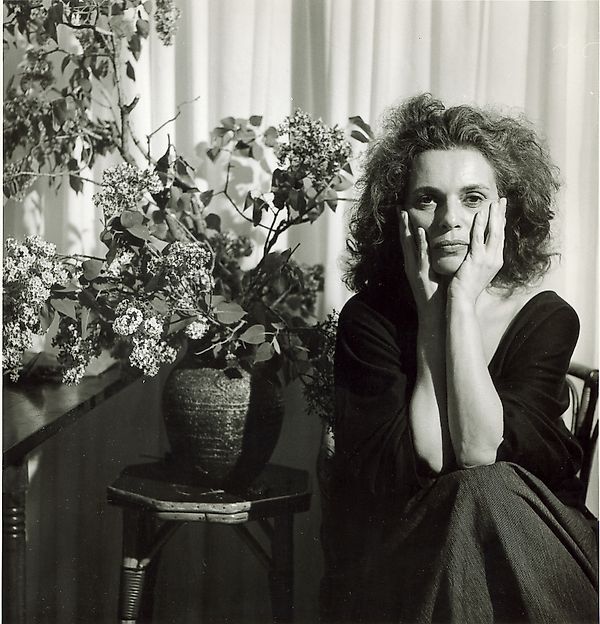
Pat Steir, who rose to prominence in the 1980s for her iconic “Waterfall” paintings, which she made by pouring paint onto canvas from atop a ladder, died in Manhattan on March 25. She was eighty-seven. Her death was confirmed by her husband, Joost Elffers, and niece Lily Sukoneck-Cohen, who survive her. Steir was also a cofounder, with her then partner Sol LeWitt, of New York’s Printed Matter bookstore and a founding board member of the pathbreaking feminist journalHeresies.Though she did not achieve fame until she was in her fifties—and, as she told theNew York Timesin 2019, was subsequently “forgotten and rediscovered many times”—Steir from the age of five was unwavering in her desire to paint. “I wanted to be a great artist,” shetold filmmaker Glenn Holsten in 2015. “Not in the slang use of ‘great,’ but fantastic—reaching the soul of other people.”
Iris Patricia Sukoneck was born the oldest of four children on April 10, 1938, in Newark, New Jersey. Her parents had both gone to art school, and she followed in their footsteps, attending the Boston University College of Fine Arts and Brooklyn’s Pratt Institute, studying under Philip Guston and Richard Lindner at the latter. Graduating from Pratt in 1962, Steir (who took her last name from a brief early marriage) spent the rest of the decade in New York, working first as an illustrator and a book designer and then as an art director at Harper & Row before accepting a teaching job at Parsons School of Design. She tirelessly continued her practice outside the hours of her day jobs, undaunted by the fact that she was one of the few women artists working in the heavily male-dominated New York art scene of the time. For her, the experience of being dismissed because of her sex was freeing.
“I thought that since I was doing something that nobody could imagine I could do, I could do anything,” she told Kiki Smith in a 2019 conversation for Artnet. “I could wander around in my own field of preferences and desires.”
In the early ’70s, John Baldessari invited Steir to lecture at the California Institute of the Arts, where she began a relationship with LeWitt. Simultaneously working as a founding editor at Semiotext(e), Steir taught at the school through 1975. “I asked for a studio with a big window and huge view, and then I had to keep the shade closed all the time because it was too bright to see colors,” she told Judith Richards in a 2008 oral history interview for the Smithsonian Archives of American Art. “So I started to do those black paintings.” These were large, monochromatic canvases featuring roses and other motifs obscured by large X’s. “I wanted to destroy images as symbols,” she later explained. “To make the image a symbol for a symbol.” The crossed-out works quickly garnered critical acclaim, and Steir spent the latter half of the ’70s traveling around the US and Europe, helping to establish both Printed Matter and Heresies during her stints at home in New York.
In the ’80s, desirous of making work without ever touching brush to surface, Steir made her “Wave Paintings” by flicking a brush loaded with paint at a canvas, producing a starry effect. “The scale was based on the size of my outstretched arm,” she told the Brooklyn Rail’s Phong Bui in 2011. “That was the beginning of the paintings being very performative.” The “Wave” works, which responded to Jackson Pollock’s drip paintings and to the work of Gustave Courbet and Hokusai, led directly to her “Waterfalls,” in whose making she eschewed the use of brushes altogether.
“I began looking at Chinese Literati paintings and at Southern Song Dynasty pottery and painting, and I realized that I didn’t have to use the brush, that I could simply pour the paint, that I could use nature to paint a picture of itself by pouring the paint. That gravity would paint my painting with me,” she told Bui. “I was influenced and inspired by John Cage, his idea of non-intention. Essentially, my whole voyage, from that first painting of a young woman, fighting her way through the paint to now, is a search and an experiment.”
To make the “Waterfalls,” the first of which she created in 1988, Steir stood atop a ladder or, later, in the basket of a cherry-picker, and sent thinned oil paint cascading down the surface of monumental canvases. The resulting works were breathtaking, immersing the viewer in luminous veils of paint that swept across the canvas, seeming to splash back up from the bottom, creating an enveloping sense of tranquility and awe that pushed against the jittery energy of Abstract Expressionism. Steir would continue to mine this vein in various forms over the ensuing decades, occasionally straying into more formal realms, as in a hushed group of towering paintings from the mid-2010s in which subdued hues appear to rain steadily in straight lines from the top of the canvas.
Another late work, Color Wheel, 2018–19, comprises a group of thirty massive canvases arranged in a circle, each a vivid, monochromatic shade atop which has been painted a single, dripping bar of complementary hue. Writing in a 2020 issue of Artforum, Ida Panicelli described the work as it appeared installed in the rotunda of the Hirshhorn Museum and Sculpture Garden in Washington, DC. “As viewers surrender to the seduction of this feast of colors, all distractions posed by the architecture fall away, and the magnetic power of the circle comes out—a voluptuous, engulfing, nearly mystical vibration that bubbles up through the artist’s systematic endeavor.”
Among the grants Steir won in her lifetime were those from the National Endowment for the Arts, in 1973 and 1976; she received a Guggenheim Fellowship in 1982. In 2020, she was the subject of a documentary by Veronica Gonzalez Peña. Her work is held in the permanent collections of major institutions around the world, including the Metropolitan Museum of Art, the Museum of Modern Art, the Solomon R. Guggenheim Museum, and the Whitney Museum of American Art, all in New York; the National Gallery of Art, Washington, DC; the Louvre, Paris; and Tate, London. A survey of her work will open on May 9 at the Parrish Art Museum in Water Mill, New York, where it will remain on view through September 26.
Steir continued painting almost until her death. “She emerged out of minimalism and conceptualism, but Pat created a visual language wholly her own—a new kind of abstraction that encompasses poetry and philosophy, in a practice that also involved writing, performance, and mentoring,” said Marc Payot, president of Hauser & Wirth, Steir’s primary gallery, in a statement. “She was so devoted body and soul to the medium of painting itself, to experimentation, that she has left behind one of the great legacies that will continue to inspire and provoke new conversations. That Pat worked until the very last of her days is testament to the power of her vision and the fierceness of will that really defines great artists.”