Calvin Tomkins, Master Profiler of the Contemporary Art World, Dead at 100
17March 22, 2026
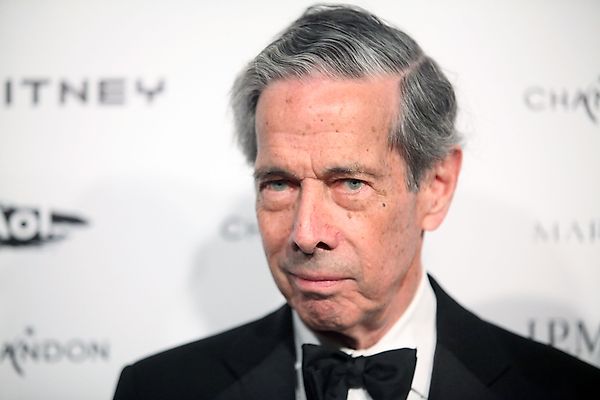
Calvin Tomkins, whose vivid and revealing profiles of contemporary art’s most fabled figures graced the pages of theNew Yorkerfor more than sixty years, died on March 20 at his home in Middletown, Rhode Island. He was one hundred years old. His wife, Dodie Kazanjian, told theNew York Timesthat his death was caused by complications from a stroke. Tomkins brought a warm, inquisitive sensibility to his portraits, writing in a clear, approachable style that drew in readers of all stripes who might not otherwise have thought themselves interested in the subjects he was covering. Despite the wealth of knowledge he gained through his profiles of art-world luminaries, Tomkins was never tempted to criticize their work, preferring to chronicle their lives instead. “I’ve always seen myself as a reporter on art,” hetold ArtReviewin 2014. “I think what’s been happening in art in this country and abroad for the last 50 years is so interesting and so varied and so connected with life in America that it’s perfectly legitimate to make an effort to report on it, to try to give a picture of the artist and the art as it’s been happening.”
Calvin Tomkins was born in Orange, New Jersey, on December 17, 1925—the same year theNew Yorkerwas born, as he was fond of noting. His mother was a homemaker and his father owned a plaster company that made drywall. Following his graduation from the private Berkshire School in Sheffield, Massachusetts, he entered the navy. Out of service two years later, he enrolled at Princeton University, receiving his BA in English in 1948.
Tomkins began his career editing news summaries for Radio Free Europe’s foreign bureaus before joining Newsweek in 1957 as a foreign news editor. While working there, he received a same-day assignment to interview Marcel Duchamp, about whom he knew nothing. Following a quick glance at a monograph about the Dada pioneer, he met Duchamp at the tony King Cole Bar at the St. Regis Hotel. “When I arrived, he was already there ahead of me, sitting at a small table, and the thing I remember most vividly is that I asked a lot of dumb questions, and he managed somehow to turn them all around into something interesting,” Tomkins told Hauser & Wirth’s Randy Kennedy in 2020.
In 1960, he was hired at the New Yorker. Shortly after, he was preparing to profile New Zealand sculptor Len Lye. Bell Labs’ Billy Klüver, who was then working with Jean Tinguely on Homage to New York, a machine that destroyed itself, urged him to interview Tinguely instead. Through the Swiss sculptor, Tomkins was introduced to Robert Rauschenberg, who was also working with Tinguely, and then to John Cage. Tomkins interviewed the pair in short order, and then profiled Duchamp for the magazine. This quartet of written portraits ignited his interest in contemporary art. He wrote more than four hundred profiles, many of them featuring artists and art-world figures, including Merce Cunningham, Jeffrey Deitch, Buckminster Fuller, Jasper Johns, Philip Johnson, Chris Ofili, Georgia O’Keeffe, Cindy Sherman, and, most recently, Tala Madani and Rashid Johnson.
Tomkins published over a dozen books, including The Bride and the Bachelors: The Heretical Courtship in Modern Art (1965), The Scene: Reports on Post-Modern Art (1976), Post- to Neo-: The Art World of the 1980s (1988), and the comprehensive six-volume set The Lives of Artists (2019), all of which collect his New Yorker portraits. Among his other well-known books are Living Well Is the Best Revenge (1971), chronicling the lives of Gerald and Sara Murphy, who served as the models for the main characters in F. Scott Fitzgerald’s 1934 Tender Is the Night; Off the Wall : A Portrait of Robert Rauschenberg (1980); Duchamp: A Biography; and Marcel Duchamp: The Afternoon Interviews (2013). He donated his papers to the Museum of Modern Art in New York and his trove of art books to the Redwood Library and Athenaeum in Newport, Rhode Island.
Tomkins retired from the New Yorker in 2022. His most recent contribution to the magazine was an excerpt from a journal he kept in 2025, “Becoming a Centenarian.” In it, he documented his stroke, which occurred in November, writing in his typical direct fashion despite his condition.
“The medical consensus seems to be that I will get a lot better, but it will take time, and (wouldn’t you know) I’ll have to do most of the work,” wrote Tomkins. “This will be the last entry for a while.”