Previously Unknown CÉzanne Mural Discovered in Artist’s Childhood Home
218Feb. 23, 2024
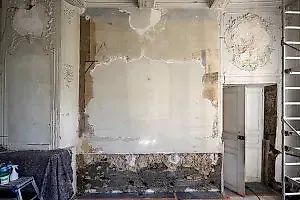
A never-before-seen work thought to be by renowned French Impressionist Paul Cézanne was discovered in his childhood home in Aix-en-Provence, theArt Newspaperreports. The roughly sixty-four-square-foot mural was uncovered last August from beneath layers of plaster and wallpaper in the main living area of the home, which was being renovated ahead of a program celebrating Cézanne’s connection to Aix. Referred to asEntrée du port(Entrance to the Port), the work appears to be influenced by Claude-Joseph Vernet or Claude Lorrain and depicts a maritime scene with long pennants lifted by a breeze; a number of ships’ masts, from which flags flutter; and a group of buildings.
The mural is the tenth work by Cézanne to have been discovered inside the house, which was purchased by the artist’s father, Louis-Auguste Cézanne, in 1859 and sold by the painter and his sisters Rose and Marie forty years later. The other nine works, all made between 1859 and 1869 and painted onto the walls, were uncovered decades ago and are noted in John Rewald’s 1996 catalogue raisonné of Cézanne’s works. The murals have since been transferred to canvas and parceled out to various art institutions, including the Chrysler Museum of Art in Norfolk, Virginia; Musée d’Orsay and the Petit Palais, both in Paris; and the Nakata Museum in Onomichi, Japan.
Cézanne is believed to have painted the 1864 work Jeu de cache-cache (Game of Hide-and-Seek) directly on top of Entrée du port; the Granel-Corsy family, which bought the house from the artist and his sisters in 1899, likely painted over the edges. The discovery of the new mural, which is set to be added to the updated catalogue raisonné, throws into question the order in which all ten works were painted. As well, it supplies Aix, which until now owned no works by the artist, with its very first Cézanne. The municipality will celebrate its link with Cézanne in 2025.