Golestan Palace, Tehran’s Only UNESCO World Heritage Site, Damaged in US-Israeli Airstrikes
29March 4, 2026
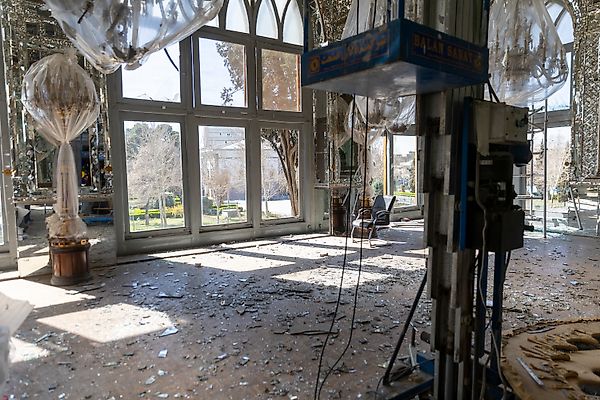
US-Israeli airstrikes on Iran have severely damaged Tehran’s four-hundred-year-oldGolestan Palace, according to reports first released by Iran’s ISNA and Mehr news agencies. Photos of the Safavid-era palace, the Iranian capital’s onlyUNESCO-listed site, showed glass and debris scattered across its floors following a March 2 missile strike on nearby Arag Square, a buffer zone.UNESCO World Heritage Sitesare protected under the 1954 Hague Convention for the Protection of Cultural Property in the Event of Armed Conflict and the 1972 Convention concerning the Protection of the World Cultural and NaturalHeritage.
Thought to have been built in the 1500s under the rule of Shahmasp 1 as part of a walled citadel, the palace was subsequently modified and in the eighteenth century became the seat of government for the Qajar dynasty. Rebuilt in the mid-1800s, the structure exemplifies the blend of European and Persian traditions that came to define the Qajar period, which lasted into the early twentieth century. The site of the coronations of Reza Shah (1926) and Mohammad Reza Shah (1967), the palace is known for its intricate mirror-work and elaborate decoration, and in the early 1970s appeared on Iranian currency.
UNESCO in a statement expressed concern regarding the damage and said that it had communicated the geographical coordinates of Iran’s twenty-nine World Heritage sites, as well as those of others of international importance, to “all parties concerned.”
US President Donald Trump had threatened to hit Iran’s cultural sites back in January 2020, after an American drone strike on a Baghdad airport killed a top Iranian commander. Following a public outcry, then-defense secretary Mark T. Esper acknowledged that any action carried out against historic sites would constitute a war crime under international law.