Flash ArtFounder Giancarlo Politi Dies at 89
41March 3, 2026
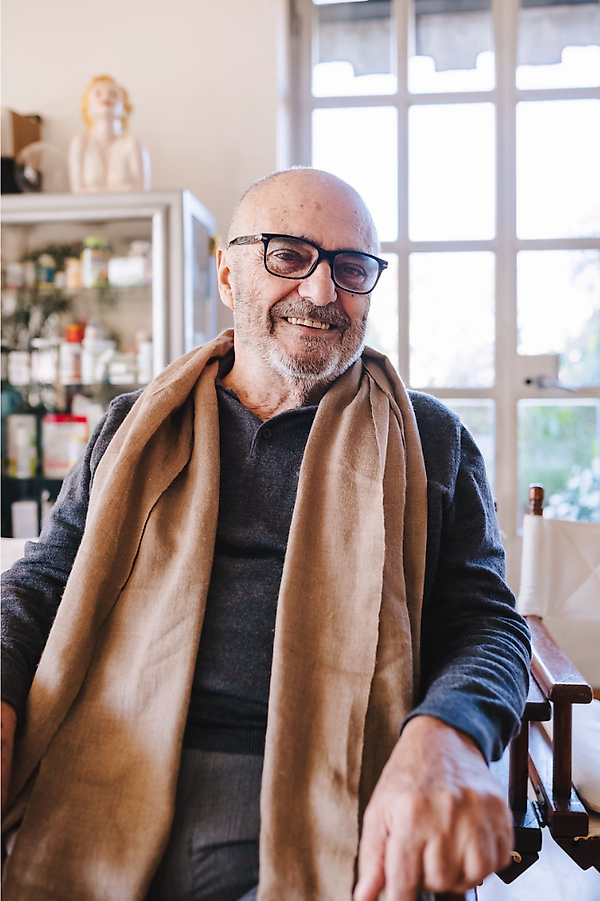
Critic, poet, and publisherGiancarlo Politi, founder of the influential contemporary art journalFlash Art, one of the first international publications of its kind, died on February 24. He was eighty-nine. Politi, over a career spanning more than five decades, shaped the global contemporary art scene through the establishment of a publishing house, an art-world directory, a museum, and a biennial, bringing cutting-edge art movements in Italy as well as those around the world to a wide audience.
Giancarlo Politi was born on January 29, 1937, in Trevi, Italy. Following a brief stint dabbling in art and poetry, he became interested in art criticism. In 1965, he moved to Rome, where he foundedFlash Art(originallyFlash), before moving its offices to Rome in 1971. The bimonthly publication quickly gained a global following; recognizing this, Politi in 1978 began putting out two editions:Flash Art International, catering to the aforementioned audience, andFlash Art Italia, focusing on the Italian art scene. The magazine appeared in a variety of languages at various points over the ensuing decades, including French, Czech, Slovak, Russian, and Hungarian.Flash Artwas crucial in introducing global audiences to the homegrown Arte Povera and Transavanguardia movements; as well, it championed the Pictures Generation, Documenta, and the work of Maurizio Cattelan and Jeff Koons, providing the latter with a forum for a series of provocative ads. In 1967,Flash Artran renowned Italian theorist Germano Celant’s manifesto “Arte Povera: Notes on a Guerilla War”; twenty years later, the magazine published Warhol’s last interview. The journal also offered a platform for critics and curators including Francesco Bonami, Hal Foster, and Massimiliano Gioni, who edited the US edition ofFlash Artin the early 2000s.
In the early 1970s, Politi launched Heute Kunst, a German-language art journal devoted to Fluxus, Conceptual, and performance art. The magazine figured in a 1972 advertisement he ran, offering himself for sale for $1,000 to galleries, museums, and “really good-looking female artists.”
In 1973, with his wife, Czech art critic Helena Kontova, he established Giancarlo Politi Editore, a publishing house issuing art books and catalogues. Beginning in 1975, Poilti Editore began publishing the annual Art Diary, a kind of white pages listing contact information for thousands of artists, photographers, critics, and cultural workers, as well as galleries, museums, and collectors. Once referred to by Andy Warhol as “the Bible of the art world,” Art Diary ceased publication in the late 2010s, as social media became omnimpresent.
In 1993, Polti founded the Trevi Flash Art Museum, a noncollecting institution that mounted exhibitions featuring artists including Vanessa Beecroft, Damien Hirst, Karen Kilimnik, Mark Kostabi, Paola Pivi, and Andres Serrano. A decade later, again with Kontova, he launched the Prague Biennale, a resolutely low-budget affair that in 2007 expanded to incorporate Prague Biennale Photo. The museum shuttered in 2007, with Palazzo Lucarini Contemporary taking over its space, while the Prague Biennale and attendant exhibitions ceased operations after its 2013 edition.
Politi is survived by Kontova and by the couple’s daughter, Gea Politi, who edits Flash Art, publishing the now-quarterly magazine alongside Cristiano Seganfreddo. The pair also run Politi Seganfreddo Edizioni, which in 2023 took up where Giancarlo Politi Editore left off.