Martin Parr, Documentarian of Modern Life, Dies at 73
95Dec. 16, 2025
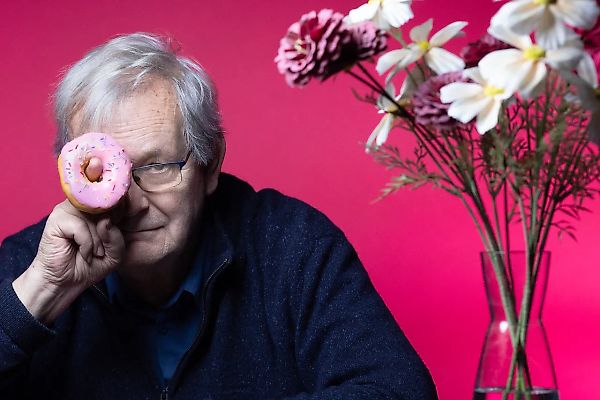
British photographerMartin Parr, known for his wry and incisive documentation of England’s social class structure, died on December 6 at his home in Bristol, England. He was seventy-three. Parr earlier this year revealed that he had been diagnosed with incurable myeloma. Shooting for Magnum Photos for decades, Parr produced what he called “subjective documentary”: saturated, flash-lit images that delivered stinging commentary on caste, consumerism, customs, and national identity. His vivid and gripping work exploded conventions surrounding documentary photography and tremendously expanded the audience for the form. His work, while often created for magazines or another commercial interest, is held in the collections of major museums around the world, including those of the Art Institute of Chicago and London’s Tate. “The fundamental thing I’m exploring constantly is the difference between the mythology of the place and the reality of it,” he told Quentin Bajac in an interview for the 2010 volumeParr by Parr. “I make serious photographs disguised as entertainment.”
Martin Parrwas born on May 23, 1952, in Epsom, Surrey. By the time he was fourteen, inspired by his grandfather George Parr, an amateur shutterbug, he knew he wanted to be a documentary photographer. He studied at Manchester Polytechnic in the early 1970s and did a stint as a roving photographer for Butlin’s, an operator of seaside resorts, where he encountered the supersaturated nostalgic postcards by John Hinde that would profoundly influence his practice. Parr began his career shooting in black-and-white, as photographers using color film could not expect to be taken seriously at the time. His earliest efforts focused on rural communities, as embodied by the series “The Nonconformists,” 1975–1980, which focused on the Methodist and Baptist nonconformist churches that formed the hubs of isolated farming villages but were closing as local populations declined. For his 1982 bookBad Weather, Parr, often using an underwater camera, captured denizens of northern England and Ireland’s West Coast battling rain and snow.
In 1986, inspired by the work of American photographers Joel Meyrowitz, Wiliam Eggleston, and Stephen Shore, Parr published the book that would bring him international acclaim and that today remains a touchstone of his oeuvre. Shot over three summers at the Brighton shore, The Last Resort shows Britain’s working class at their leisure. The series depicts in poisonous hues such scenes as a woman sunbathing before the massive, dirt-encrusted tread of a ditch digger; disconsolate children with ice cream–smeared mouths; and couples lunching on fish and chips amid trash-strewn environs. Some critics lauded these images as unflinching, often humorous portrayal of everyday life, while others decried them as an attack on the poor.
Parr was democratic in his choice of subjects. Subsequent books found him chronicling the lives of the middle class. Among these were The Cost of Living (1989), centering on the bourgeoisie’s new affluence under Prime Minister Margaret Thatcher; Small World (1995), commenting on mass tourism; and Common Sense, critiquing global consumerism.“ He treated people through his lens with a sense of equality,” Mark Sealy, the director of British photographic arts agency Autograph ABP told The Guardian. “If you were about to shove a pie in your face, he was going to capture it regardless of who you were.”
In 1988, Parr joined Magnum Photos as an associate member and was admitted as a full member in 1994, achieving the necessary two-thirds majority by a single vote, owing to dissension among the ranks as to whether his work was too avant-garde to be considered documentary. He would go on to serve as the organization’s president from 2014 to 2017.
Parr published more than 145 photobooks in his lifetime, and was the subject of more than eighty international exhibitions. In 2014, he launched the Martin Parr Foundation, which gained a permanent home in Bristol in 2017. Comprising a gallery, library, studio, and archive, the foundation houses Parr’s collection of his own work as well as his massive trove of postcards, photos, and photobooks by others. The recipient of numerous awards over the years, Parr in 2021 was appointed Commander of the Order of the British Empire for his services to photography. A film about his life, I Am Martin Parr, was released earlier this year.
Asked by Magnum in 2018 if he had any advice for young documentarians, Parr was direct. “The big mistake people make is trying to say too much. They want to change the whole world with one project. They don’t realize that dealing with one small thing well, and very meaningfully, is much more effective than trying to cover too many aspects of the world at once. If you can’t explain what you’re doing in one sentence, it’s hardly worth doing.”