Indiana University Cancels Major Exhibition of Palestinian Artist Samia Halaby
221Jan. 12, 2024
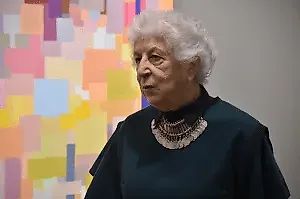
Indiana University’s Eskenazi Museum of Art has canceled a survey of Palestinian artist Samia Halaby, according to multiplenewsoutlets. Known for her vivid, abstract canvases influenced by so-called Palestinian liberation art, the eighty-seven-year-old Halaby was to have been the subject of an exhibition organized in collaboration with Michigan State University’s Broad Museum and opening at the Eskenazi in Bloomington, Indiana, on February 10. She told theNew York Timesthat she received a call from Eskenazi director David Brenneman letting her know that an employee of the arts institution had expressed trepidation in regard to her social media posts regarding the Israel-Gaza war. Halaby in the posts had expressed support for Palestinians and condemned Israel’s sustained attack on the state, conducted in the wake of the October 7 attack on Israel carried out by Palestinian militant and political organization Hamas.
Shortly thereafter, in early December, Brenneman sent her a brief note officially canceling the show.RelatedPENNSYLVANIA ACADEMY OF THE FINE ARTS TO SHUTTER COLLEGE IN 2025WARHOL FOUNDATION ANNOUNCES FALL 2023 GRANT RECIPIENTS Halaby holds master’s degrees from both Indiana University and Michigan State University, the homes of the museums that collaborated on the show. In 1972, she became the first woman to join the Yale School of Art as a full-time faculty member. The following decade, she became among those at the vanguard of digital art, having taught herself how to program computers. She is the author of a history of Palestinian art published in 2001 and was the subject of a major retrospective at the Sharjah Art Museum that closed earlier this month.
Her work is held in the collections of the Art Institute of Chicago; the Solomon R. Guggenheim Museum, New York; and the National Gallery of Art, Washington, DC, among others. According toArtnews, on receiving word of the cancellation, Halaby wrote to Indiana University president Pamela Whitten, noting that the shuttering of her show arrived “at a time when Palestinian civilians are being massacred, starved, and displaced by the millions in Gaza; in what is one of the largest human rights catastrophes this century. Nearly every country in the UN, all major human rights organizations, and a majority of Americans want to see a ceasefire.
I as a Palestinian, who was born in Jerusalem and survived the Nakba at age 11 in 1948, and someone who has for decades engaged in activism and advocacy for the life, safety, and self-determination of my people, what is being inflicted on the people of Gaza carves a deep wound. As a Palestinian and woman artist practicing in the United States, I am not a stranger to racism and sexism of the art world. As I and Palestinians everywhere are experiencing tremendous grief we turn to our friends.” Indiana University spokesperson Mark Bode in a January 10 statement reprinted in part by theTimesnoted that “academic leaders and campus officials canceled the exhibit due to concerns about guaranteeing the integrity of the exhibit for its duration.” The show was to have traveled to the Broad Art Museum in June. The director of that institution, Steven Bridges told theTimesthat the East Lansing, Michigan, museum would host the exhibition as planned..